
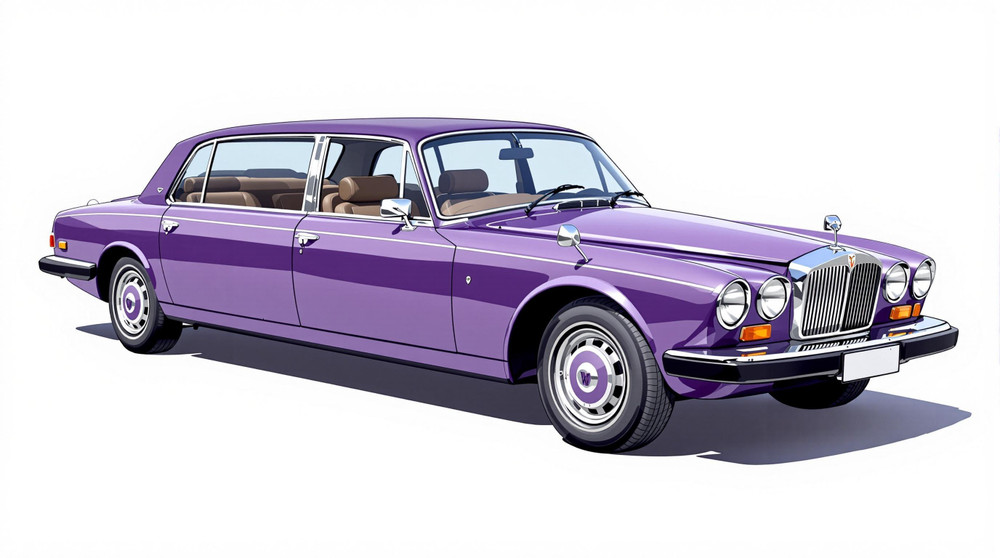
Image of 1980 Daimler Limo, Note: These illustrations use artistic license and may differ from actual historical models.
Performance Metrics
Fundamental Metrics
Emotional Appeal
MMP Rating
| Engine Specifications | |
|---|---|
| Engine: | 4.2L I6 |
| Displacement: | 4235 cc |
| Horsepower: | 140-150 HP |
| Torque: | 210-220 lb-ft |
| Compression Ratio: | 8.1:1 |
| Ignition System: | Electronic ignition |
| Cooling System: | Liquid-cooled |
| Performance Specifications | |
| 0-60 Time: | 13-15 seconds |
| 1/4 Mile Time: | Estimated at 18-20 seconds |
| Top Speed: | 110 mph |
| Transmission and Drive | |
| Drive Type: | Rear-wheel drive |
| Transmission Type: | 3-speed automatic |
| Fuel and Efficiency | |
| Fuel System Type: | Fuel injection |
| MPG: | 15-18 mpg |
| Dimensions and Brakes | |
| Brakes: | Disc brakes |
| Wheelbase: | 124 inches |
| Weight: | 4400 lbs |
Note: Specifications for classic cars are given to the best of our ability, considering the limited and variant data available.
1980 Daimler DS420: The British Limousine Built for Ceremony
Some cars are designed to turn heads; the 1980 Daimler limousine was designed to make an entrance. Long, stately and unmistakably British, the Daimler DS420 carried royalty, diplomats, dignitaries and mourners with equal composure. It was made by Jaguar Cars under the Daimler name, combining a proven Jaguar engine and chassis with the formal coachwork and spacious cabin expected of a grand chauffeur-driven car.
The DS420 first appeared in 1968, at a time when British luxury-car makers were competing to supply official limousines to royal households, governments and funeral directors. The model remained in production until 1992, an unusually long run for a specialist limousine. A notable chapter in its story came in 2002, when a hearse based on the DS420 carried the coffin of Queen Elizabeth The Queen Mother.
Formal Coachwork and a Generous Cabin
The DS420’s proportions do much of the talking. Its long wheelbase, extended rear passenger compartment, upright grille and formal roofline give it the unmistakable silhouette of a traditional state limousine. At roughly 5.7 metres long, it is a substantial car even by the standards of its era. The design favours dignity and presence over sporty lines, with large windows that make the rear cabin feel light and give passengers a clear view of the world outside.
Inside, the emphasis is on comfort and discretion. Depending on specification, the cabin could feature leather upholstery, polished wood trim, carpets and carefully finished door panels. A partition separated the chauffeur from the rear passengers, while occasional folding seats allowed the cabin to carry additional occupants when needed. Some cars were fitted with conveniences such as rear reading lights, intercoms and controls for the division window. Equipment varied, since many limousines were ordered for specific owners or official duties.
Buyers and commissioning organisations could specify a range of exterior colours. Black became the classic choice for formal, ceremonial and funeral work, while dark blue, maroon and other restrained shades also suited the car’s stately character. Two-tone finishes and special colours were possible, particularly on coachbuilt or individually commissioned examples.
The best-known body style was the four-door limousine. The DS420 platform also supported specialist conversions, including hearses and landaulets with an opening rear roof section. These versions gave the model a second life in ceremonial and funeral service, where its long cabin and formal appearance were especially useful.
Jaguar Engineering Beneath the Daimler Grille
Although the DS420 looked like a purpose-built luxury machine, its mechanical foundation drew on Jaguar engineering. Power came from Jaguar’s 4.2-litre XK inline-six, a long-running engine known from several Jaguar models. In the limousine it was paired with a three-speed automatic transmission and rear-wheel drive. The body was initially assembled by Vanden Plas; production later moved to Jaguar’s Browns Lane works.
That blend of specialist coachwork and familiar mechanical components was central to the DS420’s appeal. Jaguar’s established engine and suspension technology helped make the car suitable for regular service, while the Daimler name and carefully finished bodywork gave it the formality customers expected. It was not a technical revolution, but it was an effective answer to a demanding brief: carry people in exceptional comfort, day after day, and look appropriate doing it.
The DS420 also stood apart from more exclusive rivals by being a practical working limousine as well as a prestige car. Rolls-Royce and Bentley offered their own grand alternatives, but the Daimler became a familiar choice for institutional fleets, royal households and funeral operators. Its long production life reflects how well that combination of size, comfort and serviceability met its intended role.
Performance: Unhurried, Not Underpowered
Period figures vary by source and specification, but a 1980 DS420 is generally credited with about 245 horsepower, a top speed in the region of 110 mph and 0-to-60 mph acceleration of roughly 13 to 14 seconds. Those numbers are respectable for a large, heavy limousine, though outright speed was never its purpose. The 4.2-litre six-cylinder engine had to move a substantial body and a full complement of passengers, so acceleration feels measured rather than brisk.
On the road, the three-speed automatic suits the car’s character. It shifts without asking the driver to work hard, and the engine delivers its power in a smooth, steady manner. The sound is a muted six-cylinder hum rather than a sporting roar, especially when the engine is in good condition and the cabin is properly insulated.
The long wheelbase helps the DS420 glide over ordinary road imperfections, making the rear compartment particularly comfortable on longer journeys. Its size is also something the driver must manage. Narrow streets, tight turns and parking require planning, while crosswinds can be more noticeable in a tall, expansive car. On a winding road, it rewards smooth inputs and a relaxed pace rather than sharp cornering. Think composed progress, not agility.
What Ownership Is Really Like
Most DS420s were built for chauffeur, official, hotel or funeral service, not as everyday family cars. Today, surviving examples are used for weddings, special events, private collections and classic-car displays. Some remain working hearses or limousines, while others are carefully preserved as distinctive pieces of British motoring history.
Mechanical maintenance is manageable for an experienced classic-car specialist, in part because the XK engine and some running gear are shared with other Jaguar models. A prospective owner should still expect to seek out a mechanic familiar with older Jaguars and large automatic limousines. The car’s size and weight put extra demands on brakes, tyres and suspension, and regular use helps prevent long periods of storage from creating new problems.
Condition is especially important. Inspect the chassis and body carefully for corrosion, and check the cooling system, automatic transmission, electrical equipment and steering. The extensive interior, partition mechanism, wood trim and special coachwork can be expensive to restore. Mechanical parts may be obtainable through Jaguar specialists, but unique body and trim pieces can take more effort to locate. For an average owner, routine servicing is achievable with the right workshop; a full restoration is a specialist project.
Royal Connections and DS420 Trivia
The DS420’s strongest claim to fame is its long association with official and ceremonial service. Cars from the model family were used by royal and institutional fleets, and its hearse conversions became a familiar sight at important funerals. The Queen Mother’s 2002 funeral is among the best-known occasions linked to the model.
One of the model’s most striking records is its longevity: production continued for 24 years, from 1968 to 1992. Total production is commonly reported at approximately 4,141 cars, although exact figures for individual years, including 1980, are not consistently available. That makes the DS420 uncommon beside mass-produced saloons, but it is not necessarily rare in the same way as a one-off coachbuilt car. Specialist conversions and unusually original examples are harder to find.
Common criticisms are practical rather than mysterious: the DS420 is thirsty, large, slow to accelerate by modern standards and costly to restore if its body or interior is tired. It also asks for more storage space and maintenance attention than an ordinary classic saloon. Those drawbacks come with the territory of owning a near-six-metre limousine, and they are part of why a well-kept example remains a special sight.
Collector Values and Market Outlook
Values depend heavily on condition, history, specification and body style. As a broad 2026 estimate in the U.S. market, a usable but imperfect limousine might sell for around $15,000 to $35,000. Good, presentable examples can fall in the $35,000 to $60,000 range, while exceptional restorations or especially desirable specialist conversions may reach roughly $60,000 to $90,000 or more. These are guide figures, not a substitute for comparing recent sales; local demand and restoration quality can shift the price substantially.
In the U.K., where the model is more familiar and parts and specialists may be easier to find, asking prices are often expressed in the low tens of thousands of pounds, with outstanding examples commanding more. The market is selective. The DS420 has a devoted audience, but its size, fuel consumption and upkeep limit the number of buyers. Values have generally been steady to gradually improving for sound, well-documented cars, while poor examples can remain inexpensive because restoration costs quickly overtake their purchase price.
For collectors, the strongest buys tend to be structurally sound cars with documented maintenance, complete interiors and working limousine equipment. A rare conversion can be appealing, but originality and the quality of the work matter more than an unusual body style alone.
A Classic Limousine with a Lasting Role
The 1980 Daimler DS420 is a distinctive blend of Jaguar engineering, traditional British coachwork and chauffeur-focused comfort. Its long body and carefully appointed cabin made it a natural choice for official duties and ceremonial occasions, while its decades-long production run speaks to its usefulness as much as its prestige.
It is not a classic for quick drives or easy parking. It is a car for owners who appreciate craftsmanship, history and the quiet theatre of arriving in a proper British limousine. More than four decades after its 1980 model year, the DS420 still knows how to make an entrance.
1980 Daimler Limo Catalog of Parts
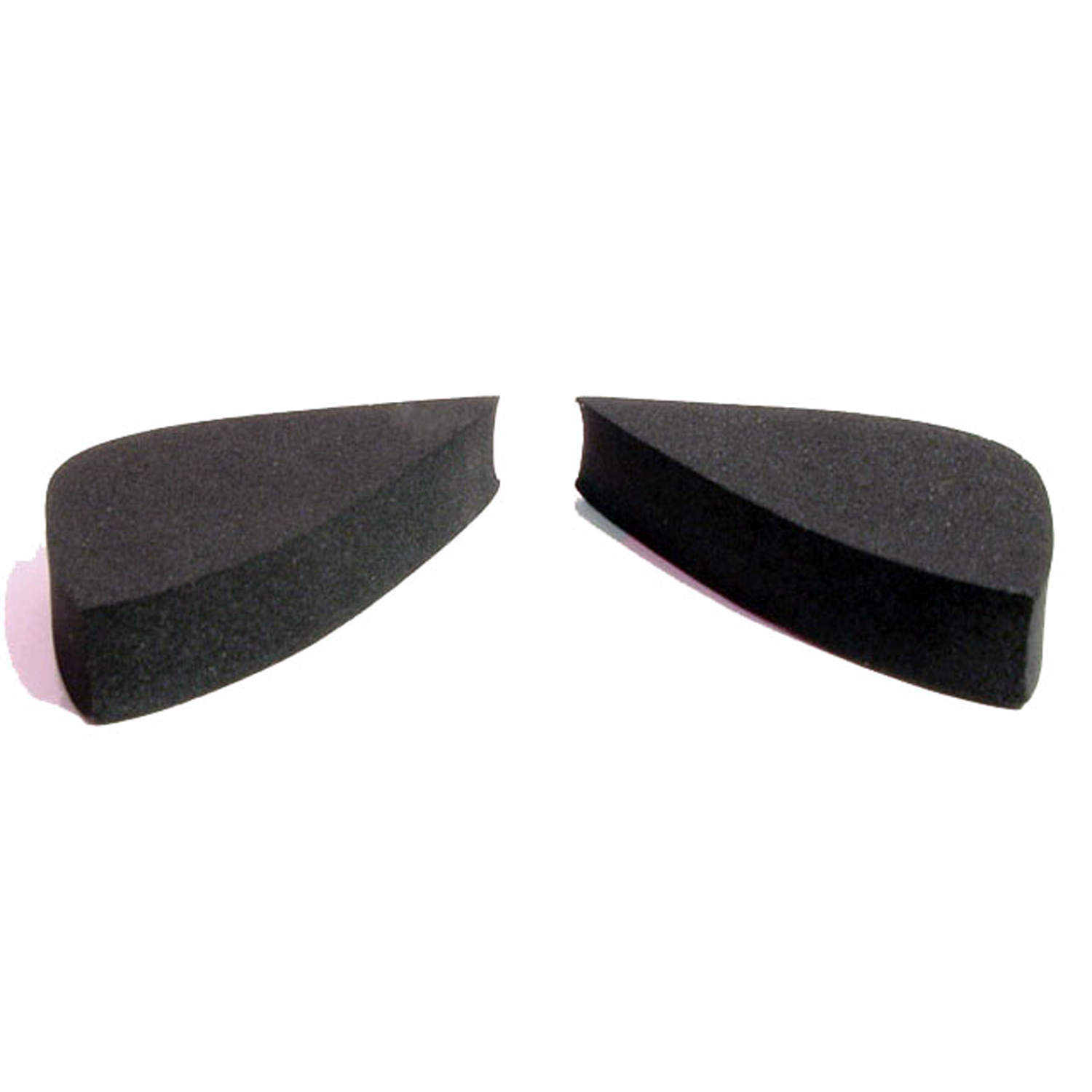 1980 Daimler LIMO Rear Door Hinge Seal. Pair-ALP 23Rear Door Hinge Seal. Pair
Why Choose Metro?
For over 100 years, Metro Moulded Parts has been the pinnacle of quality in classic car restoration parts. Our commitment to precision and authenticity in every component ensures a perfect fit and an OEM-level appearance.
- Expert Craftsmanship & Quality: Each part is a testament to our dedication to reliability and perfection, crafted from original designs and thoroughly tested.
- Advanced Technology: We use cutting-edge techniques to create flawless, long-lasting parts that surpass others in performance.
- SuperSoft Sponge – The Ultimate Door Seal: Not only are our door seals 30% softer than competitors', but they're also guaranteed to never leak. They effectively reduce wind and road noise, enhancing your classic car's comfort and driving experience.
- Proudly American: Our parts are a product of American craftsmanship, made in the USA with a spirit of excellence and heritage.
- Unrivaled Warranty: We back our products with a 30-year industry-leading warranty, a testament to our confidence in their quality.
Join us in preserving the legacy of classic cars with parts that are crafted for perfection, not just made.