

Image of 1930 Desoto Model Ck, Note: These illustrations use artistic license and may differ from actual historical models.
Performance Metrics
Fundamental Metrics
Emotional Appeal
MMP Rating
| Engine Specifications | |
|---|---|
| Engine: | Inline 6-cylinder engine |
| Displacement: | 174.9 cubic inches |
| Horsepower: | Estimated 58-60 hp |
| Torque: | Not available |
| Compression Ratio: | Not available |
| Ignition System: | Battery and coil |
| Cooling System: | Water-cooled |
| Performance Specifications | |
| 0-60 Time: | Not available |
| 1/4 Mile Time: | Not available |
| Top Speed: | 60-70 mph |
| Transmission and Drive | |
| Drive Type: | Rear-wheel drive |
| Transmission Type: | 3-speed manual |
| Fuel and Efficiency | |
| Fuel System Type: | Carburetor |
| MPG: | Not available |
| Dimensions and Brakes | |
| Brakes: | Mechanical drum brakes |
| Wheelbase: | 114 inches |
| Weight: | Estimated 2,700 lbs |
Note: Specifications for classic cars are given to the best of our ability, considering the limited and variant data available.
1930 DeSoto Model CK: Chrysler’s Confident Six
The 1930 DeSoto Model CK brought Chrysler engineering to buyers who wanted a roomy, well-equipped six-cylinder car without stepping up to a luxury marque. Built by the DeSoto division of the Chrysler Corporation, the CK followed the make’s successful 1929 debut and arrived as the Great Depression was beginning to reshape American buying habits. Its appeal was practical as well as stylish: a substantial car, a smooth six-cylinder engine, and features that helped it feel more advanced than a basic transportation car.
DeSoto took its name from Spanish explorer Hernando de Soto, and the new marque was positioned between lower-priced Plymouth and more expensive Chrysler models. The CK’s timing gave it a difficult backdrop, but the brand had already made a striking entrance. DeSoto’s first-year sales in 1929 were widely celebrated as a record-breaking debut for a new automobile make. The 1930 CK carried that momentum into a market facing rapidly worsening economic conditions.
One appealing detail for modern enthusiasts is that the CK represents DeSoto before the marque became known for its later streamlined styling and distinctive mid-century fins. It is a snapshot of the moment when American cars were moving beyond the boxy, upright look of the 1920s while still retaining the separate fenders, running boards, and formal proportions of the era.
Upright Lines and Comfortable Cabin
The Model CK has the unmistakable proportions of a late-1920s and early-1930s American automobile. A tall, upright radiator grille anchors the front end, flanked by large headlamps mounted on either side. The long hood, with its rows of cooling louvers, leads back to a steep windshield and a passenger compartment set high above the chassis. Curving front fenders frame the wheels, while full-length running boards connect the front and rear fenders into a continuous side profile.
Details such as wire wheels, bright exterior trim, and a rear-mounted spare tire gave the car a formal, carefully finished appearance. Compared with a modern car, the CK looks tall and narrow, but that upright stance was considered dignified and substantial. Its design emphasized presence and comfort rather than aerodynamic efficiency.
Inside, the CK offered a broad cabin with upright seating and generous glass for its time. Closed models typically used durable upholstery such as cloth or mohair, while open cars could feature leather trim. Depending on body style and equipment, buyers could also find contrasting interior finishes, polished hardware, and wood-grain-style detailing. Materials and trim varied by configuration, but the overall effect was more substantial than that of a bare-bones economy car.
Factory colors varied by body style and finish. Dark shades such as black, deep blue, green, and maroon suited the CK’s formal appearance, while two-tone combinations could add contrast on selected models. Exact color availability depended on the body and production specification, so surviving paint and trim are best checked against period documentation when authenticity matters.
Body Styles and Period Features
DeSoto offered the CK in a range of closed and open body styles. Depending on the catalog and body configuration, the lineup included sedans, coupes, business coupes, and open touring or roadster-style models. Some coupes and roadsters could be ordered with a rumble seat, an occasional rear perch that added a playful touch but offered limited weather protection. The sedan was a natural choice for families and business use, while the coupe remains one of the most visually appealing versions for collectors today.
Equipment could include a three-speed manual transmission, four-wheel brakes, and the comfort and convenience features expected in a well-equipped car of the period. DeSoto’s use of hydraulic braking was a meaningful advantage in an era when stopping systems were still evolving, though the condition and adjustment of any surviving brake system are crucial. Period cars also relied on a relatively simple electrical and mechanical layout compared with later automobiles, making many systems understandable to an experienced home mechanic.
Why the 1930 CK Matters
The CK was not a radical styling or engineering breakthrough, but it helped establish DeSoto as a serious player in the crowded middle-price market. Chrysler used the new division to offer buyers a six-cylinder car with a reassuringly substantial feel and modern-for-the-era equipment. That combination gave DeSoto a distinct place in the company’s lineup and helped it build an identity beyond simply being a less expensive Chrysler.
The model also reflects an important transition in automotive design. Its separate fenders and running boards belong to the traditional carriage-inspired era, while its enclosed bodies, integrated trim, and increasingly refined proportions point toward the more unified forms that would follow. In that sense, the CK is a useful example of how quickly American car design was changing around 1930.
Its lasting significance is less about a single invention than about the way it represented Chrysler’s strategy: use shared engineering and manufacturing strength to create a new brand with its own market position. That approach became a familiar feature of the American auto industry, where manufacturers used multiple marques to reach different buyers.
Six-Cylinder Performance and Road Manners
The Model CK was powered by a side-valve, or L-head, inline six-cylinder engine of about 190 cubic inches. Period specifications commonly place output at roughly 60 horsepower, delivered through a three-speed manual gearbox. Exact figures can vary by source and specification, but the engine’s character is clear: it was designed for steady, usable torque and smooth cruising rather than high-revving performance.
Reliable factory acceleration figures are not readily established for the CK. As a practical estimate, a healthy, correctly tuned example would likely take well over 20 seconds to reach 60 mph, with performance affected by body style, gearing, road conditions, and the car’s mechanical condition. A top speed in the neighborhood of 60 to 65 mph is a reasonable period-car estimate, not a promise for every surviving vehicle. These cars are most comfortable at moderate road speeds.
On a smooth road, the CK’s long, upright body and six-cylinder engine make for a relaxed, unhurried drive. The suspension is softer and less controlled than a modern setup, so potholes and sharp bumps produce more body movement. On winding roads, the driver needs to plan ahead: steering is slower, the car leans more through corners, and braking distances are much longer than those of a contemporary vehicle.
The driving experience is part of the appeal. The engine produces a steady mechanical rumble, while the gear changes and controls require more deliberate input than a modern car. The driver sits high, looks out over the long hood, and works with a steering wheel and pedals that feel distinctly mechanical. A well-sorted CK can be enjoyable on scenic drives and vintage tours, but it is not suited to fast modern traffic.
Living With a DeSoto CK
Today, most 1930 DeSoto CKs are used as show cars, museum pieces, parade vehicles, or participants in vintage touring events. They can be driven on local roads when properly restored, but few owners would choose one as a daily driver. Modern traffic speeds, limited crash protection, and the difficulty of sourcing some parts make regular commuting an impractical use for most examples.
The car’s basic mechanical layout is approachable for an owner with restoration experience. Routine work on the engine, ignition, carburetor, and manual drivetrain is generally less complex than service on a modern vehicle. The challenge is often not understanding the system, but finding correct parts and dealing with decades of wear, previous repairs, or incomplete restorations. Brakes, tires, cooling, fuel lines, and electrical components deserve careful attention before road use.
Reliability depends heavily on condition. A properly restored car can be dependable on short outings, while an unrestored example may need extensive sorting before it is safe and enjoyable. Owners should also expect period-car habits: regular inspection, careful warm-up, and more frequent maintenance than a modern car requires.
DeSoto CK Trivia and Common Complaints
The DeSoto name honored Hernando de Soto, the Spanish explorer associated with the Mississippi River expedition. The company’s 1929 launch is another notable piece of DeSoto history: the make achieved unusually strong first-year sales for a new brand, giving the division valuable momentum as it introduced the CK for 1930.
The CK is not especially famous for racing records or a celebrity owner, and there is no widely recognized speed or endurance record associated with the model. Its historical interest is rooted more in its role in Chrysler’s brand strategy and in its place among the increasingly refined American six-cylinder cars of the period.
Common criticisms are typical of cars from its era. The CK is slow by modern standards, requires more effort to steer and stop, and offers limited protection in a collision. Open versions provide little shelter from weather, while closed cars can feel warm and noisy compared with later automobiles. For collectors, those compromises are part of the period experience, but they should be understood before buying.
Collector Values and Availability
Exact production totals for individual CK body styles are difficult to establish from readily available public figures. A reasonable broad estimate is that production across the 1930 DeSoto CK range reached several tens of thousands of cars, potentially around 50,000 to 80,000 in total. That is a working estimate, not a verified model-by-model factory count. Surviving examples are far less common than the original production suggests, particularly in complete, roadworthy condition.
Values depend strongly on body style, originality, restoration quality, and documentation. As a broad current-market estimate, a project car might sell for about $5,000 to $12,000. A usable driver or older restoration could fall around $12,000 to $25,000, while a high-quality restoration may bring roughly $25,000 to $45,000 or more. Exceptional examples, rare configurations, or cars with unusually strong provenance can exceed that range. These are general estimates rather than guaranteed sale prices, and the market for prewar cars can be thin.
Like many prewar vehicles, the CK has a devoted but relatively specialized audience. Values have generally been supported by the car’s age, craftsmanship, and rarity, but they do not rise evenly. Condition and presentation matter more than simply being an early DeSoto. Clean, well-documented cars are the easiest to sell, while incomplete projects can be expensive to restore relative to their eventual market value.
A Distinctive Prewar Chrysler
The 1930 DeSoto Model CK combines an appealing early-1930s profile with Chrysler engineering and a practical six-cylinder heart. Its upright grille, sweeping fenders, roomy cabin, and period road manners capture a moment when American cars were becoming more refined while still retaining their traditional shape.
It may not be the fastest or most famous DeSoto, but the CK tells an important story about a young marque finding its place in a changing industry. For collectors who value character, history, and the pleasure of a carefully restored prewar car, the 1930 Model CK is more than an old sedan or coupe. It is a rolling reminder of how a new name earned its place on the American road.
1930 Desoto Model Ck Catalog of Parts
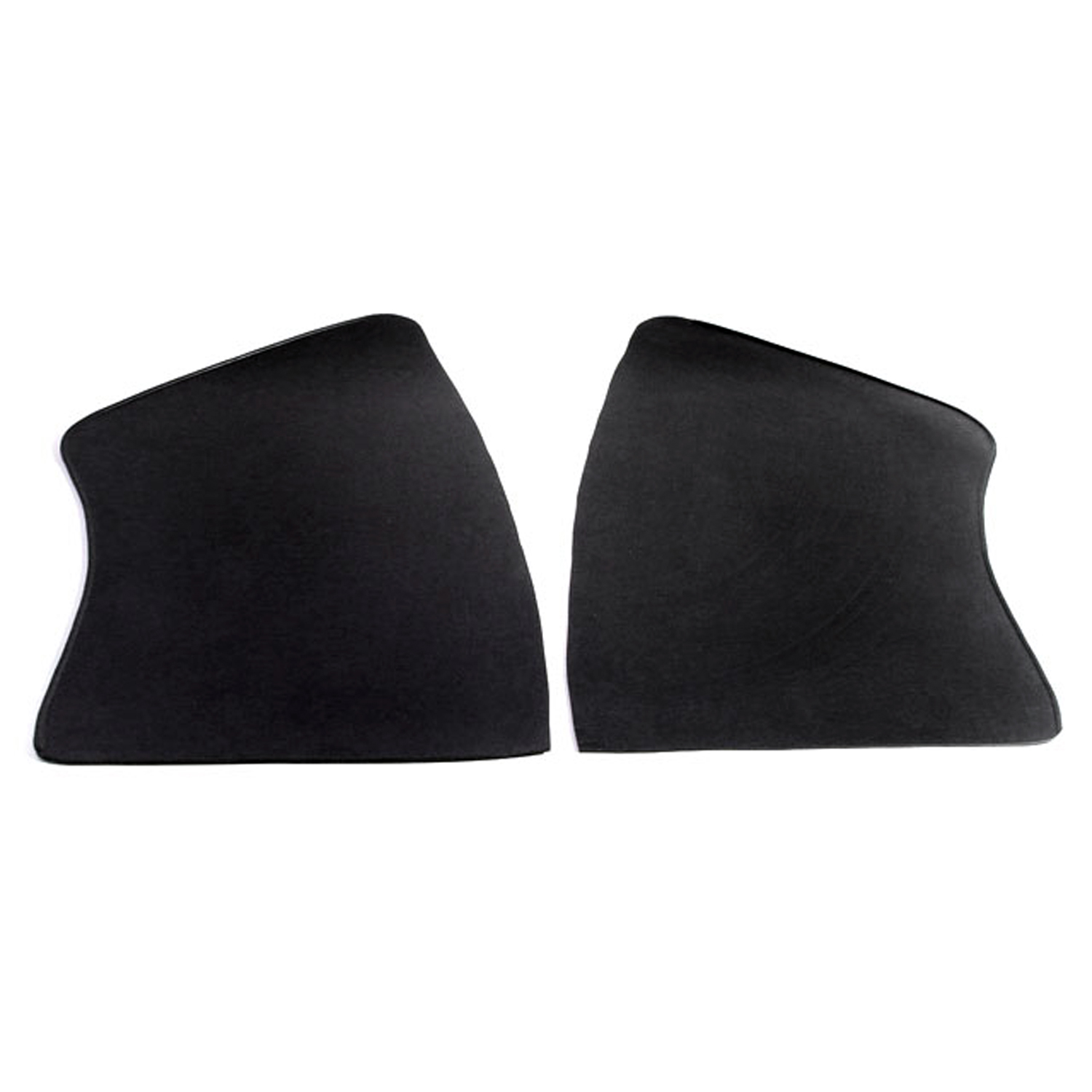 1930 DeSoto Model CK Gravel Shields. Molded flat without metal backing plates-FS 31Gravel Shields. Molded flat without metal backing plates. Apply with contact cement. 18" long X 9-3/4" wide at bottom. Pair
 1930 DeSoto Model CK Hood Corners. Fits flat corners-HC 19Hood Corners. Fits flat corners. 80° angle, 1/4" to 3/8" corner radius. 1-3/8" wide. Pair
 1930 DeSoto Model CK Windshield Post Bases. Pair R&L-MB 14Windshield Post Bases. Pair R&L
 1930 DeSoto Model CK Door Lock Pad. 1-3/8" O.D. Each-MP 551-CDoor Lock Pad. 1-3/8" O.D. Each
 1930 DeSoto Model CK Rumble Seat Step Plate Pad. Rubber face only. 4-1/4" O.D-SP 17Rumble Seat Step Plate Pad. Rubber face only. 4-1/4" O.D. Each
Why Choose Metro?
For over 100 years, Metro Moulded Parts has been the pinnacle of quality in classic car restoration parts. Our commitment to precision and authenticity in every component ensures a perfect fit and an OEM-level appearance.
- Expert Craftsmanship & Quality: Each part is a testament to our dedication to reliability and perfection, crafted from original designs and thoroughly tested.
- Advanced Technology: We use cutting-edge techniques to create flawless, long-lasting parts that surpass others in performance.
- SuperSoft Sponge – The Ultimate Door Seal: Not only are our door seals 30% softer than competitors', but they're also guaranteed to never leak. They effectively reduce wind and road noise, enhancing your classic car's comfort and driving experience.
- Proudly American: Our parts are a product of American craftsmanship, made in the USA with a spirit of excellence and heritage.
- Unrivaled Warranty: We back our products with a 30-year industry-leading warranty, a testament to our confidence in their quality.
Join us in preserving the legacy of classic cars with parts that are crafted for perfection, not just made.