

Image of 1933 Desoto Model Sd, Note: These illustrations use artistic license and may differ from actual historical models.
Performance Metrics
Fundamental Metrics
Emotional Appeal
MMP Rating
| Engine Specifications | |
|---|---|
| Engine: | Inline 6 |
| Displacement: | 3.3L |
| Horsepower: | Estimated 75-100 HP |
| Torque: | Information not available |
| Compression Ratio: | Information not available |
| Ignition System: | Distributor and coil |
| Cooling System: | Liquid-cooled |
| Performance Specifications | |
| 0-60 Time: | Information not available |
| 1/4 Mile Time: | Information not available |
| Top Speed: | 75 mph |
| Transmission and Drive | |
| Drive Type: | Rear-wheel drive |
| Transmission Type: | 3-speed manual |
| Fuel and Efficiency | |
| Fuel System Type: | Carburetor |
| MPG: | Information not available |
| Dimensions and Brakes | |
| Brakes: | Drum brakes |
| Wheelbase: | 112 inches |
| Weight: | Estimated 3000 lbs |
Note: Specifications for classic cars are given to the best of our ability, considering the limited and variant data available.
1933 DeSoto Model SD: A Six-Cylinder Classic from the Depression Era
With its tall chrome grille, sweeping fenders, and purposeful long hood, the 1933 DeSoto Model SD brought a touch of style and engineering confidence to a decade when many Americans were putting off buying a car. Built by the DeSoto division of the Chrysler Corporation, the SD was a mid-priced six-cylinder automobile aimed at drivers who wanted more room and refinement than a basic economy car could offer.
DeSoto had been created by Walter P. Chrysler in 1928 to fill the space between Plymouth and Chrysler in the company’s lineup. The Model SD arrived during the Great Depression, when automakers had to make every new feature count. One point worth clearing up: the SD was a conventional, front-engine DeSoto, not one of the radical Airflow cars introduced for 1934. Its more familiar layout made it an appealing choice for buyers who preferred established styling and straightforward mechanicals.
Under the hood was a 217.8-cubic-inch L-head inline-six, generally listed at about 82 horsepower. That combination of a smooth six-cylinder engine, roomy cabin, and substantial road presence made the SD a well-rounded car rather than a specialist machine.
Art Deco Lines and Comfortable Cabin
The Model SD wore the flowing, upright look of early-1930s American design. Its prominent vertical grille gave the front end a formal appearance, while rounded fenders softened the car’s long, boxy proportions. Headlamps sat high at the front, and the hood’s length emphasized the six-cylinder engine beneath it. Details varied with body style and trim, but brightwork and carefully shaped body panels gave the DeSoto a more polished look than a bare-bones transportation car.
Inside, the SD offered a generous cabin for its class. Upholstery materials and trim depended on the body and specification, with cloth or broadcloth commonly used in closed cars and more upscale finishes available on better-equipped versions. The dashboard placed its instruments in front of the driver, while the upright seating position and broad windows helped make the car feel open and practical. Compared with a modern interior, it was simple: the driver managed the controls directly, with no power steering, air conditioning, or electronic assistance.
Factory paint choices varied by body and production run. Period DeSotos could be ordered in a selection of subdued and richer colors, including shades such as dark blue, maroon, green, gray, and black. Deep, glossy colors suited the SD’s formal lines particularly well, although an exact original palette should be checked against factory literature for the specific body and build date.
The range included closed sedans and coupe-style bodies, with availability differing by configuration and equipment. Coupes offered a sportier profile, while four-door sedans emphasized passenger space and everyday usefulness. The sedan is the most recognizable practical version today, while the coupe tends to draw attention for its longer doors and more personal-car character.
Chrysler Engineering in a Familiar Package
The SD’s importance lies less in a single revolutionary feature than in how it combined established Chrysler engineering with a polished mid-priced car. DeSoto buyers got a six-cylinder engine, four-wheel hydraulic brakes, and substantial bodywork without stepping up to the more expensive Chrysler line. Hydraulic braking was already part of Chrysler’s engineering legacy by this point, and it gave the driver more consistent stopping power than older mechanical systems when properly maintained.
The Model SD also reflects a turning point in the industry. Automakers were experimenting with more streamlined bodies and new approaches to passenger comfort, but customers remained cautious in difficult economic times. DeSoto’s conventional layout offered a reassuring alternative just before the company made a bold styling statement with the Airflow. The SD is therefore a useful snapshot of the transition between the upright cars of the early 1930s and the more aerodynamic designs that followed.
1933 DeSoto SD Performance and Road Manners
The 217.8-cubic-inch flathead six delivered its power in a relaxed, steady fashion through a three-speed manual transmission. Period gearing, vehicle condition, and body style all affect real-world results, but a sound Model SD is generally estimated to reach about 70 to 75 mph. A 0-to-60-mph run would likely take roughly 25 to 30 seconds, if the car could comfortably manage it. These are modern estimates, not a promise of factory-tested performance for every surviving example.
On the road, the engine’s low, even note is more dignified than sporty. The driver shifts manually and feels the car’s mechanical character through the steering wheel, pedals, and gear lever. The SD’s suspension uses the traditional construction of its era, with solid axles and leaf springs. It can absorb ordinary road imperfections with a substantial, cushioned feel, but sharp bumps may produce more movement than a modern driver expects.
On winding roads, the DeSoto rewards a measured pace. Its steering is unassisted, its tires are narrow by current standards, and its body has noticeable lean in corners. The brakes require more anticipation than modern disc brakes, even when the hydraulic system is in good condition. In short, it is best driven with a smooth hand and generous following distance, not hustled through traffic like a contemporary sedan.
Living with a Model SD
Today, most Model SDs serve as show cars, touring vehicles, or prized additions to collections. A well-sorted example can handle local drives and vintage-car events, but regular commuting is rarely the goal. Its size, slower acceleration, period braking, and lack of modern safety equipment make it more enjoyable on quieter roads than in fast-moving traffic.
The basic mechanical layout is approachable for an owner with vintage-car experience. The inline-six is not hidden behind modern electronics, and many routine service tasks are straightforward. The bigger challenge is often locating correct parts, trim, glass, or body-specific components. Before buying, inspect the frame and body for rust, check the engine for oil pressure and overheating, and have the hydraulic brakes carefully evaluated. Age-related wiring and fuel-system issues also deserve attention.
Reliability depends heavily on maintenance and the quality of any restoration. A car that has been stored for years may need a full recommissioning even if it looks complete. Originality matters to collectors, but safe, sympathetic mechanical updates can make a DeSoto more dependable on the road.
Little-Known Facts and Common Complaints
The DeSoto name honors Hernando de Soto, the Spanish explorer. The brand itself was part of Chrysler’s effort to offer a distinct range of cars at several price points. The SD’s timing is another noteworthy detail: it represents DeSoto just before the company’s famous Airflow experiment, making it an interesting comparison point for anyone studying 1930s design.
There is no widely recognized land-speed record or headline-grabbing competition achievement associated with the Model SD, and no single celebrity ownership story defines the model. Its appeal is instead rooted in everyday American motoring during the Depression and in the craftsmanship of a surviving prewar car. Common criticisms are familiar for vehicles of its age: modest acceleration, heavy unassisted steering, long stopping distances by modern standards, and parts that can take time to find.
1933 DeSoto SD Values and Rarity
Exact production totals for individual SD body styles can be difficult to pin down from commonly available summaries. A reasonable working estimate is roughly 20,000 to 25,000 Model SD cars produced across the range, with far fewer surviving in roadworthy condition. That estimate should be treated as an informed approximation, not a verified body-by-body factory count. Sedans are generally easier to encounter than the more desirable or unusual body styles.
Collector values depend greatly on body style, originality, restoration quality, and documentation. As a broad present-day estimate, a project or driver-quality car might sell for around $10,000 to $20,000, while a well-restored sedan could bring roughly $20,000 to $40,000. A particularly attractive or uncommon coupe may reach about $35,000 to $60,000 or more. Exceptional cars can exceed those ranges, while incomplete projects may fall below them. These are general market estimates, not an appraisal of a specific vehicle.
Like many prewar classics, the SD’s value is supported by its age, style, and scarcity, but it is not as widely sought as the most famous luxury marques. Prices tend to favor the best-presented cars rather than every example equally. Condition and correct restoration work matter more than simply having an old DeSoto badge on the hood.
Why the 1933 DeSoto Model SD Still Matters
The 1933 DeSoto Model SD combined Chrysler engineering, useful six-cylinder performance, hydraulic brakes, and graceful Depression-era styling in a practical mid-priced package. It was neither a stripped-down economy car nor a high-priced luxury machine, but a capable family automobile built for drivers who wanted comfort and substance at a demanding moment in American history.
Today, the SD offers a rewarding view of prewar motoring before streamlining transformed the industry. Its appeal is not about speed or modern convenience. It is about the steady six-cylinder rhythm, the sweeping fenders, and the feeling of driving a thoughtfully engineered piece of the 1930s.
1933 Desoto Model Sd Catalog of Parts
 1933 DeSoto Model SD Clutch and Brake Pedal Pads. 2-1/4" wide X 3-5/8" long-CB 31Clutch and Brake Pedal Pads. 2-1/4" wide X 3-5/8" long. Pair
 1933 DeSoto Model SD Door Jamb Bumper. Perfect reproduction-DB 36Door Jamb Bumper. Perfect reproduction. 1-1/16" high X 1-1/4" wide X 7/16" thick. Each
 1933 DeSoto Model SD Gravel Shields. Molded flat without metal backing plates-FS 31Gravel Shields. Molded flat without metal backing plates. Apply with contact cement. 18" long X 9-3/4" wide at bottom. Pair
 1933 DeSoto Model SD Hood Corners. Fits flat corners-HC 19Hood Corners. Fits flat corners. 80° angle, 1/4" to 3/8" corner radius. 1-3/8" wide. Pair
 1933 DeSoto Model SD Roof Related Seal. Top insert filler & seal for closed cars-LP 110-RRoof Related Seal. Top insert filler & seal for closed cars. Fits in groove between cloth top-center panel & surrounding steel. Sold by the foot
 1933 DeSoto Model SD Door Lock Pad. 1-3/8" O.D. Each-MP 551-CDoor Lock Pad. 1-3/8" O.D. Each
 1933 DeSoto Model SD Headlight Pads. 2-3/8" wide X 4-1/2" long. Pair R&L-MP 663-MHeadlight Pads. 2-3/8" wide X 4-1/2" long. Pair R&L
 1933 DeSoto Model SD Tail-light Pads. 1-7/8" wide X 3-1/2" long. Pair-MP 663-TTail-light Pads. 1-7/8" wide X 3-1/2" long. Pair
 1933 DeSoto Model SD Cowl Vent Seal (fits some models). Made of open cell sponge-RP 100Cowl Vent Seal (fits some models). Made of open cell sponge. 2-1/2" X 16-1/4" O.D., 2" x 15-1/2" I.D. Each
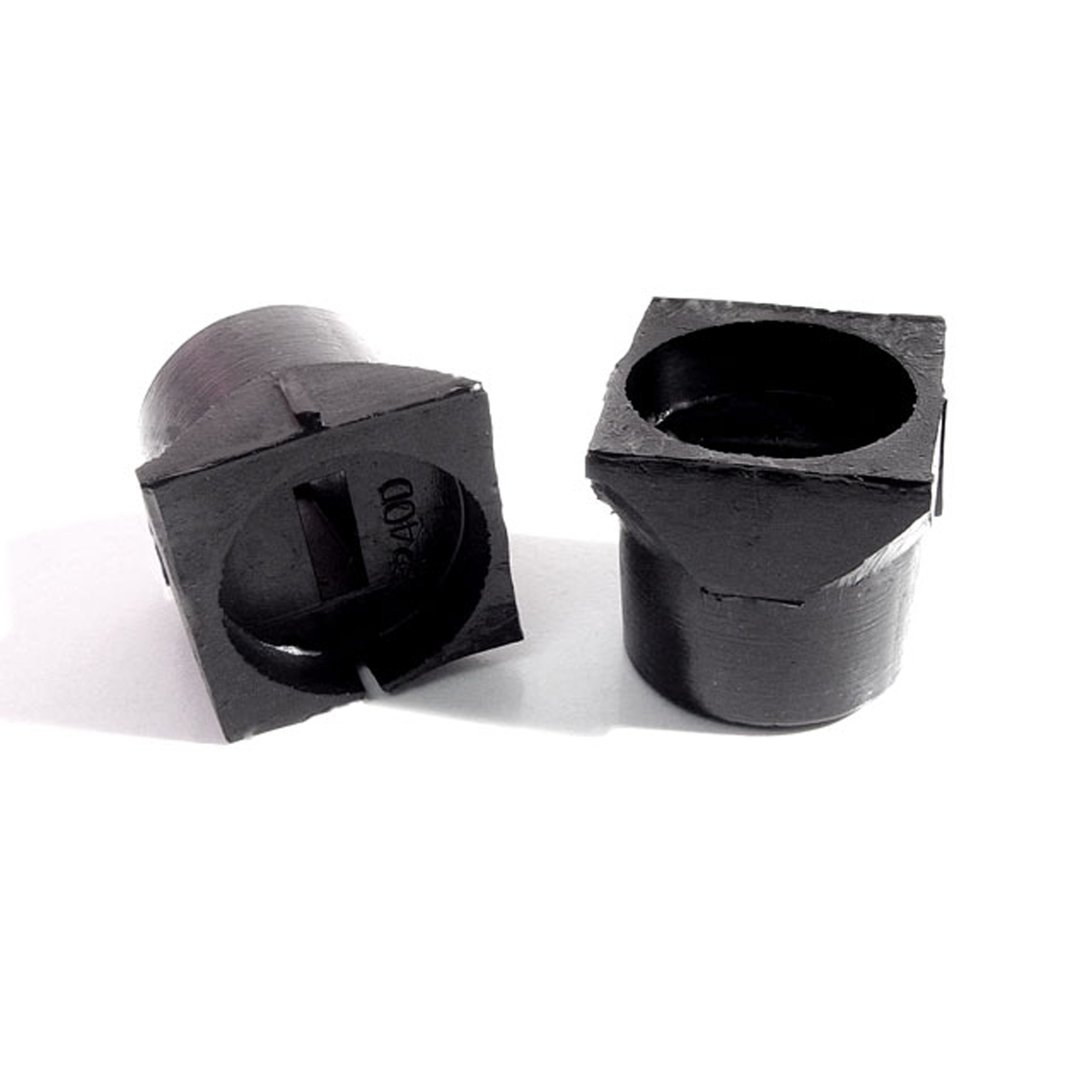 1933 DeSoto Model SD Door Check Rubber Cushion. Each-RP 40-DDoor Check Rubber Cushion. Each
 1933 DeSoto Model SD Door Bumper. 1" diameter X 1/4" thick Each-SB 60Door Bumper. 1" diameter X 1/4" thick Each
 1933 DeSoto Model SD Rumble Seat Step Plate Pad. Rubber face only. 4-1/4" O.D-SP 17Rumble Seat Step Plate Pad. Rubber face only. 4-1/4" O.D. Each
Why Choose Metro?
For over 100 years, Metro Moulded Parts has been the pinnacle of quality in classic car restoration parts. Our commitment to precision and authenticity in every component ensures a perfect fit and an OEM-level appearance.
- Expert Craftsmanship & Quality: Each part is a testament to our dedication to reliability and perfection, crafted from original designs and thoroughly tested.
- Advanced Technology: We use cutting-edge techniques to create flawless, long-lasting parts that surpass others in performance.
- SuperSoft Sponge – The Ultimate Door Seal: Not only are our door seals 30% softer than competitors', but they're also guaranteed to never leak. They effectively reduce wind and road noise, enhancing your classic car's comfort and driving experience.
- Proudly American: Our parts are a product of American craftsmanship, made in the USA with a spirit of excellence and heritage.
- Unrivaled Warranty: We back our products with a 30-year industry-leading warranty, a testament to our confidence in their quality.
Join us in preserving the legacy of classic cars with parts that are crafted for perfection, not just made.