
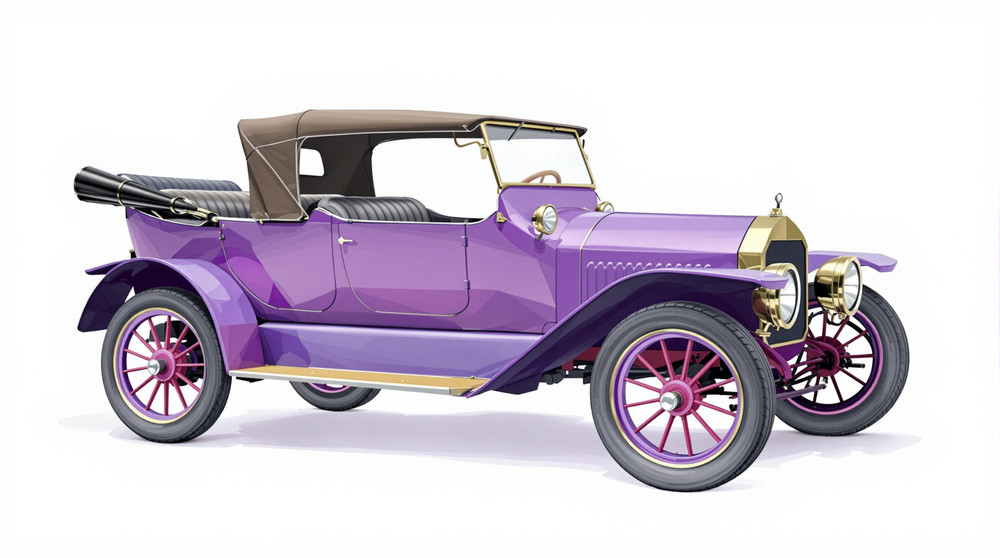
Image of 1910 Diamond T Model D, Note: These illustrations use artistic license and may differ from actual historical models.
Performance Metrics
Fundamental Metrics
Emotional Appeal
MMP Rating
| Engine Specifications | |
|---|---|
| Engine: | Single-cylinder engine |
| Displacement: | Estimated 2.0L |
| Horsepower: | Estimated 15-20 HP |
| Torque: | Not Available |
| Compression Ratio: | Not Available |
| Ignition System: | Magneto Ignition System |
| Cooling System: | Water-cooled |
| Performance Specifications | |
| 0-60 Time: | Not Available |
| 1/4 Mile Time: | Not Available |
| Top Speed: | Estimated 20-25 mph |
| Transmission and Drive | |
| Drive Type: | Rear-wheel drive |
| Transmission Type: | Manual |
| Fuel and Efficiency | |
| Fuel System Type: | Carburetor |
| MPG: | Not Available |
| Dimensions and Brakes | |
| Brakes: | Drum brakes |
| Wheelbase: | Estimated 100 inches |
| Weight: | Estimated 1500 lbs |
Note: Specifications for classic cars are given to the best of our ability, considering the limited and variant data available.
1910 Diamond T Model D: The Brass-Era Car Behind a Trucking Legend
Before Diamond T became famous for stout commercial trucks, it built passenger cars, and the 1910 Model D belongs to that little-known first chapter. It was a substantial early automobile from a young Chicago manufacturer, created when motoring was still a hands-on adventure and roads were often rough, dusty tracks rather than paved highways.
Diamond T was founded in Chicago in 1905 by Charles A. Tilt. The company name came from the diamond-shaped emblem surrounding the letter T, a mark that would later become familiar on its trucks. The Model D came from the firm’s brief passenger-car era, before customer demand and business opportunity led Diamond T toward truck production. The company introduced its first truck in 1911 and eventually left passenger cars behind.
One intriguing detail is how easily the Model D can be overlooked in Diamond T’s history. The marque’s reputation was built largely on trucks, so surviving information about its early cars is comparatively sparse. That scarcity is part of the Model D’s appeal, but it also means some specifications and equipment details need to be treated as period estimates rather than firmly documented facts.
Brass-Era Styling and Craftsmanship
The Model D’s appearance reflected the confident, upright look of a prewar touring car. Its tall stance, narrow tires, exposed chassis components and large spoked wheels gave it a distinctly mechanical presence. A prominent radiator sat at the front, while brass fittings and lamps added bright accents. Long, gently curved fenders followed the wheel arches, and the open passenger compartment made the car look ready for a country outing rather than a quiet trip around town.
As with many cars of the era, the cabin was practical and comparatively simple. The open body typically used wood framing beneath its exterior panels, with leather or leather-like upholstery on the seating. A broad bench seat, basic controls and an upright driving position put function ahead of comfort. There was little in the way of weather protection by modern standards. A folding top and side curtains could help in poor weather, but they offered nothing like the insulation or sealing of a later enclosed sedan.
Period cars were often offered in a range of dark, formal finishes, with black, deep green, maroon and other muted shades common across the market. Exact Model D color records are difficult to establish, so those should be understood as typical possibilities for the period, not a guaranteed factory palette. Black would have been a familiar, practical choice, while darker colors suited the brass hardware and polished trim.
The Model D is most closely associated with the open touring-car format that defined early family motoring. Touring bodies offered room for several passengers and made the car useful for recreation as well as transportation. Early manufacturers often accommodated customer preferences through equipment and trim choices, but surviving documentation does not support a definitive Model D body-style or option list. The open tourer remains the most recognizable form for a car of this type.
Early Automotive Technology
By 1910, the automobile had moved well beyond the earliest experiments, but driving still demanded mechanical sympathy. The Model D used a gasoline engine with period-style controls and a conventional chassis layout. Accounts of early Diamond T cars commonly associate the Model D with a four-cylinder engine and a rating in the neighborhood of 30 horsepower, though exact specifications should be checked against the individual car’s surviving records and components.
Its technology was notable less for a single breakthrough than for making a usable motorcar available during a fast-changing period. The engine, transmission, steering and braking systems were all direct and mechanical. Drivers had to monitor the car closely, manage gears deliberately and plan stops well ahead. Compared with horse-drawn transportation, however, the Model D offered a new level of independent travel and a glimpse of the mass motoring age to come.
Why the Model D Matters
The Model D represents an important transition in Diamond T’s story. It shows that the company did not begin as a truck-only builder. Its passenger cars helped establish the engineering and manufacturing experience that the firm would later apply to commercial vehicles. Diamond T’s eventual focus on trucks was a business decision shaped by the growing need to move goods by road, not evidence that the company had always made only trucks.
In the wider automotive landscape, the Model D was part of a crowded field of early American cars competing on durability, practicality and dealer support. It did not leave behind a single widely recognized design innovation comparable to later landmark technologies. Its significance is instead tied to the evolution of the Diamond T marque and to the broader shift from locally built passenger cars toward specialized commercial vehicles.
That change gives the Model D a distinct place among brass-era vehicles. It links the open touring cars of the 1900s with the durable work trucks that would define Diamond T for decades. For marque historians, it is a rare reminder of the company’s original direction.
Performance on Early Roads
Precise performance figures for a 1910 Model D are not consistently documented. If equipped with the commonly cited four-cylinder engine rated at roughly 30 horsepower, a reasonable period-appropriate expectation would be a top speed somewhere around 40 to 50 mph under favorable conditions. Actual speed would depend on the car’s gearing, mechanical condition, tire size, load and road surface. A well-used example might be happiest cruising considerably slower.
A modern 0-to-60-mph figure is not especially meaningful for this car. There is no dependable Model D acceleration test to quote, and 60 mph was not a sensible everyday target for many cars of this class. Depending on gearing and condition, the car may not reach 60 mph at all. Even if a particular example could approach that speed, its brakes, tires and handling would make such a run a poor measure of real-world performance.
On a smooth road, the Model D would feel deliberate and mechanical. Its narrow tires and solid period chassis transmitted bumps directly to the occupants, while ruts and loose surfaces called for a light, attentive hand at the steering wheel. On winding roads, the driver would need to slow early and avoid abrupt inputs. High ground clearance helped on uneven routes, but it did not make the car nimble by modern standards.
The engine would likely produce a measured, rhythmic exhaust note rather than the subdued sound of a modern car. The driver would feel the machinery through the pedals, steering and seat, and would have to coordinate each gear change with care. A Model D is best understood as an early touring machine: engaging at moderate speeds, but demanding patience and attention.
Living With a Model D
Today, a 1910 Diamond T Model D is primarily a preservation, show and touring vehicle. It is not a practical daily driver. Owners may take a properly maintained example to antique-car events or on short, carefully planned runs, but modern traffic, high-speed roads and inclement weather are not its natural habitat.
Maintenance is hands-on. The ignition, fuel delivery, lubrication, cooling system, brakes and chassis need regular inspection, and period materials can require careful adjustment. The mechanical systems are comparatively straightforward, but that does not make every repair easy. Parts may be difficult to source, and some components may require specialist fabrication or restoration. An owner with mechanical experience can handle routine work, while major engine or body repairs are best left to a shop familiar with brass-era cars.
Reliability depends heavily on restoration quality and use. A correctly rebuilt and carefully maintained Model D can be dependable for appropriate touring, but age, limited parts availability and the realities of early-car design demand preparation. Before a drive, an owner should check fluids, tires, fasteners, fuel lines and braking components, then carry basic tools and a plan for roadside trouble.
Rare Details and Common Criticisms
The most notable trivia is that the Model D belongs to a passenger-car chapter that many people do not associate with Diamond T. The company’s later commercial vehicles became its signature products, making its early automobile output especially interesting to collectors of American automotive history.
No widely recognized Model D speed, sales or endurance record is firmly associated with the car, and claims of celebrity ownership or a famous historical-event appearance should be treated cautiously unless supported by documentation. Its rarity is a more defensible point of interest than an unverified record or anecdote.
Common criticisms are familiar to owners of brass-era cars: limited speed, modest braking, weather exposure, a demanding driving routine and a ride that can feel harsh on poor roads. The controls also require more attention than those of a later vintage car. These are not flaws by modern engineering standards so much as reminders of how early motoring worked.
Collector Value and Availability
The Model D is exceptionally scarce in the current collector market, and public sale records are too limited to establish a firm benchmark. A reasonable working estimate is that only a small number survive, possibly just a handful of documented examples. The original production total is also difficult to verify. Given Diamond T’s short passenger-car period and its small scale compared with major manufacturers, an educated guess would put Model D production in the dozens to low hundreds, not thousands. This is an estimate, not a confirmed factory figure.
For a collector considering value, condition and provenance matter enormously. A project car with incomplete components might fall around $15,000 to $30,000, while a running, presentable example could plausibly bring roughly $30,000 to $75,000. A highly authentic, professionally restored car with strong documentation could exceed $100,000, particularly if two serious marque collectors compete for it. These are broad estimates, not a substitute for a specialist appraisal or a recent comparable sale.
Because so few examples change hands, price trends are difficult to measure. The Model D is more likely to hold or gradually gain value as a rare early Diamond T than to follow the broader market for common brass-era cars. However, restoration costs can exceed the car’s resale value, and rarity alone does not guarantee a quick sale. Its strongest market is among collectors who value early American motoring and Diamond T history.
A Small Car With a Big Place in Diamond T History
The 1910 Diamond T Model D combines the open-air character of brass-era motoring with a surprising connection to one of America’s best-known truck makers. Its upright touring-car design, hands-on mechanical character and limited production make it a fascinating contrast to the rugged commercial vehicles that later defined the marque.
For collectors, the Model D is not simply an old car. It is a rare survivor from the moment before Diamond T turned decisively toward trucks, and a reminder that the road to a famous automotive legacy can begin with a very different kind of vehicle.
1910 Diamond T Model D Catalog of Parts
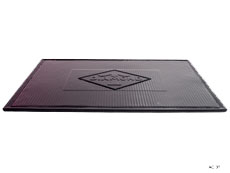 1910 DIAMOND T MODEL D Accessory Floor Mat - 12"X17" -AC 37Accessory Floor Mat - made of high quality black rubber with molded original emblem. Also designed to be sewn into new carpets. 12"X17", Each
Why Choose Metro?
For over 100 years, Metro Moulded Parts has been the pinnacle of quality in classic car restoration parts. Our commitment to precision and authenticity in every component ensures a perfect fit and an OEM-level appearance.
- Expert Craftsmanship & Quality: Each part is a testament to our dedication to reliability and perfection, crafted from original designs and thoroughly tested.
- Advanced Technology: We use cutting-edge techniques to create flawless, long-lasting parts that surpass others in performance.
- SuperSoft Sponge – The Ultimate Door Seal: Not only are our door seals 30% softer than competitors', but they're also guaranteed to never leak. They effectively reduce wind and road noise, enhancing your classic car's comfort and driving experience.
- Proudly American: Our parts are a product of American craftsmanship, made in the USA with a spirit of excellence and heritage.
- Unrivaled Warranty: We back our products with a 30-year industry-leading warranty, a testament to our confidence in their quality.
Join us in preserving the legacy of classic cars with parts that are crafted for perfection, not just made.