
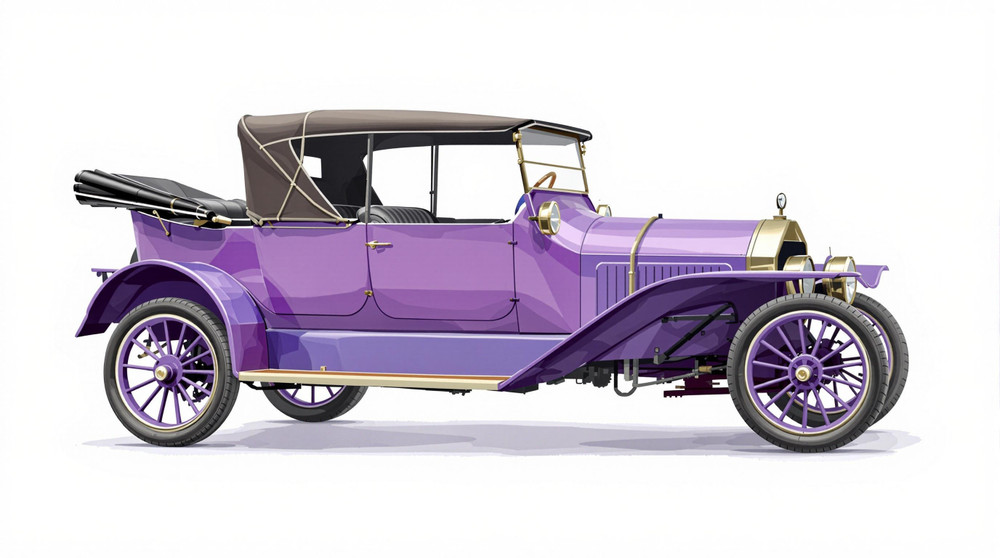
Image of 1910 Diamond T Model E, Note: These illustrations use artistic license and may differ from actual historical models.
Performance Metrics
Fundamental Metrics
Emotional Appeal
MMP Rating
| Engine Specifications | |
|---|---|
| Engine Options | Single-cylinder gasoline engine |
| Displacement Range | 2.0L |
| Horsepower Range | 10-20 HP |
| Torque | Unknown |
| Compression Ratio | Unknown |
| Ignition System | Magneto ignition |
| Cooling System | Water-cooled |
| Performance Specifications | |
| 0-60 Time | Not applicable |
| 1/4 Mile Time | Not applicable |
| Top Speed | 20-25 mph |
| Transmission and Drive | |
| Drive Type | Rear-wheel drive |
| Transmission Type | Manual |
| Fuel and Efficiency | |
| Fuel System Type | Carburetor |
| MPG | Unknown |
| Dimensions and Brakes | |
| Brakes | Drum brakes |
| Wheelbase | 100 inches |
| Weight | 1500 lbs |
Note: Specifications for classic cars are given to the best of our ability, considering the limited and variant data available.
1910 Diamond T Model E: A Rare Chicago-Built Motorcar
Before Diamond T became a familiar name on heavy-duty American trucks, it built automobiles. The 1910 Model E belongs to that brief, intriguing chapter: an early motorcar from a company that would later earn its reputation hauling freight rather than carrying passengers.
Diamond T was founded in Chicago in 1905 by Charles A. Tilt. The company began as an automobile manufacturer, building cars for buyers who wanted more than basic transportation. Around 1911, it turned toward truck production, a shift that eventually made Diamond T one of America’s best-known commercial vehicle brands. The Model E is therefore a notable link between the company’s luxury-car beginnings and its truck-building future.
Records for early Diamond T passenger cars are limited, and surviving Model E examples are exceptionally scarce. That scarcity makes the car fascinating, but it also means some details, especially production totals, body configurations, and exact performance figures, are not as firmly documented as those of better-known mass-produced automobiles.
Model E Design and Craftsmanship
The Model E belonged to an era when automobiles still looked like horse-drawn carriages learning to travel under their own power. Its tall stance, narrow tires, upright seating, and exposed mechanical parts would have given it a purposeful, open-air appearance. Large lamps and running boards were practical necessities, while the high body and prominent wheels made the car look substantial on the road.
Open touring-car coachwork is the most representative style for an automobile of this period. It offered seating for several passengers and made the car suitable for country outings as well as city travel. Period manufacturers often offered variations such as roadster or touring configurations, but surviving documentation does not establish a definitive list of Model E body styles. Buyers could also encounter differences in seating, trim, and equipment depending on the coachwork and how the individual car was ordered.
Inside, the experience would have been tactile rather than luxurious by modern standards. Leather upholstery, exposed or polished wood, metal fittings, and simple controls were typical materials and finishes for a well-appointed car of the period. The cabin was open to dust, wind, and weather, and passengers dressed accordingly. There is no reliably documented Model E color chart. Dark paint, including black and deep, restrained shades, was common across the industry, but an individual car’s finish depended on its order and restoration history.
Its technology was advanced for its day in the most important sense: it was a powered road vehicle designed for independent travel. Like other early automobiles, it relied on mechanical controls and relatively simple onboard systems rather than the electrical conveniences, weather protection, and safety equipment drivers now expect. Exact Model E specifications should be checked against the specific car’s surviving components and records, since early examples could be modified during decades of use.
Why the Diamond T Model E Matters
The Model E’s importance comes partly from what Diamond T became. The company’s eventual move from passenger cars to trucks illustrates how quickly the American automobile industry was changing. As commercial transport expanded, a manufacturer with engineering and production experience could find a larger opportunity in vehicles built to work hard every day.
Unlike mass-market cars built in enormous numbers, a Diamond T automobile represented a more specialized approach to motoring. It belonged to a period when many manufacturers were experimenting with mechanical layouts, production methods, and the best way to make a motorcar useful. Its lasting significance is less about a single breakthrough and more about preserving the early history of a company later associated with robust commercial vehicles.
Performance and Driving Feel
Reliable, model-specific factory test figures for the 1910 Model E are difficult to establish. A precise top speed or 0-to-60-mph time should therefore be treated with caution, especially for a surviving car that may have different gearing, tires, or engine components from when it left the factory. Based on the capabilities of comparable early automobiles, a healthy Model E might manage roughly 40 to 50 mph in favorable conditions. Reaching 60 mph would not have been a realistic everyday expectation, and a meaningful 0-to-60 time is unlikely to have been published or measured in the modern sense.
Acceleration would have been gradual. The driver had to manage the engine and transmission with far more involvement than in a modern car, and speed was built up rather than summoned with a quick press of the throttle. Steering, braking, and gear changes demanded attention, while narrow tires and a relatively high center of gravity encouraged measured driving.
On rough roads, the Model E’s tall wheels and period suspension could cope with surfaces that would challenge a modern low-slung car, but the ride was still affected by ruts, loose gravel, and uneven pavement. Windy roads called for patience and careful steering. The open cabin meant the driver felt the weather directly, and engine noise, tire noise, and mechanical vibration were all part of the trip. This is a car to experience at a deliberate pace, not to hustle through corners or treat like a modern touring machine.
Owning and Maintaining an Early Diamond T
A Model E today is best suited to a museum, a specialist collection, or carefully planned vintage motoring events. It is not a practical daily driver. Its strongest appeal is the chance to experience the early automobile age and to show a rare chapter of Diamond T history that is often overshadowed by the company’s trucks.
Maintenance requires period-car knowledge and access to specialist parts or skilled machinists. Many components are mechanical and can be understood without modern diagnostic equipment, but that does not make repairs simple. Original parts may be scarce, and replacement components may need to be fabricated or adapted. Regular inspection of the engine, fuel and ignition systems, steering, tires, and brakes is essential before any road use.
Reliability depends heavily on the individual car’s condition and restoration quality. An expertly maintained example can participate in appropriate events, but owners should expect frequent checks and should plan routes around the car’s modest speed and braking ability. For an average owner without vintage-car experience, a knowledgeable mechanic or club network is a major advantage.
Rare Facts and Common Misconceptions
One of the most interesting facts about the Model E is its place in Diamond T’s timeline. The company began by making automobiles and then moved into trucks around 1911. The trucks became the lasting business, leaving the passenger cars as rare reminders of the company’s earlier ambitions.
No widely recognized speed record, endurance record, or celebrity ownership story is firmly associated with the Model E. Nor is there a well-established production total for the model. Claims of a specific number should be treated carefully unless supported by factory records or a credible marque historian. A reasonable estimate is that production may have numbered somewhere from several dozen to a few hundred cars, but that is an informed guess, not a verified figure.
A common criticism of cars from this era applies here: they offer little comfort or protection by modern standards. Braking distances, weather exposure, slow acceleration, and the physical effort required to drive are all part of the bargain. Those limitations are also what make an authentic early-car experience so different from simply driving a newer classic.
Collector Value and Availability
The 1910 Diamond T Model E is likely to be difficult to find on the open market. With few known examples and limited public sales data, value depends on the car’s authenticity, completeness, running condition, restoration quality, and documentation. A rough, incomplete project could be worth substantially less than a restored and well-documented survivor.
As a broad estimate rather than a formal appraisal, a project or incomplete example might fall around $50,000 to $100,000, while a strong, running restoration could plausibly reach about $100,000 to $200,000 or more. An exceptional, highly original car with clear provenance could command a premium, though there are too few comparable sales to establish a dependable price guide.
Early automobiles as a category have a limited buyer pool, but genuine rarity and historical importance can support long-term collector interest. Values are therefore best described as condition-sensitive and potentially steady to appreciating for exceptional examples, rather than predictably rising year after year. Restoration costs can exceed market value, so buyers should prioritize documentation and mechanical assessment over optimism about future prices.
The Model E’s Lasting Appeal
The 1910 Diamond T Model E is a rare American motorcar from the formative years of the automobile industry. Its open, carriage-like design, hands-on driving character, and uncertain production history make it a compelling collector vehicle, while its connection to Diamond T’s later truck legacy gives it added historical depth.
It is not fast, comfortable, or easy to maintain by modern standards. Its value lies elsewhere: in the sounds, skills, and sensations of motoring before the automobile became ordinary. The Model E is a small but memorable piece of Diamond T history, built when the company was still deciding what it would become.
1910 Diamond T Model E Catalog of Parts
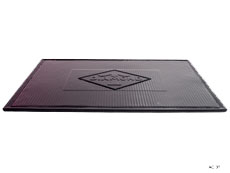 1910 DIAMOND T MODEL E Accessory Floor Mat - 12"X17" -AC 37Accessory Floor Mat - made of high quality black rubber with molded original emblem. Also designed to be sewn into new carpets. 12"X17", Each
Why Choose Metro?
For over 100 years, Metro Moulded Parts has been the pinnacle of quality in classic car restoration parts. Our commitment to precision and authenticity in every component ensures a perfect fit and an OEM-level appearance.
- Expert Craftsmanship & Quality: Each part is a testament to our dedication to reliability and perfection, crafted from original designs and thoroughly tested.
- Advanced Technology: We use cutting-edge techniques to create flawless, long-lasting parts that surpass others in performance.
- SuperSoft Sponge – The Ultimate Door Seal: Not only are our door seals 30% softer than competitors', but they're also guaranteed to never leak. They effectively reduce wind and road noise, enhancing your classic car's comfort and driving experience.
- Proudly American: Our parts are a product of American craftsmanship, made in the USA with a spirit of excellence and heritage.
- Unrivaled Warranty: We back our products with a 30-year industry-leading warranty, a testament to our confidence in their quality.
Join us in preserving the legacy of classic cars with parts that are crafted for perfection, not just made.