

Image of 1916 Dodge Model 30-35, Note: These illustrations use artistic license and may differ from actual historical models.
Performance Metrics
Fundamental Metrics
Emotional Appeal
MMP Rating
| Engine Specifications | |
|---|---|
| Engine: | Inline-4 |
| Displacement: | 212 cubic inches |
| Horsepower: | Estimated 35 horsepower |
| Torque: | Not available |
| Compression Ratio: | Not available |
| Ignition System: | Magneto |
| Cooling System: | Water-cooled |
| Performance Specifications | |
| 0-60 Time: | Not available |
| 1/4 Mile Time: | Not available |
| Top Speed: | 50 mph |
| Transmission and Drive | |
| Drive Type: | Rear-wheel drive |
| Transmission Type: | 3-speed manual |
| Fuel and Efficiency | |
| Fuel System Type: | Carburetor |
| MPG: | Not available |
| Dimensions and Brakes | |
| Brakes: | Mechanical drum brakes |
| Wheelbase: | 114 inches |
| Weight: | 2,400 lbs |
Note: Specifications for classic cars are given to the best of our ability, considering the limited and variant data available.
1916 Dodge Model 30-35: A Sturdy Start for Dodge
The 1916 Dodge Model 30-35 was built for motorists who wanted more than the bare essentials: it paired a stout four-cylinder engine with practical features and a reputation for durability. Made by Dodge Brothers Company in Hamtramck, Michigan, it belonged to the first generation of cars produced under the Dodge name, after brothers John and Horace Dodge had spent years supplying components to other manufacturers, including Ford.
The Model 30-35’s name points to its place in Dodge’s early model range and its commonly quoted 35-horsepower rating. The car helped establish Dodge as a serious independent automaker at a time when the Model T dominated the market. One intriguing piece of its backstory is that the Dodge brothers were already experienced automotive suppliers before they built their own car. Their first Dodge arrived in 1914, and it quickly earned attention for its substantial construction and equipment.
Touring-Car Style and Practical Equipment
The Model 30-35 had the upright, purposeful appearance typical of a prewar automobile. Its tall radiator and hood formed a long, squared-off front end, while exposed headlamps, narrow tires, running boards, and separate fenders gave it a distinctly mechanical profile. On a touring model, the open passenger compartment and folding fabric top made the car look ready for a long country road, though passengers had little protection from dust, cold, or rain by modern standards.
Interiors were functional rather than luxurious. Depending on body style and equipment, occupants could find leather or leather-like upholstery, a simple dashboard, basic instruments, and wood trim or structural wood components. Materials and finish varied, so surviving cars may differ from one another, especially after decades of repairs and restoration. The controls were straightforward but demanded attention: the driver worked a manual gear lever, clutch, brake, and throttle without the conveniences of power assistance.
Electric lighting and an electric starter were notable features for a car of this era, helping distinguish Dodge from many vehicles that still relied heavily on hand cranking and acetylene or oil lamps. The Model 30-35 also used a conventional front-engine, rear-wheel-drive layout and a three-speed manual transmission. These were not exotic innovations, but Dodge’s combination of familiar mechanical design and substantial equipment made the car appealing to buyers seeking a usable automobile.
Body styles offered across the early Dodge range included open touring cars and roadsters, as well as more enclosed or commercial configurations depending on year and catalog. The five-passenger touring car is among the most recognizable surviving forms. Its open layout suited the period’s roads and travel habits, and it remains a popular choice among collectors because it shows off the car’s classic proportions.
Paint availability depended on model year, body, and factory specification. Dark, restrained colors such as blue, green, gray, or black are often associated with early cars, but it is best not to assume every 1916 Dodge left the factory in one standard shade. Repaints are common, and restoration color choices should be checked against period documentation where possible.
Why the Model 30-35 Mattered
The Dodge Model 30-35 helped establish the brand’s early identity: sturdy engineering, useful equipment, and a car built to withstand regular use. It offered buyers an alternative to the lower-cost, highly standardized Model T. Dodge cars generally occupied a more substantial position in the market, with a reputation for solid construction that appealed to customers who valued durability as much as purchase price.
Its historical importance is less about one revolutionary feature than the way it helped turn an experienced parts supplier into a major automaker. The Dodge brothers understood manufacturing and component quality before launching their own vehicles, and that background shaped the company’s early reputation. The Model 30-35 also represents a bridge between the hand-built character of early motoring and the larger-scale automobile industry that was rapidly taking shape.
Dodge’s growth continued through the First World War, when automobiles and trucks became increasingly important to military and civilian transport. Dodge vehicles were associated with wartime service, though a particular surviving Model 30-35 should not be presumed to have a military history without documentation. After the brothers’ deaths in 1920, the company continued under new leadership and was eventually acquired by Chrysler in 1928.
35 Horsepower on Early Roads
The Model 30-35 used a four-cylinder, side-valve engine of roughly 212 cubic inches, commonly rated at about 35 horsepower. Exact specifications can vary with the source and the way period ratings were calculated. A healthy, correctly tuned example could reach approximately 45 to 50 mph under favorable conditions. That was brisk for the period, but modern traffic and braking distances make those speeds unsuitable for many roads today.
A precise 0-to-60-mph figure is not generally available, and many examples would struggle to reach 60 mph at all. Acceleration was leisurely by modern standards, particularly with passengers aboard or on a grade. The car rewarded smooth, deliberate driving rather than quick bursts of speed. Its three-speed transmission required the driver to coordinate the clutch and gear changes, while braking and steering demanded more physical effort than a modern driver might expect.
On a smooth road, the Dodge feels direct and mechanical. The engine produces a steady, low-frequency rumble, accompanied by the sounds of gears, tires, and the open air. On rough surfaces, its tall tires and period suspension absorb some irregularities, but the body can bounce and sway over potholes or washboard roads. Narrow tires and relatively high ground clearance suit gentle country routes better than sharp, fast cornering. On a windy road, careful steering and moderate speed are essential.
Driving one is an involving experience. The driver sits upright, monitors the simple instruments, and listens closely to the engine. Starting, shifting, braking, and turning all require more forethought than in a modern car. That hands-on character is part of the Model 30-35’s charm, but it also means the car is best enjoyed at a measured pace.
Living with a 1916 Dodge
Today, the Model 30-35 is most often used as a collector car for touring events, local shows, parades, and historical demonstrations. It can be driven, but it is not a practical daily driver in the modern sense. Open body styles offer a memorable motoring experience on fair-weather outings, while enclosed examples provide more shelter but remain unmistakably vintage in their comfort and safety.
Maintenance is manageable for an owner with mechanical interest, basic tools, and access to specialist advice. The car’s straightforward engine and drivetrain are less complicated than those of a modern vehicle, and many routine jobs can be done without diagnostic electronics. However, age changes the equation: worn bearings, deteriorated wiring, tired wood, incorrect replacement parts, and decades of amateur repairs can turn a simple service into a larger project. Parts support exists through antique-car suppliers and enthusiast networks, but some components may require rebuilding or careful searching.
Reliability depends heavily on condition and preparation. A well-restored Dodge with a sound cooling system, properly adjusted ignition, good tires, and dependable brakes can be enjoyable on suitable routes. A neglected example should not be assumed roadworthy simply because its engine starts. Before driving, an owner should inspect the brakes, steering, fuel system, tires, and structural wood or body supports.
Early Dodge Facts and Common Complaints
The Dodge brothers’ experience as suppliers helped them enter the automobile business with a clear understanding of manufacturing. Their first car appeared in 1914, and the company grew rapidly during the Model 30’s early years. Estimates for total Dodge Brothers production in 1916 are often placed around 70,000 vehicles across the company’s range, but that figure should not be mistaken for a verified Model 30-35-only production total. A precise count for this specific model and body style is difficult to establish.
There is no widely recognized Model 30-35 speed or endurance record that defines the car’s legacy. Its distinction is its role in building Dodge’s reputation and its survival as a representative early American automobile. Individual cars may have notable ownership or touring histories, but such claims are best supported with registration records, photographs, or other documentation rather than repeated as fact without evidence.
Common criticisms are predictable for a car more than a century old: limited speed, modest braking, open-air exposure, and controls that require practice. Replacement parts and authentic restoration details can also be challenging. For some buyers, the car’s age and maintenance needs outweigh its charm. For others, those same mechanical demands are part of the appeal.
Collector Values and Availability
Values vary widely with body style, originality, restoration quality, mechanical condition, and provenance. As a broad estimate in the current collector market, a project car might sell for roughly $8,000 to $18,000. A usable, presentable example may fall around $18,000 to $35,000, while a high-quality restoration or unusually well-documented car could reach approximately $35,000 to $60,000 or more. These are general ranges, not appraisals, and local market conditions can shift the result substantially.
The Model 30-35 is uncommon compared with later mass-produced classics, but it is not impossible to find through antique-car dealers, auctions, club networks, and private sales. Survivorship is difficult to quantify, and no reliable count of existing examples is available. Touring cars tend to be more familiar in the collector market than unusual body styles, while originality and documented history can make a particular car stand out.
Prices for early automobiles have generally been uneven. Well-restored, usable examples can attract committed buyers, but the market is narrower than for more familiar postwar classics. In inflation-adjusted terms, many early cars have not risen as strongly as the most popular collectible models. Condition, authenticity, and the availability of a buyer who values prewar motoring matter more than broad claims that every antique car is appreciating.
A Durable First Chapter for Dodge
The 1916 Dodge Model 30-35 combines the open-road character of early motoring with the sturdy engineering that helped establish Dodge Brothers as a major manufacturer. Its four-cylinder power, electric starting and lighting, and straightforward mechanical layout made it a serious automobile in its day, while its touring-car form remains instantly evocative today.
It is not a fast or effortless classic, and it asks its driver to participate in every part of the journey. That is precisely why the Model 30-35 remains compelling: it is more than an old car to admire. It is a rolling reminder of the moment Dodge transformed manufacturing experience into a lasting automotive name.
1916 Dodge Model 30-35 Catalog of Parts
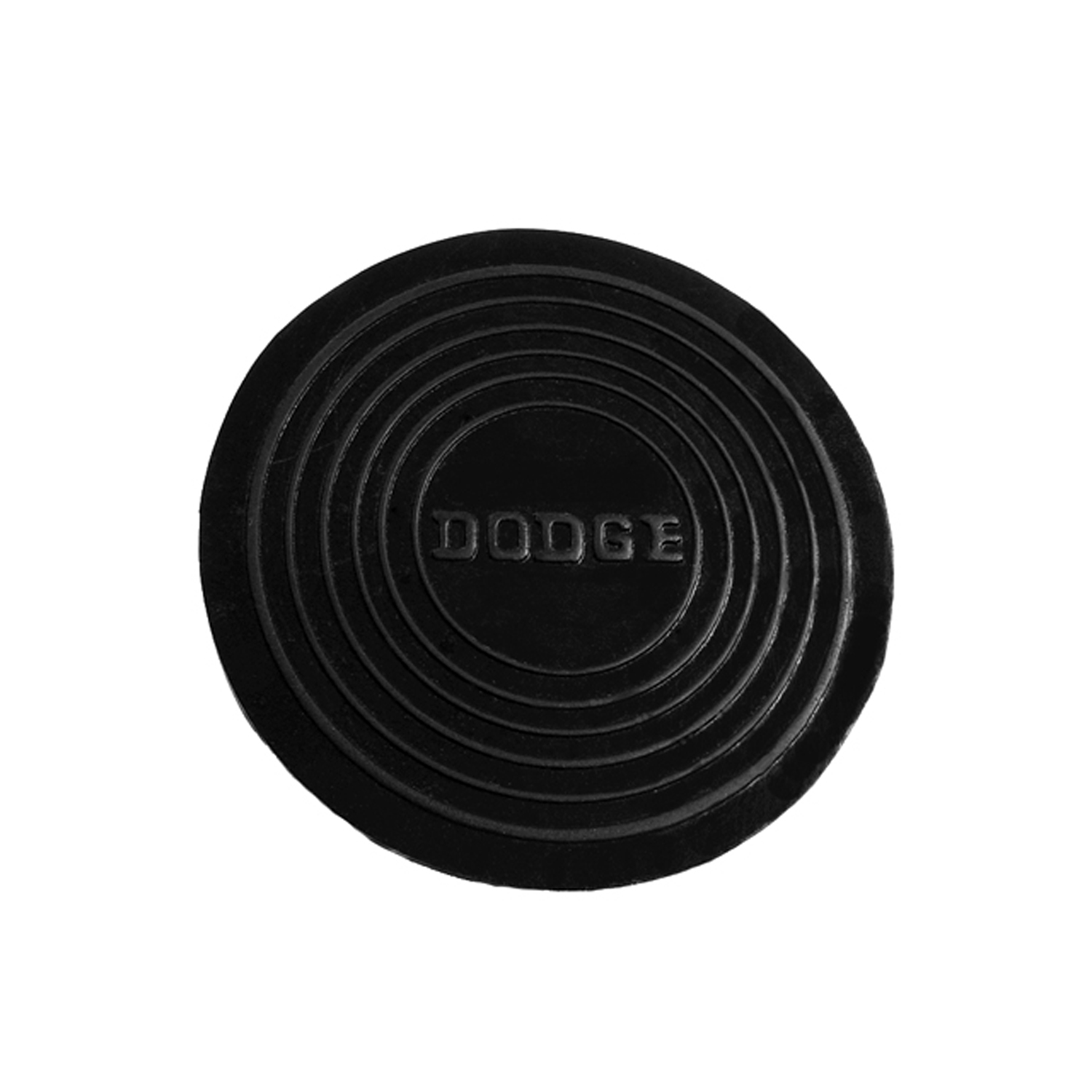 1916 Dodge Model 30-35 Step Plate Pad. Rubber face only. 4-1/4" O.D. Each-SP 18Step Plate Pad. Rubber face only. 4-1/4" O.D. Each
Why Choose Metro?
For over 100 years, Metro Moulded Parts has been the pinnacle of quality in classic car restoration parts. Our commitment to precision and authenticity in every component ensures a perfect fit and an OEM-level appearance.
- Expert Craftsmanship & Quality: Each part is a testament to our dedication to reliability and perfection, crafted from original designs and thoroughly tested.
- Advanced Technology: We use cutting-edge techniques to create flawless, long-lasting parts that surpass others in performance.
- SuperSoft Sponge – The Ultimate Door Seal: Not only are our door seals 30% softer than competitors', but they're also guaranteed to never leak. They effectively reduce wind and road noise, enhancing your classic car's comfort and driving experience.
- Proudly American: Our parts are a product of American craftsmanship, made in the USA with a spirit of excellence and heritage.
- Unrivaled Warranty: We back our products with a 30-year industry-leading warranty, a testament to our confidence in their quality.
Join us in preserving the legacy of classic cars with parts that are crafted for perfection, not just made.