
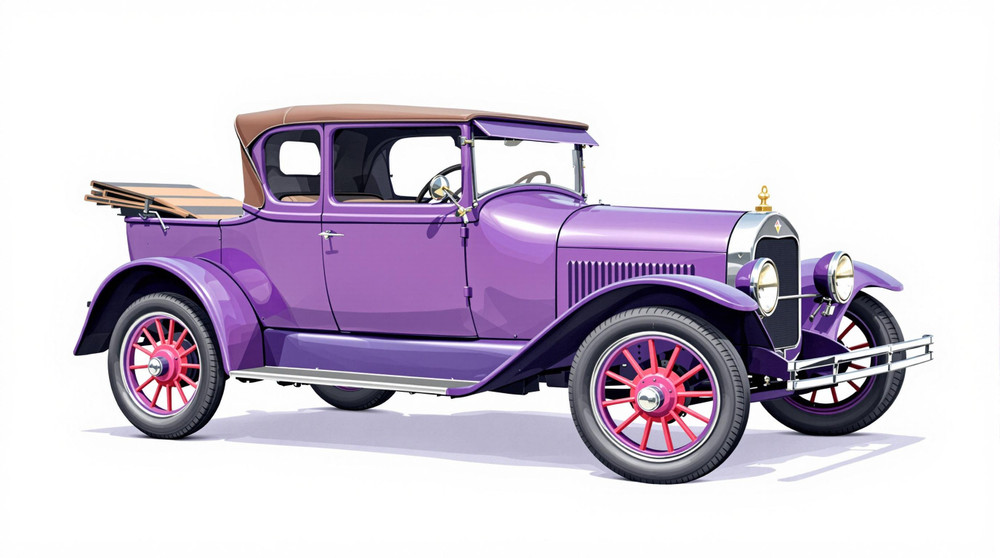
Image of 1918 Dodge Model 30, Note: These illustrations use artistic license and may differ from actual historical models.
Performance Metrics
Fundamental Metrics
Emotional Appeal
MMP Rating
| Engine Specifications | |
|---|---|
| Engine: | Inline-4 |
| Displacement: | 212 cubic inches |
| Horsepower: | Estimated 35 HP |
| Torque: | Not available |
| Compression Ratio: | Not available |
| Ignition System: | Magneto |
| Cooling System: | Water-cooled |
| Performance Specifications | |
| 0-60 Time: | Not available |
| 1/4 Mile Time: | Not available |
| Top Speed: | 50 mph |
| Transmission and Drive | |
| Drive Type: | Rear-wheel drive |
| Transmission Type: | 3-speed manual |
| Fuel and Efficiency | |
| Fuel System Type: | Carburetor |
| MPG: | Not available |
| Dimensions and Brakes | |
| Brakes: | Mechanical drum brakes |
| Wheelbase: | 114 inches |
| Weight: | 2,400 lbs |
Note: Specifications for classic cars are given to the best of our ability, considering the limited and variant data available.
1918 Dodge Model 30: A Durable American Classic
The 1918 Dodge Model 30 was built for drivers who wanted more than a basic runabout: it paired sturdy engineering with practical comfort at a time when owning a car was still a major investment. Made by Dodge Brothers Company in Detroit, the Model 30 was the firm’s first automobile and helped turn a respected auto-parts supplier into one of America’s leading carmakers.
The Dodge brothers, John and Horace, had already earned a reputation for building dependable components for other manufacturers. Their own car arrived in 1914, and the Model 30 developed a following for its solid construction and straightforward mechanical design. The 1918 edition appeared during the final year of the First World War, when automobiles were becoming essential for business, travel, and military support. Dodge cars also gained notice during the U.S. Army’s 1916 expedition into Mexico, where Dodge vehicles were used in demanding conditions. That experience helped reinforce the brand’s reputation for toughness.
A notable point in the Model 30’s story is that Dodge did not begin as a maker of inexpensive, bare-bones cars. The company promoted its first automobile as a substantial, well-equipped machine, with features such as electric starting and lighting that made motoring more convenient than hand-cranking by lamplight.
Model 30 Styling and Body Choices
The Model 30 has the upright, purposeful look associated with early touring cars. Its long hood leads to a tall radiator and narrow, separated front fenders. Large round headlamps sit beside the radiator, while exposed running boards connect the front and rear fenders along the body. Thin windshield glass, a high seating position, and an upright steering wheel complete its unmistakably prewar profile.
Many examples rode on wooden-spoke wheels, though equipment and details could vary by body style and production date. The overall impression is not delicate or ornamental. The Dodge looks like a working automobile, built to carry passengers and luggage over roads that could be rough, dusty, or muddy.
Inside, the layout is simple and functional. Open touring and roadster models typically had broad bench seating upholstered in leather or similar durable material. Closed bodies offered greater protection from weather, with interior trim and upholstery varying by model and specification. The dashboard was relatively uncomplicated by modern standards, with basic instruments and controls within reach of the driver. There was no sound insulation or climate control in the modern sense, but the Model 30 offered a substantial, well-finished cabin for its era.
Factory colors depended on body type and production details. Black was a common and practical choice, while dark blue, gray, and maroon shades are associated with period Dodge finishes. The touring car, especially in a dark color with bright lamps and polished metal fittings, remains the most recognizable Model 30 configuration.
Available bodies included touring cars, roadsters, coupes, sedans, and commercial variations. The open touring body was a particularly popular choice because it suited family travel and general-purpose motoring. A folding top and side curtains offered some protection from the weather, though they could not match the comfort of a closed sedan.
Engineering That Built Dodge’s Reputation
At the heart of the 1918 Model 30 was a 212-cubic-inch, L-head four-cylinder engine, rated at about 35 horsepower. It drove the rear wheels through a three-speed manual transmission. The design was conventional, but its strength lay in being robust and serviceable. Owners and mechanics could understand its major systems without specialist diagnostic equipment.
Electric starting and electric lighting were important conveniences. Earlier motoring often demanded a strenuous hand-cranking routine, and lamps could rely on less convenient systems. The Model 30’s electrical equipment made everyday use easier and helped the car feel modern to buyers in 1918. It still required care and attention, but it brought useful technology into a practical, production automobile.
The Model 30’s larger significance is its role in establishing Dodge as a complete-car manufacturer. Its reputation for durability helped distinguish the company from makers whose cars were seen as more fragile. Dodge’s early experience producing components for other automakers also shaped its approach: the car was designed as a coherent, sturdy product rather than simply a fashionable body around a basic chassis.
That image of dependable construction became part of Dodge’s identity for decades. The Model 30 did not introduce every major automotive innovation of its time, but it helped prove that a relatively accessible car could be well equipped, durable, and suitable for demanding use.
Performance, Ride, and Road Manners
Period performance figures are not as standardized as modern test results, and the condition of an individual car makes a substantial difference. A healthy Model 30 is generally estimated to reach approximately 45 to 50 mph under favorable conditions. Its 35-horsepower engine was designed for useful road travel, not high-speed driving.
A modern 0-to-60-mph time is not meaningful for a standard 1918 Model 30. Most examples are not capable of reaching 60 mph in ordinary running condition, and there is no dependable factory 0-to-60 figure to cite. Acceleration is best understood as deliberate: the driver works through the gears, lets the engine gather speed, and plans overtakes well in advance.
The Model 30’s suspension and tall tires soften some road imperfections, but the ride is still busy by modern standards. Broken pavement, ruts, and sharp bumps travel through the chassis, and the open body exposes passengers to wind and weather. On a winding road, the car rewards smooth inputs. Its steering is slower than a modern car’s, and the driver must account for its size, braking distances, and relatively high center of gravity.
Behind the wheel, the experience is physical and involving. The engine produces a steady, low mechanical rumble, accompanied by the sounds of gears, tires, and the wind around the windshield. The driver operates a manual transmission, monitors simple gauges, and must anticipate traffic rather than rely on modern conveniences. It is a rewarding car for relaxed touring, but not one to hurry.
Living With a 1918 Dodge
In its own time, the Model 30 could serve as family transportation, a business car, or a touring vehicle. Today, surviving examples are primarily used for antique-car events, local parades, museum displays, and careful pleasure drives. Their speed and braking limitations make modern traffic a challenge, so owners generally choose quiet roads and shorter routes.
Maintenance is manageable for an owner with mechanical experience, but “simple” does not mean maintenance-free. The ignition, fuel system, cooling system, electrical equipment, brakes, and lubrication all need regular attention. A car that has been properly restored and maintained can be reliable for its intended use, while a neglected example may require extensive work before it is roadworthy.
Many mechanical repairs are approachable for a capable vintage-car owner, and the car does not depend on electronics or proprietary diagnostic tools. The harder tasks are often sourcing correct parts, identifying previous repairs, and finding specialists familiar with early Dodge components. Body, upholstery, and woodwork repairs can also be more demanding than routine engine maintenance.
Facts, Reputation, and Common Criticisms
The Model 30 was part of Dodge’s early rise from component supplier to major automobile manufacturer. Dodge vehicles used by the U.S. Army during the 1916 Mexican expedition helped publicize their ability to cope with difficult conditions. The episode is best understood as a milestone for the early Dodge marque, rather than a feat exclusive to the 1918 model year.
There is no widely recognized land-speed record or endurance record belonging specifically to the 1918 Model 30. Its achievement was more practical: it helped build the company’s reputation and contributed to the popularity of Dodge automobiles in the years before and after the war. Exact production totals for the 1918 model year are not consistently reported. A reasonable estimate is roughly 50,000 to 70,000 Model 30 cars for that year, with total Model 30 production from 1914 through 1922 commonly estimated at several hundred thousand.
Common criticisms are familiar to anyone who has driven an early car. The Model 30 is slow by modern standards, offers limited weather protection in open form, and requires active driver involvement. Braking and handling demand caution, and the ride can feel unsettled on poor roads. Those traits are not defects so much as reminders of the era in which the car was designed.
Collector Value and Availability
The 1918 Dodge Model 30 is uncommon on today’s roads, but it is not generally considered one of the rarest American cars of its period. The Model 30 was produced in substantial numbers, and the open touring body is the version collectors are most likely to encounter. Originality, completeness, body style, restoration quality, and documentation all influence value.
As a broad current-market estimate, a project car may sell for about $5,000 to $12,000, depending on completeness and condition. A usable driver or older restoration might fall around $15,000 to $30,000, while a high-quality restoration can reach roughly $30,000 to $50,000 or more. Exceptional examples, rare configurations, or unusually strong provenance may exceed those ranges. These are general estimates, not guaranteed sale prices, and the early-car market can be thin.
Values for early brass- and nickel-era automobiles have tended to be steadier than those of some trend-driven collector cars, though market interest varies with condition and buyer demand. A well-restored Model 30 may hold value and appreciate gradually, but restoration costs can easily exceed the eventual sale price. Buyers should focus on sound structure, correct components, and maintenance records rather than assuming that a full restoration will produce a profit.
Why the 1918 Dodge Model 30 Matters
The 1918 Dodge Model 30 combined a sturdy four-cylinder engine, practical engineering, and useful equipment in a car designed for real travel. It helped establish Dodge as a serious automobile manufacturer and gave the company a durable reputation during a period when American motoring was rapidly expanding.
More than a century later, the Model 30 offers a direct connection to the early years of everyday motoring. It is not fast, quiet, or effortless, but it is honest in its design and engaging to drive. For collectors, it represents the kind of dependable pioneer that helped put America on wheels.
1918 Dodge Model 30 Catalog of Parts
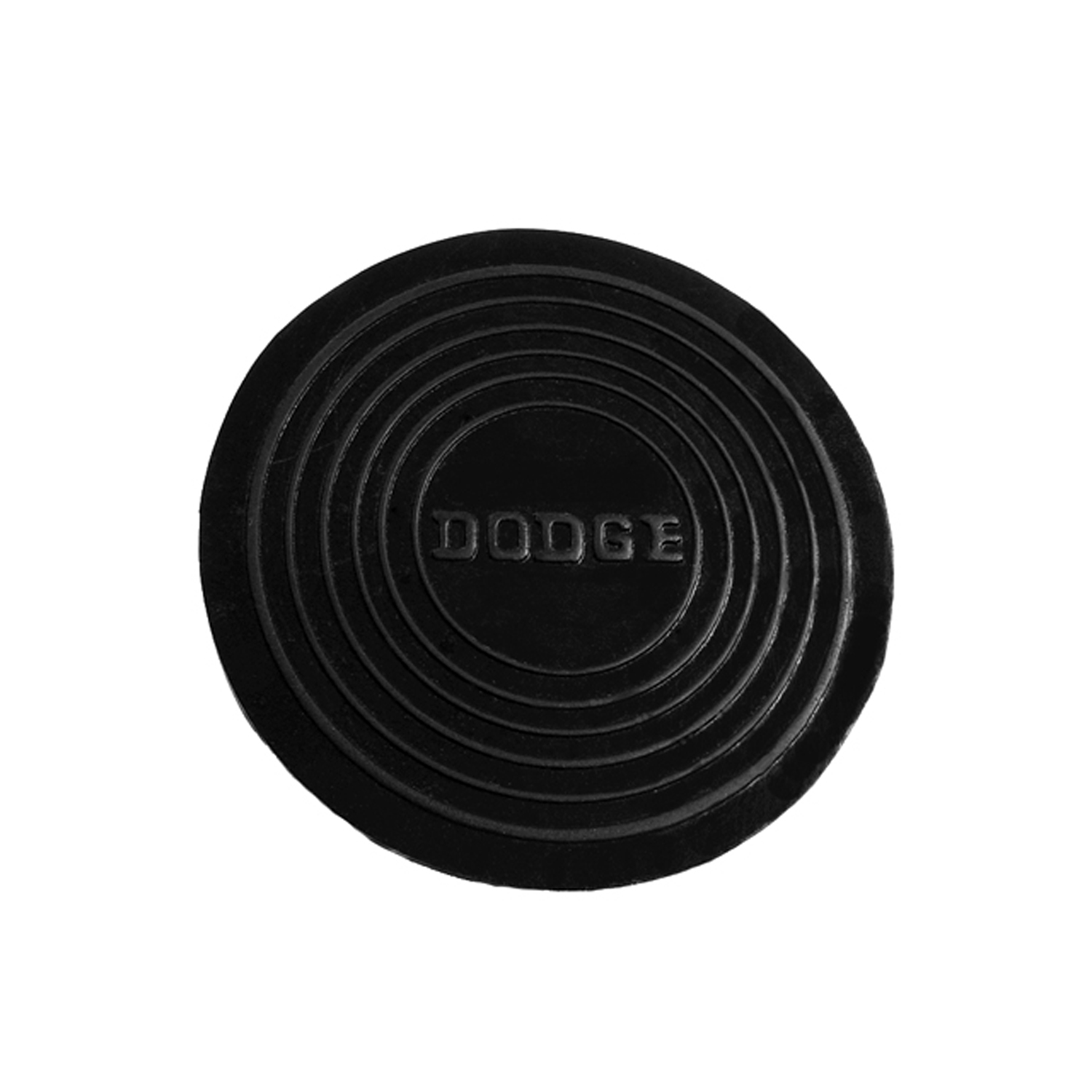 1918 Dodge Model 30 Step Plate Pad. Rubber face only. 4-1/4" O.D. Each-SP 18Step Plate Pad. Rubber face only. 4-1/4" O.D. Each
Why Choose Metro?
For over 100 years, Metro Moulded Parts has been the pinnacle of quality in classic car restoration parts. Our commitment to precision and authenticity in every component ensures a perfect fit and an OEM-level appearance.
- Expert Craftsmanship & Quality: Each part is a testament to our dedication to reliability and perfection, crafted from original designs and thoroughly tested.
- Advanced Technology: We use cutting-edge techniques to create flawless, long-lasting parts that surpass others in performance.
- SuperSoft Sponge – The Ultimate Door Seal: Not only are our door seals 30% softer than competitors', but they're also guaranteed to never leak. They effectively reduce wind and road noise, enhancing your classic car's comfort and driving experience.
- Proudly American: Our parts are a product of American craftsmanship, made in the USA with a spirit of excellence and heritage.
- Unrivaled Warranty: We back our products with a 30-year industry-leading warranty, a testament to our confidence in their quality.
Join us in preserving the legacy of classic cars with parts that are crafted for perfection, not just made.