
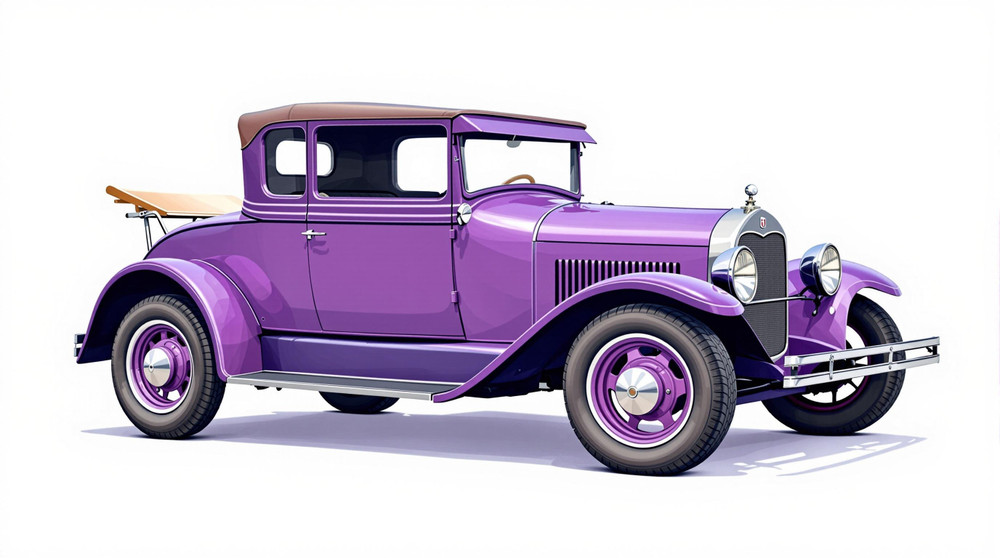
Image of 1920 Dodge Model 30, Note: These illustrations use artistic license and may differ from actual historical models.
Performance Metrics
Fundamental Metrics
Emotional Appeal
MMP Rating
| Engine Specifications | |
|---|---|
| Engine: | Inline-4 |
| Displacement: | 212 cubic inches |
| Horsepower: | Estimated 35 HP |
| Torque: | Not available |
| Compression Ratio: | Not available |
| Ignition System: | Battery and coil |
| Cooling System: | Water-cooled |
| Performance Specifications | |
| 0-60 Time: | Not available |
| 1/4 Mile Time: | Not available |
| Top Speed: | 50 mph |
| Transmission and Drive | |
| Drive Type: | Rear-wheel drive |
| Transmission Type: | 3-speed manual |
| Fuel and Efficiency | |
| Fuel System Type: | Carburetor |
| MPG: | Not available |
| Dimensions and Brakes | |
| Brakes: | Mechanical drum brakes |
| Wheelbase: | 112 inches |
| Weight: | 2,400 lbs |
Note: Specifications for classic cars are given to the best of our ability, considering the limited and variant data available.
1920 Dodge Model 30: A Tough, Trustworthy Early Motorcar
Before Dodge became a familiar name under Chrysler, the Model 30 was helping establish the company as one of America’s most respected young automakers. The 1920 Dodge Brothers Model 30 was a sturdy, practical four-cylinder car built for drivers who wanted dependable transportation rather than delicate luxury. Its straightforward engineering, electric starting system, and reputation for durability helped make it a serious rival to the era’s best-known cars.
The Model 30 first appeared in 1914, created by brothers John and Horace Dodge. Before building cars under their own name, the brothers had supplied parts to other manufacturers, including Ford. Their own car reflected that manufacturing experience: it was designed to be robust, relatively easy to service, and suitable for everyday use. The 1920 version arrived at a moment of change for the company. Both Dodge brothers died that year, within months of one another, leaving their wives to guide the business through a difficult transition.
One detail that hints at the Model 30’s reputation is its connection to the U.S. Army’s 1916 expedition into Mexico. Dodge cars were used during the campaign, where vehicles had to cope with rough roads and demanding conditions. That service helped reinforce the Dodge name as a maker of solid, capable cars.
Model 30 Styling and Cabin Design
The 1920 Model 30 wore the upright, purposeful proportions typical of an early automobile. A tall radiator and long, flat hood gave the front end a formal look, while separate fenders curved around the narrow tires. Exposed headlamps, running boards, and a folding fabric top on open models were practical features, not decoration. From the side, the car’s high stance and slim wheels made it look ready for rutted roads rather than smooth boulevards.
The five-passenger touring car is one of the Model 30’s most recognizable forms. Its open cabin offered plenty of seating and a folding top for protection from rain, though weather protection was modest by modern standards. Roadsters provided a sportier, more compact alternative. Closed-body choices such as coupes and sedans offered greater shelter, while commercial versions served businesses and delivery operators. Exact body availability could vary by model year and market.
Inside, the emphasis was on function. The broad seats were upholstered in durable period materials, commonly leather or leather-like coverings depending on body style and specification. The dashboard was simple, with basic gauges and controls rather than the elaborate trim found in a luxury car. Drivers managed the throttle and spark advance with hand controls, while the gear lever and pedals demanded direct, deliberate input. It was a tactile cabin, with little to distract from the road ahead.
Factory paint choices varied by body style, production details, and market. Black was a common, practical choice, while dark shades such as blue, green, and maroon were also associated with Dodge cars of the period. A specific car’s original color is best confirmed through its factory records or surviving paint evidence, since restorations and repainting can obscure its history.
Early Technology That Made a Difference
For its time, the Model 30 offered a useful package of modern conveniences. Electric lights and an electric starter were significant advantages in an era when many motorists still relied on a hand crank to start their cars. The electric starter reduced the effort and risk involved in getting underway, while electric lighting made night driving more practical.
Power came from a front-mounted, water-cooled inline four-cylinder engine of about 212 cubic inches. Period specifications commonly give its output as roughly 35 horsepower. A three-speed manual transmission sent power to the rear wheels. The mechanical layout was conventional, but the Model 30’s sturdy construction and attention to dependable operation helped distinguish it from cars that were less suited to regular use.
Why the Dodge Model 30 Mattered
The Model 30 helped prove that a relatively young automaker could compete by building a complete car with its own identity. Dodge Brothers had already earned a reputation as capable manufacturers and suppliers. Their car carried that reputation into the showroom, combining practical engineering with equipment that made motoring easier for ordinary owners.
Its significance was not that it introduced every major automotive innovation. Rather, the Model 30 brought several useful features together in a durable, production-built package. Electric starting and lighting, a conventional three-speed gearbox, and a reputation for sturdy construction made it a credible everyday car. That formula helped Dodge rise rapidly among American manufacturers and influenced the company’s later identity as a maker of tough, dependable vehicles.
The car also stood apart from the most basic low-cost runabouts. It offered more room and a broader range of body styles, while retaining mechanical simplicity. Compared with modern cars, its engineering was basic. Compared with many vehicles of its own era, it was a substantial and well-equipped machine.
1920 Dodge Model 30 Performance and Handling
A healthy Model 30 could reach roughly 45 to 50 mph, depending on body style, mechanical condition, gearing, and road surface. Period cars were not usually evaluated with modern acceleration tests, and a 0-to-60-mph figure is not especially meaningful here: the Model 30’s typical top speed was below 60 mph. Its acceleration was modest, with the driver using the three-speed gearbox to keep the engine working through hills and changing road conditions.
On a smooth road, the Model 30 feels steady and deliberate. Its solid axles and period suspension do not absorb bumps like a modern independent suspension system, so potholes and washboard surfaces make themselves known through the seat and steering wheel. On winding roads, the high stance, narrow tires, and relatively slow steering favor a measured pace. It is best driven with anticipation, not hurried into corners.
The driving experience is part of the appeal. The four-cylinder engine produces a mechanical, rhythmic sound, accompanied by the whir of the transmission and the movement of the body over uneven pavement. The driver must coordinate the clutch, throttle, gear lever, and hand controls with more attention than a modern car demands. Braking is also a reminder of the era: the Model 30 uses mechanical brakes acting on the rear wheels, so stopping distances and pedal feel differ greatly from those of a contemporary vehicle.
Living With a Model 30
Today, the Model 30 is best suited to touring, local club events, vintage-car shows, and occasional scenic drives. It can be driven on suitable roads, but it is not a practical daily driver in modern traffic. Its modest speed, limited braking, open body styles, and lack of contemporary safety equipment call for careful route planning and a defensive driving style.
Mechanical simplicity is a real ownership advantage. The engine, transmission, and chassis are accessible to an experienced home mechanic, and many repairs rely on basic tools and traditional mechanical skills. That does not mean every job is easy: worn parts may need specialist rebuilding, and body wood, upholstery, electrical components, and period-correct fittings can take time to source or restore. A car that has been maintained and properly sorted is far more enjoyable than a neglected project.
Owners should pay close attention to lubrication, cooling, ignition, tire condition, and the adjustment of the mechanical brakes. Original-style parts and knowledgeable service are available through vintage Dodge and antique-car networks, though availability varies by component. As with any century-old car, condition and maintenance history matter more than the badge on the radiator.
Model 30 Facts and Common Criticisms
The Dodge Brothers’ cars had a practical role beyond private motoring. Dodge vehicles were used by the U.S. military, including during the 1916 Punitive Expedition into Mexico. Their reputation for durability in difficult conditions became an important part of the company’s early image.
The year 1920 is notable in Dodge history for another reason: John and Horace Dodge both died that year. Their deaths marked the end of the company’s founding partnership, although Dodge Brothers continued to build cars and remained a major American manufacturer. Chrysler Corporation acquired Dodge in 1928.
There is no single, dependable production figure for every 1920 Model 30 body style. Dodge was producing cars in substantial numbers by this period, and a reasonable estimate is that output for the year was in the tens of thousands, potentially approaching or exceeding 100,000 when the broader Model 30 range is counted. That is a best estimate, not a confirmed tally for one body style. Surviving examples are far rarer today than the original production suggests, particularly in sound, complete condition.
Common criticisms are easy to understand from a modern perspective. The car is slow by current standards, its brakes are limited, the ride can be firm over rough roads, and an open touring model offers little protection from weather. Its controls also require practice. Those drawbacks are part of the period experience, but they make the Model 30 less suitable for casual drivers than a newer classic with better brakes and more predictable handling.
Collector Value and Availability
Values depend heavily on body style, originality, restoration quality, and mechanical condition. As a broad current-market estimate, a running project or incomplete car might fall around $5,000 to $15,000. A usable, older restoration could bring roughly $15,000 to $30,000, while a high-quality restored touring car or desirable roadster might sell in the $25,000 to $45,000 range or more. Exceptional examples and rare configurations can exceed those guide figures, while cars needing extensive work can sell for less.
The Model 30 is uncommon on the open market, but it is not as scarce as some low-production early automobiles. Touring cars are among the more familiar surviving forms; unusual body styles and commercial versions can be harder to find. Prices tend to reward quality and documented history rather than age alone. Well-restored examples have generally held collector interest, though values can vary with the broader antique-car market, restoration costs, and the availability of buyers who enjoy prewar driving.
The Lasting Appeal of the 1920 Dodge Model 30
The 1920 Dodge Model 30 brought together sturdy construction, practical engineering, electric starting and lighting, and a useful range of body styles. It was a product of a young company whose founders understood manufacturing, and it helped build the reputation that carried Dodge into the next generation.
For today’s collector, the Model 30 is more than a handsome early touring car. It is a direct link to the moment when motoring was becoming a regular part of American life. Drive one at its own pace and its significance becomes clear: this was a car built not merely to look modern, but to make dependable motoring feel possible.
1920 Dodge Model 30 Catalog of Parts
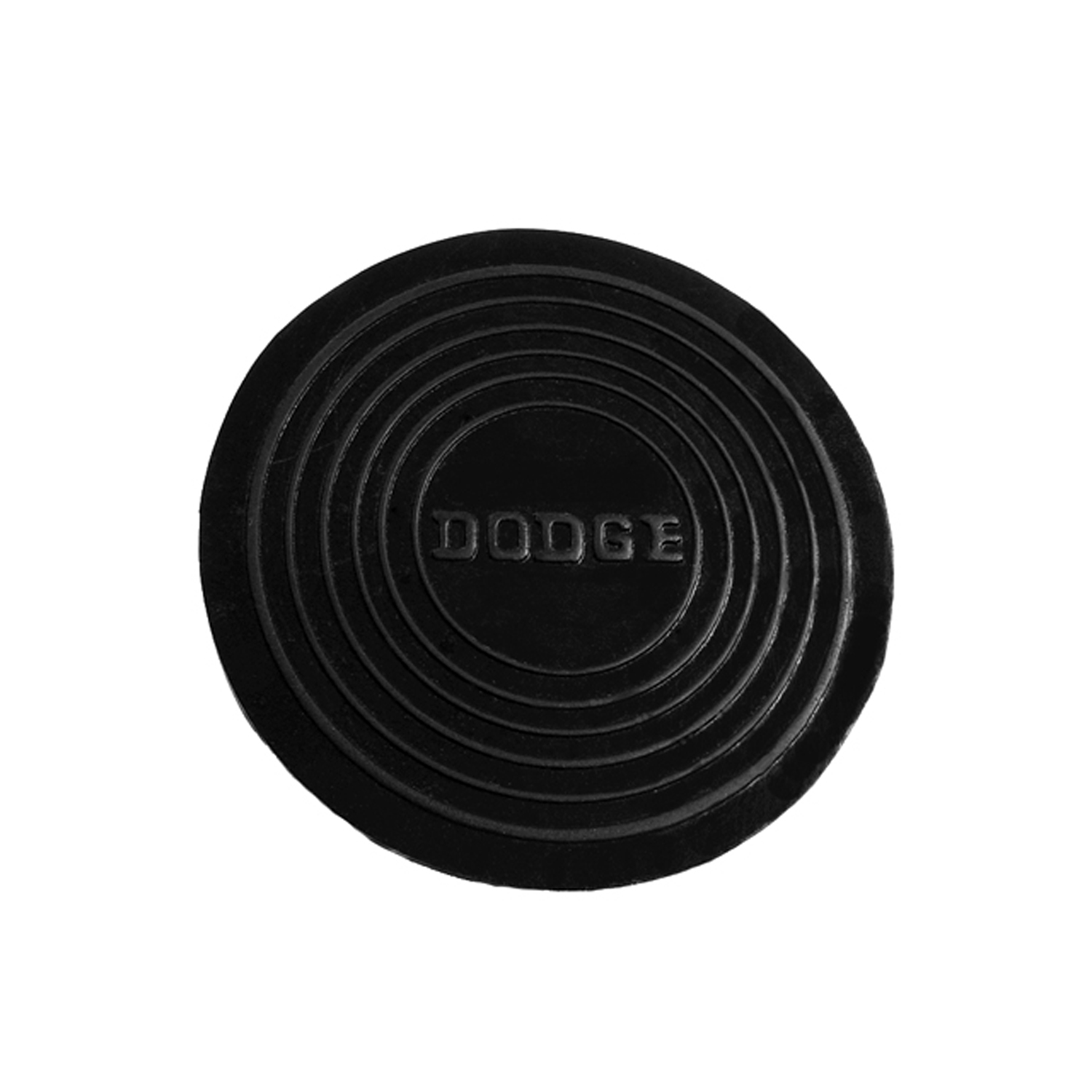 1920 Dodge Model 30 Step Plate Pad. Rubber face only. 4-1/4" O.D. Each-SP 18Step Plate Pad. Rubber face only. 4-1/4" O.D. Each
Why Choose Metro?
For over 100 years, Metro Moulded Parts has been the pinnacle of quality in classic car restoration parts. Our commitment to precision and authenticity in every component ensures a perfect fit and an OEM-level appearance.
- Expert Craftsmanship & Quality: Each part is a testament to our dedication to reliability and perfection, crafted from original designs and thoroughly tested.
- Advanced Technology: We use cutting-edge techniques to create flawless, long-lasting parts that surpass others in performance.
- SuperSoft Sponge – The Ultimate Door Seal: Not only are our door seals 30% softer than competitors', but they're also guaranteed to never leak. They effectively reduce wind and road noise, enhancing your classic car's comfort and driving experience.
- Proudly American: Our parts are a product of American craftsmanship, made in the USA with a spirit of excellence and heritage.
- Unrivaled Warranty: We back our products with a 30-year industry-leading warranty, a testament to our confidence in their quality.
Join us in preserving the legacy of classic cars with parts that are crafted for perfection, not just made.