
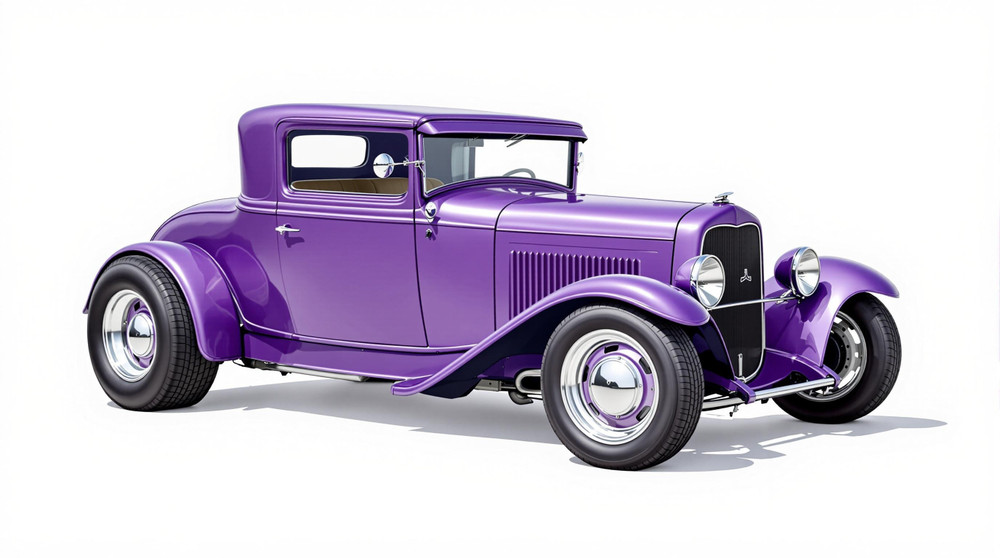
Image of 1923 Dodge Custom, Note: These illustrations use artistic license and may differ from actual historical models.
Performance Metrics
Fundamental Metrics
Emotional Appeal
MMP Rating
| Engine Specifications | |
|---|---|
| Engine Options: | Inline 4 |
| Displacement Range: | 212 cubic inches |
| Horsepower Range: | Estimated 35 HP |
| Torque: | Not available |
| Compression Ratio: | Not available |
| Ignition System: | Battery and coil |
| Cooling System: | Water-cooled |
| Performance Specifications | |
| 0-60 Time: | Not available |
| 1/4 Mile Time: | Not available |
| Top Speed: | 50 mph |
| Transmission and Drive | |
| Drive Type: | Rear-wheel drive |
| Transmission Type: | 3-speed manual |
| Fuel and Efficiency | |
| Fuel System Type: | Carburetor |
| MPG: | Not available |
| Dimensions and Brakes | |
| Brakes: | Mechanical drum brakes |
| Wheelbase: | 116 inches |
| Weight: | 2,400 lbs |
Note: Specifications for classic cars are given to the best of our ability, considering the limited and variant data available.
1923 Dodge Custom: A Brass-Era Workhorse with Lasting Appeal
The 1923 Dodge Custom pairs the sturdy, no-nonsense character of an early Dodge Brothers automobile with the individuality of a special-bodied car. There is an important detail behind the name: “Dodge Custom” was not a clearly defined factory model designation in the way later Dodge names were. It is often used today for a Dodge Brothers car with custom coachwork, unusual trim, or a body style described as custom by a seller or collector. The car beneath that description is generally from Dodge’s 1923 range, commonly identified with the Model 116.
Dodge Brothers, founded by Horace and John Dodge, began building complete automobiles in 1914. The brothers had previously made components for other automakers, and their reputation for solid engineering helped establish Dodge as a serious competitor. By 1923, the company’s cars were known less for flashy styling than for robust construction and dependable service. A surviving custom-bodied example adds a distinctive layer to that practical history.
One detail that makes the period especially interesting is Dodge’s early commitment to steel-bodied construction. The company was among the pioneers of all-steel automobile bodies, offering an alternative to the wood-framed construction common on many cars of the era. That engineering choice helped shape Dodge’s reputation for durability, even as body styles and materials continued to evolve.
Exterior Design and Body Styles
A 1923 Dodge has the upright proportions and clear, functional lines of an early touring car. Its tall radiator, separate fenders, narrow tires, prominent headlamps, and exposed running boards make it instantly recognizable as a pre-streamlined automobile. The long hood leads to a simple upright windscreen and an open passenger compartment, while the rear body varies according to the style fitted.
On a custom example, the details may depart from standard factory appearance. A coachbuilt body, special upholstery, nonstandard lamps, or period accessories can make one car look quite different from another. Buyers should check whether these features are original, period modifications, or later restorations. “Custom” can describe an authentic individual body, but it can also be a modern sales description rather than a documented factory trim level.
Dodge Brothers offered several practical body styles in this era, including touring cars, roadsters, coupes, and sedans. Open touring models were especially popular because they carried several passengers and suited the roads and weather protection expectations of the day. A sedan offered a more enclosed, formal experience, while a roadster emphasized lighter, sportier motoring. Custom-bodied cars are less common and may have been built or altered for a particular owner.
Factory paint choices varied by year, body style, and production practice. Dark shades such as black, blue, and maroon are often associated with period cars, but an individual car’s original color should be confirmed through paint layers, build records, or period documentation. Many surviving Dodges have been repainted, so a glossy modern finish is not necessarily evidence of the original color scheme.
Cabin, Craftsmanship, and Period Technology
The cabin is simple by modern standards, but its materials and controls reflect an era when driving was an active task. Depending on body style, occupants might find leather or leatherette upholstery, painted metal trim, wood details, a large steering wheel, and a straightforward instrument panel. The open cars offered little protection from wind or rain, while enclosed bodies provided a more sheltered ride at a higher price and weight.
The driver sits upright and operates the car through mechanical controls that demand more attention than a modern vehicle. There is no power steering, automatic transmission, or electronic assistance. Starting, shifting, braking, and managing engine speed are all part of the driving routine. The simplicity is appealing to vintage-car enthusiasts, but it also means that a driver must learn the car’s habits rather than expect it to behave like a contemporary sedan.
For its time, the Dodge’s appeal lay in sound, practical engineering rather than gadgets. Its steel construction, conventional front-engine and rear-wheel-drive layout, and mechanical systems were familiar to mechanics and owners. Period lighting and instrumentation were basic, and equipment could vary with body style and specification. Buyers should inspect the actual car rather than assume every 1923 Dodge carried identical fittings.
Why the 1923 Dodge Mattered
The 1923 Dodge was part of a wider shift from early, fragile automobiles toward cars designed for regular use. Dodge Brothers had built a strong name by emphasizing robust components and dependable assembly. Its steel-body work was particularly significant: it helped demonstrate that an automobile could be built with more durable body construction than the wood-framed designs still common across the industry.
It was not a radical styling trendsetter, nor did it introduce a single feature that transformed the entire industry in 1923. Its importance is more practical. Dodge helped make the automobile a credible everyday machine for buyers who valued strength, serviceability, and useful body choices. That dependable, engineering-first identity remained part of the brand’s character long after the Dodge brothers’ company became part of Chrysler Corporation in 1928.
Compared with many contemporaries, a Dodge offered a reassuringly solid reputation and a broad range of body styles. Its influence is best understood as part of the industry’s move toward cars that could serve families and businesses beyond the occasional pleasure drive. Custom-bodied examples also show how owners could personalize a mass-produced chassis before factory styling packages became the norm.
Engine, Speed, and Road Manners
Most 1923 Dodge Brothers passenger cars used a four-cylinder engine of about 212 cubic inches, or roughly 3.5 liters, with output commonly listed in the neighborhood of 30 to 35 horsepower, depending on specification and source. Power went to the rear wheels through a manual transmission, typically a three-speed unit. Because surviving cars may have been modified or rebuilt, the engine and transmission in a particular example should be verified.
A healthy, correctly geared car may reach roughly 50 to 60 mph under favorable conditions, though that is not a modern cruising-speed recommendation. Acceleration figures were not generally recorded in today’s standardized 0-to-60 format. A period Dodge is slow by modern standards, and reaching 60 mph could take a long time or may not be realistic for every body style, mechanical condition, or road. The more useful measure is how smoothly it pulls at modest speeds.
On the road, the engine produces a steady, mechanical four-cylinder note, accompanied by the sounds of gears, tires, and bodywork that are part of the vintage experience. The tall, narrow tires and period suspension respond to road imperfections differently from a modern car. Broken pavement can bring noticeable movement through the chassis, and the upright body may lean in corners. On a winding road, measured steering inputs and conservative speeds are essential.
Braking and steering also require planning. The car lacks modern power assistance and contemporary safety equipment, and braking performance depends heavily on the condition and adjustment of its mechanical system. A well-maintained Dodge can be enjoyable on quiet local roads and at vintage-car events, but it is not suited to fast traffic or abrupt maneuvers. The rewarding part is the direct connection between driver, engine, and road.
Living with a Vintage Dodge
Today, a 1923 Dodge is most often a collector car, show car, parade vehicle, or participant in touring events. Some owners take well-sorted examples on short local drives, but regular daily use is uncommon. Modern traffic speeds, limited safety equipment, and the challenge of finding suitable replacement parts all make careful route planning worthwhile.
Mechanical simplicity can make routine work approachable for an experienced home mechanic. The engine, drivetrain, and chassis use understandable period technology, and many repairs do not require electronic diagnostic equipment. However, age brings its own complications. Worn bearings, tired ignition components, deteriorated wiring, out-of-round wheels, and previous repairs can turn a simple job into a restoration project. Parts availability varies, and body, trim, and custom coachwork pieces may be harder to source than common mechanical items.
Reliability depends less on the badge than on the quality of maintenance and restoration. Before buying, inspect the engine for oil pressure and unusual noise, check the transmission and rear axle, examine the frame and body for corrosion or poor repairs, and confirm that the brakes and steering are safe. A pre-purchase inspection by a mechanic familiar with early cars is money well spent.
Facts, Myths, and Period Context
Dodge Brothers cars earned a reputation for toughness before 1923, including through their use in demanding service and military-support roles. That broader reputation helped the marque sell to buyers who wanted more than a weekend novelty. It should not be confused with a claim that a particular 1923 custom car took part in a famous event; such a history needs documentation tied to the individual vehicle.
There is no established celebrity connection or universally recognized speed record associated with the “1923 Dodge Custom” name. The term does not identify a single limited-edition model, so claims of a rare factory edition should be checked against period literature and vehicle records. A genuinely documented custom body can be scarce, but unusual appearance alone does not prove provenance.
Common criticisms are familiar to anyone who has driven a car from this period: modest speed, heavy controls, limited weather protection on open models, and braking that demands anticipation. Parts and specialist knowledge can also be challenging. Those drawbacks are balanced by the car’s sturdy feel, mechanical accessibility, and unmistakable early-automobile character.
Collector Value and Availability
Because “1923 Dodge Custom” is not a precise factory model name, there is no dependable production total for cars carrying that label. Dodge Brothers produced a large volume of automobiles around this period, with total 1923 production often estimated at roughly 200,000 cars across the range. That figure is a broad estimate for the company’s output, not a count of custom-bodied examples. The number of surviving cars is much smaller, and documented coachbuilt versions are harder to assess individually.
As a broad present-day market estimate, a project car might sell for around $8,000 to $20,000, depending on completeness and condition. A running, presentable example could fall roughly in the $20,000 to $40,000 range, while a high-quality restoration or especially desirable, well-documented custom body may bring $40,000 to $70,000 or more. These are general guide ranges, not a formal valuation. Location, provenance, body style, restoration quality, and originality can move the price substantially.
Values for early Dodge cars tend to reward condition and authenticity more than simple age. The market is relatively specialized, and custom workmanship can either add appeal or make a car harder to value if its history is unclear. In recent years, quality prewar cars have generally retained interest among dedicated collectors, but prices are not guaranteed to rise. Restoration costs can exceed a car’s resale value, so the best purchase is often the most complete, well-documented example a buyer can afford.
A Dodge Built for the Long Road
The 1923 Dodge Custom is best understood as a sturdy Dodge Brothers automobile that may carry an individual body or custom specification, rather than as a single standardized factory model. Its steel-body legacy, practical engineering, and open-road character make it an engaging representative of the early motoring era. It may be slow, demanding, and occasionally stubborn, but that is part of its appeal: every drive feels earned, and every well-preserved example keeps a piece of automotive history moving.
1923 Dodge Custom Catalog of Parts
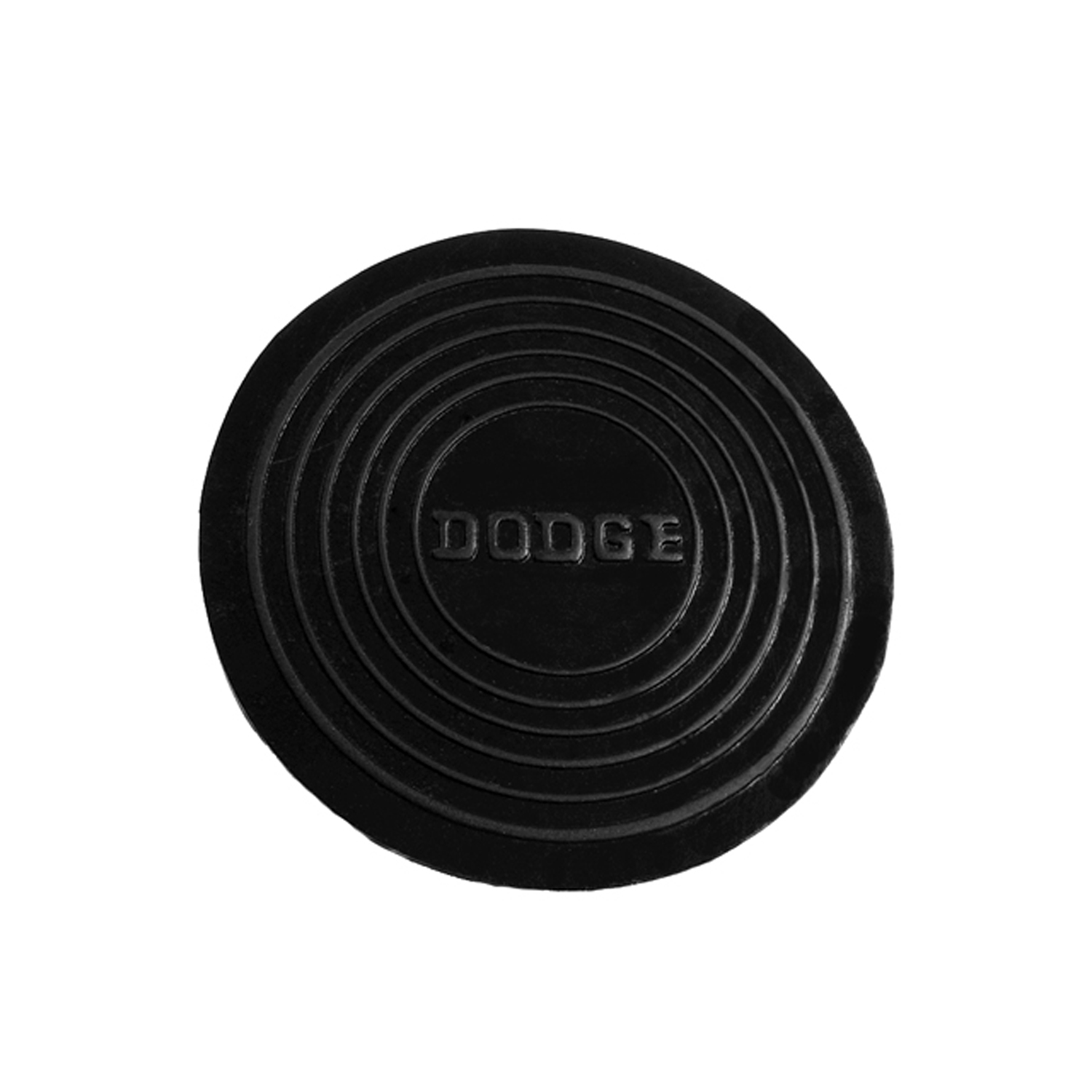 1923 Dodge Custom Step Plate Pad. Rubber face only. 4-1/4" O.D. Each-SP 18Step Plate Pad. Rubber face only. 4-1/4" O.D. Each
Why Choose Metro?
For over 100 years, Metro Moulded Parts has been the pinnacle of quality in classic car restoration parts. Our commitment to precision and authenticity in every component ensures a perfect fit and an OEM-level appearance.
- Expert Craftsmanship & Quality: Each part is a testament to our dedication to reliability and perfection, crafted from original designs and thoroughly tested.
- Advanced Technology: We use cutting-edge techniques to create flawless, long-lasting parts that surpass others in performance.
- SuperSoft Sponge – The Ultimate Door Seal: Not only are our door seals 30% softer than competitors', but they're also guaranteed to never leak. They effectively reduce wind and road noise, enhancing your classic car's comfort and driving experience.
- Proudly American: Our parts are a product of American craftsmanship, made in the USA with a spirit of excellence and heritage.
- Unrivaled Warranty: We back our products with a 30-year industry-leading warranty, a testament to our confidence in their quality.
Join us in preserving the legacy of classic cars with parts that are crafted for perfection, not just made.