
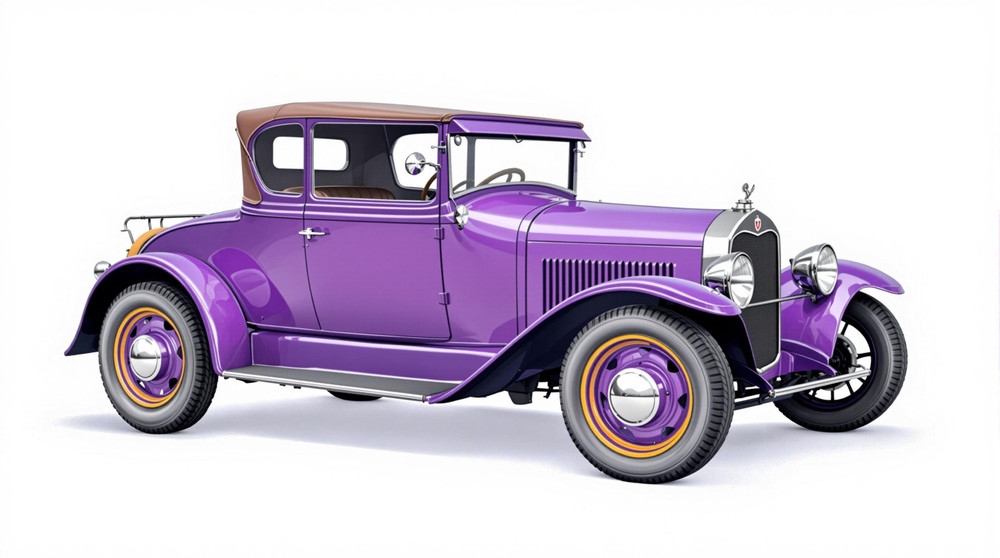
Image of 1923 Dodge Standard B, Note: These illustrations use artistic license and may differ from actual historical models.
Performance Metrics
Fundamental Metrics
Emotional Appeal
MMP Rating
| Engine Specifications | |
|---|---|
| Engine Options: | Inline 4 |
| Displacement Range: | 212 cubic inches |
| Horsepower Range: | Estimated 35 HP |
| Torque: | Not available |
| Compression Ratio: | Not available |
| Ignition System: | Battery and coil |
| Cooling System: | Water-cooled |
| Performance Specifications | |
| 0-60 Time: | Not available |
| 1/4 Mile Time: | Not available |
| Top Speed: | 50 mph |
| Transmission and Drive | |
| Drive Type: | Rear wheel drive |
| Transmission Type: | 3-speed manual |
| Fuel and Efficiency | |
| Fuel System Type: | Carburetor |
| MPG: | Not available |
| Dimensions and Brakes | |
| Brakes: | Mechanical drum brakes |
| Wheelbase: | 116 inches |
| Weight: | 2,400 lbs |
Note: Specifications for classic cars are given to the best of our ability, considering the limited and variant data available.
1923 Dodge Standard B: A Practical Pioneer of the American Road
The 1923 Dodge Standard B was built for motorists who wanted dependable, substantial transportation rather than a fragile status symbol. Its four-cylinder power, sturdy construction, and straightforward mechanicals helped make Dodge Brothers one of America’s most respected carmakers during the early years of mass motoring.
Dodge Brothers began as an engineering and manufacturing business founded by brothers John and Horace Dodge. Before building cars under their own name, they supplied parts to other automakers, including Ford. Their first Dodge Brothers automobile arrived in 1914, and the company quickly earned a reputation for robust engineering. By 1923, Dodge was a major independent manufacturer, producing practical cars for a country whose roads and towns were changing rapidly.
The Standard B belongs to the company’s early-1920s range, when closed cars were becoming more attainable and motorists increasingly expected electric starting, lighting, and reliable all-weather service. One intriguing detail is that a Dodge of this period could feel remarkably modern in its basic conveniences while still requiring the driver to manage a manual choke, clutch, and gear lever. It was a bridge between the hand-cranked pioneer car and the easier-to-use automobiles that followed.
Upright Styling and Useful Comfort
The Dodge Standard B has the unmistakable stance of an early-1920s automobile: a tall, upright radiator, separate fenders, running boards, and a long hood that gives the car a purposeful profile. Its narrow tires and high ground clearance look modest by modern standards, but they suited the rough, often unpaved roads of the day. Headlamps mounted beside the radiator and a simple, vertical windshield complete its formal, functional appearance.
Interior appointments depended on body style and specification. Open models typically used durable upholstery, often leather or leather-like trim, while closed bodies generally offered cloth upholstery. The cabin was straightforward rather than luxurious, with a large steering wheel, simple instruments, and practical controls. Wood framing and trim could be part of the body construction, though materials and details varied by coachwork.
Black was a common and popular finish on cars of the period, valued for its availability and ease of upkeep. Other colors could be offered depending on the body and production details, but surviving cars and period records do not always make a precise Standard B color list easy to confirm. Buyers should treat an unusual color as a feature to verify against the car’s original paint evidence, rather than assume every shade was a factory option.
Dodge offered a range of body styles across its early-1920s line, including open touring and roadster types as well as closed coupes and sedans. Availability could vary by model and production year. The touring body is among the most recognizable today, with its open cabin, folding top, and room for passengers. Closed sedans, meanwhile, reflected the growing appeal of weather protection and year-round motoring.
Engineering in a Changing Era
The Standard B’s importance lies less in a single headline-grabbing invention than in the way it brought sturdy, usable engineering to ordinary buyers. Dodge Brothers had built a name on well-made components, and their cars were known for solid construction at a time when many motorists still worried about breakdowns and poor roads. The company’s early adoption of electric starting and lighting on its cars also helped set expectations for practical equipment that would become commonplace.
Its conventional layout was a strength: a front-mounted engine, rear-wheel drive, a manual transmission, and a strong chassis that local mechanics could understand. Compared with more primitive cars, it offered useful everyday equipment and a reassuringly substantial feel. Compared with later cars, it was still mechanically demanding, but its uncomplicated design helped establish the kind of durable American automobile that buyers came to expect.
Dodge Brothers’ corporate story also gives the car historical context. The company remained independent after the brothers’ deaths, was sold in 1925, and later became part of Chrysler in 1928. The Standard B therefore comes from the final stretch of Dodge’s identity as a major independent automaker, before it became part of a much larger automotive group.
Four-Cylinder Power and Period Road Manners
The Standard B used a four-cylinder, side-valve engine. Published specifications for Dodge cars in this period commonly put displacement at about 212 cubic inches, with output in the neighborhood of 35 horsepower, though exact figures can depend on the precise model and source. Power went to the rear wheels through a manual gearbox, generally with three forward speeds.
A precise factory 0-to-60-mph figure is not generally available, and a Standard B should not be thought of as a car that briskly reaches 60 mph. Its performance was suited to the slower traffic and road conditions of its time. A healthy example might reach roughly 45 to 55 mph under favorable conditions, but gearing, body style, mechanical condition, tires, and road surface all affect its real-world pace. Treat that as a period-car estimate, not a guaranteed specification.
On the road, the Dodge feels deliberate. The engine makes a steady, low mechanical rumble, while the driver coordinates clutch, throttle, and gear changes without the convenience of modern synchromesh. Steering is typically heavier and slower than in a contemporary car, and the high seating position gives a clear view of the road ahead.
Leaf springs and solid axles help the car cope with rough surfaces, but they do not isolate occupants from bumps the way modern suspension does. On a winding road, the tall body, narrow tires, and period steering encourage a measured pace. The Standard B is most enjoyable when driven as intended: calmly, with room to anticipate corners and plenty of respect for its age.
Living with a Standard B
Today, most Standard Bs are used for antique-car tours, local shows, museum displays, and occasional fair-weather drives. They are not ideal daily drivers in modern traffic. Their modest speed, limited braking performance, lack of modern safety equipment, and sensitivity to fast-moving traffic make them better suited to quiet roads and organized vintage events.
Maintenance is manageable for an owner comfortable with basic mechanical work, but it is different from maintaining a modern car. Regular attention may include lubrication, ignition adjustment, cooling-system checks, brake service, and inspection of tires and steering components. Parts availability varies: common service items may be obtainable through vintage-car suppliers, while body-specific trim and original fittings can take time to locate or reproduce.
The car’s relatively simple mechanical layout is a real advantage. Many repairs do not require specialized electronic tools, and an experienced vintage-car mechanic can often diagnose problems directly. Still, a century-old automobile needs careful inspection before regular use. Good brakes, sound tires, a clean fuel system, and a reliable cooling system matter far more than shiny paint.
Facts, Lore, and Period Limitations
The Dodge brothers’ experience as parts suppliers helped shape the company’s reputation for sturdy engineering. Their first cars were designed to be more than inexpensive transportation: the company emphasized quality components and reliable construction. That background makes the Standard B a small but tangible piece of the broader story of Detroit’s rise as the center of American automobile production.
There is no widely recognized speed or endurance record specifically associated with the Standard B, and claims of special celebrity ownership should be checked against documentation. Its significance is more everyday than glamorous. Cars like this helped ordinary families, tradespeople, and businesses travel farther and more dependably than earlier generations could.
Its limitations are part of the honest ownership picture. The Standard B is slow by modern standards, its braking and handling demand caution, and replacement parts for distinctive body details can be difficult to source. It also lacks the weather sealing, safety features, and driving ease expected today. For enthusiasts, however, those characteristics are part of the experience rather than reasons to dismiss the car.
Collector Values and Availability
Standard Bs are scarce compared with later mass-produced classics, but an exact production figure for this specific designation is difficult to establish from readily available published totals. Dodge produced cars in substantial numbers in the early 1920s, yet surviving examples are spread across different body styles and configurations. Any estimate for Standard B production should be treated as a broad guess, not a verified factory count.
As a general 2026 market estimate, a project or incomplete example might fall around $5,000 to $12,000. A usable, presentable car could bring roughly $12,000 to $25,000, while a high-quality restoration may reach about $25,000 to $45,000 or more. Body style, originality, documentation, restoration quality, and mechanical condition make a major difference. Rare or especially attractive configurations can exceed these ranges, while a car needing extensive work may sell for less.
The market for early brass-era and prewar cars is specialized, so values do not always rise steadily. Well-restored examples with strong provenance tend to hold attention, but rising restoration costs can make a project car less attractive than its purchase price suggests. The best candidates for long-term value are usually complete, authentic cars with sound bodies and documented work. For most owners, the greatest return is the pleasure of preserving and driving a piece of automotive history.
Why the Dodge Standard B Still Matters
The 1923 Dodge Standard B combines sturdy early-American engineering with the practical character that made Dodge Brothers a trusted name. Its upright styling, simple four-cylinder drivetrain, and period road manners offer a vivid look at motoring just as the automobile was becoming an everyday necessity.
It is not fast, quiet, or effortless by modern standards. What it offers instead is a direct connection to a formative era of the American car industry, when dependable design could change how far people traveled and how they lived. A well-preserved Standard B is more than an old car: it is a rolling reminder of the moment everyday motoring began to take shape.
1923 Dodge Standard B Catalog of Parts
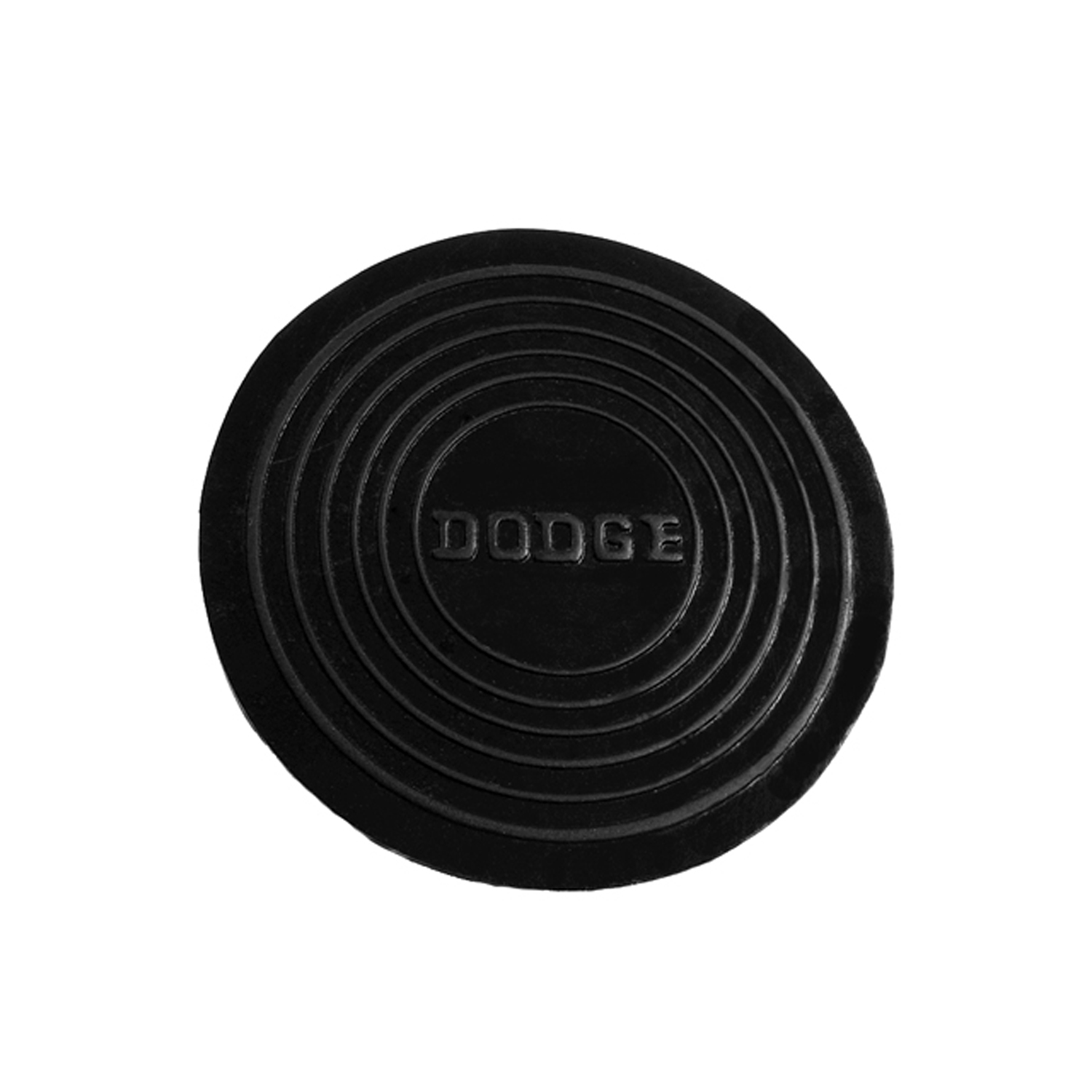 1923 Dodge STANDARD B Step Plate Pad. Rubber face only. 4-1/4" O.D. Each-SP 18Step Plate Pad. Rubber face only. 4-1/4" O.D. Each
Why Choose Metro?
For over 100 years, Metro Moulded Parts has been the pinnacle of quality in classic car restoration parts. Our commitment to precision and authenticity in every component ensures a perfect fit and an OEM-level appearance.
- Expert Craftsmanship & Quality: Each part is a testament to our dedication to reliability and perfection, crafted from original designs and thoroughly tested.
- Advanced Technology: We use cutting-edge techniques to create flawless, long-lasting parts that surpass others in performance.
- SuperSoft Sponge – The Ultimate Door Seal: Not only are our door seals 30% softer than competitors', but they're also guaranteed to never leak. They effectively reduce wind and road noise, enhancing your classic car's comfort and driving experience.
- Proudly American: Our parts are a product of American craftsmanship, made in the USA with a spirit of excellence and heritage.
- Unrivaled Warranty: We back our products with a 30-year industry-leading warranty, a testament to our confidence in their quality.
Join us in preserving the legacy of classic cars with parts that are crafted for perfection, not just made.