
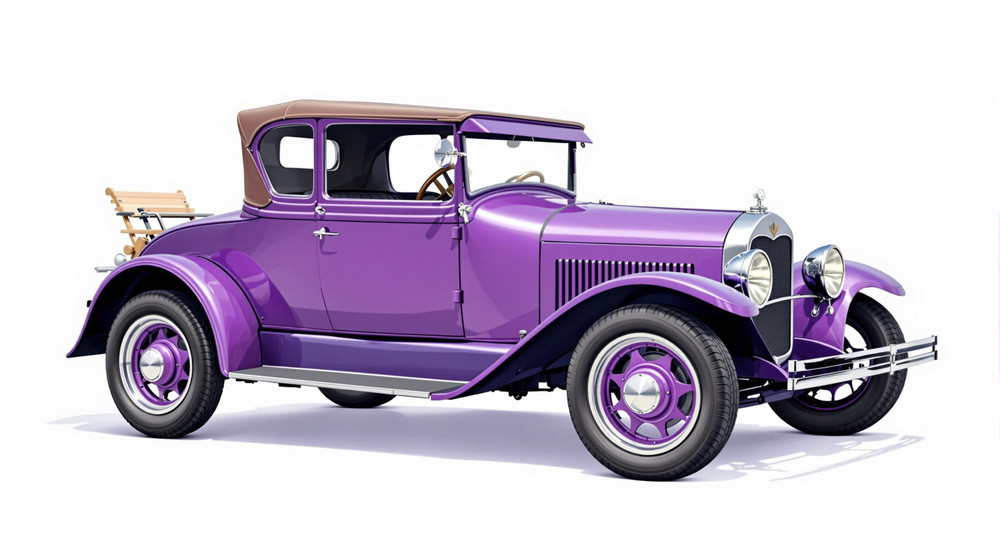
Image of 1924 Dodge Standard, Note: These illustrations use artistic license and may differ from actual historical models.
Performance Metrics
Fundamental Metrics
Emotional Appeal
MMP Rating
| Engine Specifications | |
|---|---|
| Engine: | Inline 4 |
| Displacement: | 212 cubic inches |
| Horsepower: | Estimated 35 HP |
| Torque: | Not available |
| Compression Ratio: | Not available |
| Ignition System: | Battery and coil |
| Cooling System: | Water-cooled |
| Performance Specifications | |
| 0-60 Time: | Not available |
| 1/4 Mile Time: | Not available |
| Top Speed: | 50 mph |
| Transmission and Drive | |
| Drive Type: | Rear-wheel drive |
| Transmission Type: | 3-speed manual |
| Fuel and Efficiency | |
| Fuel System Type: | Carburetor |
| MPG: | Not available |
| Dimensions and Brakes | |
| Brakes: | Mechanical drum brakes |
| Wheelbase: | 116 inches |
| Weight: | 2,400 lbs |
Note: Specifications for classic cars are given to the best of our ability, considering the limited and variant data available.
1924 Dodge Standard: A Sturdy American Original
The 1924 Dodge Standard was built for motorists who wanted dependable transportation without the price or fragility of a luxury car. Its appeal was straightforward: a sturdy chassis, a proven four-cylinder engine, and practical body styles suited to both family travel and everyday work.
The car came from Dodge Brothers, the company founded by Horace and John Dodge. Before producing cars under their own name, the brothers had supplied precision parts to major automakers, including Ford. Their first Dodge automobile arrived in 1914, and by the 1920s the marque had earned a reputation for solid construction. The 1924 Standard belongs to the four-cylinder era of Dodge production. Despite the word “Standard” sometimes being confused with later Dodge model names, this car was not a six-cylinder model.
One notable detail is its place in a rapidly changing industry. By 1924, electric starters and enclosed bodies were making motoring more accessible, while Dodge continued to emphasize durability. The company’s cars were often regarded as substantial, reliable alternatives to the lighter, less expensive Ford Model T.
Exterior Design and Body Styles
The Dodge Standard has the upright, purposeful look typical of a car from the mid-1920s. Its tall radiator, separate rounded fenders, narrow running boards, and high-mounted lamps give it a distinctly formal profile. Wire or wood-spoke wheels, depending on configuration and restoration, add to its period character. The shape is less streamlined than a later classic car, but its proportions feel balanced and unmistakably mechanical.
Period Dodge offerings included open and enclosed body styles. Touring cars and roadsters put passengers in the open air, while coupes and sedans offered greater protection from weather. Exact names and availability varied by production series and market, so surviving cars may not all match the same body-style list. The touring car is among the most recognizable versions, with its folding top, open passenger compartment, and room for several occupants.
Factory paint choices varied with body style and year. Black was a common, practical choice, while dark shades such as blue, green, or maroon suited the restrained tastes of the era. Today, many restored examples wear colors selected to reflect period palettes, though a car’s original paint evidence is the best guide to its factory finish.
Cabin, Materials, and Period Equipment
The interior is simple by modern standards, but it was built around useful, durable materials. Open cars commonly used leather or leather-like upholstery, while enclosed models could feature cloth or mohair-style trim. The dashboard is a compact arrangement of gauges, switches, and controls, with a large steering wheel that gives the driver leverage over the car’s unassisted steering.
Equipment depended on body style and specification. The electric starter was a major convenience compared with hand-cranking earlier cars, though the owner still had to manage a manual transmission and a collection of direct, mechanical controls. Lighting, instrumentation, and weather protection were basic next to modern standards. For the period, however, an enclosed Dodge offered a substantial step up in comfort from an open touring car.
Braking equipment deserves particular attention when assessing an individual car. Dodge adopted four-wheel braking during this period, but equipment and details can vary by series and surviving components. A buyer should confirm the setup on the actual car rather than assume every 1924 example has identical brakes.
Engineering and Historical Significance
The 1924 Dodge Standard’s importance lies less in a single breakthrough than in the way it brought robust engineering to a broad market. Dodge had built its reputation on sound materials and careful manufacturing, and the Standard carried that approach into a period when car ownership was expanding quickly. It was a practical automobile designed to withstand regular use, not merely to look impressive in a showroom.
Its four-cylinder engine also reflects an important moment in Dodge history. The company continued with four-cylinder cars through the mid-1920s before moving to six-cylinder models later in the decade. That makes the 1924 Standard a representative example of Dodge’s earlier engineering philosophy: ample, low-speed pulling power and durability rather than high-revving performance.
Compared with a Model T, a Dodge generally felt more substantial and offered a more modern driving experience, though it also cost more. Compared with premium marques, it was less ornate but far more attainable. Its lasting influence is tied to that middle ground: sturdy, mainstream American transportation that helped establish Dodge as a major national automaker.
Engine, Speed, and Driving Feel
The 1924 Dodge Standard is generally associated with a 212-cubic-inch (about 3.5-liter) L-head inline-four producing approximately 35 horsepower. It uses a manual gearbox and rear-wheel drive. Period specifications can differ by source and configuration, so numbers should be checked against the car’s engine and chassis records where available.
There was no modern standardized 0-to-60-mph test for this car. Its acceleration was leisurely, and many examples would struggle to reach 60 mph in ordinary driving. A reasonable modern expectation is that the car is happiest at moderate speeds, with a top speed often estimated in the neighborhood of 45 to 55 mph when mechanically sound. Those are approximate figures, not guaranteed performance claims.
Behind the wheel, the engine produces a steady, purposeful thrum rather than a sharp, high-revving note. The driver changes gears manually, steers without power assistance, and must allow plenty of room for braking. On smooth roads, the car has a rolling, deliberate character. Uneven pavement brings out the limitations of its older suspension, while narrow, winding roads call for anticipation and measured steering inputs. Crosswinds can also be noticeable, particularly in an open-bodied car.
Driving one is an active experience. The large steering wheel, visible mechanical controls, engine sounds, and slower pace make the driver feel involved in every part of the journey. It is rewarding on quiet roads and at classic-car events, but it is not suited to modern highway traffic or contemporary expectations of acceleration and safety.
Ownership, Maintenance, and Reliability
In its day, the Dodge Standard was intended for regular transportation, including family travel and general daily use. Today, most examples are used for touring, local events, museum displays, and car shows. A well-sorted car can still cover short distances reliably, but it needs more frequent inspection and care than a modern vehicle.
Routine work includes checking ignition and fuel systems, lubricating chassis components, monitoring cooling-system condition, and keeping the brakes correctly adjusted. Parts availability is generally better than for many obscure prewar marques, thanks to Dodge’s popularity and the classic-car parts network. Even so, some items may require specialist suppliers, careful rebuilding, or fabrication.
The mechanical layout is relatively accessible to an experienced home mechanic. The average owner can handle basic servicing with period-correct tools and a good workshop manual, but engine rebuilding, body restoration, and brake work may call for professional help. Reliability depends heavily on maintenance and restoration quality. A freshly painted car is not necessarily a sound car, so inspect the chassis, drivetrain, wiring, and brakes before buying.
1924 Dodge Facts and Common Criticisms
The 1924 Standard belongs to Dodge’s long-running four-cylinder chapter, which ended as the company moved toward six-cylinder power later in the decade. It also comes from a pivotal corporate era: Dodge Brothers was sold to the investment firm Dillon, Read & Co. in 1925, before Chrysler acquired the company in 1928.
There is no single widely recognized speed or endurance record associated specifically with the 1924 Standard. Its historical importance is instead found in its role as dependable mass-market transportation. Dodge vehicles of the era also appeared in the everyday life of a growing motorized America, from family trips to business use, rather than being defined by celebrity ownership or headline-grabbing racing victories.
Common criticisms are familiar to anyone driving a car from the 1920s: modest speed, heavy manual controls, limited weather protection in open models, and braking that requires more planning than modern drivers expect. Parts and restoration work can also become expensive, especially if a car has missing trim or an incomplete drivetrain. Those drawbacks are part of the ownership bargain, and they are balanced by the car’s mechanical character and sturdy construction.
Collector Value and Availability
Exact production figures for the 1924 Standard by body style are difficult to pin down, and published totals may refer to Dodge production across multiple models rather than to this specific car. As a broad estimate, Dodge’s total annual output was likely in the tens of thousands to well over 100,000 vehicles, depending on how the figures are counted. The number of surviving Standards is much smaller, but they are not as scarce as many low-volume luxury cars from the same period.
For a rough 2026 U.S. market guide, a project or incomplete example might sell for about $5,000 to $15,000. A running, usable car could fall around $15,000 to $30,000, while a high-quality restoration may bring approximately $30,000 to $55,000 or more. Body style, originality, restoration workmanship, and local demand can shift prices substantially. These are broad estimates rather than a formal appraisal.
Well-restored prewar cars have generally held appeal among collectors, but the market is selective. A sound, correctly restored touring car may attract more interest than a poorly executed project, while unusual body styles can command a premium if the right buyer appears. Over time, values are more likely to depend on condition and provenance than on the model name alone.
Why the Dodge Standard Still Matters
The 1924 Dodge Standard combines practical engineering, recognizable vintage styling, and a direct connection to the formative years of American motoring. Its four-cylinder powertrain is modest, its controls ask for attention, and its pace belongs to another era. Yet those same qualities reveal what made Dodge successful: a car built to be used, maintained, and trusted.
For collectors, it is a rewarding entry into prewar motoring. For everyone else, it is a reminder that automotive progress was built not only by glamorous innovations, but also by sturdy cars that carried ordinary people into a new age of travel.
1924 Dodge Standard Catalog of Parts
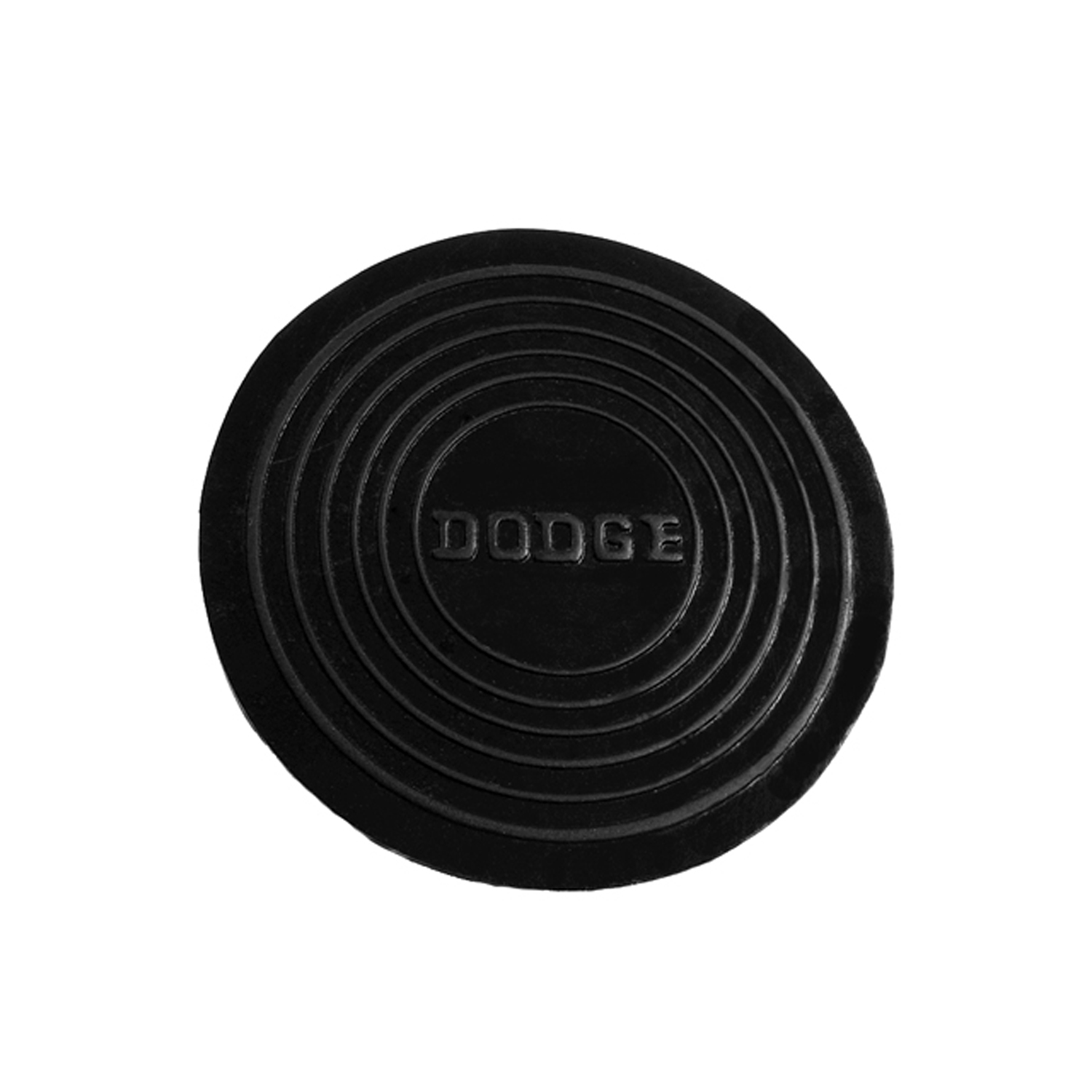 1924 Dodge STANDARD Step Plate Pad. Rubber face only. 4-1/4" O.D. Each-SP 18Step Plate Pad. Rubber face only. 4-1/4" O.D. Each
Why Choose Metro?
For over 100 years, Metro Moulded Parts has been the pinnacle of quality in classic car restoration parts. Our commitment to precision and authenticity in every component ensures a perfect fit and an OEM-level appearance.
- Expert Craftsmanship & Quality: Each part is a testament to our dedication to reliability and perfection, crafted from original designs and thoroughly tested.
- Advanced Technology: We use cutting-edge techniques to create flawless, long-lasting parts that surpass others in performance.
- SuperSoft Sponge – The Ultimate Door Seal: Not only are our door seals 30% softer than competitors', but they're also guaranteed to never leak. They effectively reduce wind and road noise, enhancing your classic car's comfort and driving experience.
- Proudly American: Our parts are a product of American craftsmanship, made in the USA with a spirit of excellence and heritage.
- Unrivaled Warranty: We back our products with a 30-year industry-leading warranty, a testament to our confidence in their quality.
Join us in preserving the legacy of classic cars with parts that are crafted for perfection, not just made.