
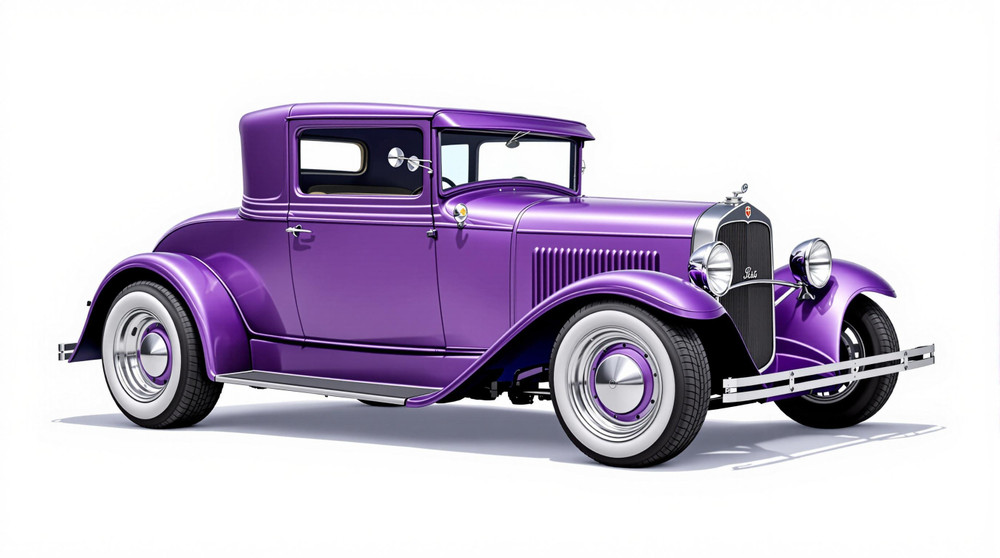
Image of 1926 Dodge Custom, Note: These illustrations use artistic license and may differ from actual historical models.
Performance Metrics
Fundamental Metrics
Emotional Appeal
MMP Rating
| Engine Specifications | |
|---|---|
| Engine Options: | Inline 4 |
| Displacement Range: | 212 cubic inches |
| Horsepower Range: | Estimated 35 HP |
| Torque: | Not available |
| Compression Ratio: | Not available |
| Ignition System: | Battery and coil |
| Cooling System: | Water-cooled |
| Performance Specifications | |
| 0-60 Time: | Not available |
| 1/4 Mile Time: | Not available |
| Top Speed: | 50 mph |
| Transmission and Drive | |
| Drive Type: | Rear-wheel drive |
| Transmission Type: | 3-speed manual |
| Fuel and Efficiency | |
| Fuel System Type: | Carburetor |
| MPG: | Not available |
| Dimensions and Brakes | |
| Brakes: | Mechanical drum brakes |
| Wheelbase: | 116 inches |
| Weight: | 2,400 lbs |
Note: Specifications for classic cars are given to the best of our ability, considering the limited and variant data available.
1926 Dodge Custom: A Working-Class Classic with Real Substance
The 1926 Dodge Custom brought sturdy engineering and practical comfort to motorists who wanted more than the bare essentials. It came from Dodge Brothers, the Detroit company founded by Horace and John Dodge, and was built before the firm became part of Chrysler Corporation in 1928.
One detail matters when identifying this car: “Custom” does not always mean a single, clearly defined factory model. Period Dodge listings and later sales descriptions use the word in different ways, sometimes for a particular body or trim specification and sometimes as a general label. The exact body style, equipment and original specification can therefore vary from one surviving car to another.
In 1926, Dodge was competing in a fast-changing market. Closed cars were becoming more attainable, roads were improving, and buyers increasingly expected dependable transport alongside basic utility. Dodge’s reputation for solid construction helped it stand out. Just two years later, the company would join Chrysler, giving this pre-merger Dodge an appealing place in the story of American motoring.
Sturdy Lines and Practical Comfort
The Dodge’s styling is upright and purposeful, with a tall radiator, prominent headlamps, sweeping front fenders and a long hood that gives the car a confident profile. Its proportions are unmistakably from the mid-1920s: narrow tires, separate fenders and running boards, a high seating position, and a body that looks built to work as well as impress.
Depending on the car’s body style, the passenger compartment could be open to the elements or enclosed. Touring and roadster versions offered an open-air experience, while coupes and sedans provided more protection from weather. Interiors were functional rather than lavish by modern standards, but period cars could feature carefully finished woodwork, durable upholstery, quality trim and clear, straightforward controls. Materials and fittings varied with body style and equipment.
Paint choices also depended on the specific body and specification. Black was a common, practical choice, while dark colors such as blue, green or maroon suited the period’s taste for restrained elegance. Original paint evidence on an individual car is more reliable than assuming every “Custom” Dodge left the factory in one standard palette.
Surviving 1926 Dodges are described in a range of body styles, including touring cars, roadsters, coupes and sedans. A closed sedan or coupe is often the most recognizable choice for collectors seeking a more protected, all-season car, while an open touring model delivers the classic vintage-car look. The “Custom” label alone is not enough to establish a car’s original body; factory records, title history and physical details can help.
Engineering Ahead of Everyday Expectations
The 1926 Dodge’s appeal was rooted in sound engineering more than flashy novelty. Its four-cylinder engine, conventional chassis and straightforward controls were designed for dependable service and repairability. Dodge also offered four-wheel hydraulic brakes on cars of this period, an important safety feature in an era when many vehicles still relied on less effective braking arrangements. Equipment can differ by market and individual car, so a surviving example should be inspected rather than judged from a model-year description alone.
That combination of practical construction and useful technology helped distinguish Dodge from many lower-priced rivals. The car was not a luxury machine, but it offered buyers a robust alternative to more basic transportation. Its lasting influence is less about one dramatic styling breakthrough than about the Dodge Brothers’ reputation for building durable, well-engineered cars, a reputation Chrysler inherited after the acquisition.
Performance on 1920s Roads
A typical 1926 Dodge of this type used a 212-cubic-inch L-head four-cylinder engine, rated at about 35 horsepower, paired with a three-speed manual transmission. Exact specifications can vary with the model and surviving car, so the vehicle’s serial information and engine should be checked before treating those figures as definitive.
There are no modern standardized acceleration figures for every body and specification. As a useful estimate, a healthy, correctly tuned example might reach roughly 50 to 60 mph, with acceleration to 60 mph likely taking well over 30 seconds and sometimes longer. These are period-appropriate estimates, not factory-tested guarantees. The car was built for steady travel, not rapid acceleration or modern highway traffic.
Behind the wheel, the engine produces a measured, mechanical thrum, with gear changes and engine speed very much part of the driving experience. The high seating position and narrow tires give the driver a clear view of the road, but steering requires more effort than in a modern car. The suspension can soften ordinary bumps, though rough surfaces still make themselves known through the chassis and cabin. On winding roads, a careful pace is essential: the car’s tall stance, vintage tires and period braking distances reward smooth inputs rather than sudden maneuvers.
Living with a Vintage Dodge
Today, a 1926 Dodge is most at home on local tours, vintage-car gatherings, museum displays and occasional pleasure drives. A well-maintained example can be used regularly in fair weather, but it is not a sensible modern daily driver. Traffic speeds, limited crash protection, period lighting and the demands of old-car maintenance all call for a thoughtful approach.
Its mechanical layout is comparatively accessible for an owner familiar with vintage vehicles. Routine work may include ignition and carburetor tuning, lubrication, cooling-system care, brake inspection and attention to the electrical system. Parts availability is generally better for common mechanical components than for distinctive body panels, upholstery details and model-specific trim. A pre-purchase inspection should cover the frame, wood structure where applicable, engine compression, transmission, steering, brakes and signs of prior repairs.
Reliability depends heavily on condition and maintenance. A sound car can be dependable on short, planned trips, but age-related issues such as cracked hoses, worn bearings, fuel-system problems and deteriorated wiring are normal considerations. “Simple to repair” does not mean maintenance-free: correct adjustments and period knowledge make a substantial difference.
Notable Details and Common Criticisms
The biggest historical connection is Dodge’s transition into the Chrysler era. The Dodge Brothers company had built its identity around practical engineering, and its 1926 cars represent the marque just before Chrysler’s 1928 acquisition reshaped its future. There is no widely recognized speed record or celebrity ownership story specific to the “1926 Dodge Custom” name, and claims of a famous connection should be verified against reliable documentation.
One persistent source of confusion is the name itself. Sellers may use “Custom” loosely, so the badge or listing description does not necessarily prove that a car was a distinct factory model. Another common criticism is the car’s modest power by present-day standards. Its acceleration, braking distances, steering effort and open-body weather protection are all firmly rooted in the 1920s. Those limitations are part of the experience, but they also mean owners need to drive with more care and leave more room than they would in a modern car.
Collector Values and Availability
As a broad 2026 estimate, a project-grade 1926 Dodge may sell for around $5,000 to $12,000, depending on completeness and structural condition. A usable driver could fall roughly in the $12,000 to $30,000 range, while a high-quality restoration or especially desirable, documented body style may bring approximately $30,000 to $50,000 or more. These are general guide ranges, not formal appraisals. Body style, originality, restoration quality, provenance and local market conditions can shift the price substantially.
Exact production figures for a “Custom” version are difficult to establish because the name was not consistently used as a single model designation. Dodge produced cars in significant numbers in the 1920s, but the number of surviving examples in any one body-and-trim combination is much smaller. A reasonable collector’s approach is to treat a precise production estimate for the “Custom” as unconfirmed unless it is supported by factory documentation.
Values for sound, well-presented examples have generally been steadier than those of fashionable postwar classics. The best cars can appreciate over time, but restoration costs are high and do not always translate into an equal increase in resale value. Originality and documented history often help a car stand out more than expensive cosmetic upgrades alone.
Why the 1926 Dodge Still Matters
The 1926 Dodge Custom is best understood as a durable pre-Chrysler Dodge with a name that can describe more than one specification. Its upright styling, practical engineering and period braking technology make it a compelling example of how American cars were evolving toward safer, more comfortable everyday transport. It will not deliver modern speed or convenience, but it offers something more distinctive: a direct connection to the early years of the American automobile industry, experienced one deliberate gear change at a time.
1926 Dodge Custom Catalog of Parts
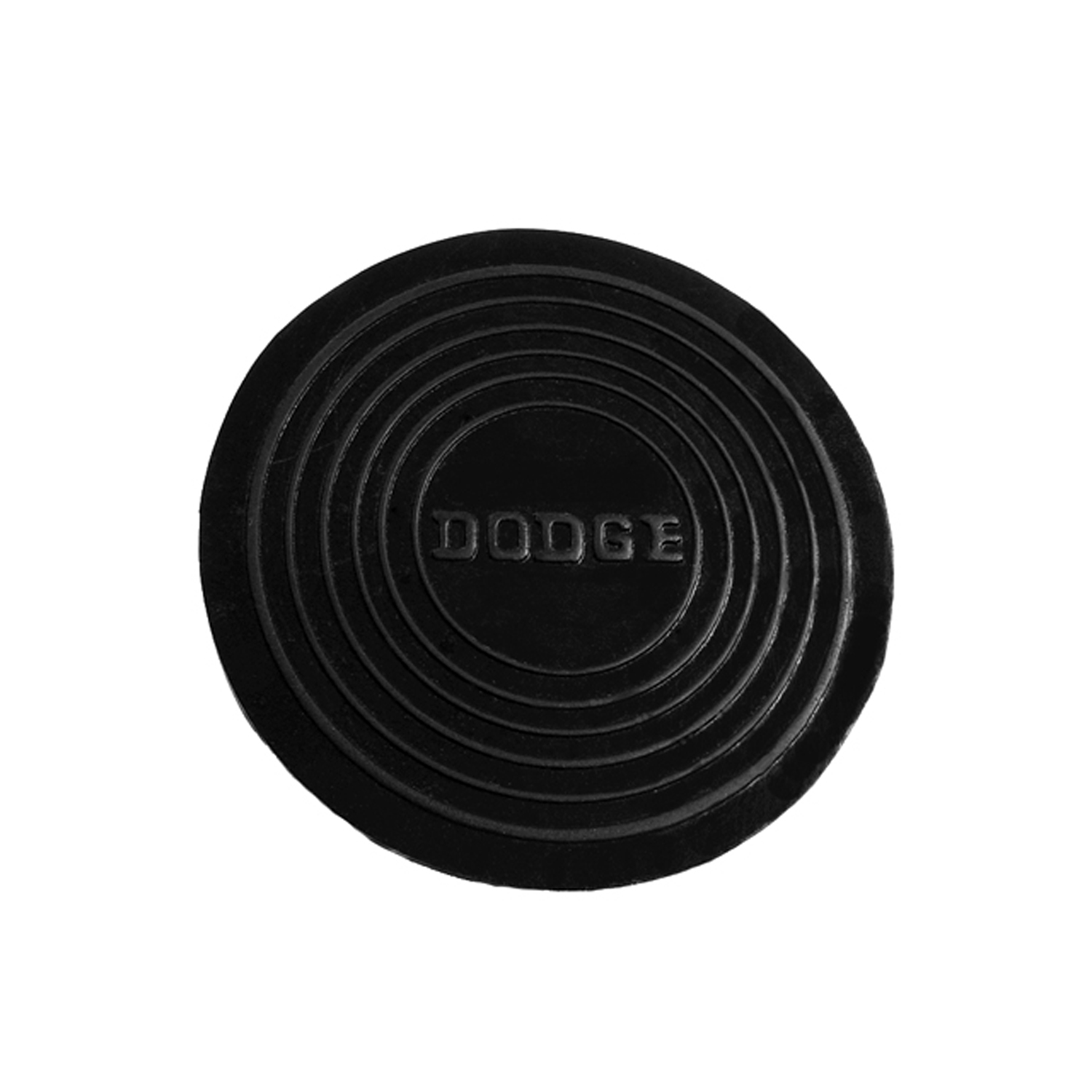 1926 Dodge Custom Step Plate Pad. Rubber face only. 4-1/4" O.D. Each-SP 18Step Plate Pad. Rubber face only. 4-1/4" O.D. Each
Why Choose Metro?
For over 100 years, Metro Moulded Parts has been the pinnacle of quality in classic car restoration parts. Our commitment to precision and authenticity in every component ensures a perfect fit and an OEM-level appearance.
- Expert Craftsmanship & Quality: Each part is a testament to our dedication to reliability and perfection, crafted from original designs and thoroughly tested.
- Advanced Technology: We use cutting-edge techniques to create flawless, long-lasting parts that surpass others in performance.
- SuperSoft Sponge – The Ultimate Door Seal: Not only are our door seals 30% softer than competitors', but they're also guaranteed to never leak. They effectively reduce wind and road noise, enhancing your classic car's comfort and driving experience.
- Proudly American: Our parts are a product of American craftsmanship, made in the USA with a spirit of excellence and heritage.
- Unrivaled Warranty: We back our products with a 30-year industry-leading warranty, a testament to our confidence in their quality.
Join us in preserving the legacy of classic cars with parts that are crafted for perfection, not just made.