

Image of 1927 Dodge Deluxe Sport, Note: These illustrations use artistic license and may differ from actual historical models.
Performance Metrics
Fundamental Metrics
Emotional Appeal
MMP Rating
| Engine Specifications | |
|---|---|
| Engine: | Inline 4 |
| Displacement: | 212 cubic inches |
| Horsepower: | Estimated 35-40 HP |
| Torque: | Not available |
| Compression Ratio: | Not available |
| Ignition System: | Battery and coil |
| Cooling System: | Water-cooled |
| Performance Specifications | |
| 0-60 Time: | Not available |
| 1/4 Mile Time: | Not available |
| Top Speed: | 50 mph |
| Transmission and Drive | |
| Drive Type: | Rear-wheel drive |
| Transmission Type: | 3-speed manual |
| Fuel and Efficiency | |
| Fuel System Type: | Carburetor |
| MPG: | Not available |
| Dimensions and Brakes | |
| Brakes: | Mechanical drum brakes |
| Wheelbase: | 116 inches |
| Weight: | 2,400 lbs |
Note: Specifications for classic cars are given to the best of our ability, considering the limited and variant data available.
1927 Dodge Deluxe Sport: A Roaring Twenties Roadster
The 1927 Dodge Deluxe Sport brings together the upright confidence of an early American motorcar and the open-air appeal of a sporty roadster. Built by Dodge Brothers, it belongs to the final chapter of the company’s independent era, just before Chrysler took control in 1928. Its four-cylinder power, traditional rear-wheel-drive layout, and rumble-seat charm make it a vivid snapshot of motoring before the modern car fully arrived.
One detail worth knowing is that “Deluxe Sport” can describe a particular body or trim configuration rather than a completely separate mechanical model. Period names and specifications sometimes vary across catalogs and surviving cars, so a car’s serial number, body tag, and original sales literature are the best guides to its exact configuration. Many cars identified by this name are open roadsters, often with a rear rumble seat for occasional passengers.
Dodge Brothers at a Turning Point
Dodge Brothers had built a reputation for sturdy, well-engineered cars since entering automobile production in 1914. By 1927, the company was navigating a changing market. Buyers were increasingly drawn to smoother six-cylinder engines, closed bodies, and comfort features, while Dodge’s established four-cylinder cars still appealed to motorists who valued straightforward construction.
The 1927 model arrived during a period of corporate change. The Dodge brothers had died earlier in the decade, and the company had passed into new ownership before Chrysler acquired it in 1928. The following year brought Dodge’s important Victory Six line. That makes the 1927 Deluxe Sport a compelling bridge between the original Dodge Brothers era and the larger, more modern cars that followed.
Roadster Style and Period Details
The Deluxe Sport’s design is all about confident, pre-streamlined proportions. Its tall radiator, long hood, separate fenders, running boards, and upright windshield give it the unmistakable profile of a 1920s automobile. Headlamps sit proudly beside the radiator, while exposed hardware and visible running gear remind you that this was a machine designed to be understood as well as admired.
On a roadster, the folding fabric top keeps the silhouette low when lowered. Many examples have a rumble seat at the rear, transforming the back deck into an occasional perch for one or two adventurous passengers. The arrangement is charming, though better suited to a short sunny ride than a long trip. As with other period cars, details such as lamps, wheels, fenders, and windshield fittings can differ by body style and production date.
Interiors were functional rather than plush by modern standards. Expect a simple dashboard with clear, period-style instruments, a large steering wheel, and a bench seat trimmed in upholstery suited to an open car. Depending on the car’s original specification, upholstery might be leather or a durable fabric. A well-restored example can look handsome, but owners should remember that original finishes were built to be used, not to provide the isolation or cushioning of a modern luxury interior.
Factory paint choices depended on body style, year, and order, and surviving cars have often been repainted. Dark, conservative shades such as black, blue, green, or maroon suit the car’s period character, but an individual car’s original color is best confirmed through paint evidence or factory documentation. Black is a familiar choice on restored examples, though it should not automatically be assumed to be original.
Body Styles and Deluxe Sport Character
Dodge’s 1927 range included multiple open and closed body types. Buyers could find practical touring and roadster bodies, along with more weather-protected coupes and sedans. The exact catalog lineup and naming could vary by market and series. The Deluxe Sport’s most evocative form is the open roadster, especially when fitted with its folding top and rumble seat. That combination gives it the sporting look most collectors associate with the name.
Before buying, check that the body style and components match the car’s identity. Roadster bodies, rumble-seat assemblies, trim pieces, and correct lamps can be difficult to source individually. A complete, well-documented car is usually a more satisfying purchase than a cheaper project missing hard-to-find parts.
Engineering and Historical Significance
The Deluxe Sport was not a revolutionary sports car, and it did not introduce a single breakthrough that transformed the industry. Its significance lies in how it represents Dodge’s practical engineering at a time when American motoring was evolving rapidly. The car retained the straightforward front-engine, rear-wheel-drive layout that mechanics and owners already understood, while offering a stylish open body for buyers who wanted more personality than a basic family car.
Many 1927 Dodge Brothers cars used a 212.3-cubic-inch L-head four-cylinder engine, commonly quoted at about 35 horsepower. Exact specifications should be checked against the car’s particular series and documentation. The engine’s side-valve design favored durability and uncomplicated servicing over high-revving performance. Power went through a manual transmission, typically a three-speed unit, to the rear wheels.
Braking and suspension also reflect the period. The car uses mechanical systems rather than modern power assistance, and its suspension relies on leaf springs. There is no modern electronic equipment, synchronized automatic shifting, or contemporary crash protection. Its appeal is precisely that directness, but it also means the driver must plan ahead and operate the car with care.
Performance and the Driving Experience
There is no single dependable factory 0-to-60-mph figure for every 1927 Deluxe Sport configuration. Period testing methods were not standardized as they are today, and engine condition, gearing, body style, and road surface make a major difference. With roughly 35 horsepower in a substantial early car, acceleration to 60 mph is slow by modern standards. A rough estimate would be around 35 to 45 seconds, if the car can reach that speed comfortably at all. Treat that as an approximation, not a verified factory test result.
A healthy example may manage a top speed in the neighborhood of 50 to 60 mph, though sustained cruising is usually more comfortable below its maximum. These cars were built for the roads and traffic of their time, not for fast modern highways. Keeping to quieter roads and allowing generous stopping distance makes for a safer, more enjoyable outing.
Behind the wheel, the engine produces a steady mechanical thrum rather than a sharp sports-car bark. The large steering wheel gives the driver leverage, but steering can feel heavy at low speeds. The manual gearbox asks for deliberate shifts, and the mechanical brakes require anticipation. On a bumpy road, the car moves with the rhythm of its leaf-spring suspension. On a winding route, it rewards smooth inputs and sensible speeds rather than aggressive cornering.
Open-car motoring is part of the experience. With the top down, the driver hears the engine, tires, wind, and every change in the road surface. It is engaging in a way a modern car rarely is, but it also asks the driver to stay attentive. A well-sorted Deluxe Sport feels lively and involving, not effortless.
Ownership, Maintenance, and Reliability
Today, the 1927 Deluxe Sport is best suited to weekend drives, local classic-car events, parades, and shows. Some owners do use their cars regularly on suitable roads, but it is not a sensible choice for commuting in modern traffic. Its modest speed, exposed body, and period braking performance call for a more relaxed driving environment.
Mechanical simplicity is one of its advantages. A skilled owner or vintage-car mechanic can understand the engine, transmission, and chassis without diagnostic computers or specialized electronic tools. Routine care includes checking fluids, ignition components, cooling-system condition, lubrication points, tires, and brake adjustment. Because the car is nearly a century old, sound maintenance matters more than the mileage shown on an odometer.
Parts availability is mixed. Common service items and some mechanical components may be obtainable through specialist suppliers or the vintage-car community, but correct body parts, trim, and roadster fittings can take time to locate. Before purchasing, inspect the frame for corrosion or poor repairs, check the engine for oil pressure and overheating, and confirm that the brakes work evenly. A professional inspection by someone familiar with Dodge Brothers cars is money well spent.
Notable Facts and Common Criticisms
The Deluxe Sport’s rumble seat is one of its most memorable features. It offered extra seating without the length and expense of a larger closed body, but it exposed passengers to wind, weather, and road dust. It is delightful for a short trip and much less appealing for a long one.
There is no widely documented speed, endurance, or sales record specific to the 1927 Deluxe Sport. Nor is there a reliably established production total for that exact body and trim designation. Dodge produced cars in several series and body styles, and surviving records do not always separate a particular “Deluxe Sport” configuration from the wider model range. It is better to describe the car as uncommon today than to attach a precise production number without supporting factory records.
Common criticisms are familiar to anyone who drives a car from the 1920s: slow acceleration, limited braking performance by modern standards, wind and weather exposure, and a lack of contemporary safety equipment. The cabin can also feel cramped compared with later cars. Those drawbacks are part of the ownership decision, not flaws that restoration can completely remove.
Collector Value and Availability
Values depend heavily on body style, completeness, mechanical condition, restoration quality, and documentation. As a broad U.S. market estimate in 2026, a project or incomplete example might fall around $5,000 to $12,000. A usable but older restoration could bring roughly $12,000 to $25,000, while a high-quality, correctly restored roadster may reach approximately $25,000 to $45,000 or more. Exceptional cars with strong provenance and unusually correct details can exceed that range, while cars needing major work can sell for less.
These are general estimates rather than a formal appraisal. The term “Deluxe Sport” can be applied inconsistently, so buyers should compare cars with the same body style and verify what is actually original. Roadsters with complete rumble-seat equipment and sound, documented restorations tend to attract more attention than less distinctive closed-body versions.
The exact number produced in this configuration is not firmly established in commonly available production summaries. Dodge’s total output for the year was far larger than the surviving pool of Deluxe Sport examples, but assigning a specific production figure to the body style would be guesswork. Today, they appear occasionally through classic-car dealers, auctions, clubs, and private sales. Their market is relatively specialized, which can make finding the right car a matter of patience.
In the long term, well-presented, authentic examples may hold or gradually gain value as interest in early American cars continues. However, the market is selective, and restoration costs can exceed a car’s eventual sale price. Condition and correctness matter more than optimistic predictions about appreciation.
Why the 1927 Dodge Deluxe Sport Still Matters
The 1927 Dodge Deluxe Sport is not a high-speed performance car or a technological showpiece. Its appeal is more personal: an open cockpit, honest mechanical construction, and styling that captures the confidence of late-1920s American motoring. It also stands at a turning point for Dodge, just before the company’s next generation of cars reshaped its lineup.
For collectors, it offers an engaging way to experience the era directly. For everyone else, it is a reminder that a memorable drive does not need to be fast or complicated. With its upright stance, steady four-cylinder pulse, and rumble seat ready for a brave passenger, the Deluxe Sport makes history feel wonderfully close at hand.
1927 Dodge Deluxe Sport Catalog of Parts
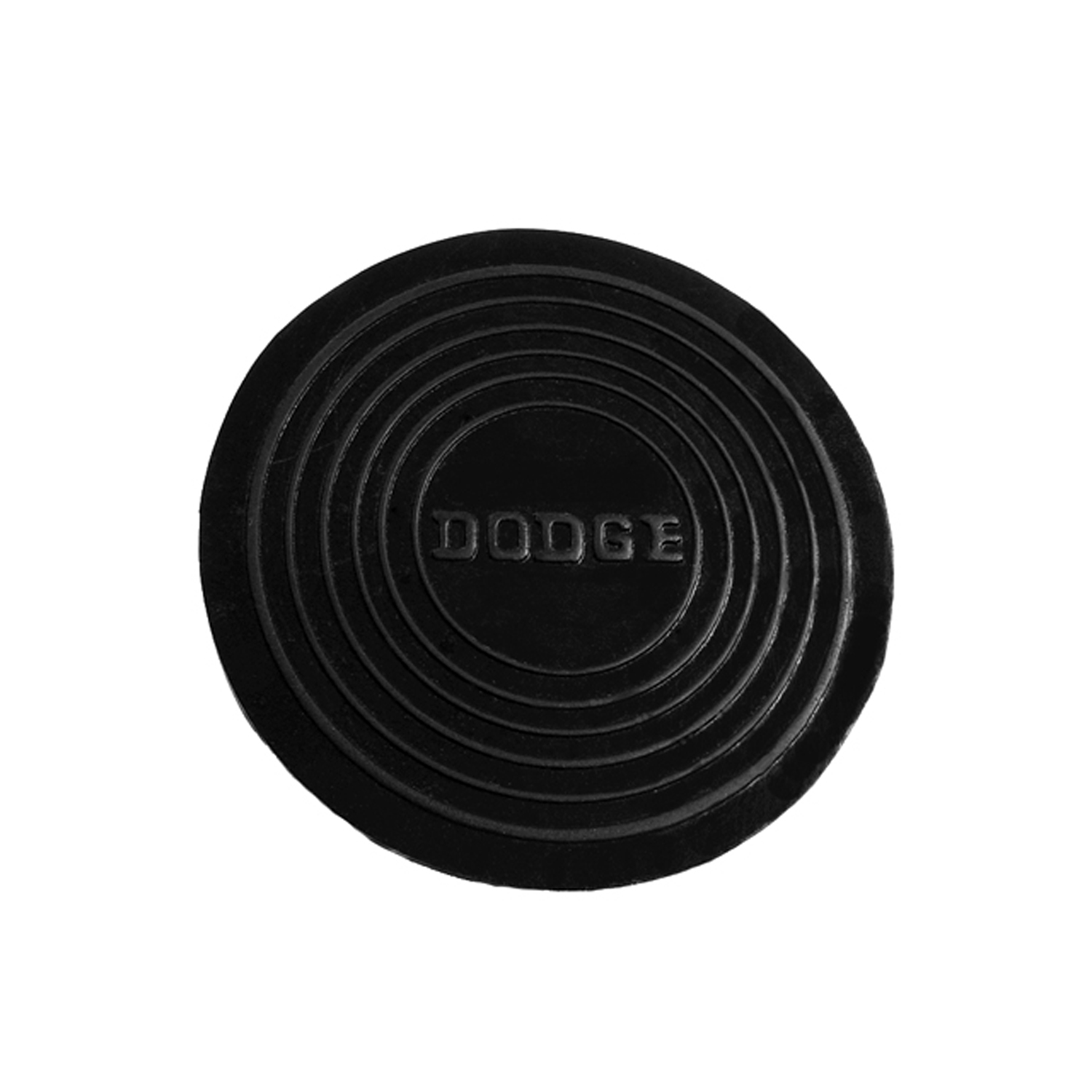 1927 Dodge DELUXE SPORT Step Plate Pad. Rubber face only. 4-1/4" O.D. Each-SP 18Step Plate Pad. Rubber face only. 4-1/4" O.D. Each
Why Choose Metro?
For over 100 years, Metro Moulded Parts has been the pinnacle of quality in classic car restoration parts. Our commitment to precision and authenticity in every component ensures a perfect fit and an OEM-level appearance.
- Expert Craftsmanship & Quality: Each part is a testament to our dedication to reliability and perfection, crafted from original designs and thoroughly tested.
- Advanced Technology: We use cutting-edge techniques to create flawless, long-lasting parts that surpass others in performance.
- SuperSoft Sponge – The Ultimate Door Seal: Not only are our door seals 30% softer than competitors', but they're also guaranteed to never leak. They effectively reduce wind and road noise, enhancing your classic car's comfort and driving experience.
- Proudly American: Our parts are a product of American craftsmanship, made in the USA with a spirit of excellence and heritage.
- Unrivaled Warranty: We back our products with a 30-year industry-leading warranty, a testament to our confidence in their quality.
Join us in preserving the legacy of classic cars with parts that are crafted for perfection, not just made.