
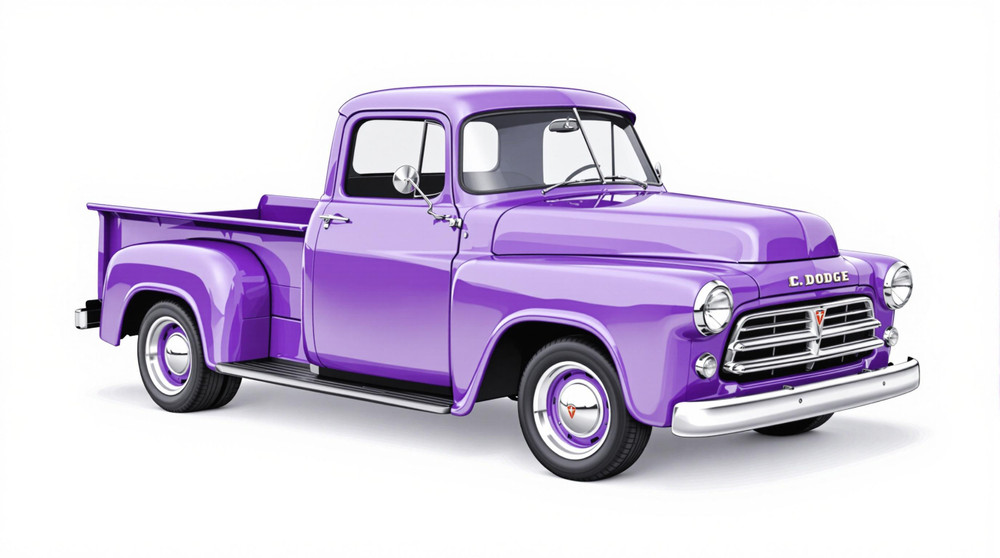
Image of 1955 Dodge C-1 Truck, Note: These illustrations use artistic license and may differ from actual historical models.
Performance Metrics
Fundamental Metrics
Emotional Appeal
MMP Rating
| Engine Specifications | |
|---|---|
| Engine Options: | Inline 6, V8 |
| Displacement Range: | 230-315 cu in (approximately) |
| Horsepower Range: | 120-210 hp (approximately) |
| Torque: | 215-315 lb-ft (approximately) |
| Compression Ratio: | 7.0:1 - 8.5:1 (approximately) |
| Ignition System: | Distributor and coil |
| Cooling System: | Liquid-cooled |
| Performance Specifications | |
| 0-60 Time: | Not available due to the age and type of vehicle |
| 1/4 Mile Time: | Not available due to the age and type of vehicle |
| Top Speed: | 70-85 mph (approximately) |
| Transmission and Drive | |
| Drive Type: | Rear-wheel drive |
| Transmission Type: | 3-speed manual, 4-speed manual |
| Fuel and Efficiency | |
| Fuel System Type: | Carburetor |
| MPG: | 10-15 mpg (approximately) |
| Dimensions and Brakes | |
| Brakes: | Drum brakes |
| Wheelbase: | 108-126 inches (approximately) |
| Weight: | 3,200-3,800 lbs (approximately) |
Note: Specifications for classic cars are given to the best of our ability, considering the limited and variant data available.
1955 Dodge C-1 Truck: A Workhorse with a Hemi Heart
The 1955 Dodge pickup looks ready to go to work, but it has a surprise under the hood: some examples could be ordered with a V8 derived from Chrysler’s famous Hemi engine family. That mix of practical farm-truck toughness and early V8 muscle gives Dodge’s mid-1950s pickups a character all their own.
A quick naming note for buyers and researchers: “C-1” is often used broadly for the first generation of Dodge’s C-series trucks, introduced for 1954. Dodge’s factory series codes changed across model years, so a truck described as a 1955 C-1 may carry a different year-specific designation on its identification plate. Check the serial number and model data when authenticating a particular truck.
Built by the Dodge division of Chrysler Corporation, the 1955 pickup belonged to Dodge’s “Job-Rated” truck range. The name reflected the company’s emphasis on matching trucks to working needs, with different capacities, wheelbases, chassis and equipment. These trucks served farms, tradespeople, small businesses and municipal fleets, while today their upright stance and recognizable mid-century styling make them popular restoration and show vehicles.
Mid-Century Dodge Truck Styling
The 1955 Dodge has the confident proportions of a classic American pickup: a tall hood, substantial front fenders and a cab set high above the road. Its broad grille and sculpted hood give the front end a purposeful look without the excess chrome and tailfin drama that would define some later 1950s vehicles. A large, curved windshield helps lighten the cab’s otherwise upright profile and gives the driver a broad view forward.
Bed and chassis configurations depended on the truck’s intended job. Buyers could find conventional pickups as well as chassis-cab models used for stake beds, service bodies and other commercial equipment. The familiar pickup layout, with an open cargo bed and separate rear fenders, is the version most often pictured today. Wheelbase, payload rating and bed dimensions varied by model, so parts and body details should be matched to the truck’s tag rather than assumed from appearance alone.
Factory colors varied by year and body configuration. Period Dodge trucks appeared in practical solid colors as well as brighter shades, with two-tone paint available on some combinations. Restorers often favor cream, red, green or blue tones that suit the truck’s broad fenders and simple lines. For a historically accurate repaint, consult a model-year paint chart and the truck’s original paint evidence, since later repainting can disguise its factory color.
A Simple, Durable Cab
Inside, the Dodge was designed for work rather than luxury. The cab typically featured a broad bench seat, painted metal surfaces, straightforward gauges and large, easy-to-operate controls. Upholstery materials and trim depended on the specification, but the overall cabin was functional and uncomplicated. A rubber floor covering was practical for muddy boots and daily hauling, while the bench seat made room for a passenger or two depending on the cab configuration.
Compared with a modern pickup, the cabin is noisy and spare. There is little sound insulation, few convenience features and no modern crash protection. In return, the layout is easy to understand, and the large steering wheel and simple dashboard give the driver a direct connection to the mechanical parts of the truck.
Engines, Equipment and Period Technology
The usual engine was a Dodge flathead inline-six, with displacement and output varying by model and application. An optional V8 was available in some configurations: the 241-cubic-inch Red Ram Hemi. The Hemi’s hemispherical combustion chambers were a notable piece of Chrysler engineering, and finding one in a working pickup gives the truck an especially appealing combination of utility and performance.
Transmission choices and equipment depended on the model. A manual gearbox was common, while an automatic transmission could be ordered on selected versions. Power steering and power brakes were not standard across the range, and many trucks relied on straightforward, manually operated systems. Electrical equipment was also less sophisticated than today’s; confirm the voltage and wiring on an individual truck, especially if it has been converted or modified over the decades.
These were not high-tech trucks by modern standards, but Dodge offered useful engineering for the era: a range of payload and chassis choices, available V8 power and equipment that could be tailored to the job. That practical flexibility was central to the Job-Rated identity.
How the 1955 Dodge Drives
Exact performance figures are difficult to pin down because engine, gearing, transmission, tire size and load all make a difference. Factory literature did not give every pickup a directly comparable modern 0-to-60-mph figure. As a broad estimate, a six-cylinder truck may take roughly 25 to 35 seconds to reach 60 mph, while a lighter V8 model could be quicker. Top speed is similarly configuration-dependent; many examples are most comfortable cruising well below 70 mph rather than sustaining modern highway speeds.
On the road, expect a deliberate, truck-like feel. The steering is slower than a modern pickup’s, and a solid-axle suspension with leaf springs is built to carry a load, not isolate the driver from every bump. An unloaded truck can bounce over rough pavement, while a properly loaded one may feel more settled. On winding roads, the tall body and period tires reward smooth steering and sensible cornering rather than quick inputs.
The six-cylinder engine has a steady mechanical rumble, while the optional Hemi V8 adds a deeper, more energetic note. Either way, the driver is part of the process: shifting, steering and braking all require more effort and attention than in a contemporary vehicle. That hands-on quality is a major part of the truck’s appeal, but it also means it is best driven with patience and room to stop.
Why the C-Series Matters
Dodge’s C-series was part of the postwar push to make work trucks more capable and more comfortable without losing their rugged construction. Its updated cab design and broad lineup helped present a truck as more than a bare commercial tool. Buyers could choose a basic hauler or a better-equipped vehicle suited to longer days on the road.
The 1955 Dodge also stands out for bringing a Hemi option into the pickup conversation. The Hemi name is now closely associated with powerful Dodge and Chrysler performance cars, but its truck application shows that the technology had a working life as well. The C-series did not single-handedly define the pickup market, but it helped establish Dodge’s reputation for offering distinctive engineering alongside practical commercial vehicles.
Ownership, Maintenance and Common Uses
Today, many 1955 Dodge pickups are used as weekend drivers, parade vehicles, show trucks or vintage-business displays. Some owners keep them close to their original work-truck specification, while others install modern brakes, updated electrical systems or drivetrain components for easier regular use. Either approach can make sense, but modifications should be documented and completed with safety in mind.
The truck’s relatively simple mechanical layout can make routine work approachable for an experienced home mechanic. The flathead six and period driveline are understandable systems, and many maintenance tasks do not require specialized electronic tools. The bigger challenges are often rust, worn suspension parts, hard-to-find trim and sourcing correct components for a specific model. Before buying, inspect the cab corners, floor, frame, bed, fenders and areas around the windshield for corrosion or old repairs.
Reliability depends heavily on condition and restoration quality. A well-maintained example can be enjoyable, but an old truck is not automatically dependable simply because its design is simple. Check the cooling system, brakes, steering, charging system and fuel delivery before regular use. If the truck will mix with modern traffic, consider its braking distance, lighting and lack of contemporary safety features.
Truck Facts and Common Criticisms
The headline piece of trivia is the optional 241-cubic-inch Red Ram Hemi, a reminder that Chrysler’s Hemi history extends beyond passenger cars. Another point of interest is the Dodge “Job-Rated” approach: rather than treating every pickup as the same basic product, the company offered multiple chassis and capacity combinations for different kinds of work.
There is no single dependable production figure for every 1955 Dodge pickup body, engine and series combination. Dodge built trucks in substantial numbers, but exact totals for the specific pickup configuration are not consistently available in commonly cited records. A cautious estimate would put production of 1955 light-duty Dodge pickups in the tens of thousands, perhaps around 20,000 to 50,000, but that is a broad estimate rather than a verified factory count. The number of surviving, correctly identified examples is lower, especially for trucks retaining unusual equipment or original details.
Common criticisms are familiar to anyone who drives a period work truck: modest acceleration, heavy controls, a bouncy ride when empty and limited comfort on long trips. Rust and previous repairs can also complicate restoration. Those drawbacks are part of the ownership calculation, not flaws to ignore. A sound truck with a clear history is usually a better buy than a shiny example hiding structural problems.
1955 Dodge Pickup Values and Collectibility
Prices vary substantially with condition, originality, engine, body style and location. As a general U.S. market guide, a project truck may sell for roughly $2,000 to $8,000. A usable driver or older restoration might fall around $8,000 to $25,000, while a carefully restored, highly presentable example could reach approximately $30,000 to $50,000 or more. An original or well-documented Hemi-powered truck may command a premium, though condition and authenticity still matter more than a badge or seller’s claim.
These pickups are less commonly seen than some better-known Chevrolet and Ford trucks of the same era, but they are not impossibly rare. Good examples appear through classic-truck dealers, online listings, auctions and enthusiast networks. Values have generally benefited from growing interest in vintage pickups, although prices can rise or soften with the broader collector market. Exceptional restorations tend to hold attention; rough projects remain sensitive to the cost of bodywork and parts.
A Dodge Built to Work, and Worth Remembering
The 1955 Dodge C-series pickup combines honest working-truck construction with distinctive mid-century styling and, in some versions, the remarkable option of a Hemi V8. Its simple cab, job-focused configurations and direct driving manners reflect a time when trucks were expected to earn their keep. For collectors, that blend of utility and character is the lasting attraction: it is not just a nostalgic shape, but a piece of Dodge’s working history that still feels ready to get the job done.
1955 Dodge C-1 Truck Catalog of Parts
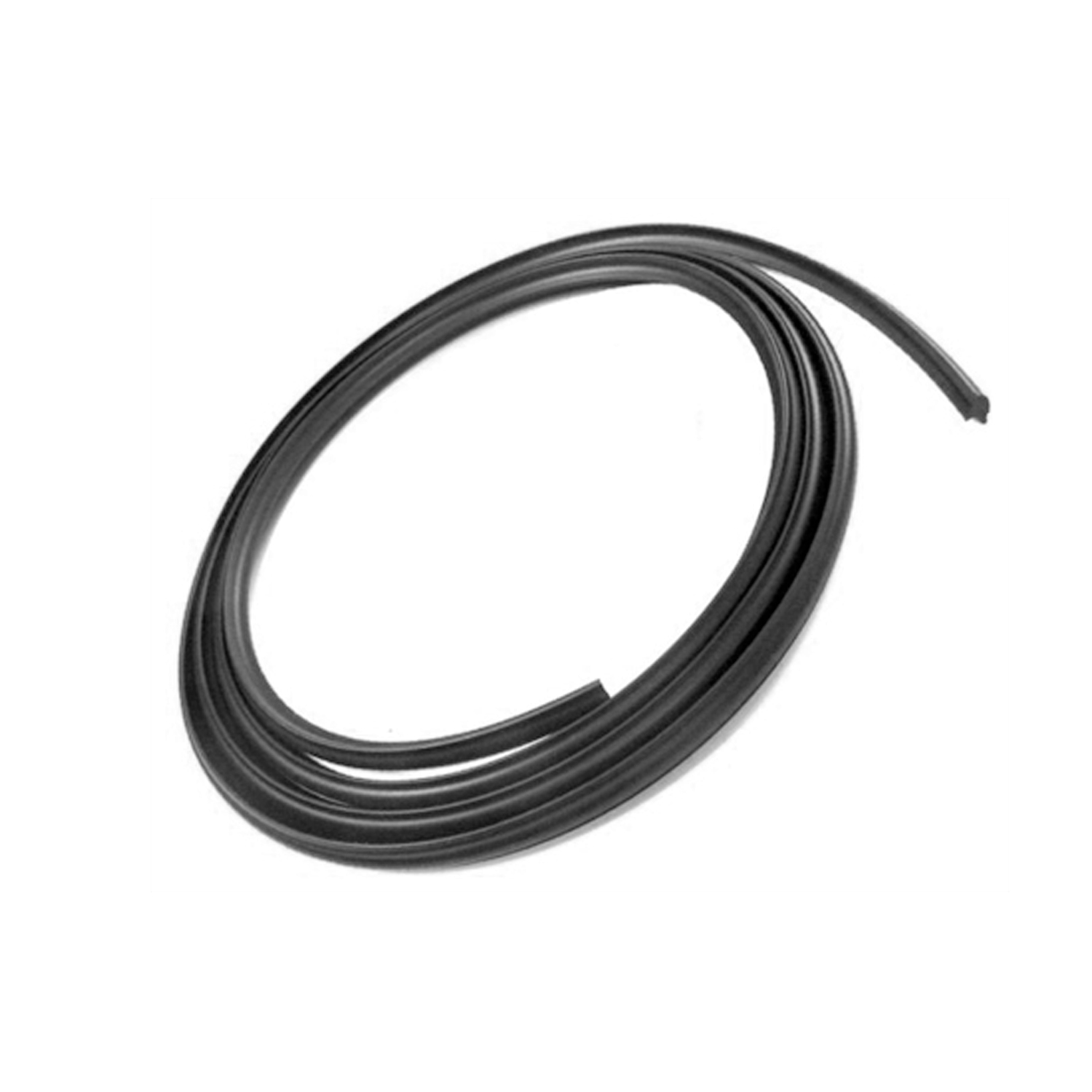 1955 Dodge C-1 Truck Lockstrip Seal, 54-93 Mopar Full Size Truck, Van & SUV, Chromed Plastic Type-LS 2-VLockstrip Seal, 54-93 Mopar Full Size Truck, Van & SUV, Chromed Plastic Type, Each. Works with Metro p/n VWS 2706.
Why Choose Metro?
For over 100 years, Metro Moulded Parts has been the pinnacle of quality in classic car restoration parts. Our commitment to precision and authenticity in every component ensures a perfect fit and an OEM-level appearance.
- Expert Craftsmanship & Quality: Each part is a testament to our dedication to reliability and perfection, crafted from original designs and thoroughly tested.
- Advanced Technology: We use cutting-edge techniques to create flawless, long-lasting parts that surpass others in performance.
- SuperSoft Sponge – The Ultimate Door Seal: Not only are our door seals 30% softer than competitors', but they're also guaranteed to never leak. They effectively reduce wind and road noise, enhancing your classic car's comfort and driving experience.
- Proudly American: Our parts are a product of American craftsmanship, made in the USA with a spirit of excellence and heritage.
- Unrivaled Warranty: We back our products with a 30-year industry-leading warranty, a testament to our confidence in their quality.
Join us in preserving the legacy of classic cars with parts that are crafted for perfection, not just made.