
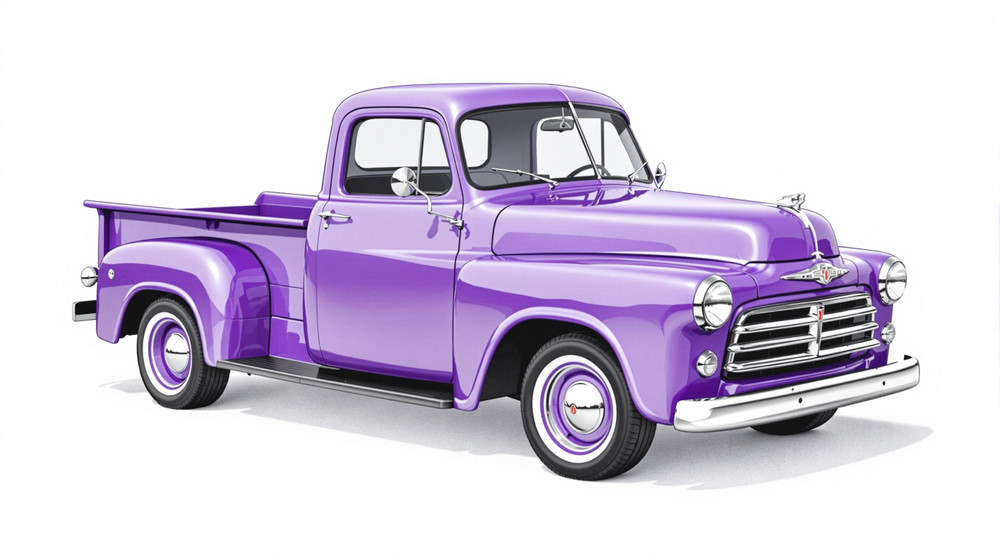
Image of 1955 Dodge C-3, Note: These illustrations use artistic license and may differ from actual historical models.
Performance Metrics
Fundamental Metrics
Emotional Appeal
MMP Rating
| Engine Specifications | |
|---|---|
| Engine: | 230 cubic inch inline-six, 241 cubic inch V8 |
| Displacement: | 230-241 cubic inches |
| Horsepower: | 120-150 hp |
| Torque: | 215-220 lb-ft |
| Compression Ratio: | 7.0:1 |
| Ignition System: | Distributor and coil |
| Cooling System: | Liquid-cooled |
| Performance Specifications | |
| 0-60 Time: | Estimated 15-20 seconds |
| 1/4 Mile Time: | Estimated 20-25 seconds |
| Top Speed: | 85-90 mph |
| Transmission and Drive | |
| Drive Type: | Rear-wheel drive |
| Transmission Type: | 3-speed manual, 2-speed automatic |
| Fuel and Efficiency | |
| Fuel System Type: | Carburetor |
| MPG: | Estimated 10-15 mpg |
| Dimensions and Brakes | |
| Brakes: | Drum brakes |
| Wheelbase: | 108 inches |
| Weight: | 3,200-3,500 lbs |
Note: Specifications for classic cars are given to the best of our ability, considering the limited and variant data available.
1955 Dodge C-3: A Job-Rated Pickup with Mid-Century Character
The 1955 Dodge C-3 is a working truck with a surprisingly polished face: a broad chrome grille, rounded front fenders, and a confident stance that still looks at home on a farm road or at a classic-truck show. Built by Dodge, a division of the Chrysler Corporation, the C-3 belongs to the brand’s postwar C-series and carries forward Dodge’s “Job-Rated” approach: trucks were offered in configurations intended for different kinds of work, rather than as one-size-fits-all haulers.
The C-3 designation identifies Dodge’s 1955 truck series, following the C-1 for 1954 and preceding the C-4 for 1956. That makes the 1955 model a useful snapshot of a changing era. American buyers were beginning to see pickups as personal transportation as well as commercial equipment, but the C-3 remained firmly rooted in practical service. One appealing detail is that the same basic truck family could be ordered as a pickup, a cab-and-chassis, or a commercial body, giving the C-3 a much wider working life than its familiar pickup shape suggests.
1955 Dodge C-3 Styling and Cab Design
The C-3 wears the rounded, substantial styling typical of early-1950s American trucks. Its hood is long and gently domed, with a bold grille and a prominent Dodge badge at the nose. Rounded front fenders flow around the wheels instead of appearing as thin, separate add-ons, while the cab has a tall, upright profile that prioritizes visibility and useful headroom. Details such as bright trim and polished bumpers give better-equipped examples a dressier appearance, but the overall design remains straightforward and durable.
Inside, the C-3 is a practical workplace. The broad bench seat, simple instrument panel, large steering wheel, and easy-to-read gauges are arranged for function rather than decoration. Materials were appropriate to a working truck: painted metal, durable upholstery, rubber flooring, and straightforward controls. A Custom Cab package could add a more finished look and comfort features, depending on configuration. Even so, this is not a modern luxury pickup. The driver sits upright, works the controls directly, and feels connected to the truck’s mechanical parts.
Factory paint choices varied with body style, trim, and ordering options. Buyers could choose from solid colors and two-tone combinations, with lighter cab roofs often paired with darker body colors on dressier trucks. Red, blue, green, cream, and dark-toned combinations are among the shades commonly seen on restored examples. A truck’s present color is not always proof of its original finish, so collectors should check the paint code or surviving factory records when originality matters.
Body Styles and C-3 Options
The half-ton pickup is the version most people picture today, but Dodge’s 1955 C-3 range covered more than a single bed and cab combination. Wheelbase and payload choices varied across the light- and medium-duty lineup, while commercial buyers could select chassis-cab, stake, panel, and other body configurations. Special-purpose trucks and heavier Dodge offerings also sat within the broader commercial family, though specifications depended on the particular model and equipment.
For collectors, the conventional pickup is usually the most recognizable and easiest C-3 to enjoy. A short, tidy half-ton has strong period appeal, while a long-wheelbase or work-bodied truck tells a more specific story about its former job. Original beds, tailgates, trim, and cab details can be harder to find than the basic mechanical parts, making completeness an important consideration when shopping.
Engineering and Historical Significance
The C-3 was an evolution of Dodge’s postwar truck design, not a radical break with it. Its significance lies in how it balanced a rugged chassis and working-truck layout with the more comfortable cab and more expressive styling that buyers increasingly expected. Dodge marketed its trucks around suitability for a particular job, and that practical, configurable approach helped define the brand’s commercial identity.
Compared with contemporary pickups, the Dodge offered a distinctive alternative to Chevrolet and Ford. Its rounded front-end design gave it a softer, more sculpted look than some rivals, while the available range of chassis and body configurations served businesses that needed more than a basic pickup. The C-3 did not introduce a technology that transformed the industry, but it represents the steady postwar improvement of trucks into vehicles that could handle long workdays with better visibility, more cab space, and a broader choice of equipment.
It also sits just before the dramatic styling changes of the later 1950s. As American vehicles became more expressive, Dodge trucks gradually moved toward newer design themes. The 1955 C-3 therefore appeals to enthusiasts who prefer a classic rounded truck that looks purposeful without the fins and flash associated with later models.
Engines, Performance, and Road Manners
Most C-3 pickups were powered by Dodge’s 230-cubic-inch flathead inline-six, a low-revving engine designed for dependable pulling rather than quick acceleration. A 241-cubic-inch Hemi V8 was available in parts of Dodge’s truck range, but availability depended on the specific model and configuration. Buyers should verify an engine’s originality by checking the truck’s identification information and period documentation, since decades of swaps and repairs are common.
Exact performance figures vary with engine, transmission, axle ratio, tire size, and load. As a broad period-truck estimate, a six-cylinder C-3 might reach roughly 65 to 75 mph in favorable conditions, with a 0-to-60-mph time in the neighborhood of 25 to 35 seconds. A V8-equipped truck could be quicker, but it would still feel leisurely by modern standards. These are estimates, not universal factory figures, and a heavily loaded truck or one with low gearing will perform differently.
On the road, the C-3 behaves like a traditional body-on-frame pickup. Its leaf-spring suspension and solid axles are well suited to carrying cargo, but an empty truck can bounce over sharp bumps and uneven pavement. On a winding road, the upright cab, relatively slow steering, and period tires encourage a relaxed pace. Crosswinds can be noticeable, especially with a tall load or an empty bed. The truck rewards smooth inputs rather than fast cornering.
The driving experience is part of the appeal. The flathead six produces a steady mechanical hum, accompanied by intake and exhaust sounds that are more workmanlike than sporty. The gearshift requires deliberate movement, the steering wheel feels large in the hands, and braking effort can be substantial compared with a modern pickup. A well-maintained C-3 can be perfectly enjoyable on local roads and at moderate speeds, but it should not be expected to keep pace with contemporary traffic in every situation.
Owning and Maintaining a Dodge C-3
Today, C-3s are most often used as weekend drivers, vintage work trucks, parade vehicles, and show entries. Some owners still put them to light hauling duty, but preservation-minded collectors tend to avoid heavy loads that could strain an aged chassis or original drivetrain. The model’s appealing proportions also make it a popular candidate for tasteful restorations and custom builds.
The basic mechanical layout is relatively accessible to a competent home mechanic. The engine, transmission, brakes, and suspension use conventional period technology, and routine jobs do not require the diagnostic equipment needed by a modern vehicle. Parts availability is generally best for common service items and mechanical components. Correct trim, original sheet metal, and model-specific interior pieces can take more time and money to source.
As with any 70-year-old truck, condition matters more than reputation. Inspect the frame, cab corners, floor pans, running boards, bed, and lower fenders for rust or previous repairs. Check for oil leaks, worn steering components, brake condition, cooling-system problems, and signs of poor wiring work. A truck that starts and moves under its own power may still need extensive attention before it is safe for regular road use.
C-3 Trivia and Common Criticisms
The C-3 is part of Dodge’s “Job-Rated” truck tradition, a marketing idea built around matching a truck’s chassis, payload, and body to its intended work. That practical philosophy is a useful reminder that a 1955 Dodge pickup was not necessarily designed to be a single, uniform product. Two C-3s can look similar while differing in wheelbase, equipment, engine, and original purpose.
There is no widely recognized C-3 speed, endurance, or sales record, and the model is not known for a defining celebrity connection or a single famous historical appearance. Its story is more representative than spectacular: thousands of trucks like it supported farms, trades, small businesses, and local deliveries across postwar America. Exact production totals for the C-3 pickup alone are difficult to establish from commonly available published figures.
Common criticisms are familiar to anyone who has driven an old work truck. The ride can be firm or bouncy, the steering and brakes require more effort than modern systems, and the cabin is noisy by current standards. Performance is modest, particularly with the six-cylinder engine. On the positive side, those limitations are part of an honest, mechanical driving experience, and the truck’s simple construction is easier to understand and service than that of a modern vehicle.
Collector Values and Availability
The 1955 Dodge C-3 is less common in the collector market than better-known Chevrolet and Ford pickups of the same period, but it is not so rare that a determined buyer can never find one. The pickup is the most visible version, while unusual commercial bodies and well-preserved original configurations can be harder to locate. Dodge did not publish an easily verified production total for the C-3 pickup by body and trim, so any precise figure should be treated cautiously.
As a rough estimate rather than a documented factory count, several tens of thousands of C-3 pickups may have been built, perhaps in the range of 25,000 to 50,000. The full C-3 truck series, including non-pickup commercial versions, would have been larger. Survivorship is a separate matter: working trucks were often used hard, modified, or scrapped, so original and complete examples are much less plentiful than the original production number might suggest.
In the current collector market, a project truck may sell for roughly $5,000 to $12,000, depending on rust, completeness, and title status. A running driver or sound older restoration might fall around $12,000 to $25,000. A high-quality restoration, a particularly attractive original truck, or a rare body configuration could bring approximately $25,000 to $45,000 or more. These are broad U.S. market estimates; location, originality, mechanical condition, and the quality of the work can shift a price substantially.
Values for desirable classic pickups have generally strengthened over the long term, though the C-3 remains a niche choice rather than a blue-chip collectible. Prices can move unevenly, and a costly restoration does not guarantee a matching resale price. Buyers tend to pay most for honest condition, documented history, and correct details, while custom modifications can narrow the audience unless they are especially well executed.
Why the 1955 Dodge C-3 Still Matters
The 1955 Dodge C-3 combines useful engineering, distinctive rounded styling, and the straightforward character of a postwar work truck. It was built to serve different jobs, and its configurable lineup reflects a time when a pickup was first and foremost a tool. Today, its modest performance and unfiltered road manners are balanced by accessible mechanicals, strong visual personality, and a rewarding sense of connection to the vehicle.
For collectors who want something less familiar than the usual Ford or Chevrolet, the C-3 is a compelling alternative. It may not be the quickest or most celebrated truck of its era, but it carries the honest presence of a machine made to earn its keep. That is exactly what makes a well-preserved 1955 Dodge C-3 memorable.
1955 Dodge C-3 Catalog of Parts
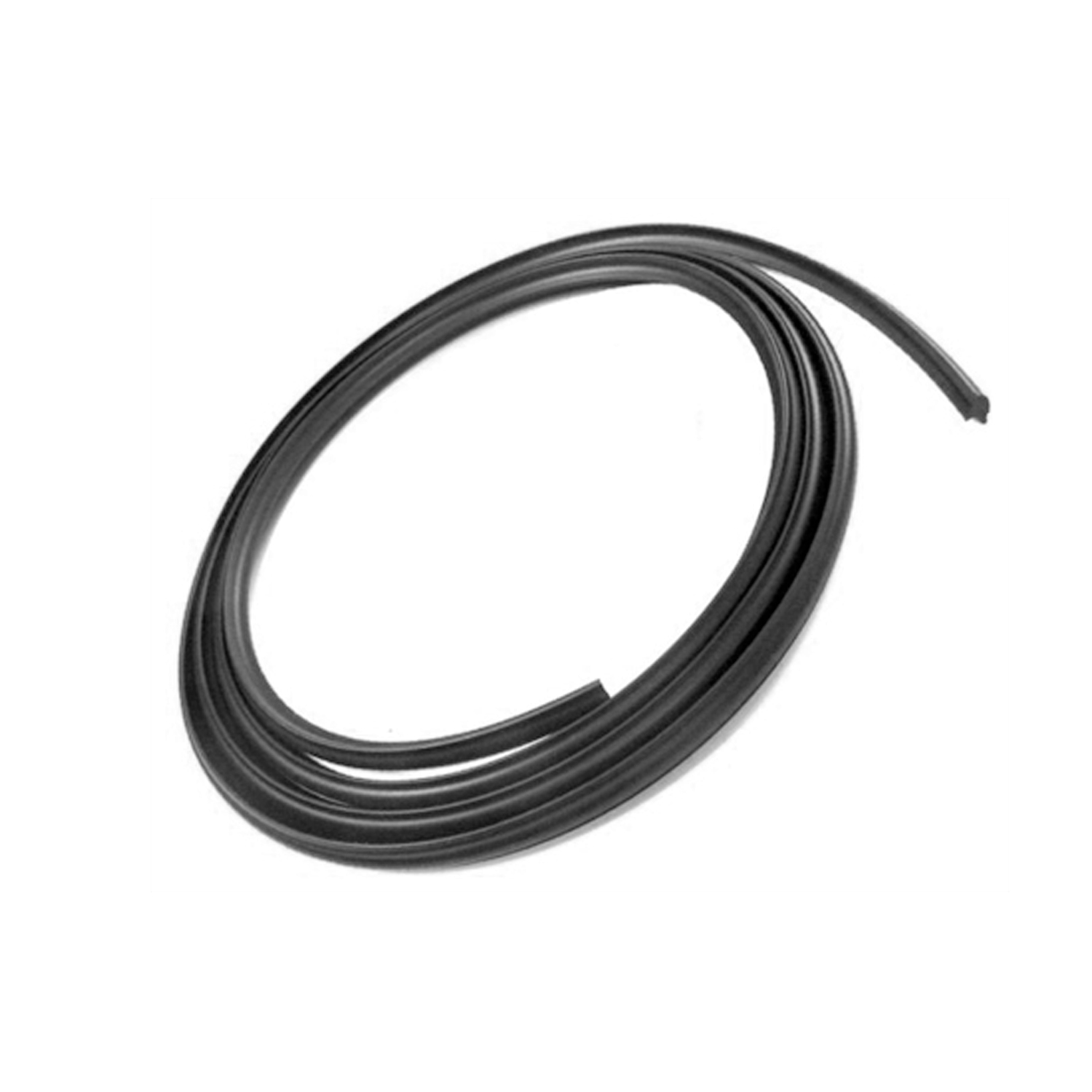 1955 Dodge C-3 Lockstrip Seal, 54-93 Mopar Full Size Truck, Van & SUV, Chromed Plastic Type-LS 2-VLockstrip Seal, 54-93 Mopar Full Size Truck, Van & SUV, Chromed Plastic Type, Each. Works with Metro p/n VWS 2706.
Why Choose Metro?
For over 100 years, Metro Moulded Parts has been the pinnacle of quality in classic car restoration parts. Our commitment to precision and authenticity in every component ensures a perfect fit and an OEM-level appearance.
- Expert Craftsmanship & Quality: Each part is a testament to our dedication to reliability and perfection, crafted from original designs and thoroughly tested.
- Advanced Technology: We use cutting-edge techniques to create flawless, long-lasting parts that surpass others in performance.
- SuperSoft Sponge – The Ultimate Door Seal: Not only are our door seals 30% softer than competitors', but they're also guaranteed to never leak. They effectively reduce wind and road noise, enhancing your classic car's comfort and driving experience.
- Proudly American: Our parts are a product of American craftsmanship, made in the USA with a spirit of excellence and heritage.
- Unrivaled Warranty: We back our products with a 30-year industry-leading warranty, a testament to our confidence in their quality.
Join us in preserving the legacy of classic cars with parts that are crafted for perfection, not just made.