
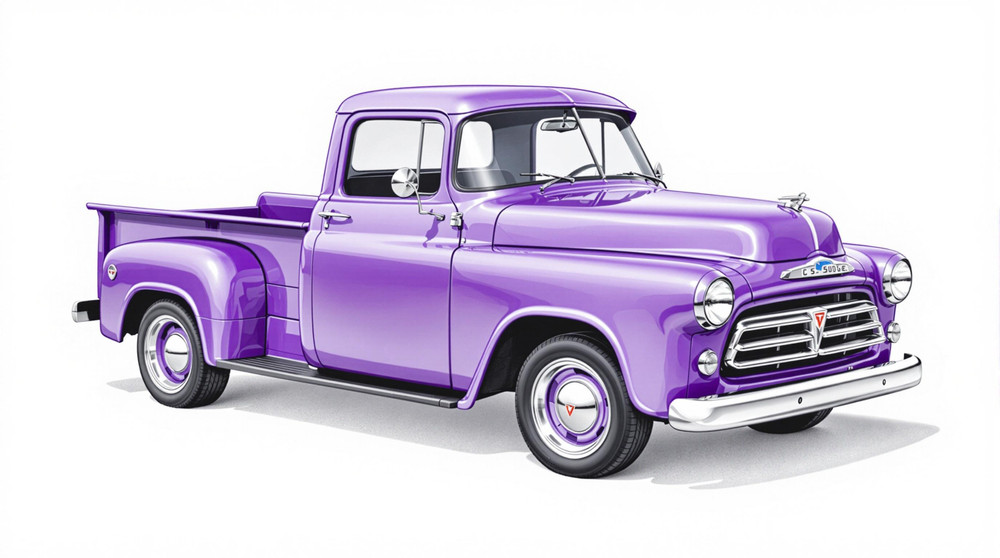
Image of 1956 Dodge C-3, Note: These illustrations use artistic license and may differ from actual historical models.
Performance Metrics
Fundamental Metrics
Emotional Appeal
MMP Rating
| Engine Specifications | |
|---|---|
| Engine Options: | 230 cubic inch Flathead Inline-6, 315 cubic inch Red Ram V8 |
| Displacement Range: | 230-315 cubic inches |
| Horsepower Range: | 120-218 hp |
| Torque: | 202-313 lb-ft |
| Compression Ratio: | 7.0:1 - 8.4:1 |
| Ignition System: | Distributor and coil |
| Cooling System: | Liquid cooled |
| Performance Specifications | |
| 0-60 Time: | Estimated 10-12 seconds |
| 1/4 Mile Time: | Estimated 17-19 seconds |
| Top Speed: | 90-100 mph |
| Transmission and Drive | |
| Drive Type: | Rear wheel drive |
| Transmission Type: | 3-speed manual, 2-speed automatic |
| Fuel and Efficiency | |
| Fuel System Type: | Carburetor |
| MPG: | Estimated 10-15 mpg |
| Dimensions and Brakes | |
| Brakes: | Drum brakes |
| Wheelbase: | 108.0 inches |
| Weight: | 3,200-3,600 lbs |
Note: Specifications for classic cars are given to the best of our ability, considering the limited and variant data available.
1956 Dodge C-3: The One-Year Classic Pickup
The 1956 Dodge C-3 looks ready for work, but its broad hood, handsome grille and rounded cab give it the presence of a truck that knows how to make an entrance. Built by the Dodge Division of Chrysler, the C-3 was the 1956 member of Dodge’s C-series light-truck family, which ran from 1954 through 1956. These trucks combined traditional body-on-frame construction with more modern styling and comfort, arriving as American buyers increasingly wanted pickups that could serve both on the job and at home.
The C-3’s appeal today starts with its brief production window: it represents the final model year of the original C-series design. It is not a completely different truck from the 1954 and 1955 models, but year-to-year details make it a distinct chapter in Dodge’s truck history. That one-year identity gives the 1956 model extra interest for collectors searching for something less familiar than a Ford F-100 or Chevrolet Task Force pickup.
Bold Fenders, Practical Cab
Dodge gave the C-3 a confident, rounded look typical of mid-1950s American design. Its tall hood flows into pronounced front fenders, while the upright grille and substantial bumper make the truck look sturdy without appearing austere. The cab has a broad, bright-windowed appearance, with generous glass helping visibility compared with older, more cramped work trucks. Details such as grille trim, badges and bumper equipment can vary by model and options, so surviving examples do not all look identical.
Inside, the C-3 keeps things straightforward. The metal dashboard, simple instruments and large controls were designed for use, not decoration. A bench seat was standard fare, and the materials were durable rather than luxurious. Well-preserved trucks can feel surprisingly welcoming, though their painted metal surfaces and modest insulation make clear that this was a working vehicle, not a modern comfort-focused pickup.
For its time, the C-3 offered practical conveniences rather than flashy technology. Buyers could equip trucks with features such as a heater, radio, improved lighting and other comfort or utility options, depending on the model and order. Power steering and power brakes were not typical features on a light-duty pickup of this era, so the driver did the work through a large steering wheel and a conventional braking system.
Color availability varied with factory choices, model and equipment, and today’s restored trucks may wear colors that were not original to them. Period-style solid colors, two-tone combinations and contrasting cab or body details all suit the truck’s shape. Cream, red, green, blue and dark tones are popular choices among restorers, but buyers should check paint codes and documentation before treating any particular combination as factory-correct.
The C-3 name covers a range of Dodge truck configurations, not just one pickup. Light-duty models included conventional pickups in different payload ratings, while Dodge’s broader truck lineup also offered chassis-cab and commercial body configurations. For many enthusiasts, the most recognizable version is the light-duty pickup with its original-style bed, which shows off the C-3’s long hood, rounded fenders and balanced proportions.
Where the C-3 Fits in Truck History
The C-series helped Dodge move its light trucks toward a more modern balance of work ability and everyday usability. Its styling was cleaner and more integrated than that of many earlier commercial trucks, while its sturdy chassis and familiar mechanical layout kept it useful for farms, trades and small businesses. The C-3 was not a revolutionary engineering leap, but it reflects an important shift: pickups were becoming vehicles people might choose for personal transportation as well as labor.
That combination sets the Dodge apart from some better-known rivals. The C-3 has a distinctive Chrysler-era look, yet it remains mechanically understandable to a hands-on owner. Its lasting influence is less about a single breakthrough than about its place in the evolution of the American pickup: a practical machine with enough style and comfort to work beyond the worksite.
Engine, Speed and Road Manners
Engine availability depended on the specific truck and its equipment. C-3 models could be fitted with a 230-cubic-inch flathead six, while V8-equipped versions used a Dodge Power-Dome Hemi-family engine, commonly listed at 270 cubic inches for 1956. Exact specifications should be confirmed against the truck’s serial number, engine stamping and original sales literature, since decades of repairs and swaps mean a surviving example may not retain its original powertrain.
There is no single dependable factory 0-to-60-mph figure for every C-3 configuration. These were working trucks, and performance varied with engine, axle ratio, transmission, payload and condition. As a broad real-world estimate, a six-cylinder truck may need roughly 20 seconds or more to reach 60 mph, while a healthy V8 example could be quicker, often in the high teens. A top speed around 70 to 80 mph is plausible for a lightly loaded, properly maintained truck, but sustained highway speed is not where an old pickup like this feels most relaxed.
On the road, expect a distinctly vintage driving experience. The steering is unassisted and can feel heavy at parking speeds, while the solid axles and leaf springs are built to carry loads rather than smooth out every bump. An unloaded C-3 can bounce over rough pavement; with a sensible load, the suspension often settles down. On winding roads, the tall stance and period tires call for measured inputs. It is happiest at a steady pace, with room to brake and turn.
The six-cylinder has a steady, workmanlike note, while the V8 adds a deeper rumble and stronger response. Either way, the driver is part of the machine: shifting a manual gearbox, steering with both hands and listening for changes in engine or drivetrain sound. That direct connection is a big part of the truck’s appeal, though it can feel demanding after a long day in a modern pickup.
Living With a 1956 Dodge
Today, C-3s are used as weekend cruisers, farm and property trucks, restoration projects and show vehicles. A mechanically sound example can handle local errands and occasional country-road trips, but most owners do not treat one as a modern daily driver. Braking distances, traffic speed, fuel economy, visibility and the absence of contemporary safety equipment all deserve consideration.
Routine maintenance is straightforward for an owner comfortable with older vehicles. The engines are conventional, and many service tasks can be handled with basic tools and a workshop manual. However, age brings the usual challenges: worn steering components, tired brakes, electrical faults, cooling-system problems, rust and hard-to-find trim or body pieces. Mechanical repairs are generally more approachable than a complete body restoration, so inspect the cab, frame, bed and lower body carefully before buying.
Parts support is good for common service items and engine work, but some model-specific sheet metal, interior pieces and brightwork can take patience to locate. A vehicle with a complete, reasonably original cab and trim is often a better starting point than a cheap project missing key parts.
Facts, Myths and Collector Interest
The C-3’s strongest talking point is its place at the end of the 1954-56 C-series run. It does not have a widely recognized speed record or a famous competition history, and it is not known for a headline-grabbing celebrity connection. Its significance is more grounded: it represents the dependable Dodge work truck that helped build the postwar American economy, one farm, shop and small business at a time.
A common criticism is that the C-3 lacks the parts availability and name recognition of comparable Ford and Chevrolet pickups. That can make restoration slower and resale less predictable. Its other limitations are simply those of a 1950s truck: basic safety equipment, modest performance by modern standards and a ride that can be choppy when the bed is empty. For enthusiasts, those drawbacks are part of the period experience, but they should be understood before purchase.
Rarity and 1956 Dodge C-3 Values
Dodge did not make the C-3 a limited-edition collectible, and a dependable, model-specific production total is difficult to establish. As a broad estimate rather than a verified factory figure, light-duty C-3 pickup production may have been in the low tens of thousands. The number of complete, original or well-restored trucks available today is much smaller, and condition, body style, engine and documentation make a major difference.
In the current collector market, a project truck may sell for roughly $5,000 to $12,000, depending on completeness and rust. A usable driver commonly falls around $12,000 to $25,000. A well-restored example can bring approximately $25,000 to $45,000, with exceptional, highly original or unusually well-documented trucks sometimes exceeding that range. These are broad U.S. market estimates, not appraisals; local demand and the quality of the restoration can shift the price substantially.
Values have generally benefited from renewed interest in vintage pickups, but the C-3 remains more of a specialist’s choice than a guaranteed investment. Clean trucks have the best chance of holding or increasing value. A costly restoration, especially one involving extensive rust repair or scarce parts, may be difficult to recover at resale. Buy the best body and history you can afford, and view rising values as a bonus rather than the whole reason to own one.
Why the C-3 Still Matters
The 1956 Dodge C-3 brings together the qualities that make a classic truck satisfying to own: sturdy construction, honest mechanicals, distinctive mid-century styling and a strong connection to everyday working life. It may not have the fame of its Ford and Chevrolet contemporaries, but that relative rarity is part of its charm. For a collector who wants a useful, characterful pickup with a story of its own, the C-3 is a classic that earns its place in the garage.
1956 Dodge C-3 Catalog of Parts
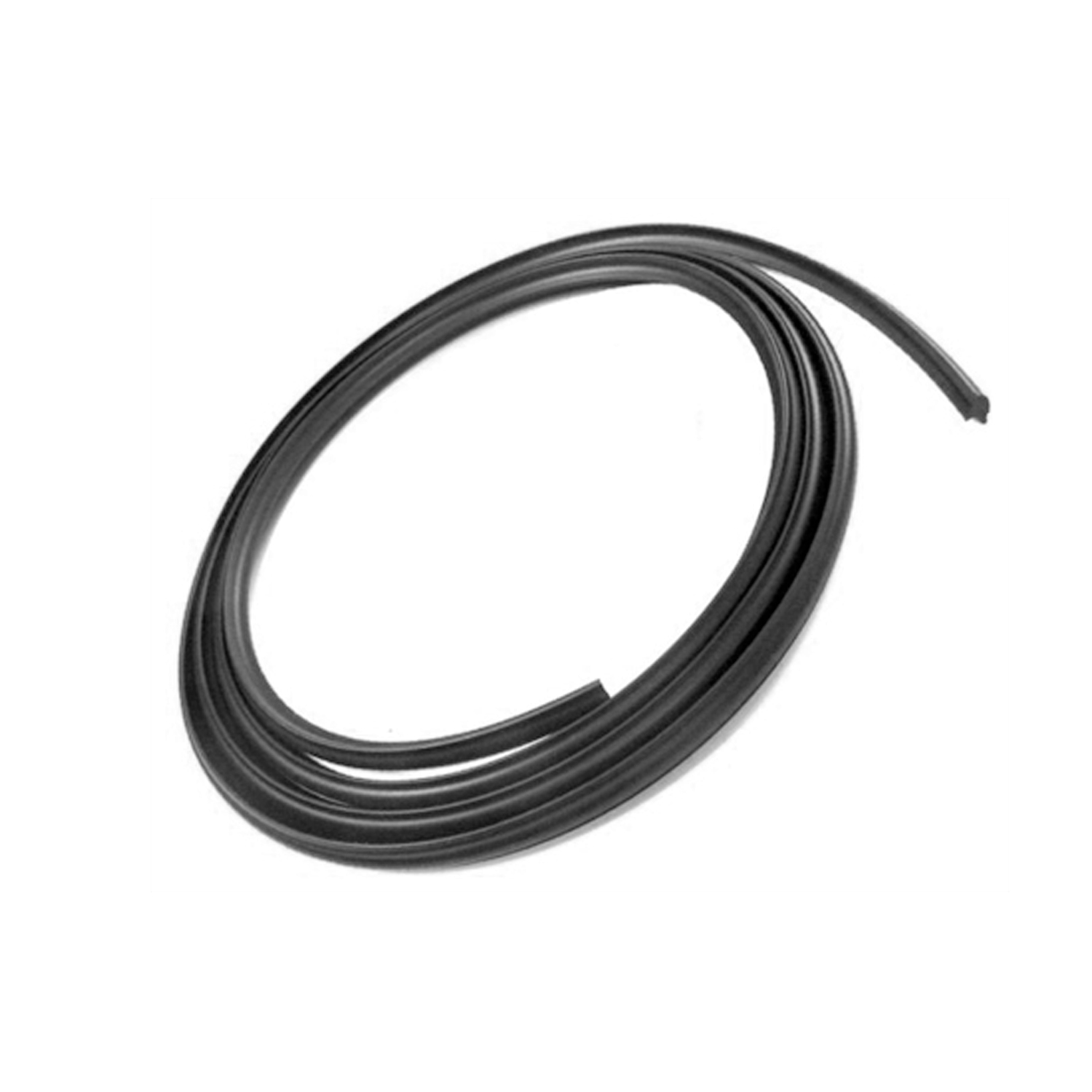 1956 Dodge C-3 Lockstrip Seal, 54-93 Mopar Full Size Truck, Van & SUV, Chromed Plastic Type-LS 2-VLockstrip Seal, 54-93 Mopar Full Size Truck, Van & SUV, Chromed Plastic Type, Each. Works with Metro p/n VWS 2706.
Why Choose Metro?
For over 100 years, Metro Moulded Parts has been the pinnacle of quality in classic car restoration parts. Our commitment to precision and authenticity in every component ensures a perfect fit and an OEM-level appearance.
- Expert Craftsmanship & Quality: Each part is a testament to our dedication to reliability and perfection, crafted from original designs and thoroughly tested.
- Advanced Technology: We use cutting-edge techniques to create flawless, long-lasting parts that surpass others in performance.
- SuperSoft Sponge – The Ultimate Door Seal: Not only are our door seals 30% softer than competitors', but they're also guaranteed to never leak. They effectively reduce wind and road noise, enhancing your classic car's comfort and driving experience.
- Proudly American: Our parts are a product of American craftsmanship, made in the USA with a spirit of excellence and heritage.
- Unrivaled Warranty: We back our products with a 30-year industry-leading warranty, a testament to our confidence in their quality.
Join us in preserving the legacy of classic cars with parts that are crafted for perfection, not just made.