
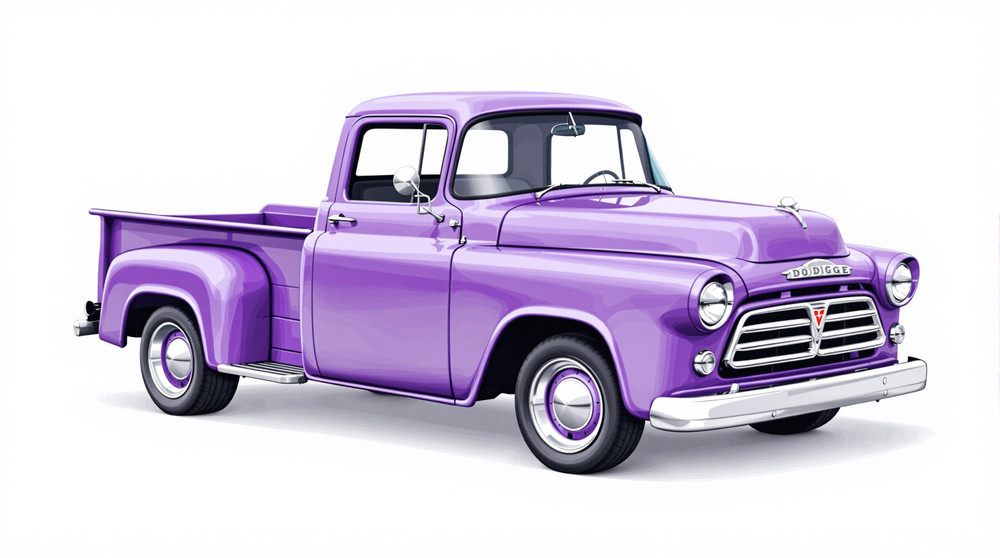
Image of 1957 Dodge D200 Pickup, Note: These illustrations use artistic license and may differ from actual historical models.
Performance Metrics
Fundamental Metrics
Emotional Appeal
MMP Rating
| Engine Specifications | |
|---|---|
| Engine Options: | 230 cubic inch Flathead Inline 6, 315 cubic inch V8 |
| Displacement Range: | 230-315 cubic inches |
| Horsepower Range: | 120-180 hp |
| Torque: | 215-285 lb-ft |
| Compression Ratio: | 7.0:1 - 8.4:1 |
| Ignition System: | Distributor and coil |
| Cooling System: | Liquid cooled |
| Performance Specifications | |
| 0-60 Time: | Estimated 15-20 seconds |
| 1/4 Mile Time: | Estimated 20-25 seconds |
| Top Speed: | 75-85 mph |
| Transmission and Drive | |
| Drive Type: | Rear wheel drive |
| Transmission Type: | 3-speed manual, 4-speed manual |
| Fuel and Efficiency | |
| Fuel System Type: | Carburetor |
| MPG: | Estimated 10-15 mpg |
| Dimensions and Brakes | |
| Brakes: | Drum brakes |
| Wheelbase: | 133 inches |
| Weight: | 3,500-4,000 lbs |
Note: Specifications for classic cars are given to the best of our ability, considering the limited and variant data available.
1957 Dodge D200 Pickup: A Heavy-Duty Classic
The 1957 Dodge D200 Pickup brought big-truck capability and bold, late-1950s styling to the working world. Built by the Dodge division of Chrysler, it was a three-quarter-ton member of Dodge’s newly redesigned D-Series, aimed at owners who needed more capacity than a half-ton pickup could provide. Its mix of sturdy construction, distinctive Forward Look-era design, and torsion-bar front suspension made it a notable alternative to the more familiar pickups from Ford, Chevrolet, and International Harvester.
One especially interesting detail is that the D200 arrived during Dodge’s “Power Giant” truck era. The name promoted a broad range of working-truck improvements, while the D200 itself offered a more substantial chassis than the D100 half-ton. It was a practical machine first, but one with enough styling flair to stand out in a lineup of mostly work-focused trucks.
Forward Look Styling and Work-Ready Design
The D200 wore the confident, futuristic look that Chrysler was pushing across its vehicles in the late 1950s. Its tall hood, broad grille, sculpted front fenders, and prominent headlamp housings gave it a powerful face. The cab had a wide windshield and a roomy, upright profile, while the long bed and heavy-duty stance made its purpose clear. Compared with a passenger car, the design remained straightforward, but the truck had considerably more visual polish than a plain, slab-sided work vehicle.
Inside, the D200 was functional rather than luxurious. A broad bench seat, painted metal surfaces, simple gauges, and a rubber floor mat suited muddy boots and long workdays. Depending on equipment and trim, upholstery could include durable cloth or vinyl. The materials were chosen for serviceability and wear resistance, not softness or elaborate decoration. Buyers could add convenience equipment, but the basic cab kept the driver’s controls direct and uncomplicated.
Dodge offered a selection of factory paint colors, with solid shades and two-tone combinations available depending on the year, trim, and ordering choices. Popular restorations often feature period colors such as red, blue, green, cream, and black, but the exact palette varied. Original paint codes and build records are the best guide when returning a particular truck to factory-correct colors.
The D200 was available as a pickup and could also be ordered in commercial configurations such as chassis-cab or stake and platform forms, with body availability depending on the buyer’s needs and local ordering options. The conventional pickup was the most recognizable version. It paired a substantial cargo bed with the D200’s heavier-duty chassis, making it a versatile choice for farms, trades, and small businesses. It is not the same model as Dodge’s better-known Sweptside special-edition pickup, which was based on the lighter D100.
Power Giant Engineering
The 1957 redesign brought an important mechanical change: torsion-bar front suspension. In place of the conventional front leaf springs used by many rivals, Dodge used torsion bars to support the front end. The arrangement helped create a more controlled ride and left room for a lower, cleaner chassis layout. The rear suspension remained based on leaf springs, a familiar and rugged setup for carrying loads.
Power came from a choice of six-cylinder and V8 engines, with specifications varying by configuration and rating. Common choices included a 230-cubic-inch flathead six and a 315-cubic-inch V8. The six was the economical, dependable work option; the V8 offered stronger acceleration and more useful passing power, especially when the truck was loaded. Transmission and axle choices also affected how a particular D200 performed on the road or at work.
That combination of a heavy-duty frame, available V8 power, and front torsion bars helped distinguish Dodge from competitors that relied on more conventional suspension layouts. The D200 was not a radical revolution in pickup design, but it showed how passenger-car engineering ideas could be adapted to a serious work truck.
D200 Performance and Road Manners
Surviving factory performance figures for individual D200 combinations are limited, and acceleration depended heavily on engine, gearing, transmission, tire size, and payload. As a general guide, a six-cylinder truck was a modest performer, while a V8-equipped D200 could feel considerably livelier. A lightly loaded V8 example might reach 60 mph in roughly 15 to 20 seconds. A six-cylinder truck, or one carrying a substantial load, could take longer.
Top speed was not a priority for a three-quarter-ton pickup. Depending on gearing and condition, a D200 might manage roughly 75 to 85 mph, but sustained high-speed cruising was neither its main purpose nor its strongest suit. These are practical estimates, not guaranteed factory test results for every truck.
On a smooth road, the torsion-bar front suspension gives the D200 a more composed feel than some older, solid-front-axle work trucks. Broken pavement still makes its weight and commercial tires apparent, particularly when the bed is empty. With a load aboard, the rear springs settle into their job and the ride can feel more settled. On winding roads, the tall cab and heavy chassis encourage a measured pace rather than quick cornering. Drivers should also remember that braking, steering feel, and tire technology are very different from those of a modern pickup.
Behind the wheel, the D200 feels substantial and mechanical. The engine’s low, steady note, the upright seating position, and the direct controls make it feel like a working truck rather than a vintage cruiser dressed up as one. A well-maintained V8 adds a satisfying rumble, while the six-cylinder engine delivers a simpler, quieter sort of workaday character.
Life With a 1957 Dodge D200
Most D200s were bought to work. They hauled farm supplies, tools, building materials, and business equipment, and many spent decades earning their keep. Today, owners use them as weekend drivers, farm trucks, tow vehicles for light recreational duties, and show-quality restorations. Their heavy-duty character can be a benefit for occasional hauling, but a restored example deserves sympathetic use rather than constant overloading.
Mechanical repairs are generally approachable for an experienced home mechanic. The engine bay is relatively uncluttered, and the truck’s basic systems are understandable compared with modern computer-controlled vehicles. Routine service items are familiar, though age can complicate jobs: stuck fasteners, worn wiring, tired suspension parts, and decades of improvised repairs are common challenges. Engine and brake parts are often available through classic-truck suppliers, while model-specific trim, body panels, and correct interior pieces can take more searching.
Before buying, inspect the frame, cab corners, floorboards, bed, and lower fenders for rust or old collision repairs. Check the brakes, steering joints, cooling system, and charging system, and confirm that any V8 or transmission is correct for the truck if originality matters. A clean, solid body is usually more valuable than a shiny paint job hiding structural problems.
1957 Dodge D200 Facts and Myths
The D200’s torsion-bar front suspension is one of its most conversation-starting features. It reflects Dodge’s willingness to give its trucks a different engineering character from the leaf-spring layouts common among competitors. The truck also belongs to the broader Power Giant era, a useful period name for understanding Dodge’s late-1950s commercial lineup.
There is no dependable, widely published production total specifically for 1957 D200 pickups. Dodge built a range of D-Series trucks and commercial configurations, and surviving public figures do not consistently separate D200 pickups from other versions. A reasonable estimate is that production ran into the thousands, potentially reaching the low tens of thousands across D200 configurations, but that should be treated as an informed estimate rather than a verified count.
The D200 is not known for a major speed record, racing achievement, or a single famous historical event. Its significance is more grounded: it represents the working trucks that supported farms, trades, and local businesses during a period of rapid postwar growth. One common criticism is that it can feel slow and heavy by modern standards. Another is that its three-quarter-ton suspension can ride firmly when the bed is empty. Those traits are part of its original working purpose, not signs that it was designed as a comfortable highway cruiser.
Collector Values and Availability
1957 Dodge D200 pickups are less common in the collector market than many half-ton pickups, but they are not necessarily rare in the strict sense. Their long working lives meant that plenty were used hard, modified, or scrapped, and surviving trucks vary widely in condition. Original, unmodified examples are especially appealing to collectors of Dodge trucks and commercial vehicles.
As a broad 2026 market estimate in the United States, a project truck may sell for about $5,000 to $12,000, depending on completeness and rust. A usable driver or older restoration commonly falls around $12,000 to $28,000. A very good, well-restored example may bring roughly $30,000 to $50,000, with exceptional, highly original trucks or top-quality restorations potentially exceeding that range. Local demand, documentation, drivetrain, body condition, and originality can shift prices substantially.
Values for well-presented classic pickups have generally strengthened over the long term, though individual trucks can rise or fall with collector demand and restoration costs. The D200’s niche appeal means it may not attract as many buyers as a popular half-ton, but its heavier-duty specification and distinctive 1957 styling give it a clear audience. Because model-specific sales data is limited, these figures are useful guideposts rather than a formal appraisal.
Why the 1957 Dodge D200 Still Matters
The 1957 Dodge D200 combined genuine work-truck construction with a design language shaped by the era’s optimism and automotive experimentation. Its torsion-bar front suspension set it apart mechanically, while its bold grille, sculpted fenders, and substantial stance gave it a presence that many utilitarian pickups lacked. It was built to haul, not to chase records, and its lasting appeal comes from that honest purpose.
For collectors, restorers, and classic-truck fans, the D200 offers a rewarding alternative to more commonly seen half-ton pickups. It is a reminder that the best vintage trucks are not just nostalgic shapes. They are surviving tools, engineered for a specific job and styled with enough character to remain memorable long after the workday ended.
1957 Dodge D200 Pickup Catalog of Parts
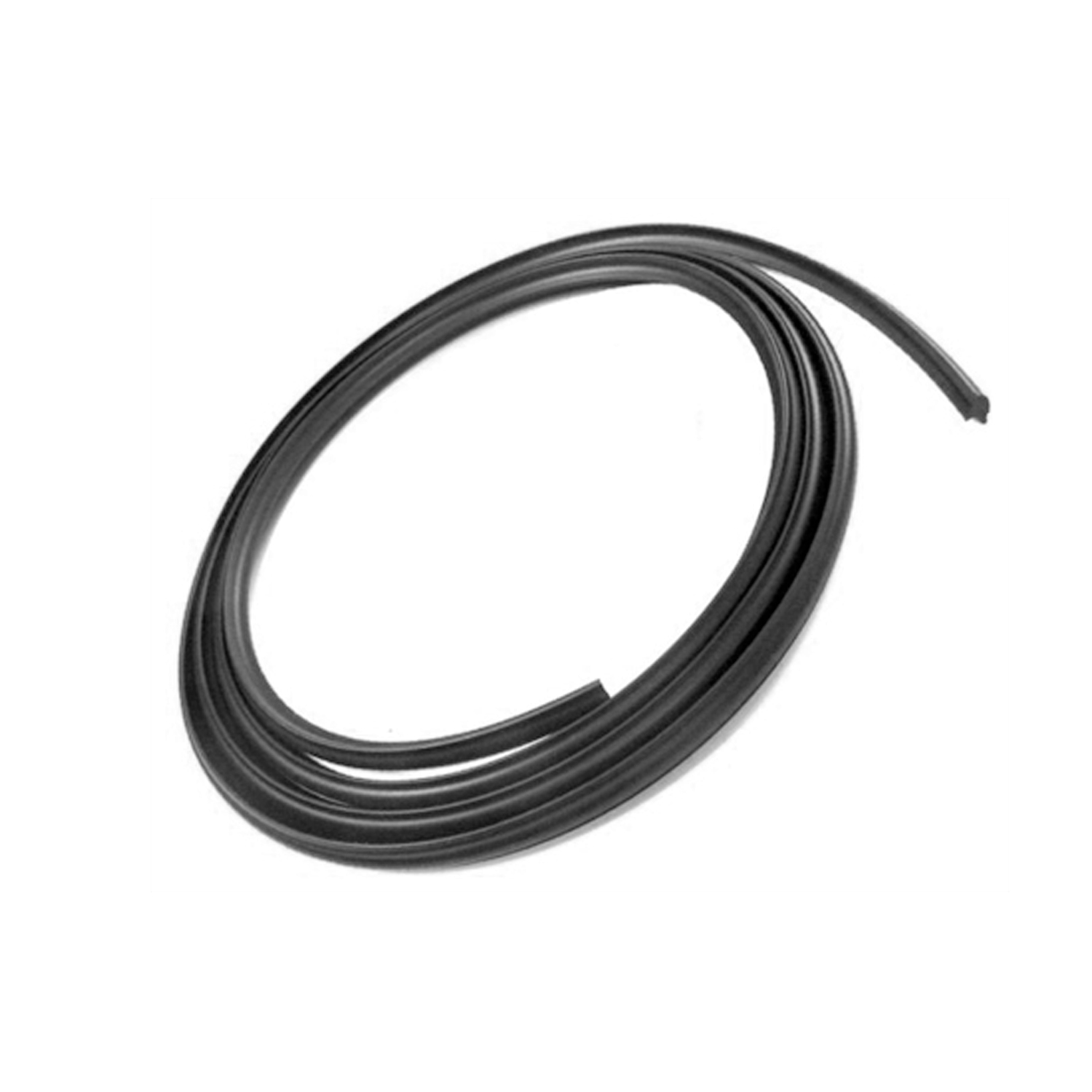 1957 Dodge D200 Pickup Lockstrip Seal, 54-93 Mopar Full Size Truck, Van & SUV, Chromed Plastic Type-LS 2-VLockstrip Seal, 54-93 Mopar Full Size Truck, Van & SUV, Chromed Plastic Type, Each. Works with Metro p/n VWS 2706.
Why Choose Metro?
For over 100 years, Metro Moulded Parts has been the pinnacle of quality in classic car restoration parts. Our commitment to precision and authenticity in every component ensures a perfect fit and an OEM-level appearance.
- Expert Craftsmanship & Quality: Each part is a testament to our dedication to reliability and perfection, crafted from original designs and thoroughly tested.
- Advanced Technology: We use cutting-edge techniques to create flawless, long-lasting parts that surpass others in performance.
- SuperSoft Sponge – The Ultimate Door Seal: Not only are our door seals 30% softer than competitors', but they're also guaranteed to never leak. They effectively reduce wind and road noise, enhancing your classic car's comfort and driving experience.
- Proudly American: Our parts are a product of American craftsmanship, made in the USA with a spirit of excellence and heritage.
- Unrivaled Warranty: We back our products with a 30-year industry-leading warranty, a testament to our confidence in their quality.
Join us in preserving the legacy of classic cars with parts that are crafted for perfection, not just made.