
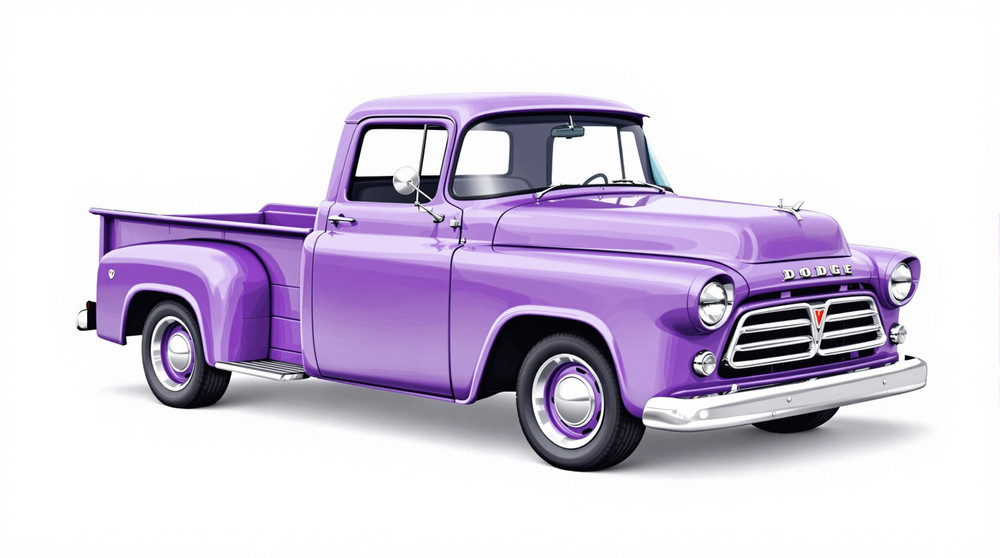
Image of 1957 Dodge W200 Pickup, Note: These illustrations use artistic license and may differ from actual historical models.
Performance Metrics
Fundamental Metrics
Emotional Appeal
MMP Rating
| Engine Specifications | |
|---|---|
| Engine: | 230 cubic inch flathead six, 315 cubic inch V8 |
| Displacement: | 230-315 cubic inches |
| Horsepower: | 120-210 hp |
| Torque: | 215-315 lb-ft |
| Compression Ratio: | 7.0:1 - 8.4:1 |
| Ignition System: | Distributor and coil |
| Cooling System: | Liquid-cooled |
| Performance Specifications | |
| 0-60 Time: | Estimated 15-20 seconds |
| 1/4 Mile Time: | Estimated 20-25 seconds |
| Top Speed: | 70-85 mph |
| Transmission and Drive | |
| Drive Type: | 4WD |
| Transmission Type: | 3-speed manual, 4-speed manual |
| Fuel and Efficiency | |
| Fuel System Type: | Carburetor |
| MPG: | Estimated 10-15 mpg |
| Dimensions and Brakes | |
| Brakes: | Drum brakes |
| Wheelbase: | 122 inches |
| Weight: | 3,500-4,000 lbs |
Note: Specifications for classic cars are given to the best of our ability, considering the limited and variant data available.
1957 Dodge W200: The Workhorse That Took the Rough Road
Before four-wheel-drive pickups became everyday status symbols, the 1957 Dodge W200 was built to earn its keep wherever pavement ran out. A three-quarter-ton 4x4 from Chrysler Corporation’s Dodge division, it paired the styling of Dodge’s new-for-1957 truck line with the hardware needed for farms, construction sites, and backcountry roads.
The W200 belongs to Dodge’s newer W-series four-wheel-drive pickups, introduced for 1957. It is often confused with the older, more rugged Dodge Power Wagon, but the two were different trucks. The W200 used a more conventional pickup cab and body, while the military-inspired Power Wagon continued as a separate model with its own distinctive design. That distinction makes the W200 an interesting bridge between Dodge’s utilitarian past and the more modern 4x4 pickups that followed.
One detail that surprises many enthusiasts is how new the W-series was in 1957. It was not simply an old two-wheel-drive Dodge with a front axle added. It represented Dodge’s move toward a more contemporary four-wheel-drive pickup, even as it retained the straightforward, serviceable engineering expected of a working truck.
Forward Look Styling, Built for Work
The W200 wore the broad, upright appearance of Dodge’s 1957 truck family. Its front end featured a prominent grille, substantial fenders, and a tall hood, while the cab had a larger, more modern presence than the earlier Pilot-House-era trucks. The design reflected the period’s fascination with forward-looking automotive styling, but it remained practical rather than flashy. High ground clearance and exposed, purposeful proportions made its four-wheel-drive identity easy to read.
Inside, the W200 was a working environment, not a luxury lounge. The cabin was typically finished with painted metal surfaces, durable upholstery, a straightforward instrument panel, and simple controls. Materials and trim depended on the truck’s specification, but even well-equipped examples put function first. The upright seating position offered a clear view of the road and the front corners of the truck, a useful advantage on narrow trails and job sites.
Modern conveniences were limited by today’s standards. A heater, radio, upgraded trim, or other accessories could be ordered depending on the truck and market, but power steering and power brakes were not the sort of equipment buyers took for granted. The W200’s notable technology was mechanical: four-wheel drive, a transfer case, a driven front axle, and the heavy-duty chassis components required to make them useful.
Paint choices varied by year, body configuration, and order. Buyers could choose practical solid colors, and two-tone treatments were available on some Dodge trucks. Fleet buyers often preferred restrained colors, while brighter finishes gave a personal truck more presence. Original paint codes and combinations are worth checking against the specific body and build documentation, since not every color advertised across Dodge’s range was offered on every W200 configuration.
The W200 was offered in pickup form and could also be ordered in work-oriented chassis and cab configurations, with equipment depending on the application. For most people today, the classic image is the regular-cab pickup: a compact cab, tall stance, and load-carrying bed. Dodge’s eye-catching Sweptside styling is sometimes associated with the 1957 truck range, but it was a special appearance treatment tied to particular models, not the defining W200 configuration.
Why the W200 Matters in Dodge’s 4x4 Story
The W200 helped broaden Dodge’s four-wheel-drive appeal. The Power Wagon had a strong reputation for toughness, but its specialized, old-school character was not the right fit for every buyer. The W-series brought 4x4 capability into a more conventional pickup format, making it easier to imagine using one as a general-purpose truck for work and recreation.
That approach became increasingly important as pickup buyers expected one vehicle to handle several roles. The W200 was not a technological revolution in the way a modern independent-suspension truck might be, but it showed how manufacturers could combine familiar pickup styling with serious off-road hardware. Its recipe of a conventional cab, body-on-frame construction, solid axles, leaf springs, and a selectable four-wheel-drive system became a durable template for working 4x4s.
Compared with many two-wheel-drive pickups of its day, the W200’s extra traction and ground clearance set it apart. Compared with the heavier Power Wagon, it offered a more familiar pickup profile. Its lasting appeal comes from that balance: more approachable than a specialized military-style truck, yet considerably more capable than a standard rear-drive pickup.
Engine, Speed, and Road Manners
Engine and drivetrain details vary by truck, but 1957 Dodge pickups could be equipped with a 230-cubic-inch flathead inline-six or a 315-cubic-inch V8, depending on configuration and ordering. Period horsepower figures are not always directly comparable with modern ratings, and a W200’s final performance depended heavily on its engine, axle gearing, transmission, tire size, and load.
Dodge did not publish a modern-style 0-to-60 figure for the W200. As a practical estimate, a six-cylinder example might take roughly 30 seconds or more to reach 60 mph, while a V8 truck could be quicker, perhaps in the mid-to-high 20-second range when unloaded and in good condition. A realistic top speed is approximately 65 to 75 mph, though gearing, mechanical condition, and tire choice can shift that range. These are estimates, not guaranteed factory test results, and the truck was designed for useful torque and durability rather than fast acceleration.
On rough ground, the W200’s solid axles and leaf springs were assets. They were sturdy, relatively simple to service, and well suited to carrying loads. On broken pavement, however, the same hardware could produce a firm, bouncy ride, especially when the truck was empty. The steering feels slower and less precise than that of a modern pickup, and the tall stance can make the truck lean noticeably through bends.
Windy roads require a measured hand. The W200’s height, weight, old-style steering, and tires designed for work rather than sharp cornering reward steady inputs and sensible speeds. Its four-wheel drive improves traction on loose or slippery surfaces, but it does not make the truck immune to the limits of its brakes, tires, or high center of gravity.
From behind the wheel, the experience is mechanical and direct. The engine has a low, purposeful rumble, the manual gearbox asks for deliberate shifts, and the driver feels the road through the steering wheel and chassis. Engaging four-wheel drive is a reminder that this is equipment with a job to do, not a quiet modern crossover dressed up for adventure.
Living with a 1957 Dodge W200
Today, W200s appear as restorations, weekend cruisers, farm and ranch trucks, trail rigs, and displays at vintage truck shows. Some are still used for light hauling, but a well-preserved example is increasingly likely to be kept as a collectible rather than exposed to daily work. Its size and modest performance can make routine modern highway driving tiring, particularly in traffic or on long trips.
Much of the basic mechanical work is approachable for an experienced home mechanic. The engine, manual transmission, axles, brakes, and suspension use familiar traditional components, and there is plenty of room to work compared with many newer vehicles. The challenges are often age and parts availability rather than electronic complexity. Four-wheel-drive components, correct trim, body panels, and model-specific pieces can take patience to source.
Before buying, inspect the frame, cab corners, floor, bed, and areas around the windshield and fenders for rust or old repairs. Check the transfer case and front axle for leaks, noise, and proper engagement. Brake condition matters enormously: an old truck with worn drums, deteriorated hoses, or neglected wheel cylinders is not ready for regular road use. Also verify that the engine, transmission, and axle combination suits the truck’s intended use.
W200 Trivia and Common Complaints
The most common point of confusion is the name. Enthusiasts sometimes call every old Dodge 4x4 a Power Wagon, but the W200 was part of Dodge’s newer W-series pickup family. The original-style Power Wagon continued separately, so identifying the model correctly is important when researching parts, production, or value.
No widely recognized speed, sales, or endurance record defines the 1957 W200. Nor is there a well-documented celebrity connection that gives the model a famous-owner premium. Its historical significance is quieter: it represents Dodge’s effort to make four-wheel drive available in a more conventional pickup format.
Criticisms are straightforward. The ride can be harsh, steering and braking feel dated, fuel economy is poor by modern standards, and highway speed is limited. Some owners also find that the truck’s utilitarian cabin and heavy controls demand more effort than expected. Those drawbacks are part of its character, but they should be understood before buying one as a daily driver.
Collector Value and Rarity
Dodge did not publish a commonly cited production total specifically for the 1957 W200, so an exact figure is difficult to establish. Four-wheel-drive pickups were a smaller slice of the market than ordinary two-wheel-drive trucks, and surviving W200s are far less common than familiar mass-market pickups. As a cautious estimate rather than a factory count, production may have been in the low thousands. The number of surviving examples in good condition is smaller still.
In the current collector market, a project truck may bring roughly $5,000 to $15,000, depending on completeness and rust. A usable, presentable example could fall around $15,000 to $35,000. A high-quality restoration or unusually original truck may reach $40,000 to $70,000 or more, particularly if it has strong documentation, desirable equipment, and excellent workmanship. These are broad U.S. market estimates; condition, originality, location, and the quality of any restoration matter more than a single asking price.
Values have generally benefited from growing interest in vintage 4x4s and early Dodge pickups. Exceptional examples have the best chance of appreciating, while rough projects can be expensive to restore relative to their finished value. The W200 is a niche collectible, so prices can vary considerably from one sale to the next. Buyers should compare completed sales where possible and budget for mechanical sorting, not just cosmetic work.
A Dodge 4x4 with Real Working Roots
The 1957 Dodge W200 combines a distinctive late-1950s Dodge look with the practical hardware of a genuine four-wheel-drive work truck. It is not fast, plush, or effortless to drive, but it offers something more memorable: rugged mechanical character, a useful place in Dodge’s history, and the satisfaction of a truck built for difficult roads.
For collectors, the W200 is a chance to own a less-common alternative to better-known vintage pickups. For enthusiasts who appreciate solid axles, simple controls, and honest utility, it remains a compelling reminder that the best classic trucks were made to work first and make an impression second.
1957 Dodge W200 Pickup Catalog of Parts
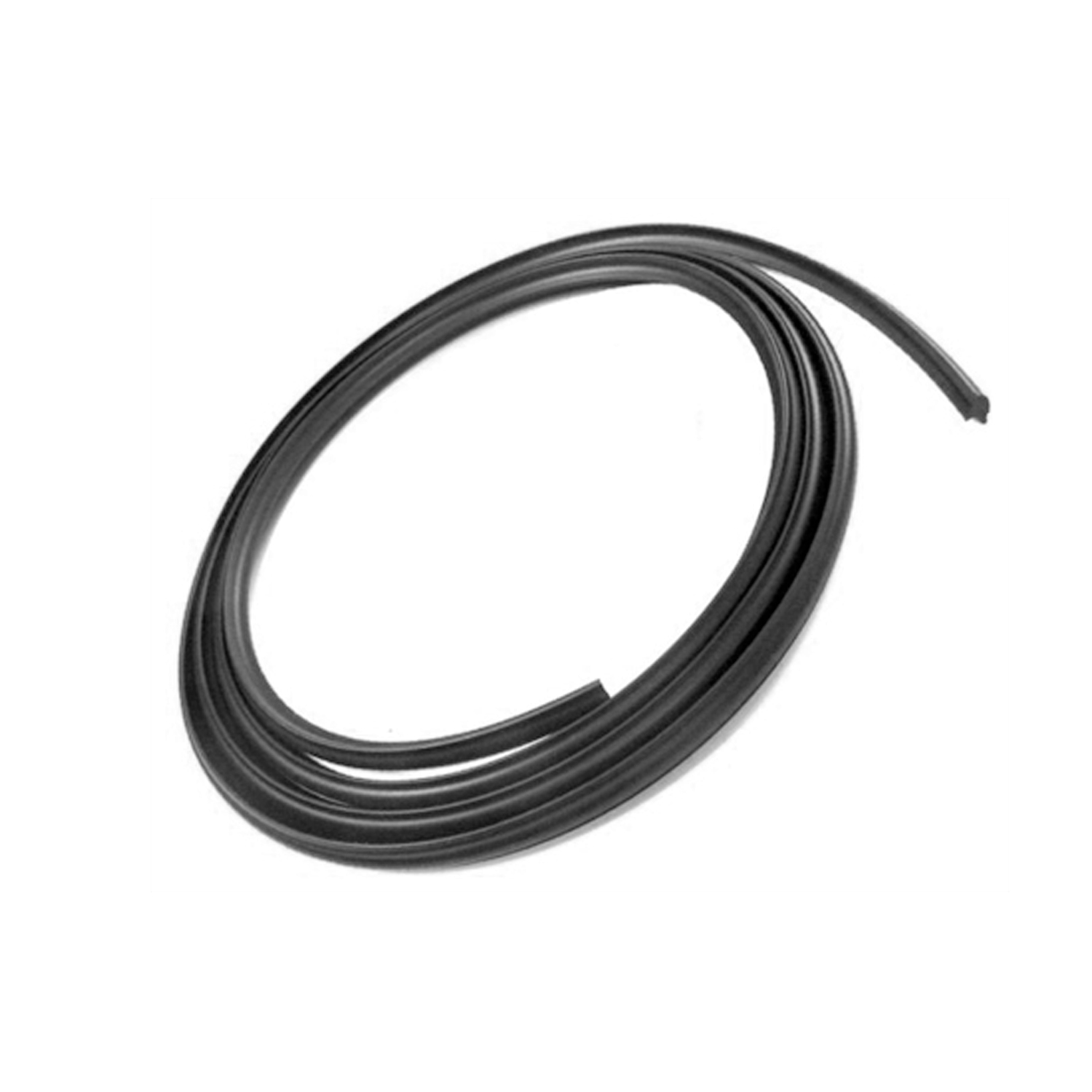 1957 Dodge W200 Pickup Lockstrip Seal, 54-93 Mopar Full Size Truck, Van & SUV, Chromed Plastic Type-LS 2-VLockstrip Seal, 54-93 Mopar Full Size Truck, Van & SUV, Chromed Plastic Type, Each. Works with Metro p/n VWS 2706.
Why Choose Metro?
For over 100 years, Metro Moulded Parts has been the pinnacle of quality in classic car restoration parts. Our commitment to precision and authenticity in every component ensures a perfect fit and an OEM-level appearance.
- Expert Craftsmanship & Quality: Each part is a testament to our dedication to reliability and perfection, crafted from original designs and thoroughly tested.
- Advanced Technology: We use cutting-edge techniques to create flawless, long-lasting parts that surpass others in performance.
- SuperSoft Sponge – The Ultimate Door Seal: Not only are our door seals 30% softer than competitors', but they're also guaranteed to never leak. They effectively reduce wind and road noise, enhancing your classic car's comfort and driving experience.
- Proudly American: Our parts are a product of American craftsmanship, made in the USA with a spirit of excellence and heritage.
- Unrivaled Warranty: We back our products with a 30-year industry-leading warranty, a testament to our confidence in their quality.
Join us in preserving the legacy of classic cars with parts that are crafted for perfection, not just made.