
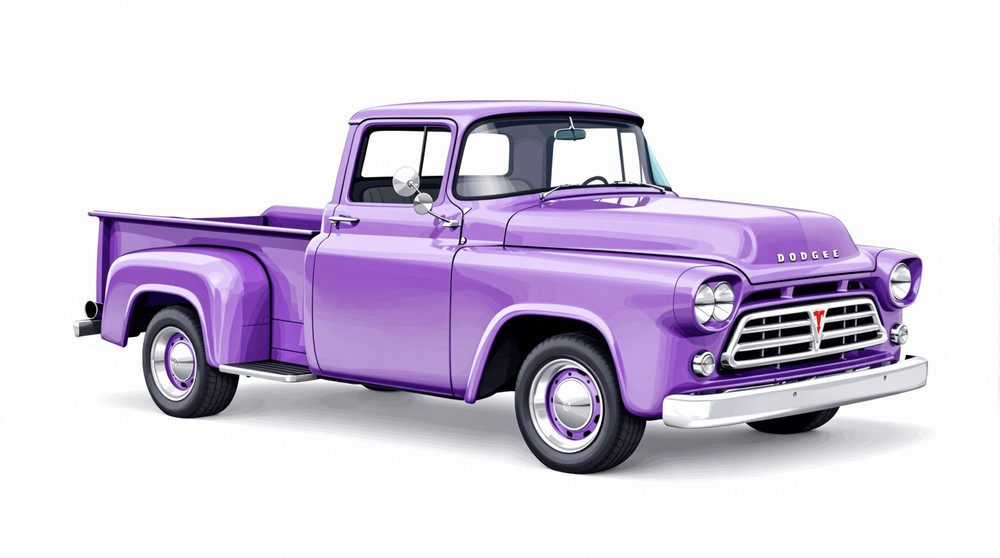
Image of 1958 Dodge W100 Pickup, Note: These illustrations use artistic license and may differ from actual historical models.
Performance Metrics
Fundamental Metrics
Emotional Appeal
MMP Rating
| Engine Specifications | |
|---|---|
| Engine: | 318 cu in (5.2 L) V8 |
| Displacement: | 318 cubic inches |
| Horsepower: | 200-230 hp |
| Torque: | 320 lb-ft |
| Compression Ratio: | 8.0:1 |
| Ignition System: | Conventional breaker-point ignition system |
| Cooling System: | Liquid-cooled |
| Performance Specifications | |
| 0-60 Time: | Estimated 10-12 seconds |
| 1/4 Mile Time: | Estimated 17-19 seconds |
| Top Speed: | 85-90 mph |
| Transmission and Drive | |
| Drive Type: | 4WD |
| Transmission Type: | 3-speed manual |
| Fuel and Efficiency | |
| Fuel System Type: | Carburetor |
| MPG: | Estimated 10-12 mpg |
| Dimensions and Brakes | |
| Brakes: | Drum brakes |
| Wheelbase: | 108 inches |
| Weight: | 3,500 lbs |
Note: Specifications for classic cars are given to the best of our ability, considering the limited and variant data available.
Before four-wheel-drive pickups became lifestyle accessories, the 1958 Dodge W100 was built to get people, tools, and supplies through places where ordinary trucks had no business going. It paired a practical half-ton pickup body with a proper 4x4 drivetrain, making it a useful link between Dodge’s work-truck range and its famous Power Wagon heritage.
1958 Dodge W100: A Half-Ton 4x4 with Work to Do
The W100 belonged to Dodge’s W-series of four-wheel-drive trucks, introduced in the 1950s. The “W” distinguished it from the rear-wheel-drive D-series, while “100” identified the half-ton class. Built by the Dodge division of Chrysler, it served farmers, tradespeople, rural businesses, and drivers who needed traction on rough roads rather than a polished road-going ride.
The W100 was not the same truck as Dodge’s larger, heavy-duty Power Wagon, which had a separate and especially rugged design lineage. But the two shared a practical purpose: dependable four-wheel-drive capability for demanding work. The W100 brought that idea to a smaller, more manageable pickup.
One detail that makes the 1958 model interesting is its place in a rapidly changing truck market. Four-wheel drive was still a specialist feature, not the everyday choice it is today. A W100 gave buyers a genuine factory 4x4 pickup in a half-ton package, at a time when many competitors’ work trucks remained rear-wheel drive.
1958 Dodge W100 Styling and Cab Design
The W100 wore the broad-shouldered look of a late-1950s American truck. Its upright cab, substantial hood, prominent front fenders, and straightforward grille gave it a sturdy, purposeful appearance. Bright trim and period-correct badging added a little show without disguising its working-truck character. The overall shape is more functional than sleek, with tall glass and a commanding driving position.
Inside, the cab was simple and durable. Painted metal surfaces, a broad bench seat, basic door panels, and easy-to-read gauges were typical of the period. Materials were chosen for cost and hard use, not luxury. A heater, radio, and other comfort items could be specified, but equipment varied by truck and original order. Today, a well-preserved cab with intact trim, gauges, and seat upholstery is a major part of a W100’s appeal.
Its most important technology was beneath the bodywork. The W100’s four-wheel-drive system used a transfer case to send power to both axles, giving the driver extra traction on mud, snow, gravel, and uneven ground. The arrangement was mechanical and straightforward by modern standards, but it represented a meaningful advantage over a conventional two-wheel-drive pickup. Manual transmissions were the norm, with equipment and gearing depending on the truck’s original specification.
Factory paint choices varied by year, trim, and buyer order. Period Dodge trucks appeared in practical solid colors as well as brighter shades, often with contrasting grille, wheel, or trim details. White, red, blue, green, and subdued work-truck colors are all familiar on surviving examples. Original paint can be difficult to verify after decades of repainting, so factory paint codes and build documentation are useful when authenticity matters.
The W100 was primarily a conventional-cab pickup. Bed and wheelbase details could vary, and some trucks were ordered as chassis-cabs for specialized bodies. Dodge’s eye-catching Sweptside pickup is often mentioned alongside late-1950s trucks, but it was a special styling treatment chiefly associated with rear-wheel-drive D100 models, not the typical W100. The classic W100 pickup with its practical separate-fender bed remains the most recognizable version.
Why the W100 Matters in Truck History
The 1958 W100 helped make four-wheel drive available in a smaller pickup that could still handle everyday farm and business duties. It was not the first 4x4 truck, nor was it designed to set a speed record. Its importance was practical: buyers could get traction and utility without stepping up to a much larger, heavier truck.
That combination helped define the path toward the modern 4x4 pickup. Later trucks would add more comfort, higher payloads, and increasingly sophisticated drivetrains, but the basic formula remains familiar: a conventional pickup cab and bed, a transfer case, and driven front and rear axles. The W100 also carried Dodge’s established reputation for rugged four-wheel-drive equipment into the half-ton market.
Compared with many contemporary pickups, the W100’s key distinction was its factory 4x4 configuration. It was more maneuverable than a large military-style truck and better suited to ordinary work than a passenger-car-based utility vehicle. That middle ground is exactly what gives it historical significance today.
W100 Performance, Speed, and Road Manners
Engine and equipment depended on the individual truck. A common powerplant was Dodge’s 230-cubic-inch L-head inline six, while V8 availability and exact specifications varied across the model range and build. Some period Dodge truck literature lists V8 options in the 315-cubic-inch family. Buyers should verify the engine in a particular W100 by checking its identification numbers and original documentation rather than relying on a generic specification.
These trucks were geared for pulling and low-speed work, not quick acceleration. A healthy six-cylinder W100 might take roughly 25 to 35 seconds to reach 60 mph, depending on gearing, tires, load, and condition. A representative top speed is in the neighborhood of 65 to 75 mph, but that is an estimate, not a promise. Old tires, brakes, steering components, and drivetrain condition matter far more than the theoretical number. A W100 is happiest at moderate speeds.
On pavement, the truck feels tall and deliberate. Its solid axles, leaf springs, and period tires communicate bumps directly, and an unloaded bed can make the rear end feel especially firm. On a winding road, expect slower steering response and more body movement than in a modern pickup. In mud, snow, or a rutted track, the four-wheel-drive hardware is the star. It provides useful grip, though it does not turn the W100 into a modern off-roader with electronic traction control or contemporary suspension travel.
The driving experience is wonderfully mechanical. The engine has a steady, unhurried note, while the transmission and transfer case require deliberate input. The driver sits upright, looks out over a long hood, and feels closely connected to the truck’s controls. There is little insulation from noise or vibration by modern standards, but that directness is a large part of the appeal.
Owning and Maintaining a 1958 Dodge W100
Surviving W100s are used as weekend drivers, farm and ranch trucks, restoration projects, and show vehicles. Some are kept close to stock, while others receive upgrades such as modern ignition components, improved brakes, or a different engine. For a historically correct restoration, preserving the original drivetrain and four-wheel-drive components is particularly important.
Many basic service tasks are accessible to a mechanically minded owner. The engine bay is relatively uncomplicated, and the truck’s mechanical systems can be understood without specialized diagnostic electronics. Parts availability is mixed: common service items and some engine components may be found through classic-truck suppliers, while model-specific body trim, correct W100 4x4 parts, and hard-to-find interior pieces can take patience and careful searching.
Reliability depends heavily on maintenance and past repairs. Before buying, inspect the frame for corrosion or damage, check the cab and bed for rust, and examine the transfer case, front axle, steering, brakes, and clutch. Look for signs of mismatched drivetrain parts or improvised repairs. A truck that has spent decades working in snow or wet conditions may have serious hidden rust, while a dry-climate example can be dramatically better underneath.
W100 Trivia and Common Criticisms
The W100 belongs to Dodge’s broader Power Wagon era, but the name can cause confusion. Dodge’s larger civilian Power Wagon was a distinct heavy-duty truck, while the W100 was the half-ton member of the W-series. That distinction matters when researching parts, specifications, and historical descriptions.
There is no widely accepted, easy-to-reference production total for the 1958 W100 alone. Dodge built many trucks across its full range, but model-by-model 4x4 figures are not consistently published. The W100 was a specialized choice compared with a standard two-wheel-drive pickup, so it was far less common on the road. It is best known today for its practical 4x4 specification and its place in Dodge’s civilian truck history, rather than for a documented speed, sales, or endurance record.
Common criticisms are familiar to anyone who has driven a 1950s work truck: slow acceleration, heavy steering, limited braking performance by modern standards, a stiff ride, and modest comfort. Parts for model-specific 4x4 hardware can also be harder to source than parts for more common Dodge pickups. Those drawbacks are real, but they are part of the period character rather than surprises for an informed owner.
1958 Dodge W100 Values and Collector Outlook
Values vary widely with condition, originality, rust, drivetrain completeness, and the quality of any restoration. As a broad current-market guide, a project W100 may sell for roughly $5,000 to $12,000. A usable driver often falls around $15,000 to $35,000, while a very clean, correctly restored, or unusually original truck can reach approximately $40,000 to $70,000 or more. Exceptional examples may exceed that range, but condition and provenance need to justify the price.
Because exact 1958 W100 production figures are difficult to isolate, any production estimate should be treated as an informed guess. Given its half-ton 4x4 status and the specialist nature of the market at the time, a reasonable estimate is several thousand examples, perhaps around 3,000 to 8,000 for the model year. This is not a verified factory total. Original records or a reliable registry would be needed to establish a precise count.
Values for well-presented vintage 4x4 pickups have generally strengthened over the long term, especially for rust-free, original, and properly restored examples. The market is selective, however. A rough project with missing 4x4 parts can be expensive to finish, while an attractive truck with documented history is easier to sell. The W100 is a niche collectible, but its rarity, useful design, and growing interest in early 4x4s support its appeal.
The 1958 W100’s Lasting Appeal
The 1958 Dodge W100 is a straightforward truck with a meaningful place in the development of the four-wheel-drive pickup. Its sturdy late-1950s styling, simple cabin, mechanical controls, and factory 4x4 drivetrain make it both a useful piece of history and a distinctive collector vehicle. It is not fast or particularly comfortable, and it asks its owner for hands-on care.
What it offers instead is character and capability in a compact, honest package. The W100 helped bring four-wheel-drive utility to the half-ton pickup, and that practical idea still shapes trucks today.
1958 Dodge W100 Pickup Catalog of Parts
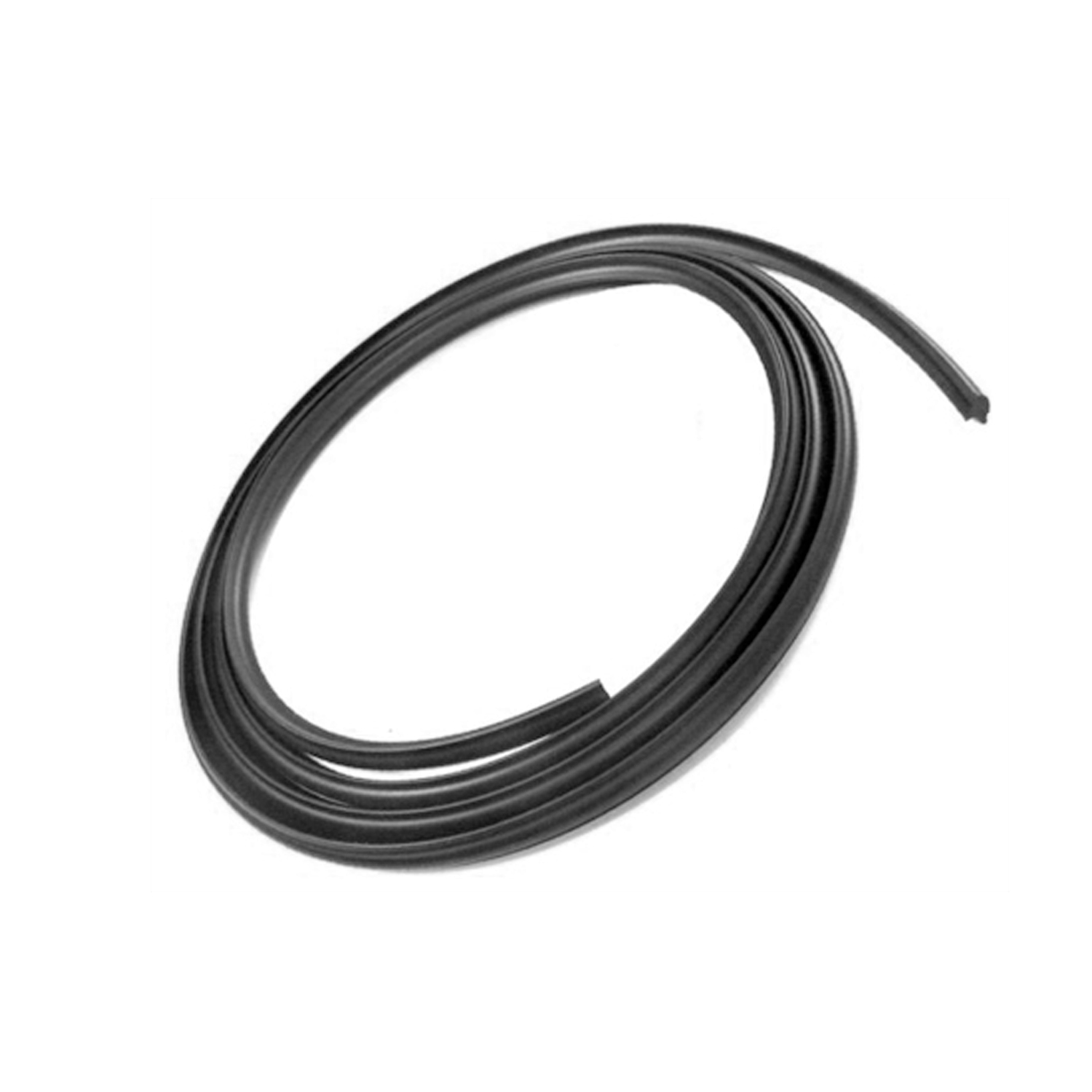 1958 Dodge W100 Pickup Lockstrip Seal, 54-93 Mopar Full Size Truck, Van & SUV, Chromed Plastic Type-LS 2-VLockstrip Seal, 54-93 Mopar Full Size Truck, Van & SUV, Chromed Plastic Type, Each. Works with Metro p/n VWS 2706.
Why Choose Metro?
For over 100 years, Metro Moulded Parts has been the pinnacle of quality in classic car restoration parts. Our commitment to precision and authenticity in every component ensures a perfect fit and an OEM-level appearance.
- Expert Craftsmanship & Quality: Each part is a testament to our dedication to reliability and perfection, crafted from original designs and thoroughly tested.
- Advanced Technology: We use cutting-edge techniques to create flawless, long-lasting parts that surpass others in performance.
- SuperSoft Sponge – The Ultimate Door Seal: Not only are our door seals 30% softer than competitors', but they're also guaranteed to never leak. They effectively reduce wind and road noise, enhancing your classic car's comfort and driving experience.
- Proudly American: Our parts are a product of American craftsmanship, made in the USA with a spirit of excellence and heritage.
- Unrivaled Warranty: We back our products with a 30-year industry-leading warranty, a testament to our confidence in their quality.
Join us in preserving the legacy of classic cars with parts that are crafted for perfection, not just made.