

Image of 1958 Dodge W300 Pickup, Note: These illustrations use artistic license and may differ from actual historical models.
Performance Metrics
Fundamental Metrics
Emotional Appeal
MMP Rating
| Engine Specifications | |
|---|---|
| Engine: | 315 cu in (5.2 L) V8, 318 cu in (5.2 L) V8 |
| Displacement: | 315-318 cu in |
| Horsepower: | 204-230 hp |
| Torque: | 310-340 lb-ft |
| Compression Ratio: | 8.0:1 |
| Ignition System: | Conventional breaker-point ignition system |
| Cooling System: | Liquid-cooled |
| Performance Specifications | |
| 0-60 Time: | Estimated 10-12 seconds |
| 1/4 Mile Time: | Estimated 17-19 seconds |
| Top Speed: | 85-90 mph |
| Transmission and Drive | |
| Drive Type: | 4WD |
| Transmission Type: | 4-speed manual |
| Fuel and Efficiency | |
| Fuel System Type: | Carburetor |
| MPG: | Estimated 10-12 mpg |
| Dimensions and Brakes | |
| Brakes: | Drum brakes |
| Wheelbase: | 133 inches |
| Weight: | 4,500 lbs |
Note: Specifications for classic cars are given to the best of our ability, considering the limited and variant data available.
1958 Dodge W300 Power Wagon: The One-Ton 4x4 Built for Work
The 1958 Dodge W300 Pickup was less interested in looking tough than in getting a difficult job done. A heavy-duty, one-ton four-wheel-drive truck from Dodge, it belonged to the Power Wagon family, a line born from the practical lessons of wartime military trucks. In an era when most pickups were rear-wheel drive, the W300 offered serious traction, a stout chassis, and the sort of mechanical simplicity that made it useful far from paved roads.
Its roots reached back to the Dodge WC military trucks of World War II. After the war, Dodge adapted that proven four-wheel-drive concept for civilian buyers, creating the Power Wagon. By 1958, the W300 stood at the heavy end of the civilian range, aimed at farmers, contractors, utility companies, and anyone who needed a truck that could carry a load and keep moving through mud, snow, or rough ground.
A notable distinction is that the W300 was not simply a regular pickup with four-wheel drive added. It was a purpose-built heavy-duty platform, with commercial-grade components and multiple possible body configurations. That work-first approach is a big part of its appeal today.
Workwear Styling and a Practical Cab
The W300 had a purposeful, upright look. Its broad hood, sturdy front fenders, tall stance, and prominent grille gave it the proportions of a truck designed around its chassis rather than a passenger car. Compared with the more flamboyant styling of some late-1950s vehicles, the Dodge looked refreshingly direct. The high ground clearance and rugged front end were functional features, not just visual drama.
Inside, the cab was simple and durable. A broad bench seat, painted metal surfaces, straightforward gauges, and practical controls put utility ahead of luxury. Depending on how a truck was ordered and later equipped, the seat upholstery could vary, but hard-wearing materials were the priority. Sound insulation and comfort were modest by modern standards, and the cabin could feel noisy and exposed on a long highway drive.
Color choices depended on factory ordering and the truck’s intended use. Buyers could select from period Dodge truck colors, with solid fleet-style finishes especially common on working trucks. Two-tone treatments were possible on some configurations, but many W300s were ordered in straightforward colors chosen for a business, farm, or municipality. Original paint and trim combinations are worth checking carefully, since commercial trucks were often repainted during their working lives.
The W300 was available as a pickup, but the chassis could also support bodies such as a stake bed, platform, service body, or other commercial equipment. Buyers could specify or install work-focused options including a power take-off, winch, plow equipment, or specialized utility body. The pickup-bed version is the most familiar to collectors, while cab-and-chassis examples show just how adaptable the platform was.
Power Wagon Engineering in a Changing Truck Market
The W300’s significance is rooted less in flashy design innovation than in the way it brought genuine four-wheel-drive capability to civilian work. Dodge’s Power Wagon helped establish the heavy-duty 4x4 pickup as a practical tool for people who needed dependable traction, rather than a recreational accessory. The W300 continued that tradition with a one-ton chassis suited to demanding commercial use.
It also arrived at a time when American pickups were becoming more comfortable and more style-conscious. Dodge offered increasingly modern-looking trucks, but the W300 retained a rugged, serviceable character. Its value lay in its heavy frame, four-wheel-drive hardware, and ability to accept a wide range of equipment. In that sense, it anticipated the specialized work-truck market that remains important today.
The Power Wagon name later became closely associated with off-road trucks, but the 1958 W300’s mission was not recreational trail driving. It was built to haul, tow, plow, and reach job sites that ordinary two-wheel-drive trucks could not manage reliably.
Engine, Speed, and Road Manners
Engine and equipment choices varied by truck. The W300 was commonly associated with Dodge’s 230-cubic-inch flathead six, while a 315-cubic-inch V8 was available on some 1958 Dodge truck configurations. A heavy-duty manual transmission and a low-range transfer case made the truck suitable for slow, controlled work. Exact specifications should be checked against the individual truck’s data plate and build information, since decades of repairs and drivetrain swaps are common.
There is no single reliable factory 0-to-60-mph figure for every W300 configuration. The truck’s gearing, engine, axle ratio, load, and body all affected performance. As a reasonable modern estimate, many examples would take roughly 25 to 35 seconds to reach 60 mph, if they could reach it comfortably at all. A healthy, lightly loaded truck might manage a top speed in the neighborhood of 55 to 65 mph, but sustained high-speed driving is not what its gearing or handling was designed for.
On the road, the W300 feels like a heavy work truck, not a modern pickup. The steering is slower, the turning circle is wide, and the brakes and controls require more effort than a contemporary driver may expect. Its stiff suspension can bounce over sharp bumps, especially when the bed is empty. On winding roads, careful inputs and modest speeds are the sensible approach. In slippery or uneven conditions, however, four-wheel drive and ground clearance give it the confidence that made the Power Wagon name valuable.
The driving experience is wonderfully mechanical. The engine’s low, working rumble comes through the cab, the manual gearbox demands deliberate shifts, and the transfer case reminds the driver that this is serious equipment. It rewards patience and attention rather than quick acceleration. With a load behind it or a job to do, the truck feels more at home.
Owning and Maintaining a W300
Most W300s spent their lives as work vehicles. They hauled building supplies, served farms and utility fleets, carried service bodies, and worked in snow country with plows or winches. Today, surviving examples appear as restorations, working vintage trucks, parade vehicles, and show displays. A well-sorted truck can still be used, but it is better suited to local trips and occasional hauling than daily high-speed commuting.
Mechanical repairs are often approachable for an owner with basic tools and experience. The truck uses largely conventional mechanical systems, and many routine jobs do not require modern diagnostic equipment. The bigger challenge is finding correct parts for specific W300 components. Four-wheel-drive hardware, heavy-duty axles, transfer-case parts, and original body panels may take time to source. As with any old work truck, inspect the frame, cab corners, floor, bed, suspension mounts, and drivetrain before buying. Rust and decades of hard use can turn a seemingly simple project into an expensive one.
Reliability depends heavily on condition. A maintained example can be a dependable old truck, but age-related issues such as worn wiring, tired brakes, leaking seals, and cooling-system problems should be expected. Many survivors have also been modified, so verify that the engine, transmission, axles, and transfer case are compatible and properly installed.
W300 Facts and Common Criticisms
The W300’s most interesting “option” was often the equipment bolted to it. A PTO-driven accessory or period winch could turn the truck into a mobile power source or recovery vehicle. Many trucks were ordered as bare or lightly equipped work platforms and then fitted to suit a particular trade. That means two W300s can look quite different while sharing the same basic heavy-duty identity.
There is no widely recognized speed, sales, or endurance record associated specifically with the 1958 W300. Its legacy is more practical than glamorous: trucks like it helped keep farms, job sites, and rural services operating in places where roads were poor or weather was severe. No famous celebrity ownership or single landmark event defines the model, and that suits its working-class character.
Common criticisms are easy to understand from a modern perspective. The cab is noisy, the ride can be stiff, fuel economy is poor, and highway speed is limited. Steering and braking feel dated, and parts availability can be uneven. Those drawbacks are part of the bargain: the W300 delivers old-fashioned utility and mechanical character, not modern comfort or efficiency.
Collector Value and Rarity
Dodge did not publish an easily verified production total for the 1958 W300 Pickup alone, so any exact figure should be treated cautiously. As a best estimate, production was likely in the hundreds to low thousands for the model year, with the exact number depending on whether one counts only pickup-bed trucks or all W300 chassis and commercial configurations. Compared with mainstream pickups, it is a rare sight today, and especially complete, original examples are harder to find than modified or heavily used survivors.
As a broad 2026 collector-market estimate, a project truck may sell for about $5,000 to $15,000. A running, usable example could fall around $15,000 to $35,000, while a well-restored truck may bring roughly $40,000 to $75,000. Exceptional restorations, unusual period equipment, or highly original examples can exceed that range. These are general estimates, not appraisals; condition, documentation, originality, and location make a substantial difference.
Values have generally benefited from growing interest in vintage 4x4s, but the W300 market is narrower than the market for more familiar half-ton pickups. Its rarity helps, while its size, operating costs, and specialized parts can limit the pool of buyers. Clean, authentic trucks with a documented history are the strongest candidates for appreciation. A rough truck with major rust or incomplete drivetrain components may remain difficult to sell even when the model itself is increasingly appreciated.
A Heavy-Duty Dodge with Lasting Character
The 1958 Dodge W300 Pickup combines the heritage of the civilian Power Wagon with the practical demands of a one-ton 4x4. Its upright styling, adaptable chassis, low-range capability, and straightforward mechanical layout made it a serious tool in its day. It is slow, noisy, and demanding by modern standards, but those qualities are part of its honest appeal.
For collectors, the W300 offers something more distinctive than another familiar pickup: a rugged piece of working history that represents the early years of civilian four-wheel-drive trucks. It was built to go where the job was, and more than six decades later, that remains its defining achievement.
1958 Dodge W300 Pickup Catalog of Parts
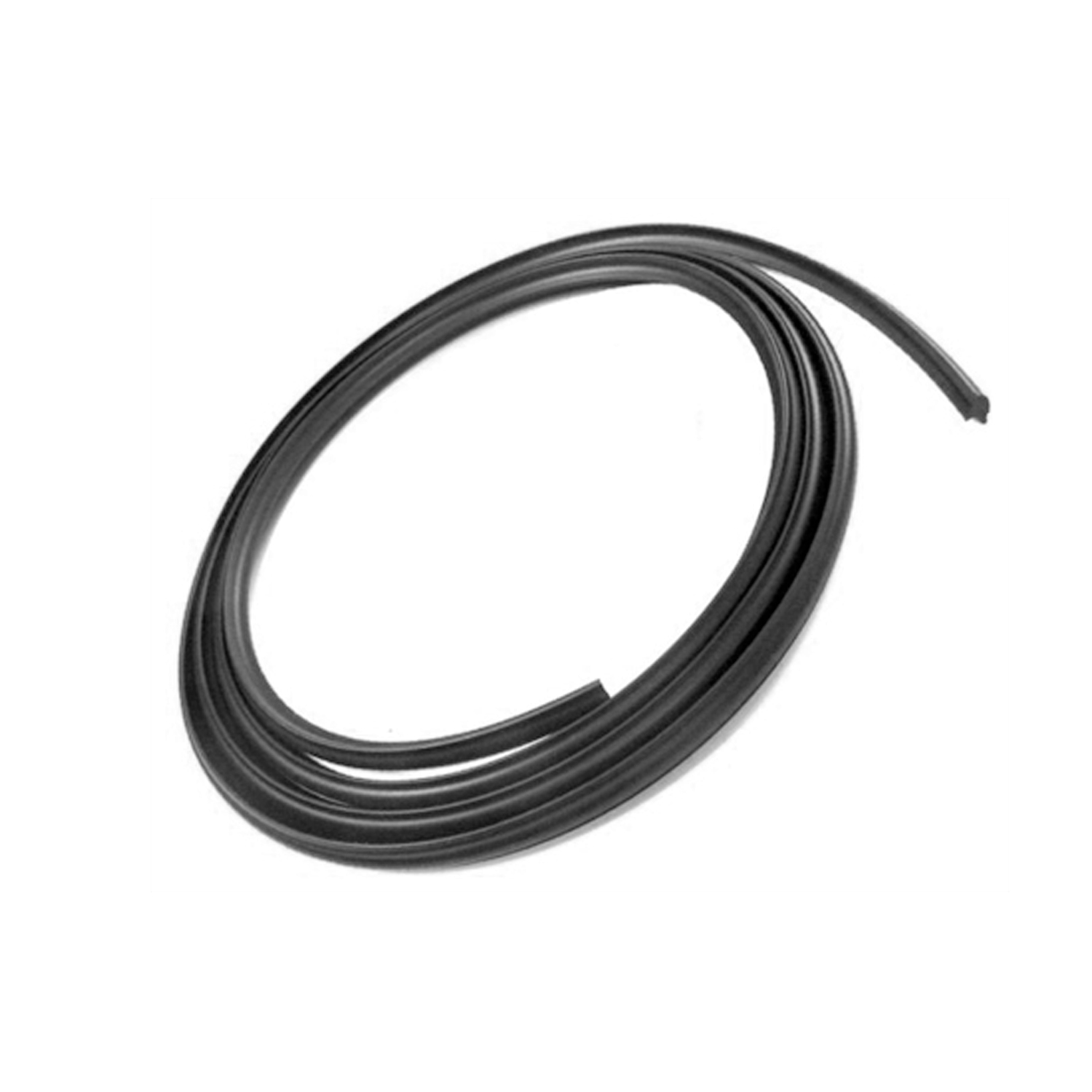 1958 Dodge W300 Pickup Lockstrip Seal, 54-93 Mopar Full Size Truck, Van & SUV, Chromed Plastic Type-LS 2-VLockstrip Seal, 54-93 Mopar Full Size Truck, Van & SUV, Chromed Plastic Type, Each. Works with Metro p/n VWS 2706.
Why Choose Metro?
For over 100 years, Metro Moulded Parts has been the pinnacle of quality in classic car restoration parts. Our commitment to precision and authenticity in every component ensures a perfect fit and an OEM-level appearance.
- Expert Craftsmanship & Quality: Each part is a testament to our dedication to reliability and perfection, crafted from original designs and thoroughly tested.
- Advanced Technology: We use cutting-edge techniques to create flawless, long-lasting parts that surpass others in performance.
- SuperSoft Sponge – The Ultimate Door Seal: Not only are our door seals 30% softer than competitors', but they're also guaranteed to never leak. They effectively reduce wind and road noise, enhancing your classic car's comfort and driving experience.
- Proudly American: Our parts are a product of American craftsmanship, made in the USA with a spirit of excellence and heritage.
- Unrivaled Warranty: We back our products with a 30-year industry-leading warranty, a testament to our confidence in their quality.
Join us in preserving the legacy of classic cars with parts that are crafted for perfection, not just made.