
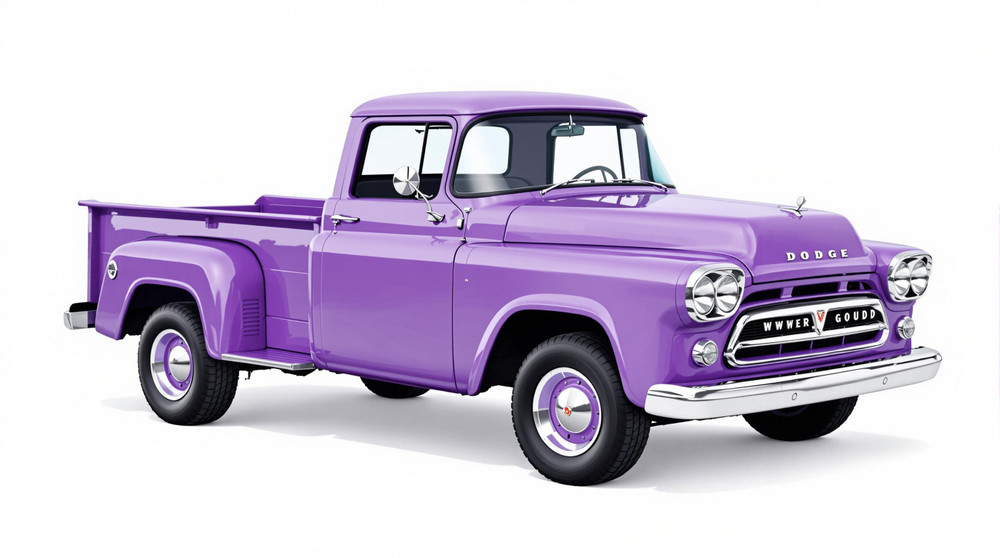
Image of 1958 Dodge Wm300 Power Wagon, Note: These illustrations use artistic license and may differ from actual historical models.
Performance Metrics
Fundamental Metrics
Emotional Appeal
MMP Rating
| Engine Specifications | |
|---|---|
| Engine: | Inline 6 |
| Displacement: | 230 cubic inches |
| Horsepower: | 120-130 HP |
| Torque: | 202 lb-ft |
| Compression Ratio: | 7.0:1 |
| Ignition System: | Distributor and coil |
| Cooling System: | Liquid-cooled |
| Performance Specifications | |
| 0-60 Time: | Not available due to the vehicle's age and purpose (it was primarily a work vehicle) |
| 1/4 Mile Time: | Not available for the same reasons |
| Top Speed: | 60-65 mph |
| Transmission and Drive | |
| Drive Type: | 4WD |
| Transmission Type: | 4-speed manual |
| Fuel and Efficiency | |
| Fuel System Type: | Carburetor |
| MPG: | 10-12 MPG |
| Dimensions and Brakes | |
| Brakes: | Hydraulic drum brakes |
| Wheelbase: | 126 inches |
| Weight: | 5,300 lbs |
Note: Specifications for classic cars are given to the best of our ability, considering the limited and variant data available.
1958 Dodge WM-300 Power Wagon: A Work Truck with Military Roots
The 1958 Dodge WM-300 Power Wagon was built for roads that barely deserved the name. Tall, blunt-nosed, and equipped with four-wheel drive, it brought the toughness of Dodge’s wartime trucks to farms, work sites, forests, and rural communities across America.
Dodge introduced the civilian Power Wagon in 1946, drawing heavily on the company’s experience building four-wheel-drive military trucks during World War II. The WM-300 was part of the later-generation range, and the 1958 model retained the original Power Wagon’s central idea: a sturdy, self-reliant truck designed to keep working far from paved roads or repair shops. It was not a modern pickup with an off-road package. It was a purpose-built 4x4 whose simple mechanical layout and available power take-off equipment made it useful as a mobile work machine.
One especially distinctive feature was the optional engine-driven winch. Powered through the truck’s power take-off system, it could pull the Power Wagon out of trouble or help move equipment and materials. That capability says a lot about the WM-300: it was designed not just to travel over rough ground, but to do useful work once it got there.
Power Wagon Styling and Cab Design
The WM-300 wears its working character openly. Its tall hood, upright grille, separate front fenders, exposed running boards, and high ground clearance give it a sturdy, almost architectural profile. The large wheels and narrow body emphasize function over fashion, while the high-mounted cab gives the driver a commanding view of the terrain ahead. Details vary with equipment and body configuration, but the overall shape is unmistakably old-school Power Wagon.
The cab is equally straightforward. Inside, drivers found a broad bench seat, painted metal surfaces, simple gauges, and large controls that were easy to operate with work gloves. Materials were durable rather than luxurious, with practical upholstery and trim chosen to tolerate daily use. Sound insulation and comfort features were modest by modern standards, and the cab could be noisy, warm, or drafty depending on weather and condition.
Equipment varied by order and intended job. A truck destined for farm or utility work could be specified differently from one ordered for a municipality, forestry crew, or industrial fleet. Buyers could choose useful additions such as a PTO winch, power take-off provisions, different tires, and various body or chassis arrangements. Paint choices depended on the buyer and order; fleet colors such as red, green, blue, yellow, black, and white were common sights, though availability could vary.
WM-300 Bodies and Equipment
The WM-300 was offered in work-oriented configurations, including chassis-cab and stake-bed arrangements, as well as trucks fitted for flatbed or service-body use. Some Power Wagons were equipped with pickup-style beds, but the model’s strongest identity came from its commercial and utility applications. Many trucks were completed or adapted to suit a particular job, so surviving examples may have bodies that differ considerably from one another.
The most iconic setup is the basic cab-and-chassis truck with a practical work bed and a front-mounted PTO winch. That combination captures the Power Wagon’s purpose: carry a crew and its equipment, cross difficult ground, and provide pulling power when the job demands it. For collectors, originality matters, but a period-correct utility body can be just as compelling as a standard configuration.
Engineering That Put Work First
At the heart of the 1958 WM-300 was Dodge’s 230-cubic-inch flathead inline-six. This long-running L-head engine was valued for steady low-speed pulling and straightforward service, not high-revving performance. Output is commonly quoted at roughly 120 horsepower, though published figures can vary with year, rating method, and specification. A four-speed manual transmission and a two-speed transfer case gave the driver a low-range setting for slow, controlled work on steep or slippery ground.
Its solid axles, ladder-frame construction, and heavy-duty components suited the truck to loads and rough terrain. The mechanical simplicity was a major advantage in the era before electronic engine controls and complex emissions systems. An experienced owner or mechanic could diagnose much of the truck with ordinary tools and a workshop manual. That simplicity did not make every repair effortless: parts can be specialized, rust can hide in the frame and cab, and worn steering or driveline components may require careful rebuilding.
The WM-300’s broader influence is less about styling trends than about capability. It helped establish the idea that a civilian four-wheel-drive truck could be a dedicated tool for work in remote conditions. Later pickups became more comfortable and faster, but the Power Wagon’s combination of low-range gearing, rugged construction, and job-specific equipment remains a recognizable blueprint for serious off-road utility vehicles.
How the 1958 Power Wagon Drives
Performance figures for old work trucks are best treated as estimates, not modern instrumented-test results. Depending on gearing, tires, condition, load, and altitude, a healthy WM-300 may top out around 50 to 60 mph. Reaching 60 mph from rest can take roughly 30 to 40 seconds, and some examples may struggle to reach that speed at all, especially when loaded or fitted with low-speed gearing. The truck was designed to pull and crawl, not sprint.
On rough ground, the Power Wagon feels reassuringly substantial. Its solid axles and heavy-duty suspension can take punishment, though the ride is firm and the truck can bounce over sharp bumps when unladen. Low range helps it move slowly and steadily over uneven trails, while four-wheel drive provides useful traction in mud, snow, and loose gravel. On winding roads, the high stance, narrow tires, manual steering, and considerable body movement call for patience. It is happiest at a measured pace, with the driver looking well ahead and making deliberate inputs.
The flathead six produces a deep, steady mechanical murmur rather than a modern truck’s polished soundtrack. Gear changes are deliberate, steering requires effort at low speeds, and braking takes more anticipation than in a contemporary vehicle. The driving experience is physical and involving: the driver hears the engine, feels the road through the chassis, and has to work with the truck instead of expecting it to do everything automatically.
Living with a WM-300
Most owners use a 1958 Power Wagon as a collector vehicle, weekend driver, show truck, or occasional workhorse. It can still handle farm, property, and trail duties, but regular highway commuting is rarely its ideal role. Slow cruising speeds, old-style brakes, fuel consumption, and limited cabin comfort make long modern commutes tiring.
Maintenance is manageable for owners comfortable with older mechanical vehicles. The flathead engine and manual driveline are relatively accessible, and many routine jobs are uncomplicated. The greater challenge is often locating sound parts and assessing decades of repairs. Before buying, inspect the frame, cab floors, rocker areas, fenders, suspension mounts, axle components, brakes, and steering. Check that the transfer case engages properly and that any PTO equipment works as intended. A truck that appears complete can still need costly work if its structural metal or drivetrain has been neglected.
Reliability depends heavily on condition and upkeep. A well-maintained example can be dependable for local trips and occasional off-road use, but age-related issues are inevitable. Cooling-system condition, electrical connections, fuel delivery, brake hydraulics, and old rubber components deserve particular attention. The WM-300 is mechanically approachable, but it is still a nearly seven-decade-old truck, not a maintenance-free modern vehicle.
Power Wagon Facts and Common Criticisms
The Power Wagon’s PTO equipment is among its most interesting features. Depending on specification, a PTO could operate a winch or other work accessories, turning the truck’s engine into a source of power for more than just forward motion. This helps explain why Power Wagons served in demanding settings such as farms, utility fleets, forestry work, and municipal operations.
There is no widely accepted, model-year-by-model-year production total for the 1958 WM-300. As a rough estimate, production may have been in the low thousands, perhaps around 2,000 to 3,000 trucks, but that should be treated as an informed approximation rather than an official factory figure. The model is far less common than mass-market pickups, and surviving examples vary widely in originality and condition.
Common criticisms are easy to understand: the truck is slow, thirsty, noisy, and physically demanding to drive. Its turning and braking feel dated, and highway speeds can be uncomfortable. Those shortcomings are part of the trade-off for a vehicle built around durability and low-speed capability. The WM-300 is not a forgotten speed record holder or a luxury classic; its reputation rests on usefulness, ruggedness, and an unusually direct connection between driver and machine.
1958 Dodge WM-300 Values and Collectibility
Collector values depend on rust, mechanical condition, originality, body style, and equipment. As a broad current-market guide, a project truck may sell for about $8,000 to $20,000. A usable driver often falls around $20,000 to $40,000, while a well-restored or unusually original example can bring roughly $40,000 to $75,000. Exceptional restorations, rare configurations, or trucks with highly desirable period equipment may exceed that range, though asking prices do not always reflect completed sales.
Availability is limited compared with ordinary classic pickups. Trucks do appear through specialist dealers, online auctions, and enthusiast networks, but condition and configuration vary considerably. Values have generally strengthened as interest in vintage 4x4s has grown, especially for complete, well-documented examples. The market is selective: a properly restored truck can attract strong interest, while a rusty or heavily modified one may remain difficult to sell regardless of its asking price.
For the best long-term appeal, look for a sound frame, a complete drivetrain, correct identifying details, and evidence of careful maintenance. A useful period body or working PTO winch can add character, but poor structural repairs can quickly outweigh desirable accessories.
Why the WM-300 Still Matters
The 1958 Dodge WM-300 Power Wagon combined wartime engineering roots with the everyday needs of farms, businesses, and remote communities. Its flathead six, low-range four-wheel drive, durable chassis, and available PTO equipment made it a genuine work tool, while its distinctive shape has made it a lasting classic.
It is not quick, quiet, or especially comfortable, and that is precisely why it remains memorable. The WM-300 represents a time when a truck’s reputation was earned by getting the job done far beyond the end of the pavement.
1958 Dodge Wm300 Power Wagon Catalog of Parts
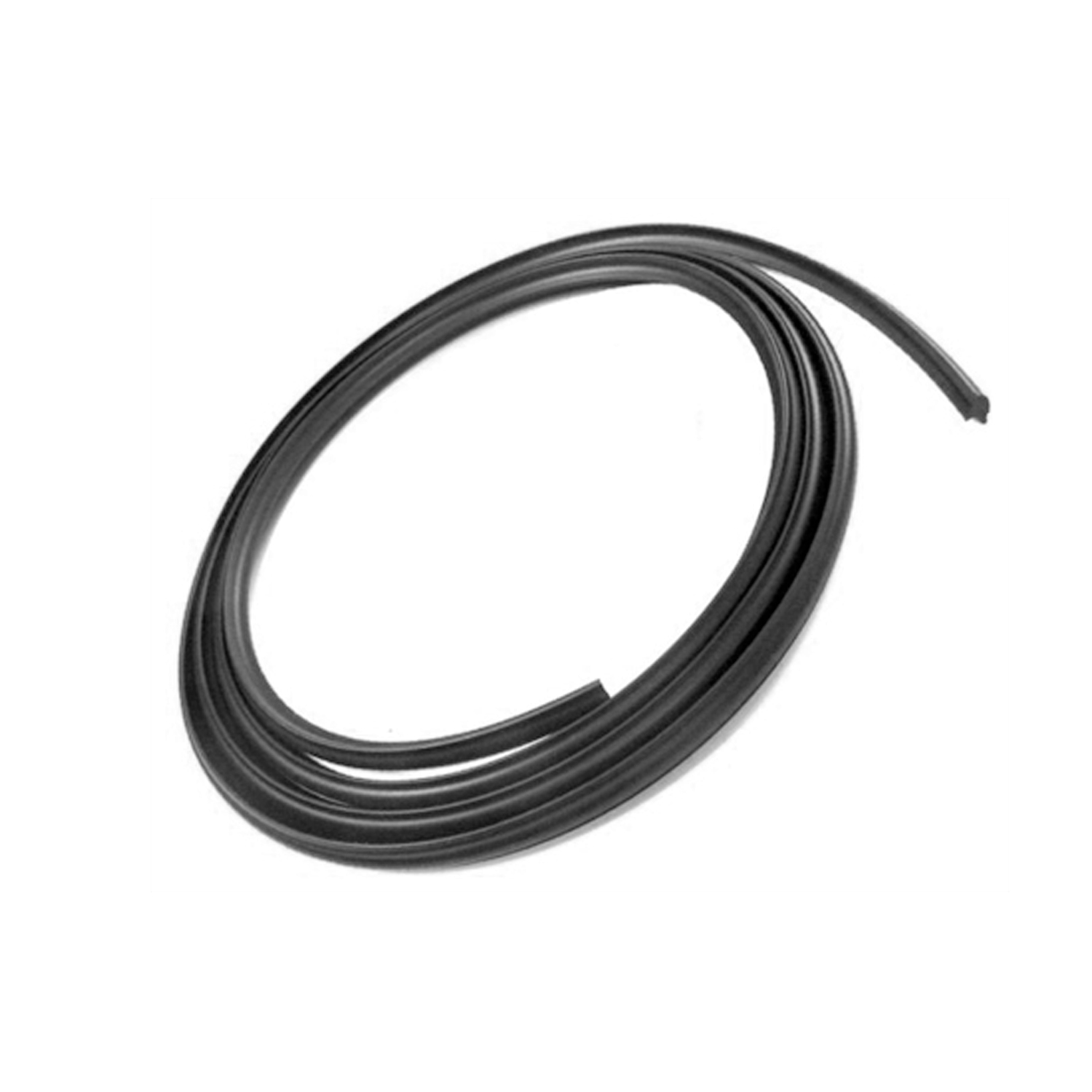 1958 Dodge Wm300 Power Wagon Lockstrip Seal, 54-93 Mopar Full Size Truck, Van & SUV, Chromed Plastic Type-LS 2-VLockstrip Seal, 54-93 Mopar Full Size Truck, Van & SUV, Chromed Plastic Type, Each. Works with Metro p/n VWS 2706.
Why Choose Metro?
For over 100 years, Metro Moulded Parts has been the pinnacle of quality in classic car restoration parts. Our commitment to precision and authenticity in every component ensures a perfect fit and an OEM-level appearance.
- Expert Craftsmanship & Quality: Each part is a testament to our dedication to reliability and perfection, crafted from original designs and thoroughly tested.
- Advanced Technology: We use cutting-edge techniques to create flawless, long-lasting parts that surpass others in performance.
- SuperSoft Sponge – The Ultimate Door Seal: Not only are our door seals 30% softer than competitors', but they're also guaranteed to never leak. They effectively reduce wind and road noise, enhancing your classic car's comfort and driving experience.
- Proudly American: Our parts are a product of American craftsmanship, made in the USA with a spirit of excellence and heritage.
- Unrivaled Warranty: We back our products with a 30-year industry-leading warranty, a testament to our confidence in their quality.
Join us in preserving the legacy of classic cars with parts that are crafted for perfection, not just made.