
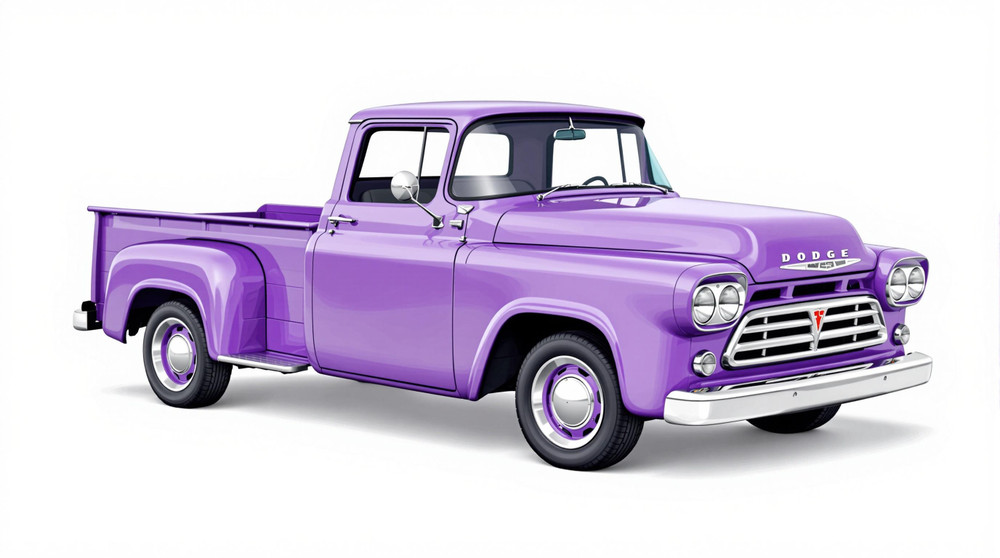
Image of 1959 Dodge W200 Pickup, Note: These illustrations use artistic license and may differ from actual historical models.
Performance Metrics
Fundamental Metrics
Emotional Appeal
MMP Rating
| Engine Specifications | |
|---|---|
| Engine: | 318 cu in (5.2 L) V8, 361 cu in (5.9 L) V8 |
| Displacement: | 318-361 cu in |
| Horsepower: | 200-265 hp |
| Torque: | 270-380 lb-ft |
| Compression Ratio: | 8.5:1 - 9.0:1 |
| Ignition System: | Conventional breaker-point ignition system |
| Cooling System: | Liquid-cooled |
| Performance Specifications | |
| 0-60 Time: | Estimated 10-12 seconds |
| 1/4 Mile Time: | Estimated 17-19 seconds |
| Top Speed: | 85-95 mph |
| Transmission and Drive | |
| Drive Type: | Rear-wheel drive (4x4 optional) |
| Transmission Type: | 3-speed manual, 4-speed manual |
| Fuel and Efficiency | |
| Fuel System Type: | Carburetor |
| MPG: | Estimated 10-12 mpg |
| Dimensions and Brakes | |
| Brakes: | Drum brakes |
| Wheelbase: | 122 inches |
| Weight: | 4,500 lbs |
Note: Specifications for classic cars are given to the best of our ability, considering the limited and variant data available.
1959 Dodge W200 Pickup: A Four-Wheel-Drive Workhorse
The 1959 Dodge W200 Pickup was built for jobs that could take a truck beyond the pavement. It combined Dodge’s late-1950s styling with a part-time four-wheel-drive system, a stout chassis, and straightforward mechanicals. Today, it stands out as an uncommon early example of the four-wheel-drive pickups that would eventually become fixtures on farms, worksites, and recreational trails.
Dodge was part of the Chrysler Corporation, and the W200 belonged to the company’s W-Series of four-wheel-drive trucks. The W-Series arrived in 1957 alongside two-wheel-drive D-Series models, giving buyers a factory-built alternative to aftermarket four-wheel-drive conversions. The W200 was the three-quarter-ton member of the range, positioned for owners who needed more capacity than a light-duty pickup could provide.
One important distinction for collectors: the W200 is not the same truck as Dodge’s older, heavier-duty Power Wagon. The names and four-wheel-drive heritage are closely linked, but the W200 was a conventional pickup with its own chassis and body. That difference matters when researching parts, specifications, and vehicle history.
Forward Look Styling Meets Utility
Dodge’s passenger cars were famous for their dramatic late-1950s fins, but the 1959 W200 wore a more restrained interpretation of the era’s “Forward Look.” Its broad hood, upright cab, prominent grille, and substantial fenders gave it a purposeful stance. The truck looked modern for its day without hiding its working-truck character. High ground clearance and exposed solid axles made its four-wheel-drive purpose plain.
Cab interiors were practical rather than luxurious. Drivers sat on a broad bench seat, faced a simple metal dashboard, and typically found durable upholstery and a rubber floor covering suited to muddy boots. The materials were chosen for serviceability and cost, not plushness. Large controls and straightforward instruments were easy to understand, although the driving position and steering effort feel decidedly old-fashioned by modern standards.
Technology was similarly functional. The W200’s key feature was its part-time four-wheel-drive system, which sent power to the front axle when conditions called for extra traction. It also used a traditional body-on-frame construction, solid axles, and mechanical systems that could be inspected and repaired without specialized electronics. Depending on its original specification, a truck might have a three-speed or four-speed manual transmission, with low gearing useful for hauling and slow-speed work.
Paint colors and trim varied with the order and market. Buyers could choose practical solid colors, while two-tone combinations added a more dressed-up look. Restored examples are often seen in period-inspired reds, blues, greens, creams, and combinations of those colors, but the original paint code is the best guide to a particular truck’s factory finish.
Cab and Bed Configurations
The W200 was primarily a regular-cab pickup, offered with a conventional stepside-style bed commonly known as a Utiline. Dodge also introduced its wide, smooth-sided Sweptline pickup bed for the 1959 model year, but availability depended on the model and configuration. Four-wheel-drive W200s are most closely associated with the traditional Utiline look, so buyers should confirm the original configuration rather than assume every bed is factory-correct.
Equipment varied by order. A W200 could be specified as a basic work truck or ordered with more comfort and appearance features. Options and details changed across markets and production runs, which is why original documentation, chassis numbers, and period parts references are valuable when evaluating a restoration.
Why the W200 Mattered
The W200’s importance is less about introducing a revolutionary styling trend and more about making factory four-wheel drive available in a conventional, usable pickup. Before four-wheel-drive pickups became common, many buyers relied on specialized trucks or aftermarket conversions. Dodge’s W-Series helped establish the idea that a customer could buy a regular-looking work pickup with four-wheel-drive hardware already engineered into the vehicle.
That approach anticipated the modern 4x4 pickup: a truck expected to work on ordinary roads, carry a load, and tackle rough terrain when needed. The W200 was not alone in that shift, but its combination of pickup practicality and factory four-wheel drive helped build the market that later manufacturers expanded. Its solid-axle construction and simple mechanical layout also give it a distinctive place in the evolution of utility vehicles.
Engine, Speed, and Driving Feel
Engine availability depended on the truck’s specification and market. Period Dodge truck powerplants included flathead six-cylinder engines and optional V8s. A commonly cited six-cylinder choice was the 230-cubic-inch flathead, while V8-equipped trucks offered stronger acceleration and more relaxed cruising under load. Exact output figures and engine combinations should be checked against the individual truck’s serial number and factory literature, since equipment could vary.
There is no single dependable factory 0-to-60 mph figure for every 1959 W200 configuration. As a practical estimate, a six-cylinder truck with low gearing could take well over 20 seconds to reach 60 mph, and a V8 would generally do it faster. Top speed also depended on gearing, tires, engine, and condition. Many examples are happiest at moderate road speeds rather than sustained modern-highway cruising; roughly 55 to 65 mph is a more comfortable expectation than treating the truck as a high-speed commuter.
Behind the wheel, the W200 feels like a machine built around work rather than speed. The engine has a steady, mechanical sound, while a manual gearbox rewards deliberate shifts. The ride is firm, especially when the truck is empty, and solid axles transmit bumps directly to the cab. On winding roads, the tall body and older steering design call for measured inputs. In loose gravel, snow, or a muddy field, however, low gearing and four-wheel drive offer the sort of useful traction that gives the truck its character.
Four-wheel drive should be used according to the system’s design and road conditions. Like other traditional part-time systems, it is generally intended for slippery or loose surfaces rather than dry pavement, where driveline bind can occur. The owner’s manual and the truck’s specific transfer-case setup are the right references before operating it.
Living With a 1959 Dodge W200
Today, W200s are most often used as weekend drivers, restoration projects, show vehicles, farm trucks, and vintage off-road rigs. They can still perform useful work, but many owners avoid heavy-duty use to preserve increasingly scarce components and original sheet metal. Their size and period charm make them natural conversation starters at classic-truck gatherings.
The mechanical layout is comparatively accessible for a skilled home mechanic. The truck has no engine computer or complex electronic controls, and many routine service tasks are familiar to anyone who has worked on older American vehicles. The harder challenges are finding correct parts, identifying previous modifications, and dealing with rust or worn four-wheel-drive components. Before purchase, inspect the frame, cab corners, floors, bed, suspension mounts, axles, transfer case, and steering carefully.
Reliability depends heavily on maintenance and restoration quality. A sound, correctly serviced truck can be dependable for local use, but age brings predictable concerns: leaks, tired wiring, brake wear, cooling-system problems, and deterioration in rubber parts. A pre-purchase inspection by a mechanic familiar with vintage Dodge trucks is money well spent.
W200 Trivia and Common Misconceptions
The W200’s most notable bit of trivia is its place in the transition from specialized four-wheel-drive vehicles to the everyday 4x4 pickup. It offered useful off-road ability in a familiar pickup format, rather than asking owners to choose between a conventional work truck and a more specialized machine.
There is no widely recognized speed, sales, or endurance record associated specifically with the 1959 W200. Nor is there a definitive, readily available production total for this exact model and configuration. Dodge’s broad truck production figures do not reliably tell us how many W200s were built, and surviving examples can be difficult to distinguish from trucks that have been modified over the decades.
A frequent criticism is that the W200 is slow, noisy, and demanding by modern standards. That is fair: it has neither contemporary acceleration nor modern ride comfort, braking, or safety equipment. Its steering and manual controls require more attention than those of a new pickup. For enthusiasts, though, the direct mechanical feel is part of the appeal rather than a defect to be corrected.
Collector Values and Rarity
The 1959 W200 is uncommon compared with ordinary two-wheel-drive pickups, but rarity alone does not guarantee a high price. Condition, originality, rust, drivetrain completeness, and the quality of any restoration have a major effect on value. Because reliable model-specific production totals are not readily established, any estimate of how many were built should be treated as a broad guess rather than a historical fact. The W200 was a specialized part of the Dodge truck range, and surviving examples are scarce enough to take time to find.
As a general U.S. market guide, a rough project might sell for about $10,000 to $20,000, depending on completeness and rust. A usable driver could fall around $20,000 to $40,000, while a well-restored or especially original example may bring roughly $40,000 to $70,000 or more. Exceptional trucks, rare configurations, and high-quality restorations can exceed that range. These are estimates, not a guaranteed appraisal; actual sale prices vary with region, season, documentation, and buyer interest.
Well-presented vintage 4x4 pickups have attracted stronger collector interest over time, and the W200 benefits from that trend. Values can rise for clean, correctly restored trucks, but condition and authenticity matter more than simply waiting for the market to appreciate. Poor repairs, serious frame rust, missing four-wheel-drive parts, or an incorrect drivetrain can quickly narrow the pool of buyers.
A Dodge 4x4 With Lasting Character
The 1959 Dodge W200 Pickup brought together honest work-truck construction, period Dodge styling, and factory four-wheel drive at a time when that combination was still unusual. It is not fast or refined by modern standards, and it asks its driver to be involved. That is precisely what makes it memorable: the W200 is a practical piece of four-wheel-drive history, built to earn its keep and tough enough to inspire respect more than six decades later.
1959 Dodge W200 Pickup Catalog of Parts
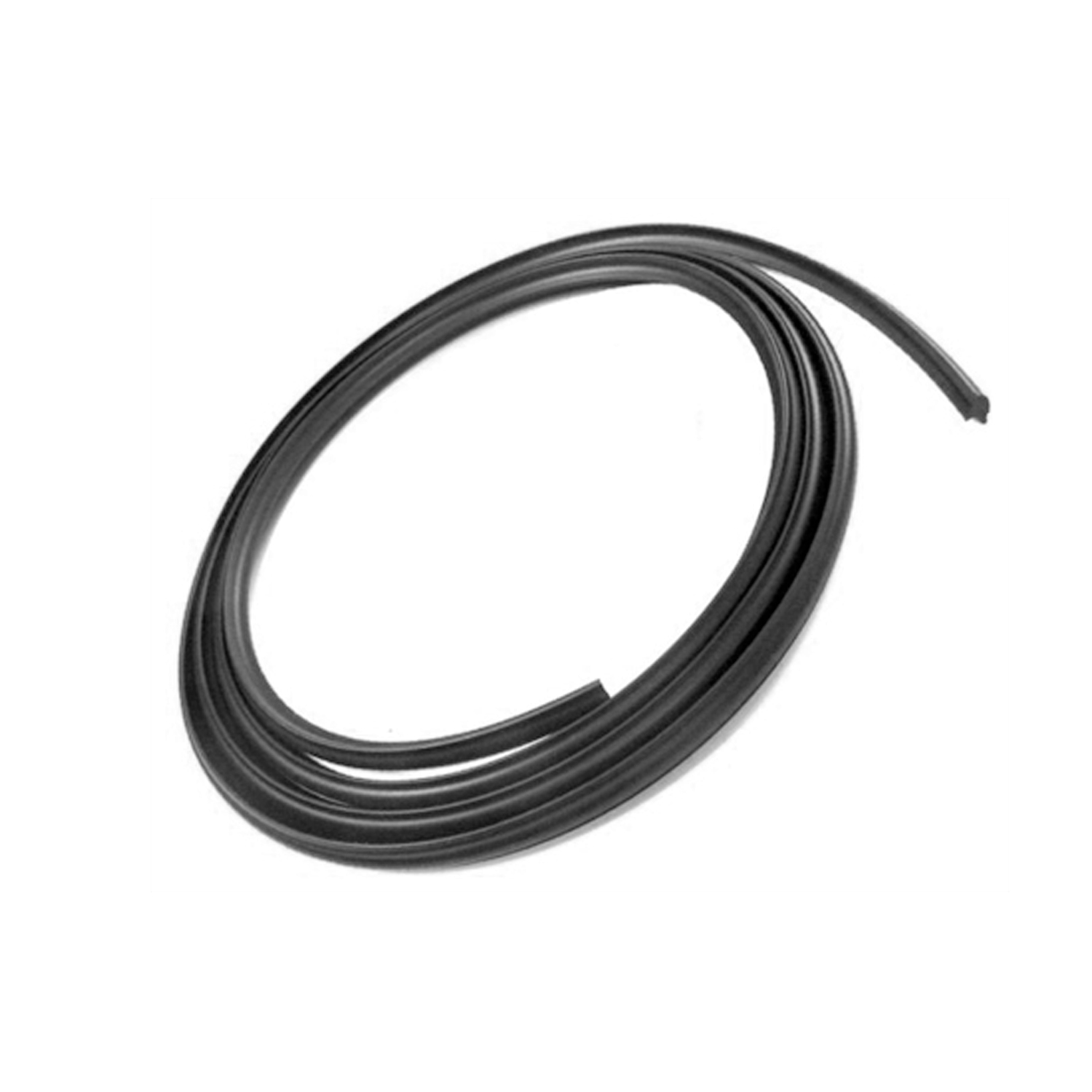 1959 Dodge W200 Pickup Lockstrip Seal, 54-93 Mopar Full Size Truck, Van & SUV, Chromed Plastic Type-LS 2-VLockstrip Seal, 54-93 Mopar Full Size Truck, Van & SUV, Chromed Plastic Type, Each. Works with Metro p/n VWS 2706.
Why Choose Metro?
For over 100 years, Metro Moulded Parts has been the pinnacle of quality in classic car restoration parts. Our commitment to precision and authenticity in every component ensures a perfect fit and an OEM-level appearance.
- Expert Craftsmanship & Quality: Each part is a testament to our dedication to reliability and perfection, crafted from original designs and thoroughly tested.
- Advanced Technology: We use cutting-edge techniques to create flawless, long-lasting parts that surpass others in performance.
- SuperSoft Sponge – The Ultimate Door Seal: Not only are our door seals 30% softer than competitors', but they're also guaranteed to never leak. They effectively reduce wind and road noise, enhancing your classic car's comfort and driving experience.
- Proudly American: Our parts are a product of American craftsmanship, made in the USA with a spirit of excellence and heritage.
- Unrivaled Warranty: We back our products with a 30-year industry-leading warranty, a testament to our confidence in their quality.
Join us in preserving the legacy of classic cars with parts that are crafted for perfection, not just made.