
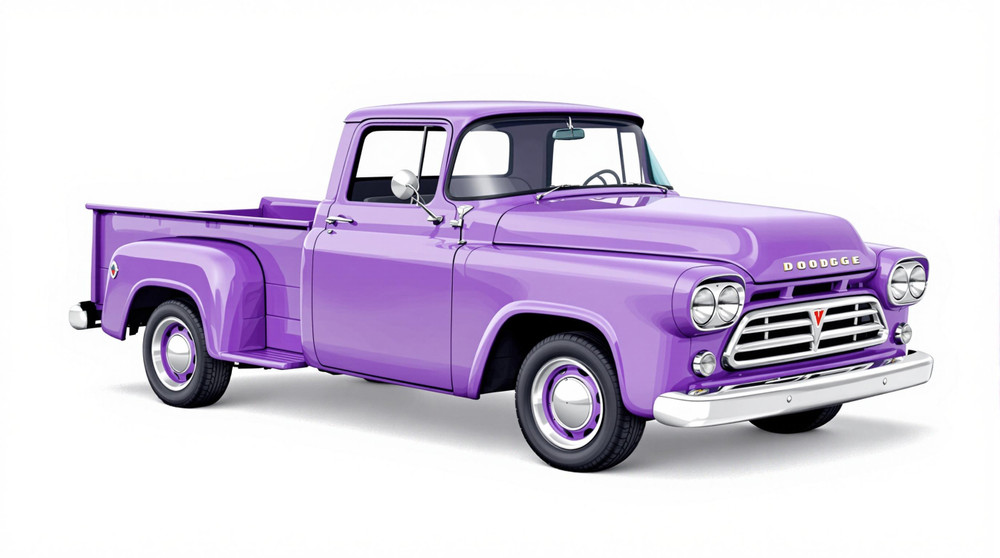
Image of 1959 Dodge W300 Pickup, Note: These illustrations use artistic license and may differ from actual historical models.
Performance Metrics
Fundamental Metrics
Emotional Appeal
MMP Rating
| Engine Specifications | |
|---|---|
| Engine: | 318 cu in (5.2 L) V8 |
| Displacement: | 318 cu in (5.2 L) |
| Horsepower: | 200-230 hp |
| Torque: | 340 lb-ft |
| Compression Ratio: | 8.5:1 |
| Ignition System: | Conventional breaker-point ignition system |
| Cooling System: | Liquid-cooled |
| Performance Specifications | |
| 0-60 Time: | Estimated 10-12 seconds |
| 1/4 Mile Time: | Estimated 18-20 seconds |
| Top Speed: | 85-90 mph |
| Transmission and Drive | |
| Drive Type: | 4WD |
| Transmission Type: | 4-speed manual |
| Fuel and Efficiency | |
| Fuel System Type: | Carburetor |
| MPG: | Estimated 10-12 mpg |
| Dimensions and Brakes | |
| Brakes: | Drum brakes |
| Wheelbase: | 133 inches |
| Weight: | 4500 lbs |
Note: Specifications for classic cars are given to the best of our ability, considering the limited and variant data available.
1959 Dodge W300 Pickup: A One-Ton 4x4 Built for Work
The 1959 Dodge W300 Pickup was not interested in making hard work look easy. It was built to get through it. A one-ton, four-wheel-drive truck from the Dodge division of Chrysler Corporation, the W300 brought rugged running gear and practical truck styling to farms, worksites, utility fleets, and remote roads.
The W300 belongs to the broader Dodge Power Wagon story, but it is worth distinguishing it from the earlier, military-derived Power Wagon with its unmistakable rounded fenders. The W300 used Dodge’s newer, more conventional truck cab and body. In 1959, it represented a more modern-looking way to buy a serious four-wheel-drive Dodge, while retaining the mechanical simplicity that made these trucks valuable far from paved roads.
One intriguing detail is that “pickup” describes only part of the W300’s working life. Buyers could order the truck in pickup form, but the chassis also suited stake beds, service bodies, and other commercial equipment. Many W300s spent their lives as tools rather than personal transportation, which helps explain why well-preserved examples are uncommon today.
1959 Dodge W300 Styling and Cab
The W300 has the upright, purposeful look of a late-1950s work truck. Its tall cab, broad hood, prominent front fenders, and substantial grille give it a solid stance without the decorative excess associated with some passenger cars of the period. Depending on configuration, its tall ride height and heavy-duty tires make the four-wheel-drive hardware part of the visual character, not something hidden beneath sleek bodywork.
The pickup version paired the cab with a practical cargo bed, while many W300 chassis were fitted with specialized bodies by dealers, fleet operators, or independent body builders. The most recognizable configuration today is the conventional cab pickup, but a truck equipped with a period-correct utility or stake body tells an equally authentic working-truck story.
Inside, the emphasis was on durability and clear, straightforward controls. The cabin used painted metal surfaces and hard-wearing upholstery rather than the plush trim found in an upscale car. A large steering wheel, simple instrument panel, and easy-to-read gauges suited drivers who might be wearing gloves or spending much of the day behind the wheel. Materials were functional, and the cab could feel noisy and utilitarian by modern standards.
Dodge offered a range of exterior colors during the period, with availability depending on body and order. Solid work-truck colors were common, while two-tone treatments could give a pickup a more distinctive appearance. There was no single signature W300 color: fleet buyers often chose practical colors, and surviving trucks appear in everything from subdued shades to brighter period hues. Original paint codes and factory records are useful when restoring one.
Four-Wheel-Drive Technology of Its Era
The W300’s defining feature was its four-wheel-drive system, which made it suitable for muddy fields, snow-covered routes, rough access roads, and job sites where a two-wheel-drive truck could quickly lose traction. The system was mechanical rather than electronic, with a manual transmission and a transfer case providing the driver with control over the truck’s gearing and traction. Exact equipment could vary by build and option, so a specific truck should be checked by its serial number and component tags.
That straightforward design was an advantage. There were no electronic traction systems or computer-controlled drive modes to diagnose. A properly maintained W300 relied on robust mechanical components, regular lubrication, and a driver who understood when to use low range. Depending on its original equipment and later modifications, a truck might also have been fitted with useful work options such as a power take-off or winch.
Power came from Dodge’s period truck-engine lineup. Many W300s are associated with the durable 251-cubic-inch flathead six, a low-revving engine valued for its workday dependability. Engine availability and specifications could vary by order, and surviving trucks may have been repowered over the decades. For an individual example, the engine number and original sales or build documentation are more reliable guides than a generic model description.
Why the W300 Mattered
The W300 was part of a turning point in the working-truck market. Four-wheel drive was becoming increasingly useful beyond military service and specialized rural work. Farmers, utility companies, construction crews, and government departments needed trucks that could carry heavy loads and reach places where ordinary pickups struggled. The W300 answered that demand with a factory-built one-ton platform rather than requiring buyers to start with a lighter truck and improvise.
Its significance was less about introducing a single headline-grabbing invention and more about making heavy-duty 4x4 capability available in a practical commercial package. The combination of a conventional cab, substantial chassis, and four-wheel drive helped establish the template for modern work-oriented 4x4 pickups. The W300 was not alone in that shift, but it remains an important example of how the American pickup evolved from a basic farm vehicle into a versatile tool for industry and public services.
Compared with a two-wheel-drive truck of the same era, the W300 offered better mobility on loose or slippery ground. Compared with more car-like pickups, it prioritized load capacity, traction, and durability. That trade-off is central to its appeal: it was built to be useful first and comfortable second.
W300 Performance and Road Manners
There is no single dependable factory 0-to-60 mph or top-speed figure that describes every 1959 W300. Engine choice, axle gearing, tire size, bodywork, load, and drivetrain condition all affect performance. As a realistic guide, an original, work-geared truck might reach roughly 55 to 65 mph when mechanically sound, but it is happiest at more modest cruising speeds. A 0-to-60-mph run could take well over 20 seconds, and a heavily loaded or low-geared example may take longer. These are practical estimates, not guaranteed factory test results.
Behind the wheel, the W300 feels substantial. The steering is heavier and less precise than that of a modern pickup, and the tall stance makes the truck’s size apparent on narrow roads. Its solid, work-focused suspension can feel firm when the bed is empty, especially over potholes and washboard surfaces. Add a proper load and the ride often settles down, though the truck remains a heavy-duty vehicle rather than a comfort-tuned cruiser.
On winding roads, drivers need to account for the truck’s height, mass, and older steering and braking characteristics. Four-wheel drive can help the tires find traction, but it does not make the W300 a sports truck or shorten its stopping distance. In low range, the gearing is useful for crawling through rough terrain or maneuvering a load, while on the highway the engine tends to sound busy compared with a modern truck.
The soundtrack is part of the experience: a steady, deliberate engine note, mechanical gear changes, tire noise, and the occasional creak from a hard-working chassis. The driver is involved in every part of the job. There is no electronic assistance to smooth out poor technique, so choosing the right gear and reading the terrain matter.
Living With a 1959 Dodge W300
Today, a W300 is best suited to occasional driving, historic-truck displays, farm or property use, and carefully chosen off-road outings. Some owners use them regularly, but a 1959 truck is not an effortless substitute for a modern daily driver. Its speed, braking, steering, noise, fuel use, and lack of contemporary safety features all require realistic expectations.
Mechanical repairs can be approachable for an experienced home mechanic. The truck’s systems are largely mechanical, and many routine jobs do not require specialized electronics or diagnostic equipment. However, the W300 is heavy-duty equipment, so components such as axles, transfer cases, brakes, and steering parts can be cumbersome to service. Restoration work may also involve searching for model-specific pieces, especially trim, body panels, and original 4x4 components.
Before buying, inspect the frame for corrosion or poor repairs, check the cab and bed for rust, and look closely at the front axle, transfer case, and driveshafts. Confirm that four-wheel drive engages and disengages correctly. Check for leaks, unusual noises, and signs of mismatched or substituted parts. A truck that has worked hard may be mechanically sound but cosmetically rough, while a shiny restoration can still hide problems underneath.
W300 Facts, Myths, and Common Criticisms
The W300 is sometimes confused with the earlier-style Power Wagon. Both belong to Dodge’s Power Wagon legacy, but the W300’s more conventional cab and body give it a different appearance and role. It was a serious commercial truck, and many examples were built or equipped to suit a particular customer’s work rather than to serve as a uniform consumer model.
There is no widely recognized production record, speed record, or celebrity ownership story that defines the 1959 W300. Nor is there a reliable, commonly published model-year production total for every W300 body and chassis configuration. These trucks were ordered in multiple forms, and many were used hard, altered, or scrapped. Their rarity today comes in large part from that working life, rather than from a limited-edition badge.
Common criticisms are easy to understand. The W300 is slow by modern standards, thirsty compared with a contemporary pickup, noisy on the highway, and demanding to steer and stop. Its cabin is basic, and its heavy-duty suspension can be uncomfortable when unladen. Those drawbacks are part of the same design brief that made it capable: strength and serviceability came ahead of speed and refinement.
1959 Dodge W300 Collector Value
Values vary widely with condition, originality, body style, and the quality of any restoration. As a broad current-market estimate, a rough project truck may fall around $10,000 to $20,000. A usable driver with sound structure and functioning four-wheel drive could bring roughly $20,000 to $40,000. A well-restored, highly original, or unusually well-equipped example may reach approximately $45,000 to $75,000 or more, particularly when its history and restoration are documented.
These figures are estimates, not a formal appraisal. A rare commercial body can be valuable to the right buyer, while a non-original engine or incomplete 4x4 system may affect desirability. Rust, hidden frame repairs, and scarce model-specific parts can have a greater impact on the final price than fresh paint.
No dependable figure is available for 1959 W300 production across all configurations. A cautious estimate would put total W300-series output for that model year in the low thousands, perhaps around 1,000 to 3,000 trucks when pickups and commercial chassis are considered together. That is an informed guess, not an official production total. Surviving examples in original or carefully restored condition are considerably less common.
Interest in vintage 4x4s has supported values for well-presented W300s, especially trucks with documented histories and authentic equipment. Market prices can still vary with broader collector trends, and the cost of a full restoration may exceed the value of the finished truck. Buyers should focus on condition and completeness rather than assuming every old Power Wagon-related Dodge will appreciate automatically.
Why the 1959 Dodge W300 Still Stands Out
The 1959 Dodge W300 Pickup combined one-ton strength, mechanical four-wheel drive, and practical truck styling at a time when rugged 4x4s were becoming increasingly important to American work. It was not fast or luxurious, and it never pretended to be. Its appeal lies in its straightforward engineering, useful capability, and the evidence of a lifetime spent doing real work.
For collectors, restorers, and fans of early 4x4s, the W300 is a distinctive chapter in Dodge’s Power Wagon story. Find one with sound structure and authentic running gear, and you have more than a vintage pickup. You have a tough, purposeful machine that helped define what a working four-wheel-drive truck could be.
1959 Dodge W300 Pickup Catalog of Parts
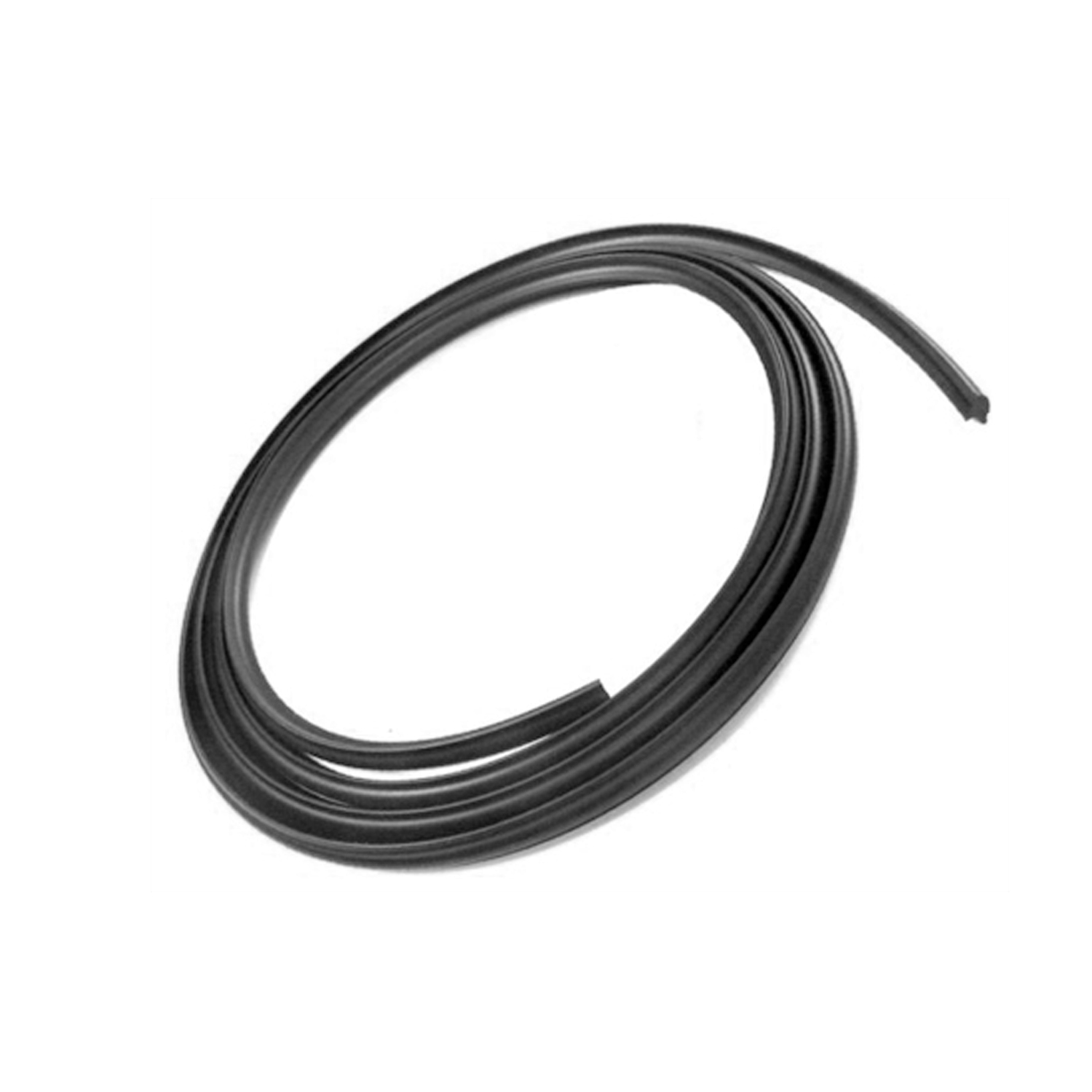 1959 Dodge W300 Pickup Lockstrip Seal, 54-93 Mopar Full Size Truck, Van & SUV, Chromed Plastic Type-LS 2-VLockstrip Seal, 54-93 Mopar Full Size Truck, Van & SUV, Chromed Plastic Type, Each. Works with Metro p/n VWS 2706.
Why Choose Metro?
For over 100 years, Metro Moulded Parts has been the pinnacle of quality in classic car restoration parts. Our commitment to precision and authenticity in every component ensures a perfect fit and an OEM-level appearance.
- Expert Craftsmanship & Quality: Each part is a testament to our dedication to reliability and perfection, crafted from original designs and thoroughly tested.
- Advanced Technology: We use cutting-edge techniques to create flawless, long-lasting parts that surpass others in performance.
- SuperSoft Sponge – The Ultimate Door Seal: Not only are our door seals 30% softer than competitors', but they're also guaranteed to never leak. They effectively reduce wind and road noise, enhancing your classic car's comfort and driving experience.
- Proudly American: Our parts are a product of American craftsmanship, made in the USA with a spirit of excellence and heritage.
- Unrivaled Warranty: We back our products with a 30-year industry-leading warranty, a testament to our confidence in their quality.
Join us in preserving the legacy of classic cars with parts that are crafted for perfection, not just made.