
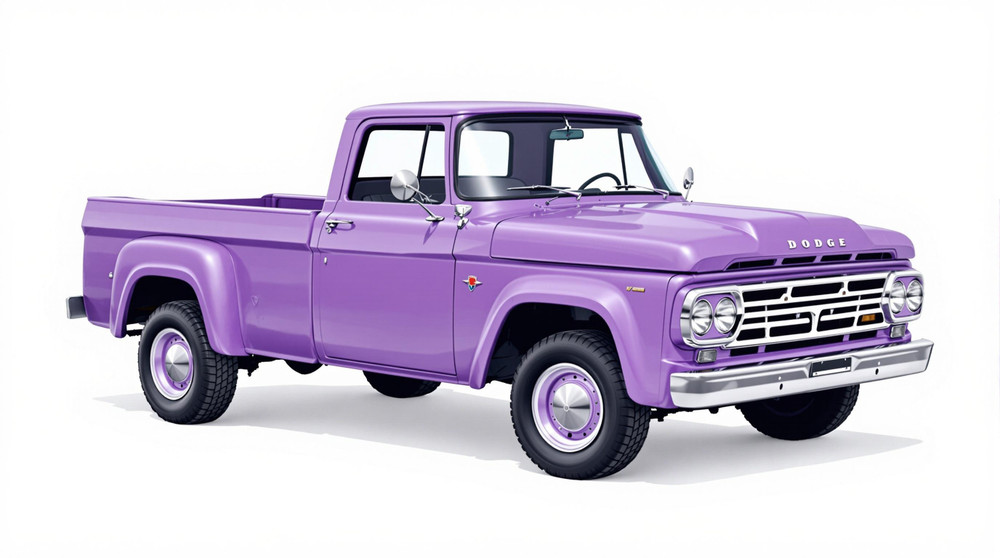
Image of 1961 Dodge Wm300 Power Wagon, Note: These illustrations use artistic license and may differ from actual historical models.
Performance Metrics
Fundamental Metrics
Emotional Appeal
MMP Rating
| Engine Specifications | |
|---|---|
| Engine: | 230 cubic inch flathead six |
| Displacement: | 230 cubic inches (3.8 liters) |
| Horsepower: | 120-130 hp |
| Torque: | 202 lb-ft |
| Compression Ratio: | 7.0:1 |
| Ignition System: | 6-volt electrical system |
| Cooling System: | Liquid-cooled |
| Performance Specifications | |
| 0-60 Time: | Not available due to the vehicle's primary design as a work truck |
| 1/4 Mile Time: | Not available due to the vehicle's primary design as a work truck |
| Top Speed: | 60 mph |
| Transmission and Drive | |
| Drive Type: | 4-wheel drive |
| Transmission Type: | 4-speed manual |
| Fuel and Efficiency | |
| Fuel System Type: | Carburetor |
| MPG: | 10-12 mpg |
| Dimensions and Brakes | |
| Brakes: | Hydraulic drum brakes |
| Wheelbase: | 126 inches |
| Weight: | 5,700 lbs |
Note: Specifications for classic cars are given to the best of our ability, considering the limited and variant data available.
1961 Dodge WM-300 Power Wagon: A Working Truck with a Legendary Lineage
The 1961 Dodge WM-300 Power Wagon was built for places ordinary trucks were never meant to go. With its tall steel body, low-range four-wheel drive and dependable flathead six, it brought the rugged spirit of Dodge’s wartime 4x4s to farms, worksites and remote roads across America.
Manufactured by the Dodge division of Chrysler, the WM-300 belonged to the civilian Power Wagon line introduced after World War II. Its roots reached back to the military Dodge WC-series trucks, whose service had demonstrated the value of a tough, compact four-wheel-drive vehicle. The civilian Power Wagon retained much of that practical engineering, making it one of the earliest factory-built 4x4 trucks sold to the general public.
A notable detail is just how long the basic design endured. By 1961, the Power Wagon still had the upright cab and purposeful proportions that traced their origins to an earlier era. That made it look old-fashioned beside newer trucks, but its proven layout was exactly what many buyers wanted: a vehicle that could be repaired and put back to work.
Workhorse Styling and a No-Nonsense Cab
The WM-300 has a square, upright profile, with a tall hood, separate rounded front fenders and a broad, simple grille. Its round headlights sit prominently at the front, while the flat windshield and near-vertical cab emphasize visibility and function over aerodynamic refinement. Heavy bumpers, deep wheel openings and substantial running boards complete the impression of a truck designed to take a knock and keep moving.
Inside, the cab is similarly straightforward. The driver faces a painted-metal dashboard with clear, basic instruments and large, easy-to-reach controls. A full-width bench seat provides room for a work crew, while rubber flooring is practical for muddy boots and spilled tools. Upholstery and trim could vary, but the overall standard was utilitarian rather than plush. There is little in the way of sound insulation or modern comfort equipment, which is part of the truck’s honest, hands-on character.
Buyers could choose from different paint colors depending on model year, ordering arrangements and whether the truck was being supplied for a fleet. Work-oriented shades such as red, green, blue, gray and white are commonly seen today, but there was no single color that defined every 1961 WM-300. Fleet buyers often chose colors that matched their business or municipality.
The familiar pickup configuration is the most recognizable today, but the WM-300 was also sold as a chassis cab that could receive a flatbed, stake body, service body or other commercial equipment. That flexibility made it useful to farmers, contractors, utilities and local governments. Optional equipment could include a winch and power takeoff arrangements for running auxiliary machinery, depending on the truck’s configuration.
What Made the Power Wagon Different
The Power Wagon’s significance lies less in fashionable styling than in how it helped establish the civilian 4x4 work truck. Before four-wheel drive became a familiar choice across the pickup market, Dodge was offering a purpose-built vehicle that could be ordered from the factory with a driven front axle and a two-speed transfer case. Its combination of truck utility, low-range gearing and available work equipment made it a specialized tool rather than simply a pickup with rugged looks.
That engineering made the WM-300 stand apart from many two-wheel-drive pickups of its era. It could crawl over rough ground, climb steep grades and keep working in conditions that would stop a conventional truck. Its solid axles, leaf springs and heavy-duty components favored durability and load-carrying ability over precise handling or a soft ride.
The Power Wagon also helped create a lasting template for the 4x4 pickup: a practical cab, a useful bed or commercial body, a transfer case with low range and equipment suited to real work. Modern trucks are far more comfortable and sophisticated, but the essential idea remains familiar.
Flathead Power and Four-Wheel-Drive Capability
Power typically came from Dodge’s 230-cubic-inch L-head, or flathead, inline-six. Period specifications and reference sources can differ, but a figure of roughly 125 horsepower is commonly associated with this engine in the era. It was not designed for high-revving performance. Instead, its straightforward construction and useful low-speed torque suited a truck expected to pull, haul and operate at modest speeds.
A four-speed manual transmission and two-speed transfer case gave the driver a range of ratios for road use and slow, demanding work. In low range, the Power Wagon could make controlled progress over rough ground or steep terrain. Exact equipment varied by truck, and decades of repairs and modifications mean that surviving examples may no longer match their original specification.
There is no meaningful modern-style acceleration figure for a stock 1961 WM-300. Depending on gearing, condition, tires and load, a 0-to-60-mph run would likely take well over 20 seconds, and could be closer to 30 seconds or more. Top speed is similarly affected by axle gearing and tire size. Around 55 to 60 mph is a sensible expectation for many examples, though that does not mean the truck is comfortable or best used at that pace for long distances.
Behind the wheel, the engine makes its presence known with a steady mechanical rumble and the characteristic sound of a slow-turning inline-six. The manual gearbox calls for deliberate shifts, and the steering is typically heavy by modern standards, especially at low speed. On bumps, the solid axles and leaf springs deliver a firm, sometimes jarring ride. On a winding road, the tall stance and truck-focused steering reward a measured pace rather than quick direction changes.
In slippery or uneven conditions, however, the WM-300’s strengths become clear. Low-range gearing and four-wheel drive give the driver useful control, while the truck’s rugged chassis is at home on dirt tracks, snow-covered roads and worksite terrain. Its abilities depend on tire condition, drivetrain setup and maintenance, but a sound example remains a capable off-road machine.
Living with a 1961 WM-300
These trucks were built primarily for work, and their common roles included farm transport, construction, utility service, forestry, fire protection and municipal use. Today, owners use them as restoration projects, show vehicles, farm trucks and recreational off-roaders. Some are driven regularly, but a WM-300 is best approached as a vintage utility vehicle rather than a modern daily driver.
Maintenance is relatively approachable for an owner who is comfortable with older mechanical systems. The flathead six is simple in concept, and many routine jobs do not require specialized electronic diagnostic equipment. Parts support is available through vintage Dodge and Power Wagon suppliers, though some components can be costly or difficult to source. Original trim, body panels and specialized equipment may take patience to find.
Reliability depends heavily on condition and previous repairs. Before purchase, check the frame for damage or corrosion, inspect the cab and fenders closely, and examine the transfer case, axles, brakes and steering. Pay special attention to whether four-wheel drive engages correctly. A truck that has worked hard for decades may have hidden wear, and repairs to a heavy-duty 4x4 can add up quickly.
Power Wagon Facts and Common Criticisms
The WM-300’s military connection is central to its identity, but the 1961 civilian truck was not simply a surplus military vehicle. It was a purpose-built Dodge model that carried forward ideas and engineering experience from the WC series. Civilian buyers could put it to work in settings far from the battlefield, from rural farms to utility crews maintaining remote infrastructure.
There is no widely recognized speed or endurance record attached specifically to the 1961 WM-300. Its achievement was practical: it earned a reputation as a dependable tool in places where roads were poor or nonexistent. Its most frequent criticisms are equally practical. The truck is slow, noisy and thirsty compared with modern pickups, and its ride, steering and braking demand more effort from the driver.
Those shortcomings are not surprises to most enthusiasts. They are consequences of a design focused on strength and serviceability. A WM-300 was built to get the job done, not to make a long highway trip feel effortless.
Collector Value and Availability
Exact production figures for the 1961 WM-300 are not consistently available in public model-year records. As a best estimate, production may have been in the low thousands, perhaps around 1,000 to 2,000 trucks, but that is not a confirmed factory total. Surviving examples are less common than ordinary vintage pickups, and trucks retaining original equipment and configuration can be particularly appealing to collectors.
As of 2026, condition, originality, body style and mechanical quality have a major effect on value. A rough project might sell for roughly $8,000 to $18,000. A usable driver or older restoration could fall around $20,000 to $35,000, while a well-restored example may bring approximately $40,000 to $70,000. Exceptional restorations or rare, well-documented configurations can exceed that range, while heavily modified or incomplete trucks may sell for less.
These are broad estimates rather than guaranteed prices. Regional demand, rust, drivetrain condition and the quality of restoration all matter. Interest in vintage 4x4s has generally supported values over time, especially for authentic, well-presented examples. Still, the WM-300 is a specialist collector vehicle, so its market is smaller and less predictable than that for better-known classic pickups.
A Classic Built to Keep Going
The 1961 Dodge WM-300 Power Wagon combines a rugged military-era lineage with the practical usefulness of a civilian work truck. Its flathead six, four-speed manual transmission, low-range four-wheel drive and adaptable body configurations made it a serious tool in an era when factory-built 4x4 pickups were still unusual.
It is not fast, quiet or comfortable by modern standards, and that is precisely why it remains memorable. The WM-300 represents a time when capability meant simple, durable engineering and the confidence to keep moving when the pavement ended. For collectors and enthusiasts, it is more than an old truck: it is one of the machines that helped put four-wheel-drive utility on the map.
1961 Dodge Wm300 Power Wagon Catalog of Parts
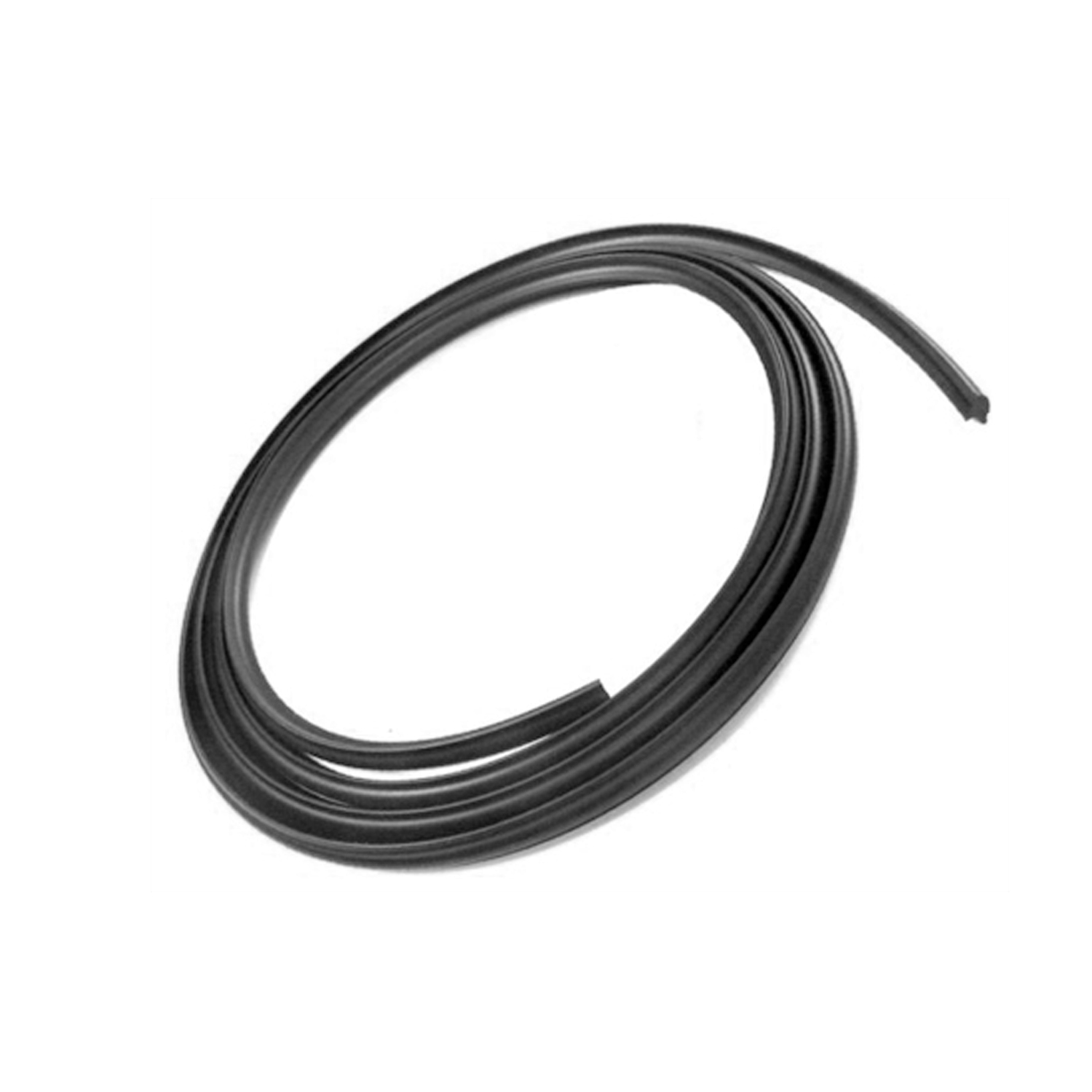 1961 Dodge Wm300 Power Wagon Lockstrip Seal, 54-93 Mopar Full Size Truck, Van & SUV, Chromed Plastic Type-LS 2-VLockstrip Seal, 54-93 Mopar Full Size Truck, Van & SUV, Chromed Plastic Type, Each. Works with Metro p/n VWS 2706.
Why Choose Metro?
For over 100 years, Metro Moulded Parts has been the pinnacle of quality in classic car restoration parts. Our commitment to precision and authenticity in every component ensures a perfect fit and an OEM-level appearance.
- Expert Craftsmanship & Quality: Each part is a testament to our dedication to reliability and perfection, crafted from original designs and thoroughly tested.
- Advanced Technology: We use cutting-edge techniques to create flawless, long-lasting parts that surpass others in performance.
- SuperSoft Sponge – The Ultimate Door Seal: Not only are our door seals 30% softer than competitors', but they're also guaranteed to never leak. They effectively reduce wind and road noise, enhancing your classic car's comfort and driving experience.
- Proudly American: Our parts are a product of American craftsmanship, made in the USA with a spirit of excellence and heritage.
- Unrivaled Warranty: We back our products with a 30-year industry-leading warranty, a testament to our confidence in their quality.
Join us in preserving the legacy of classic cars with parts that are crafted for perfection, not just made.