

Image of 1983 Dodge 400, Note: These illustrations use artistic license and may differ from actual historical models.
Performance Metrics
Fundamental Metrics
Emotional Appeal
MMP Rating
| Engine Specifications | |
|---|---|
| Engine: | 2.2L I4, 2.6L I4 |
| Displacement: | 2.2 - 2.6L |
| Horsepower: | 84 - 93 hp |
| Torque: | 111 - 130 lb-ft |
| Compression Ratio: | 8.5:1 - 9.2:1 |
| Ignition System: | Electronic |
| Cooling System: | Liquid-cooled |
| Performance Specifications | |
| 0-60 Time: | 14 - 16 seconds |
| 1/4 Mile Time: | 18 - 20 seconds |
| Top Speed: | 100 - 105 mph |
| Transmission and Drive | |
| Drive Type: | FWD |
| Transmission Type: | 3-speed automatic, 4-speed manual |
| Fuel and Efficiency | |
| Fuel System Type: | Carburetor |
| MPG: | 20 - 25 mpg |
| Dimensions and Brakes | |
| Brakes: | Front disc, rear drum |
| Wheelbase: | 100.3 inches |
| Weight: | 2,500 - 2,800 lbs |
Note: Specifications for classic cars are given to the best of our ability, considering the limited and variant data available.
1983 Dodge 400: The Upscale K-Car With a Convertible Twist
The 1983 Dodge 400 paired practical front-wheel-drive engineering with the comfort and style of a more expensive American car, and it did so at a moment when Chrysler needed a hit. Built by the Chrysler Corporation, the 400 was an upscale member of the company’s influential K-car family. It offered a roomier, more refined alternative to the basic Dodge Aries, with a particularly memorable ace up its sleeve: an American-built convertible at a time when domestic drop-tops had nearly vanished.
The 400 arrived for the 1982 model year and had a short run. By 1983, Dodge was shifting its sedan and coupe offerings toward the new 600, while the 400 name continued for the convertible. That brief life makes the 1983 car a useful snapshot of Chrysler’s turnaround years: modest in size, carefully equipped, and designed to make a sensible economy-car platform feel more upscale.
K-Car Roots, Dodge 400 Character
The Dodge 400 was based on Chrysler’s K platform, the architecture behind a broad family of compact and midsize cars that helped the company recover financially in the early 1980s. Its transverse-mounted four-cylinder engine drove the front wheels, allowing a relatively compact exterior to provide generous cabin and trunk space. The platform’s flexibility was central to its success: Chrysler could use the same basic engineering for practical sedans, sporty coupes, luxury-leaning models, and convertibles.
One of the 400’s most notable distinctions was its factory-built convertible body. Chrysler had helped revive the American convertible market with the LeBaron and Dodge 400 convertibles in 1982. The timing was striking: domestic manufacturers had largely abandoned traditional convertibles during the 1970s, and the 400 helped make a factory drop-top seem viable again. Its soft top was more than a styling flourish. The convertible required structural reinforcement to compensate for the roof’s absence, making it a more specialized car than the sedan or coupe.
Exterior Styling and Body Choices
The 400 wore the formal, upright styling that defined many American cars of the period. Its rectangular grille, squared-off lamps, clean body sides, and restrained brightwork gave it a conservative, upscale look. The proportions were less dramatic than those of a full-size Dodge, but the design aimed to make the car appear substantial and well-appointed rather than sporty in the European sense.
Buyers could find the 400 as a four-door sedan, a two-door coupe, or a two-door convertible during the model’s brief run, though the lineup changed as the 600 took over the sedan and coupe roles. The convertible is the most distinctive and collectible version today. Its lowered roofline and open cabin gave the otherwise familiar K-car shape a more relaxed, leisure-oriented personality.
Paint choices varied by year, trim, and production combination. Period colors included familiar American-car shades such as white, silver, red, blue, tan, and darker metallic tones. White and red convertibles are especially evocative of the era, though condition and originality matter far more to collectors than any single color. A car retaining its original paint and trim generally has a stronger story than one chosen solely for a popular color.
A More Comfortable K-Car Cabin
Inside, the 400 aimed to distinguish itself from an ordinary economy car. Depending on body style and equipment, the cabin could feature plush cloth or velour upholstery, patterned seat inserts, carpeting, woodgrain-look trim, and comfort-oriented details. Materials were appropriate to a mainstream American car of the early 1980s: welcoming and decorative, though not comparable to the leather-rich interiors of premium European models.
The layout was straightforward. Controls were arranged for easy reach, visibility was good, and the relatively upright seating position made the car feel airy. The sedan was the practical choice for families, while the coupe gave the car a more personal-car feel. In the convertible, the rear seat was best suited to shorter trips or smaller passengers, as was common in compact drop-tops of the period.
Available conveniences could include power steering, power brakes, air conditioning, automatic transmission, power windows and locks, cruise control, and upgraded audio equipment, depending on the car’s configuration. Some Chrysler models of this era also offered electronic warning or voice-alert features, but equipment varied, so buyers should confirm what is actually present rather than assume every 400 received the same technology.
Technology That Served a Purpose
The 400’s key engineering advantage was its front-wheel-drive layout. With the engine mounted across the nose, the car avoided the long transmission tunnel and rear-wheel-drive packaging common in many American cars. That meant useful interior space without requiring a large exterior footprint. Front-wheel drive also gave the car predictable traction on wet or lightly snow-covered roads, a practical benefit for everyday owners.
Underneath, the K-car used a front suspension with longitudinal torsion bars and a conventional rear suspension, tuned primarily for comfort and affordable production. The typical braking setup used front disc brakes and rear drums. These were not exotic innovations, but they represented the kind of cost-conscious engineering that made the platform adaptable and helped Chrysler build many different cars from shared components.
1983 Dodge 400 Performance and Road Manners
Most 1983 Dodge 400s were powered by Chrysler’s 2.2-liter inline four-cylinder engine. A 2.6-liter Mitsubishi-built four-cylinder was also available in some versions. Output depended on engine, transmission, and emissions specification, but the 2.2-liter generally produced about 96 horsepower, while the 2.6-liter was around 100 to 104 horsepower. A manual gearbox was offered in some configurations, while a three-speed automatic was a common choice.
Performance was adequate rather than brisk. Expect a typical 0-to-60 mph time in roughly the 12-to-15-second range, depending on engine, transmission, body style, and vehicle condition. Top speed was approximately 100 mph, give or take, but the 400 was not designed for sustained high-speed driving. Its strengths were relaxed commuting, easy maneuverability, and reasonable fuel economy by the standards of a comfortable American car.
On ordinary roads, the suspension favored a soft, compliant ride. It absorbed broken pavement and small bumps well, though the convertible’s extra body structure and open-top configuration could make it feel less rigid than a closed sedan. On winding roads, the 400 displayed the front-wheel-drive personality of its era: secure and predictable when driven smoothly, but not especially eager to rotate through a corner. Strong acceleration could produce some torque steer, and the steering emphasized ease of use over detailed feedback.
Behind the wheel, the four-cylinder engine delivers a straightforward mechanical hum rather than a sporting soundtrack. The ride is calm, the controls are light, and the driver sits in a practical, upright position. Put the top down and the experience changes considerably. The convertible turns a quiet commuter into an easygoing warm-weather cruiser, even if it is not a high-powered grand touring car.
Why the Dodge 400 Mattered
The 400 did not introduce a groundbreaking new engine or establish a major performance benchmark. Its significance lies in how effectively it used the K-car formula. Chrysler took a compact, front-wheel-drive platform and adapted it for buyers who wanted more comfort, a more formal appearance, or the pleasure of open-air motoring. The 400 demonstrated that an economical platform could support several distinct personalities without requiring an entirely separate vehicle architecture.
It also belongs to a larger story. The K-car family gave Chrysler a flexible foundation at a critical point in the company’s history. The 400 itself was a short-lived step between the Aries and the more upscale 600, but the broader platform helped shape the company’s product strategy for years. Its convertible version contributed to the return of factory-built American drop-tops, a trend that later grew across the industry.
Living With a 1983 Dodge 400
Today, a Dodge 400 is most often a nostalgic cruiser, a local-show car, or a restoration project rather than a regular daily driver. A solid sedan can still handle occasional commuting, but age is the deciding factor. Rubber parts, cooling-system components, electrical connections, weather seals, suspension bushings, and fuel-system pieces all deserve inspection on a car more than four decades old.
Many mechanical parts are shared with other Chrysler K-platform cars, which can make routine service more manageable than the model’s rarity might suggest. The 2.2-liter engine is familiar to many independent mechanics, and basic maintenance is generally straightforward. The trickier items are often body-specific: convertible-top fabric and hardware, seals, trim, interior pieces, and certain model-year details can be harder to source. Before buying a convertible, operate the top if possible and check carefully for water intrusion, rust, and structural repairs.
Common criticisms include modest acceleration, a dated three-speed automatic, road noise, and a cabin that can show its age in materials and fit. The convertible can also develop squeaks or cowl shake, especially if its structure or suspension has deteriorated. These are ordinary weaknesses for an aging, comfort-focused compact, not evidence that the 400 was intended to be a sports car.
Production, Rarity, and Collector Values
Precise production totals for every 1983 Dodge 400 body style are not consistently reported in readily available model summaries, and the transition to the Dodge 600 complicates year-by-year comparisons. A reasonable broad estimate is that roughly 50,000 to 80,000 Dodge 400s were built across the 1982 and 1983 model years, with convertibles representing a much smaller share. Treat that figure as an informed estimate, not a verified factory total.
The convertible is the version most likely to attract collector interest, especially if it is original, rust-free, and equipped with a functioning top. As a general U.S. market guide in 2026, a project car may sell for around $1,000 to $3,000. A usable driver in fair-to-good condition might bring about $4,000 to $8,000, while a well-presented convertible can reach roughly $10,000 to $18,000. Exceptional examples may exceed that range, but such sales are uncommon. Sedans and coupes generally bring less unless they have unusually low mileage or remarkable originality.
The 400 is a niche collectible, not a blue-chip classic. Values have tended to depend heavily on condition, season, and buyer interest, rather than rising steadily like those of high-profile muscle cars. Good convertibles may appreciate modestly as people seek out overlooked 1980s cars, but ordinary examples are likely to remain affordable. The best buying strategy is to choose a structurally sound car with complete trim and service records, rather than betting on a rough example becoming valuable.
What Makes the 1983 Dodge 400 Special
The 1983 Dodge 400 combined sensible K-car engineering, a more comfortable interior, and a rare-for-its-time factory convertible option. It was never a speed machine, and its short production life kept it from becoming a major automotive icon. Yet it captures a meaningful moment when Chrysler was rebuilding its range and rediscovering the appeal of the American drop-top.
For today’s enthusiast, the Dodge 400 is an approachable piece of that story: practical, distinctive, and unexpectedly enjoyable with the roof folded away. It may not command muscle-car money, but it represents an important chapter in the comeback of both Chrysler and the American convertible.
1983 Dodge 400 Catalog of Parts
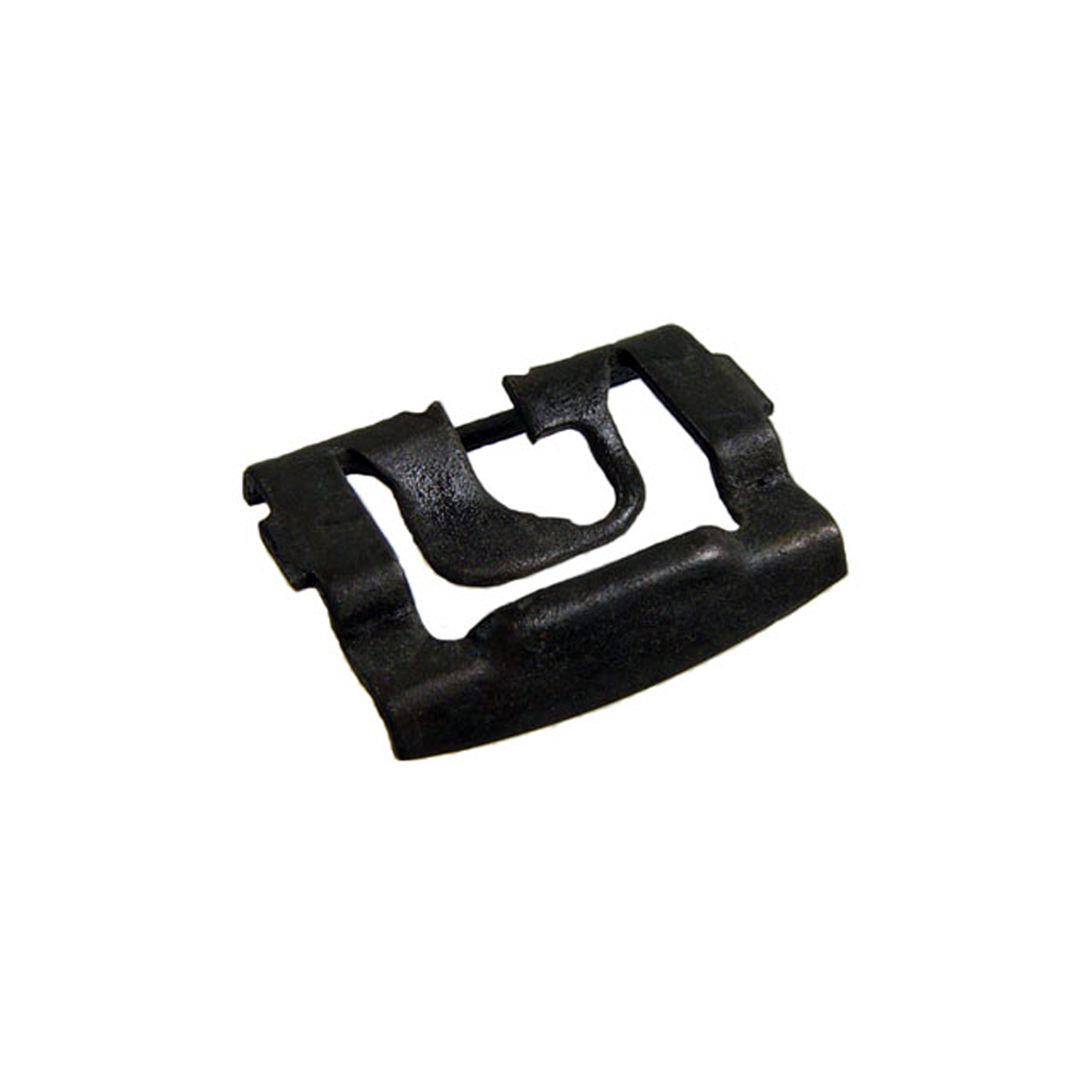 1983 Dodge 400 Windshield and Rear Windshield Molding Clip. Made of steel-WF 216Windshield and Rear Windshield Molding Clip. Made of steel. 1-1/8" X 5/8". Each
Why Choose Metro?
For over 100 years, Metro Moulded Parts has been the pinnacle of quality in classic car restoration parts. Our commitment to precision and authenticity in every component ensures a perfect fit and an OEM-level appearance.
- Expert Craftsmanship & Quality: Each part is a testament to our dedication to reliability and perfection, crafted from original designs and thoroughly tested.
- Advanced Technology: We use cutting-edge techniques to create flawless, long-lasting parts that surpass others in performance.
- SuperSoft Sponge – The Ultimate Door Seal: Not only are our door seals 30% softer than competitors', but they're also guaranteed to never leak. They effectively reduce wind and road noise, enhancing your classic car's comfort and driving experience.
- Proudly American: Our parts are a product of American craftsmanship, made in the USA with a spirit of excellence and heritage.
- Unrivaled Warranty: We back our products with a 30-year industry-leading warranty, a testament to our confidence in their quality.
Join us in preserving the legacy of classic cars with parts that are crafted for perfection, not just made.