
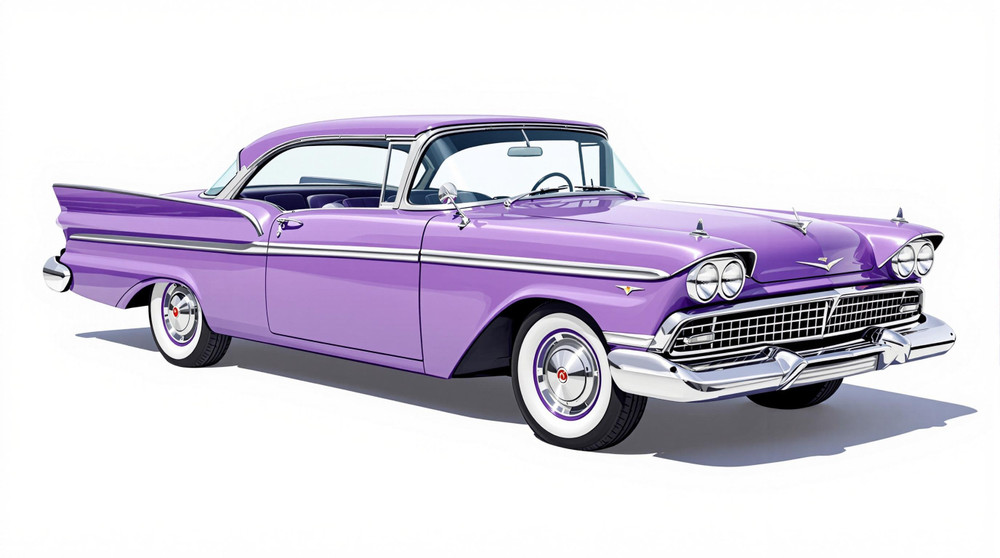
Image of 1958 Edsel Corsair, Note: These illustrations use artistic license and may differ from actual historical models.
Performance Metrics
Fundamental Metrics
Emotional Appeal
MMP Rating
| Engine Specifications | |
|---|---|
| Engine: | E-475 8-cylinder |
| Displacement: | 410 cu in (6.7 L) |
| Horsepower: | 345 hp |
| Torque: | 475 lb-ft |
| Compression Ratio: | 10.5:1 |
| Ignition System: | Conventional points ignition system |
| Cooling System: | Liquid-cooled |
| Performance Specifications | |
| 0-60 Time: | 9.4 seconds |
| 1/4 Mile Time: | 17 seconds |
| Top Speed: | 120 mph |
| Transmission and Drive | |
| Drive Type: | Rear-wheel drive |
| Transmission Type: | 3-speed automatic |
| Fuel and Efficiency | |
| Fuel System Type: | Carburetor |
| MPG: | 10-12 mpg |
| Dimensions and Brakes | |
| Brakes: | Drum brakes |
| Wheelbase: | 124 inches |
| Weight: | 4,500 lbs |
Note: Specifications for classic cars are given to the best of our ability, considering the limited and variant data available.
1958 Edsel Corsair: Ford’s Boldest Newcomer
The 1958 Edsel Corsair arrived wearing one of the most unmistakable faces in American motoring: a tall, vertical grille framed by sweeping bodywork and dramatic chrome. Built by Ford Motor Company for its new Edsel division, the Corsair was an upscale full-size car positioned above the Ranger and Pacer, but below the flagship Citation. Its brief run made it part of one of Detroit’s most famous commercial misfires, yet the Corsair remains a fascinating blend of genuine innovation, confident styling, and late-1950s optimism.
Ford named Edsel after Henry Ford’s son, Edsel Bryant Ford, and introduced the marque in September 1957 as a 1958-model-year launch. The Corsair shared its longer 124-inch wheelbase platform with the Citation, while the Ranger and Pacer used a shorter chassis. One intriguing detail is that Edsel’s much-discussed pushbutton transmission controls were placed in the center of the steering wheel. It was a striking idea, but one that also became a ready-made target for jokes and criticism.
Distinctive Edsel Styling
The Corsair’s signature feature was its narrow, upright grille, often nicknamed the “horse collar.” Set between the headlights, it gave the car a face unlike the broad horizontal grilles common on many rivals. Quad headlamps, a sculpted hood, generous chrome trim, and sweeping side contours completed the look. At the rear, tall vertical taillamps and substantial tailfins made the Corsair unmistakably a product of the finned-car era.
Inside, the Corsair offered the spacious, bright cabin expected of a premium American car. Buyers could find patterned cloth upholstery combined with vinyl or other trim, depending on the body style and options. The dashboard used a broad, period-style instrument layout, with bright metal accents and a prominent speedometer. As with any 68-year-old car, the quality and condition of an individual interior now depend heavily on how it was stored, maintained, and restored.
Edsel offered the Corsair in three body styles: a two-door hardtop, a four-door hardtop, and a four-door sedan. The hardtops delivered the most dramatic profile, with a pillarless appearance when their windows were lowered. Two-tone paint combinations suited the car’s sculpted sides especially well. Factory colors came in a broad range of late-1950s hues, from restrained dark shades to brighter blues, greens, reds, and light tones. The most appealing choice today often depends on the car’s originality and the contrast between its body and roof colors.
Features Ahead of Their Time
The Corsair’s most famous piece of equipment was Teletouch Drive, an optional pushbutton-controlled automatic transmission. Rather than using a conventional column lever, the driver selected gears with buttons set in the steering-wheel hub. The system was visually memorable and freed up space around the steering column, though its complicated electrical and mechanical setup can demand extra attention on surviving cars.
Other available conveniences included power steering, power brakes, and air conditioning, along with the expected range of comfort and appearance options. These features helped the Corsair compete in an era when American manufacturers were selling not just transportation, but effortless driving and an increasingly luxurious experience.
Why the Corsair Matters
The Corsair arrived during a difficult moment for the industry. The 1958 recession cooled demand for new cars, while Edsel had to establish a brand from scratch in a crowded market. The division’s heavily promoted launch raised expectations that the new cars could not meet. Their styling was distinctive, but the unusual grille divided opinion, and the Edsel name quickly became associated with disappointing sales.
That reputation can obscure what the Corsair represented. Ford gave it a separate identity, a dedicated model range, and features designed to make it feel different from an ordinary Ford or Mercury. The car’s pushbutton transmission is among the era’s most recognizable experiments in driver controls. Edsel’s short life also made the Corsair a lasting case study in product planning, branding, and the risks of launching a new marque at the wrong time.
The Corsair did not establish a lasting design template in the way some celebrated classics did. Its importance is more unusual: it stands as a vivid example of Detroit’s willingness to take stylistic and marketing risks, and of how quickly a bold new product can become a cultural punchline when sales expectations, timing, and public taste fail to line up.
361 V8 Performance and Road Manners
Most 1958 Corsairs were powered by Ford’s 361-cubic-inch V8, marketed by Edsel as the E-400. In Corsair trim, it was rated at about 303 horsepower and approximately 400 lb-ft of torque. A three-speed manual transmission was available, while many cars were ordered with an automatic. The 361’s broad low-speed torque suited the Corsair’s full-size character: it was built to gather speed smoothly rather than deliver sports-car sharpness.
Period performance figures vary with transmission, axle ratio, vehicle condition, and testing method. As a general guide, a healthy Corsair can be expected to reach 60 mph in roughly 9 to 11 seconds, with a top speed in the neighborhood of 110 to 115 mph. Those are estimates, not a guarantee for every surviving car. Today, age, tune, tire choice, and drivetrain condition make a much bigger difference than the original brochure numbers.
On the road, the Corsair feels substantial. Its long wheelbase and soft suspension help it glide over ordinary bumps, while the body-on-frame construction and coil-spring front suspension contribute to a comfortable, traditional American-car ride. On winding roads, its size, weight, and period steering geometry encourage a relaxed pace rather than quick direction changes. Crosswinds and uneven pavement can remind the driver that this is a large 1950s automobile, not a modern touring sedan.
The V8 supplies a deep, unhurried rumble, and the cabin feels most at home cruising along a straight highway. With power steering, parking and low-speed maneuvering are easier, though the car still takes up considerably more space than a modern vehicle. The experience is less about cornering precision and more about the view over the hood, the smooth engine note, and the sensation of piloting a piece of mid-century design.
Living With a 1958 Corsair
Today, Corsairs are most often used as show cars, weekend cruisers, and occasional touring cars. Their roomy cabins and relaxed ride make them pleasant for local events, but their age, fuel consumption, braking distances, and parts availability make routine modern commuting less practical. A well-sorted example can still be driven regularly, provided its owner keeps up with maintenance and plans routes and speeds accordingly.
Many mechanical components are related to Ford products of the period, which can make common service work more manageable than the car’s short-lived brand might suggest. However, Corsair-specific trim, body panels, interior pieces, and Teletouch components can be harder to locate. The average owner can handle basic maintenance with suitable tools and a workshop manual, but transmission diagnosis, major engine work, and restoration of rare trim may call for a specialist or an active Edsel owners’ network.
As with any classic, inspect the frame and body carefully for corrosion, check the engine and transmission before purchase, and verify that electrical accessories work. A complete, well-documented car is usually a better starting point than a cheap project missing hard-to-find Edsel parts.
Edsel Corsair Facts and Myths
The 1958 Corsair was not a rare factory performance edition, and it did not set a famous speed or endurance record. Its strongest claim to fame is cultural: the Edsel name became shorthand for a highly publicized product that failed to meet its maker’s sales hopes. The Corsair itself was part of that story, but it was not alone. The whole Edsel program was affected by the recession, an ambitious launch, strong competition, and styling that many buyers found too unconventional.
One persistent criticism concerns the grille. Some people admired its individuality; others thought it looked awkward or overemphasized the center of the car. The Teletouch system also drew scrutiny because its unusual controls and added complexity could be less reassuring than a conventional gear selector. These criticisms are part of the Corsair’s appeal today: the features that made it controversial when new are precisely what make it memorable now.
Celebrity ownership stories are not central to the Corsair’s history, and claims about famous owners should be checked against documentation. A verified ownership record, original paperwork, or period photographs can add interest to a particular car, but the model’s broader historical significance does not depend on celebrity connections.
Collector Values and Rarity
Production figures vary among reference sources, but a reasonable estimate is that roughly 19,000 to 20,000 Corsairs were built for 1958. That makes the model uncommon compared with mass-market Fords of the same year, though it is not necessarily unobtainable. Cars appear on the market periodically, with condition, originality, body style, and documentation all affecting availability and price.
As a broad current-market guide, a Corsair needing substantial work might sell for about $5,000 to $12,000. A solid driver or older restoration could fall around $12,000 to $25,000, while a very well-restored, highly original, or exceptional example might bring roughly $25,000 to $40,000 or more. These are estimates rather than appraisals, and unusually complete cars or particularly desirable examples can sit outside those ranges.
Edsel values have generally strengthened as the cars have gained recognition among collectors, but the market remains specialized. Prices can vary widely, and restoration costs may exceed the value of an average example. The strongest long-term prospects are usually the cars with sound bodies, documented history, correct details, and quality workmanship rather than those restored without regard to originality.
A Lasting Place in American Car History
The 1958 Edsel Corsair combined a powerful V8, generous proportions, ambitious technology, and styling that refused to blend in. Its pushbutton transmission and striking grille made it a conversation piece when new, while the short-lived Edsel program gave it a permanent place in automotive history. It may not have transformed the industry, but it remains an unusually expressive example of Detroit’s boldest era.
For collectors, the Corsair offers more than nostalgia: it is a handsome, distinctive car with a story behind every unusual detail. Drive one today and you are not simply cruising in a classic. You are carrying one of the most daring experiments of the 1950s down the road.
1958 Edsel Corsair Catalog of Parts
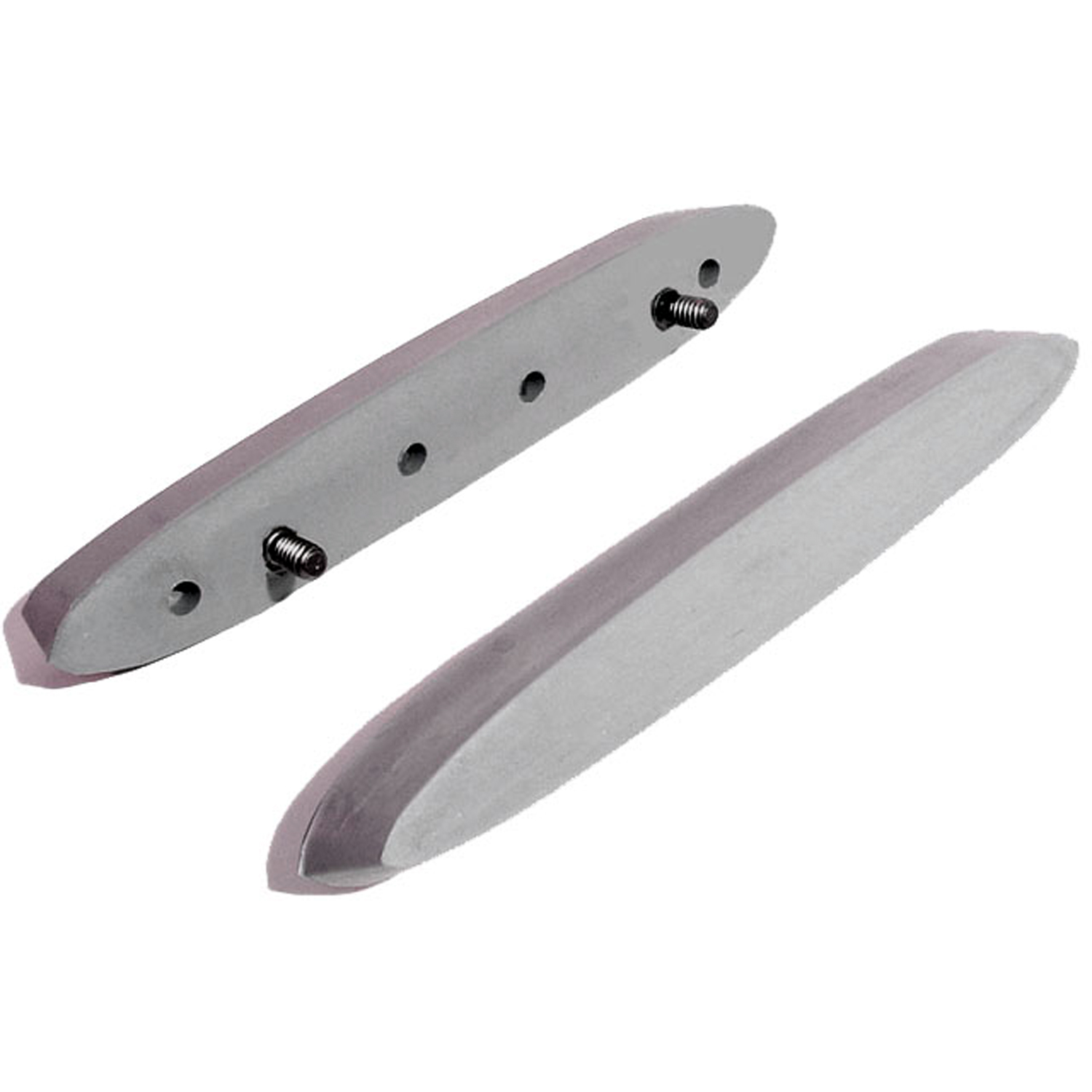 1958 Edsel Corsair Bumperette Bumper. Used at bumper guard on car-BG 101Bumperette Bumper. Used at bumper guard on car. Made of gray rubber with steel core and threaded studs. 6-3/4"l X 3/4" thick, with 3-3/4" between studs. Pair
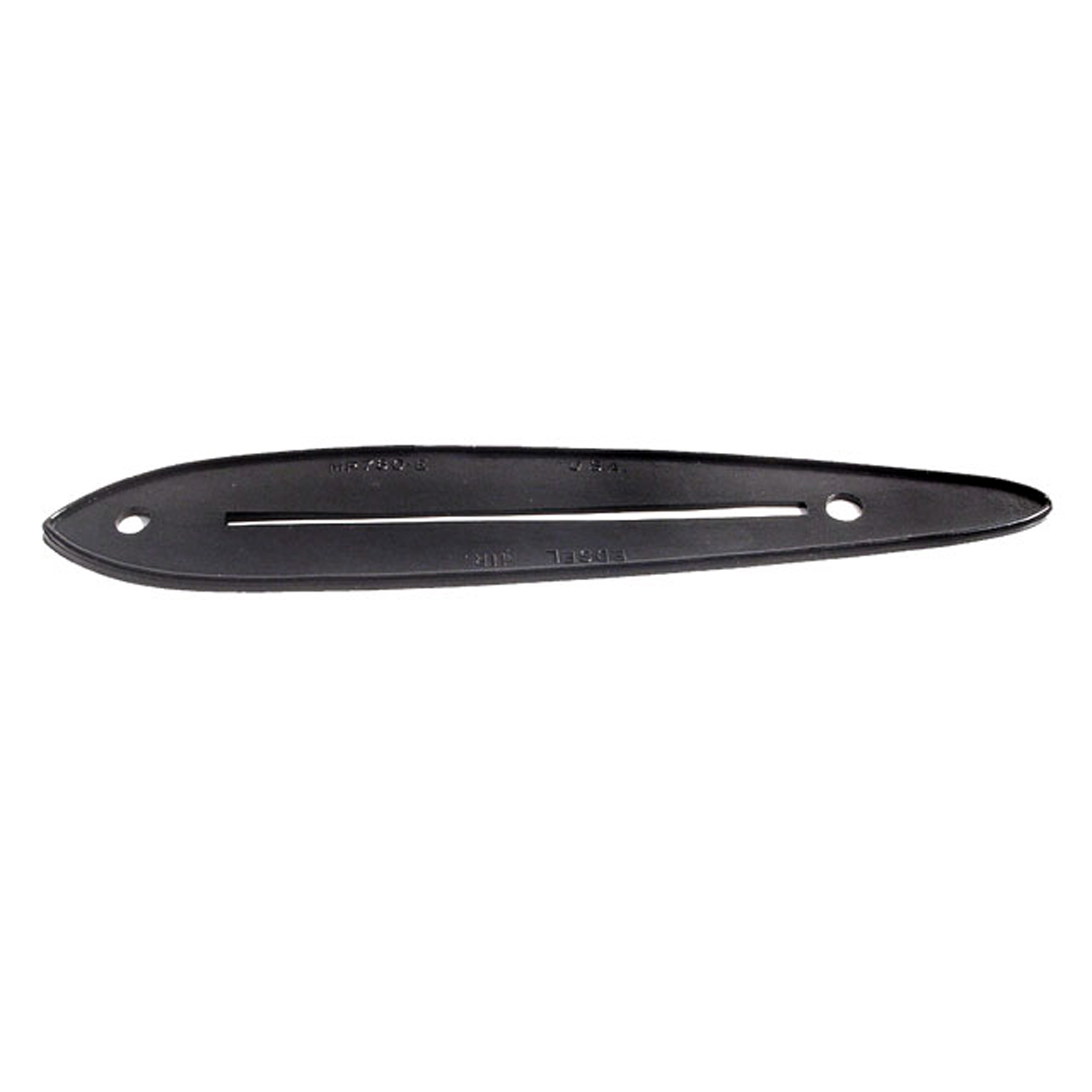 1958 Edsel Corsair Mirror Pad. 1-3/8" wide X 7-1/4" long. Each-MP 780-EMirror Pad. 1-3/8" wide X 7-1/4" long. Each
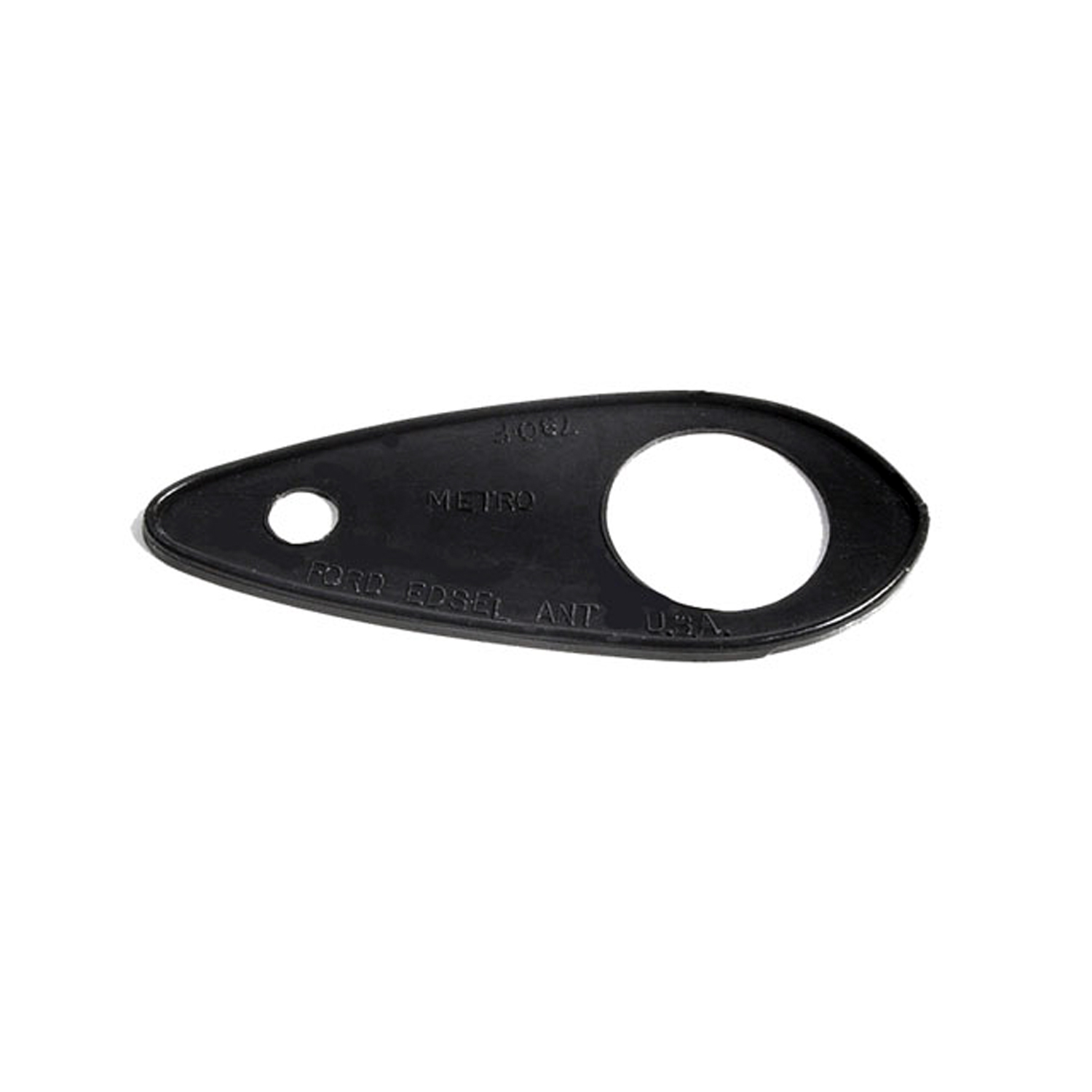 1958 Edsel Corsair Antenna Pad. 1-5/8" wide X 3-5/8" long. Each-MP 780-FAntenna Pad. 1-5/8" wide X 3-5/8" long. Each
Why Choose Metro?
For over 100 years, Metro Moulded Parts has been the pinnacle of quality in classic car restoration parts. Our commitment to precision and authenticity in every component ensures a perfect fit and an OEM-level appearance.
- Expert Craftsmanship & Quality: Each part is a testament to our dedication to reliability and perfection, crafted from original designs and thoroughly tested.
- Advanced Technology: We use cutting-edge techniques to create flawless, long-lasting parts that surpass others in performance.
- SuperSoft Sponge – The Ultimate Door Seal: Not only are our door seals 30% softer than competitors', but they're also guaranteed to never leak. They effectively reduce wind and road noise, enhancing your classic car's comfort and driving experience.
- Proudly American: Our parts are a product of American craftsmanship, made in the USA with a spirit of excellence and heritage.
- Unrivaled Warranty: We back our products with a 30-year industry-leading warranty, a testament to our confidence in their quality.
Join us in preserving the legacy of classic cars with parts that are crafted for perfection, not just made.