
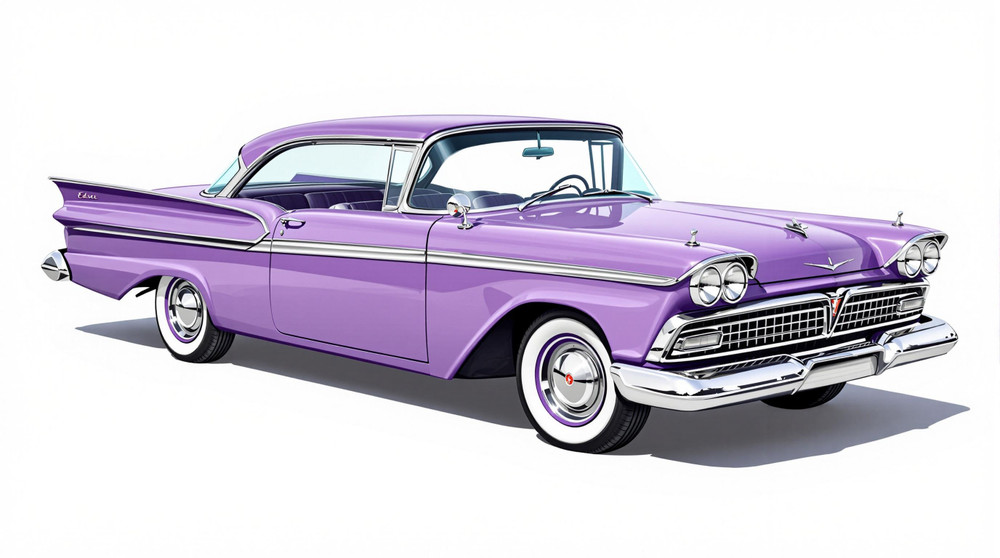
Image of 1958 Edsel Pacer, Note: These illustrations use artistic license and may differ from actual historical models.
Performance Metrics
Fundamental Metrics
Emotional Appeal
MMP Rating
| Engine Specifications | |
|---|---|
| Engine: | E-400 V8 |
| Displacement: | 361 cu in (5.9 L) |
| Horsepower: | 303 hp |
| Torque: | 400 lb-ft |
| Compression Ratio: | 10.5:1 |
| Ignition System: | Conventional, distributor |
| Cooling System: | Liquid-cooled |
| Performance Specifications | |
| 0-60 Time: | Estimated 9.2 seconds |
| 1/4 Mile Time: | Estimated 17 seconds |
| Top Speed: | 120 mph |
| Transmission and Drive | |
| Drive Type: | Rear-wheel drive |
| Transmission Type: | 3-speed automatic, 3-speed manual |
| Fuel and Efficiency | |
| Fuel System Type: | Carburetor |
| MPG: | Estimated 10-12 mpg |
| Dimensions and Brakes | |
| Brakes: | Drum brakes |
| Wheelbase: | 118 in |
| Weight: | 3,700 lbs |
Note: Specifications for classic cars are given to the best of our ability, considering the limited and variant data available.
1958 Edsel Pacer: A Bold American Original
The 1958 Edsel Pacer arrived wearing one of the most talked-about front ends in American automotive history. Built by Ford Motor Company’s newly created Edsel division, the Pacer was a mid-level model in a lineup designed to give buyers something fresh between Ford and Mercury. It combined big-car comfort, a powerful V8 and styling that refused to blend into the traffic.
Edsel was launched in September 1957, at a difficult moment for the American car industry. The country was entering a recession, buyers were turning toward smaller cars, and Ford had invested heavily in a new brand meant to fill a perceived gap in its lineup. The Pacer lasted for just the 1958 model year. One memorable detail was its available Teletouch transmission selector, which put gear-selection buttons in the center of the steering wheel, an unusual solution that made the Edsel instantly recognizable from the driver’s seat as well as from the curb.
Edsel Pacer Styling and Interior
The Pacer’s signature feature was its tall, narrow center grille, often nicknamed the “horse collar.” It was framed by a broad, sculpted front end with paired headlamps, substantial chrome trim and a long hood. The styling was deliberately different from the horizontal grilles common on many late-1950s cars. Some buyers found the face striking; others found it too unusual. Either way, it was hard to mistake a Pacer for anything else.
Along the sides, bright moldings emphasized the car’s length and gave the body a crisp, decorated look. At the rear, prominent fins and distinctive taillamp shapes completed the period-correct space-age profile. The overall effect was grand and expressive, especially on the hardtops and convertible, where the long roofline and generous glass made the car look particularly dramatic.
Inside, the Pacer offered a roomy cabin with broad bench seats and a carefully styled dashboard. Depending on body style and equipment, upholstery combined patterned cloth with vinyl trim. The materials and appointments were intended to feel more upscale than a basic family sedan, though they did not make the Pacer a luxury car in the same league as the larger Edsel Citation. Buyers could add comfort and convenience options such as power steering, power brakes, power windows and a power seat.
Factory paint choices included a wide range of period colors, from restrained whites and dark shades to brighter blues, greens and other saturated hues. Two-tone combinations were especially well suited to the Pacer’s chrome and body contours. Exact color availability depended on the model and production details, but a contrasting roof remains one of the most eye-catching looks for a restored example.
The Pacer was offered in several body styles, including two-door and four-door hardtops, a four-door sedan and a convertible. The hardtops deliver the classic long-and-low Edsel look, while the convertible is the most dramatic and sought-after choice. The Pacer sat above the Ranger in the 1958 Edsel range and below the larger, more expensive Corsair and Citation models.
What Made the 1958 Pacer Different
The Edsel Pacer’s significance is about more than its grille. Edsel was one of the most ambitious new American car launches of the postwar era, backed by Ford’s research, marketing and engineering resources. The Pacer embodied the era’s faith that a new brand, distinctive styling and a carefully planned model range could persuade buyers to choose a different badge.
Its technology was a mixture of genuinely novel ideas and familiar Ford engineering. The optional Teletouch system replaced a conventional column-mounted shift lever with electric push buttons in the steering-wheel hub. It looked futuristic and kept the dashboard visually clean, but it also placed the controls in an unusual location and could be costly to diagnose or repair. The Pacer’s mechanical foundations, by contrast, drew on established Ford components, which helped make routine service more approachable than the car’s reputation might suggest.
The Edsel experiment did not succeed commercially. The 1958 recession, intense competition, high expectations and the car’s polarizing styling all played a part. Ford discontinued the Pacer after one model year as it reshaped the Edsel lineup for 1959. The brand itself disappeared in 1960. Although the Pacer did not establish a lasting sales trend, its story became a lasting case study in product planning, branding and the risks of promising more than a new model can deliver.
V8 Performance and Road Manners
A 361-cubic-inch V8 was the heart of the 1958 Pacer. Known as the E-400, it was rated at 303 horsepower and 400 lb-ft of torque. A three-speed manual transmission was available, while an automatic transmission could be specified with the Teletouch controls. Equipment and transmission choices can differ among surviving cars, so a buyer should verify a particular vehicle’s configuration rather than rely on badges or seller descriptions alone.
Period performance figures vary with body style, gearing, transmission and test conditions. As a broad guide, a healthy Pacer can be expected to reach 60 mph in roughly 10 to 12 seconds, with a top speed in the neighborhood of 110 to 115 mph. Those are estimates, not a promise for every car. Today, a Pacer’s age, tune, tires and brake condition matter far more than a period-style performance number.
On the road, the Pacer feels like a substantial late-1950s American car. Its V8 delivers a deep, relaxed burble and plenty of low-speed torque, while the suspension is tuned more for cruising comfort than sharp cornering. It generally absorbs ordinary bumps with a soft, floating feel, but its size and body lean are noticeable on winding roads. Crosswinds can push the broad body around, and the steering is slower and less precise than a modern driver may expect.
Driving one is a hands-on experience. The large steering wheel, long hood and bench seat put the driver in command of a broad view of the road, while the engine’s steady rumble encourages an unhurried pace. The Teletouch selector adds a memorable conversation starter, but it is not a substitute for careful operation or regular maintenance. In modern traffic, allow extra room, drive defensively and remember that the original drum brakes and period tires do not perform like contemporary systems.
Living With an Edsel Pacer
Today, most Pacers are collector cars, show vehicles or occasional-use weekend cruisers rather than everyday transportation. A sound example can make a memorable parade car or long-distance tourer, but regular commuting brings the usual classic-car compromises: fuel consumption, limited safety equipment, slower braking and the need to keep an eye on age-related wear.
Basic mechanical maintenance is within reach of an experienced home mechanic. The V8 and many chassis components share Ford-family engineering, and routine jobs such as ignition service, fluid changes and brake work are familiar territory for classic-car specialists. Model-specific trim, body parts, interior pieces and Teletouch components can be harder to locate. Before buying, inspect the body and frame for corrosion, check the electrical system and transmission carefully, and confirm that distinctive trim and glass are present.
Reliability depends heavily on the individual car. A well-maintained Pacer can be a dependable pleasure for seasonal use, but a neglected example may need substantial work in its fuel, cooling, electrical and braking systems. It is wise to find a shop or parts source familiar with Edsels before beginning a major restoration.
Edsel Pacer Facts and Myths
The Pacer was a one-year model: there was no 1959 Pacer. Edsel production figures commonly place 1958 Pacer output at about 20,988 cars, though enthusiasts should consult model-specific records when verifying an individual car. Convertibles were produced in far smaller numbers than the full Pacer series and are especially desirable today.
The Teletouch system is often remembered as a novelty, but it was a real production feature, not a show-car gimmick. Its placement in the steering-wheel hub made it visually distinctive, while its complexity contributed to a reputation for troublesome repairs. Another common criticism is the Pacer’s divisive front styling. That polarizing design is also a major reason the car remains so recognizable.
The Edsel never became a sales leader or a record-setting performance car. Its lasting “record” is cultural: the name has become shorthand for a high-profile product launch that missed its goals. That reputation can overshadow the Pacer’s genuine strengths, including its comfortable cabin, strong V8 and memorable design. There is no need to invent a celebrity connection or racing pedigree to make the car interesting; its brief, dramatic place in Ford history is compelling on its own.
1958 Edsel Pacer Collector Values
For a rough U.S. market guide, a project car may sell for around $8,000 to $15,000, while a usable driver could fall in the $18,000 to $35,000 range. A well-restored hardtop or sedan may bring approximately $35,000 to $60,000, with condition, originality and documentation making a significant difference. Pacer convertibles can command considerably more, with excellent examples potentially reaching $60,000 to $100,000 or beyond. These are broad estimates, not guaranteed appraisals, and unusual provenance or exceptional restoration quality can move a sale outside the ranges.
Pacers are scarce compared with mass-produced Fords, but they are not impossible to find through Edsel clubs, specialist dealers, auctions and online listings. Convertibles are the hardest body style to locate and generally attract the strongest interest. Values have tended to be selective rather than uniformly fast-rising: exceptional, correct cars can hold attention, while rough projects and modified examples may be slower to sell. As with many niche classics, condition and the quality of the restoration matter more than a general market trend.
Why the Edsel Pacer Still Matters
The 1958 Edsel Pacer brought together a powerful V8, comfortable American-car proportions, a bold grille and technology that looked toward the future. Its commercial story ended quickly, but the car became far more memorable than many of its successful contemporaries. For collectors, it offers a rare chance to own a rolling piece of automotive history that still starts conversations wherever it goes.
The Pacer’s appeal is its unapologetic character: it was designed to stand apart, and it still does.
1958 Edsel Pacer Catalog of Parts
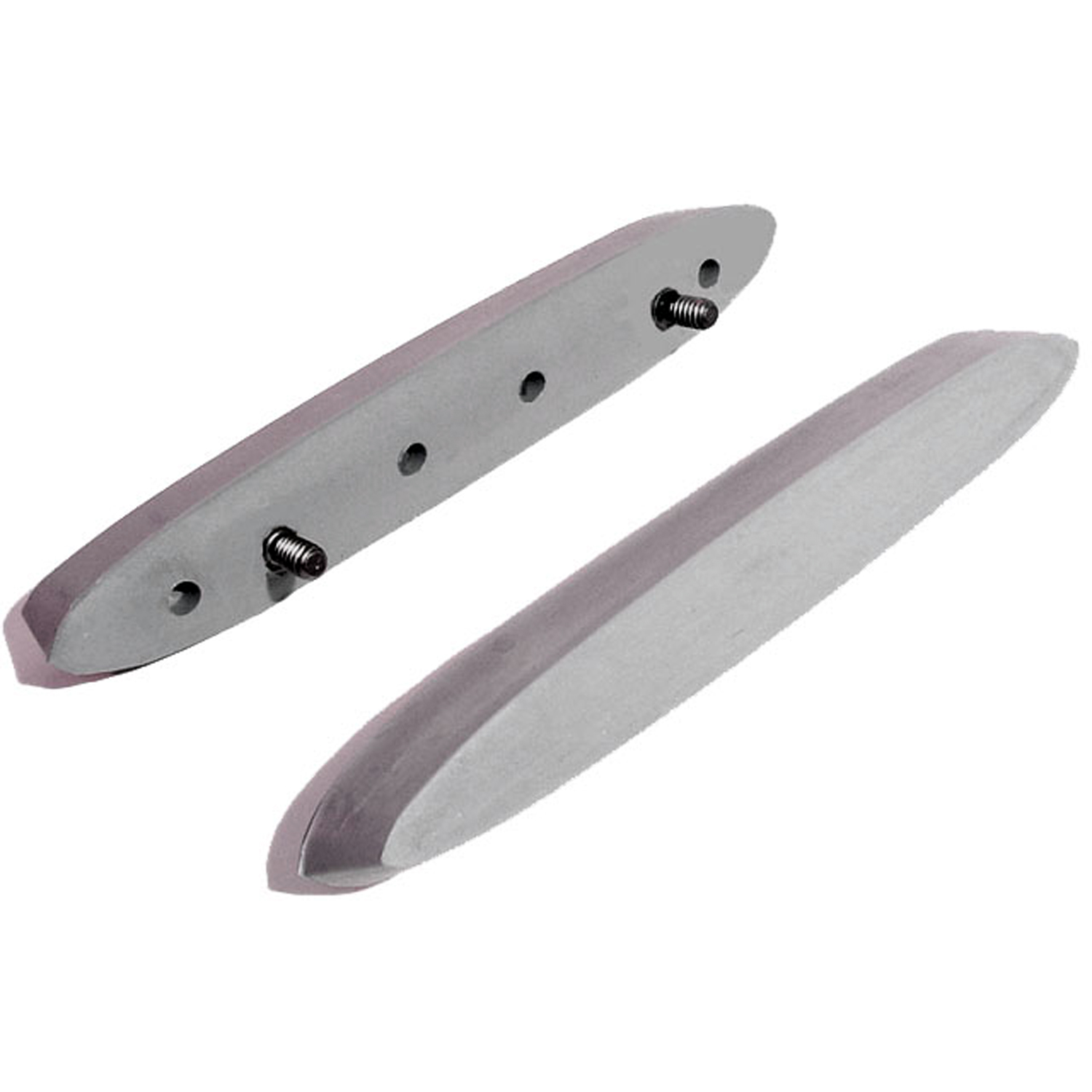 1958 Edsel Pacer Bumperette Bumper. Used at bumper guard on car-BG 101Bumperette Bumper. Used at bumper guard on car. Made of gray rubber with steel core and threaded studs. 6-3/4"l X 3/4" thick, with 3-3/4" between studs. Pair
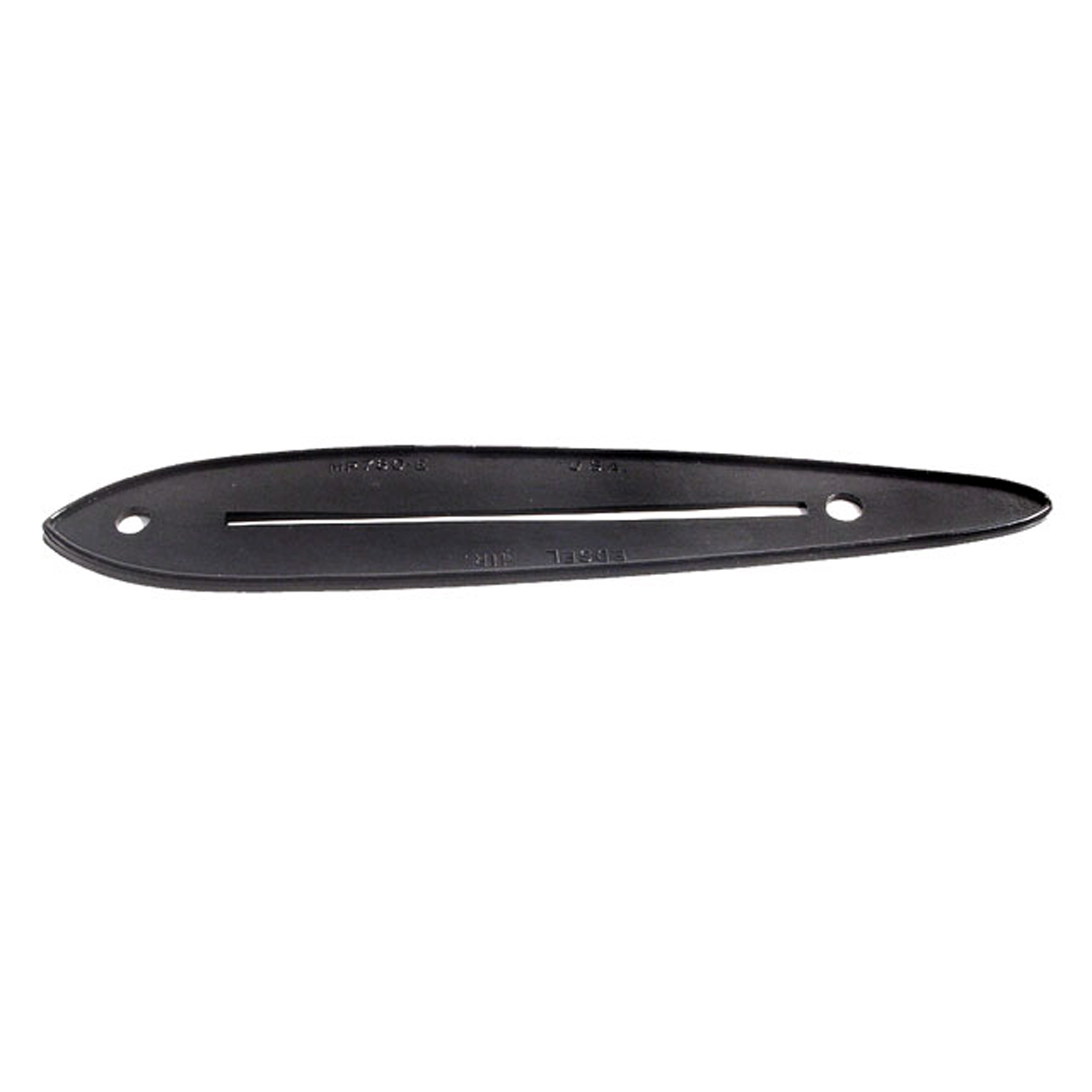 1958 Edsel Pacer Mirror Pad. 1-3/8" wide X 7-1/4" long. Each-MP 780-EMirror Pad. 1-3/8" wide X 7-1/4" long. Each
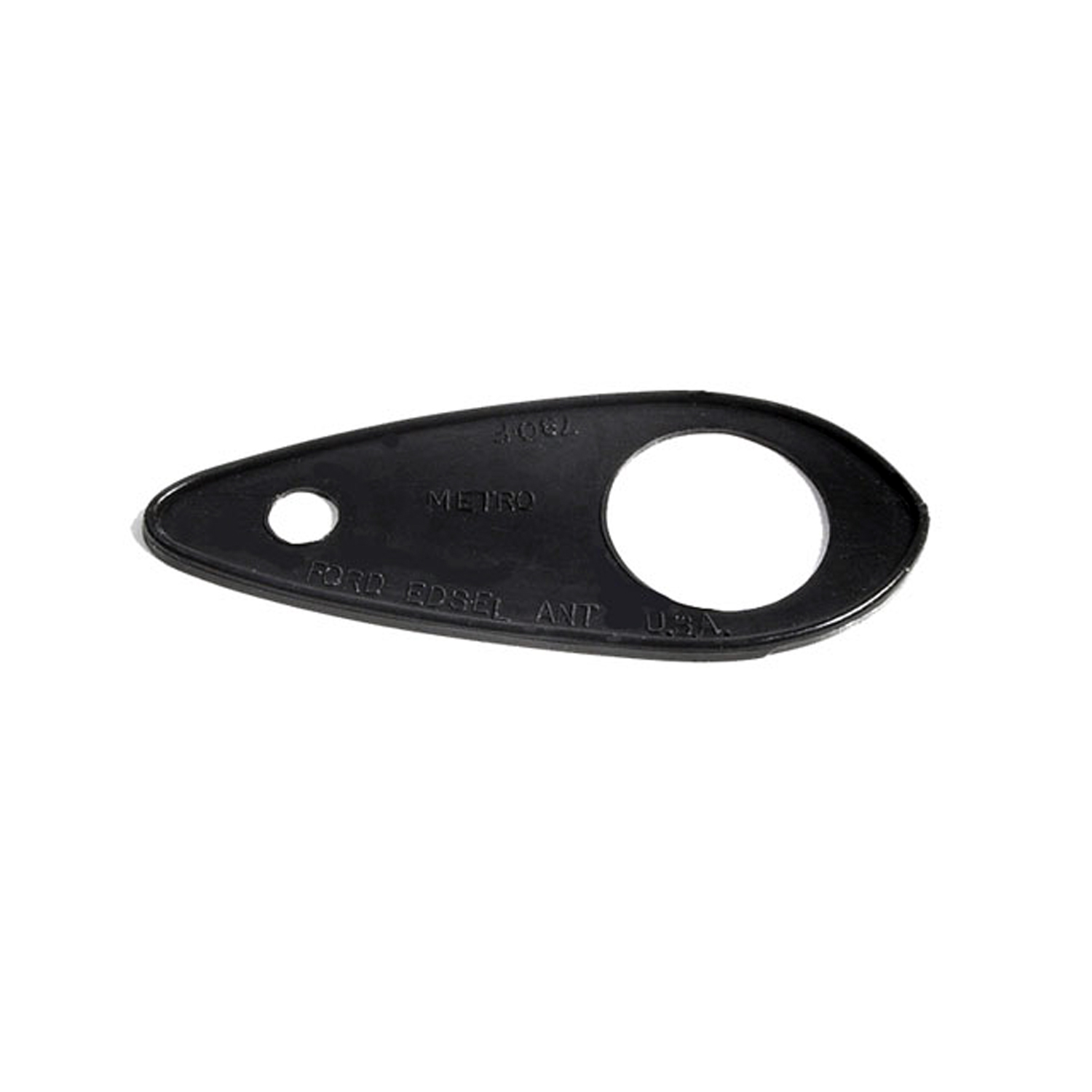 1958 Edsel Pacer Antenna Pad. 1-5/8" wide X 3-5/8" long. Each-MP 780-FAntenna Pad. 1-5/8" wide X 3-5/8" long. Each
Why Choose Metro?
For over 100 years, Metro Moulded Parts has been the pinnacle of quality in classic car restoration parts. Our commitment to precision and authenticity in every component ensures a perfect fit and an OEM-level appearance.
- Expert Craftsmanship & Quality: Each part is a testament to our dedication to reliability and perfection, crafted from original designs and thoroughly tested.
- Advanced Technology: We use cutting-edge techniques to create flawless, long-lasting parts that surpass others in performance.
- SuperSoft Sponge – The Ultimate Door Seal: Not only are our door seals 30% softer than competitors', but they're also guaranteed to never leak. They effectively reduce wind and road noise, enhancing your classic car's comfort and driving experience.
- Proudly American: Our parts are a product of American craftsmanship, made in the USA with a spirit of excellence and heritage.
- Unrivaled Warranty: We back our products with a 30-year industry-leading warranty, a testament to our confidence in their quality.
Join us in preserving the legacy of classic cars with parts that are crafted for perfection, not just made.