
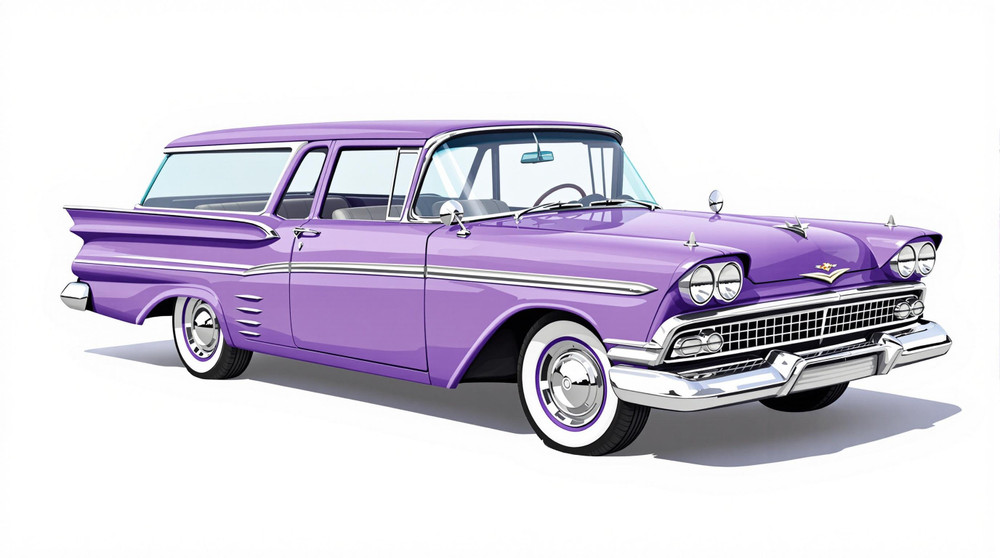
Image of 1958 Edsel Villager, Note: These illustrations use artistic license and may differ from actual historical models.
Performance Metrics
Fundamental Metrics
Emotional Appeal
MMP Rating
| Engine Specifications | |
|---|---|
| Engine: | 361 cu in (5.9 L) FE V8 |
| Displacement: | 361 cu in (5.9 L) |
| Horsepower: | 303 hp |
| Torque: | 400 lb-ft |
| Compression Ratio: | 10.5:1 |
| Ignition System: | Conventional points ignition system |
| Cooling System: | Liquid-cooled |
| Performance Specifications | |
| 0-60 Time: | 10.5 seconds |
| 1/4 Mile Time: | 17.5 seconds |
| Top Speed: | 120 mph |
| Transmission and Drive | |
| Drive Type: | Rear-wheel drive |
| Transmission Type: | 3-speed automatic |
| Fuel and Efficiency | |
| Fuel System Type: | Carburetor |
| MPG: | 10-12 mpg |
| Dimensions and Brakes | |
| Brakes: | Drum brakes |
| Wheelbase: | 118 in |
| Weight: | 3,700 lbs |
Note: Specifications for classic cars are given to the best of our ability, considering the limited and variant data available.
1958 Edsel Villager: Ford’s Bold Family Wagon
The 1958 Edsel Villager brought the Edsel experiment into the family driveway: a roomy, V8-powered station wagon with styling unlike anything else at the grocery store. Built by Ford Motor Company for its newly launched Edsel division, the Villager was the four-door, six-passenger member of Edsel’s wagon family. Its combination of practical wagon packaging and unmistakable Edsel design makes it a fascinating snapshot of late-1950s American motoring.
The Edsel division was named for Edsel Ford, Henry Ford’s son, and introduced for the 1958 model year after years of planning and market research. Ford hoped the new brand would fill a gap between its mainstream cars and Mercury. The timing proved difficult: the United States was entering a recession, buyers were turning toward more economical cars, and Edsel’s ambitious launch generated enormous expectations. One memorable detail of the Villager’s story is that it carried Edsel’s famously controversial front-end design in a practical family wagon, making even an ordinary school run a display of the new brand’s confidence.
Villager Styling: A Wagon with Its Own Look
The Villager’s front end is its most recognizable feature. A slim, upright center grille divides the wide front fascia, giving the car the vertical “horse-collar” look associated with 1958 Edsels. Headlamps sit out toward the fenders, while sculpted body sides, bright trim, and generous glass help the long wagon feel lighter than its size suggests. At the back, a broad tailgate and large rear window make the Villager useful as well as distinctive.
Chrome was part of the period’s visual vocabulary, but Edsel used it to emphasize the car’s lines rather than hide them. Two-tone paint schemes were especially fitting on the wagon, with contrasting roof and body colors highlighting its long profile. Factory colors varied by trim and production choices; popular-looking combinations included light bodies paired with a darker roof, along with solid colors such as white, red, blue, and green. Original paint codes and trim combinations are worth checking carefully on surviving cars, since repainting can obscure the factory specification.
The Villager was a four-door, six-passenger station wagon with two rows of seating. Edsel’s other 1958 wagons included the two-door Roundup and the more upscale, nine-passenger Bermuda, which added a third-row seat. The Villager sat in the useful middle ground: easier to load and park than a three-row wagon, but with the extra passenger access of four doors. It was one part of a broader Edsel range that also included sedans and hardtops.
Cabin Comfort and 1950s Technology
Inside, the Villager offered a wide bench-seat cabin, durable upholstery, and bright trim. Materials and patterns depended on the chosen trim and options, but the overall effect was more stylish than utilitarian. The cabin was designed for family use, with broad seats and a straightforward layout. As with other period wagons, the rear cargo area could be adapted for luggage, groceries, camping gear, or the assorted necessities of a long road trip.
Edsel’s most talked-about piece of equipment was its optional Teletouch automatic transmission. Instead of a conventional column-mounted selector, the driver chose gears using push buttons arranged in the steering-wheel hub. The system was a striking conversation starter and kept the cabin’s controls visually unusual. It could also be troublesome: its electrical and mechanical components required correct adjustment and sound connections. Many Villagers were ordered with a conventional three-speed manual transmission, while automatic transmission was available as an option.
Other period features could include power steering, power brakes, a heater, radio, and power-operated accessories, depending on the car’s order. Equipment differed from one example to another, so a buyer should verify what is actually present rather than assume every Villager had the same specification.
What Made the Edsel Villager Different?
The Villager’s importance lies partly in the way it applied Edsel’s styling and branding to a mainstream family vehicle. The wagon was not a separate, anonymous utility model. It belonged unmistakably to the Edsel family, with the same bold front-end treatment and attention-grabbing details as the sedans and hardtops. That gave buyers a practical alternative to the more common Ford and Mercury wagons without asking them to give up visual individuality.
Edsel also tried to make its controls and equipment feel modern. Teletouch was the headline innovation, though its complexity became a liability for owners and mechanics. The car is a useful reminder that clever design does not automatically make a feature dependable or easy to service. Edsel’s short life also turned the Villager into a particularly vivid example of how product planning, styling, pricing, timing, and public perception can all affect a new car brand.
The Edsel division ended after the 1960 model year. The Villager did not create a lasting design template for later wagons, but it remains part of the story of Ford’s most famous postwar brand launch. Its distinctive grille, push-button transmission option, and abrupt place in automotive history continue to set it apart from more conventional family cars of the era.
361 V8 Performance and Road Manners
Most 1958 Villagers were powered by Edsel’s 361-cubic-inch V8, rated at about 303 horsepower in its four-barrel form. That substantial engine suited a full-size wagon, providing strong low-speed pull for passengers and cargo. Exact specifications and equipment can vary by car, so engine identification and documentation are important when evaluating an individual example.
Period test results and modern estimates vary with transmission, axle ratio, vehicle condition, and test method. As a general guide, a healthy 361-powered Villager might reach 60 mph in roughly 10 to 12 seconds and have a theoretical top speed in the neighborhood of 105 to 110 mph. These are estimates, not guaranteed factory figures for every car. The Villager was built for comfortable family travel, not drag-strip work, and its considerable weight meant it needed room to stop and turn.
On a smooth highway, the Villager delivers the relaxed, substantial feel expected of a late-1950s American wagon. The V8 produces a deep, unhurried rumble, and the long wheelbase helps it settle into a steady cruise. Its soft suspension takes the edge off ordinary bumps, though rough roads can bring body motion and a noticeable bounce. On winding roads, the car’s size, soft ride, and period tires call for measured inputs rather than quick cornering. The steering and brakes also feel less precise than those of a modern vehicle.
Fuel economy is modest by today’s standards. A realistic figure depends heavily on tune, gearing, traffic, and driving style, but owners should expect single-digit or low-teens miles per gallon rather than modern-car efficiency. The Villager rewards an easy pace: let the V8 do its work, leave room for braking, and enjoy the view through the generous glass.
Living with a 1958 Villager
Today, the Villager is best suited to weekend cruising, local shows, historic events, and relaxed road trips. Some owners do use classic cars regularly, but a Villager’s age, fuel consumption, braking performance, and need for careful maintenance make it less convenient as a dependable everyday commuter. Its wide body and long wagon tail also take practice in tight parking lots.
Routine mechanical work is within reach for an experienced home mechanic. The V8 and many chassis components share familiar Ford-era engineering, and standard maintenance tasks such as ignition service, carburetor tuning, brake work, and fluid changes are manageable with the right manual and tools. The harder parts to find are often Edsel-specific: trim, emblems, body panels, interior details, and components for Teletouch-equipped cars. Before buying, inspect the frame and floor for corrosion, check the tailgate and window mechanisms, and confirm that the engine and transmission are the correct type or are properly documented replacements.
Villager Trivia and Common Criticisms
Edsel produced an estimated 7,009 Villagers for 1958, making it far less common than an ordinary Ford wagon but not as scarce as the 1958 Bermuda or Roundup. Those production figures are commonly cited model totals; surviving examples are fewer, and cars with original trim, complete documentation, and functioning equipment are especially appealing to collectors.
The Villager’s most famous talking point is the Edsel grille, which inspired strong reactions from the beginning. Critics also questioned the brand’s pricing and positioning, while owners sometimes encountered quality-control issues or complicated Teletouch repairs. The broader Edsel failure is often reduced to jokes about styling, but the outcome had more than one cause: an economic downturn, changing buyer preferences, ambitious expectations, and a new brand trying to establish itself in a crowded market.
There is no widely recognized speed or endurance record associated with the Villager. Its claim to fame is cultural rather than competitive: it is one of the most recognizable products of the Edsel launch and a rolling artifact of a bold, short-lived automotive experiment. Its rarity and unusual design have made it a natural conversation piece at classic-car gatherings.
Collector Value and Market Outlook
Values depend strongly on condition, originality, location, and the quality of restoration. As a broad current-market estimate, a project Villager may sell for roughly $5,000 to $12,000. A running driver in usable condition could fall around $15,000 to $30,000, while a well-restored example may bring approximately $30,000 to $55,000. An exceptional, highly original, or meticulously restored car can exceed that range, particularly when it has rare equipment, excellent documentation, or a desirable factory color combination.
The Villager is a niche collector car rather than a blue-chip investment. Prices have generally been supported by its distinctive styling and Edsel history, but wagon values can vary widely because the pool of buyers is smaller than for a famous convertible or high-performance model. A sound, complete car is usually a safer purchase than a cheap project: sourcing wagon-specific trim and repairing body or tailgate damage can quickly outweigh the initial savings. Overall, values appear steady to gradually strengthening for well-presented examples, while rough cars remain more sensitive to restoration costs.
Why the 1958 Edsel Villager Still Matters
The 1958 Edsel Villager paired a powerful 361 V8 and practical six-passenger layout with styling that refused to blend into traffic. Its unusual grille and optional steering-wheel push-button transmission captured Edsel’s ambition, while its short production history gave it an enduring place in American automotive lore. It is comfortable, imposing, and imperfect in ways that make it all the more interesting.
For collectors, the Villager offers something beyond rarity: a chance to own a usable family wagon from one of Detroit’s most famous experiments. Nearly seven decades later, it still turns a routine arrival into an event.
1958 Edsel Villager Catalog of Parts
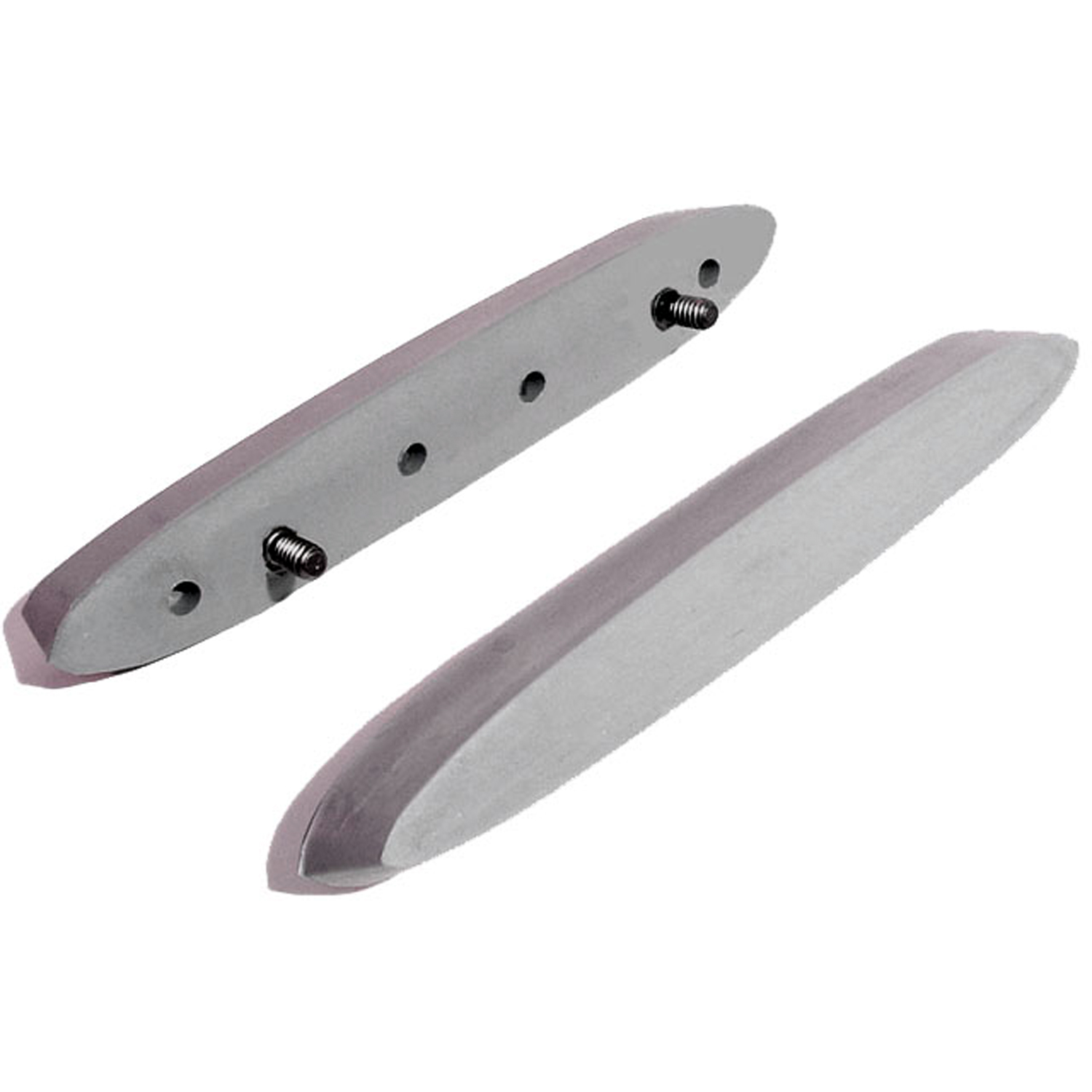 1958 Edsel Villager Bumperette Bumper. Used at bumper guard on car-BG 101Bumperette Bumper. Used at bumper guard on car. Made of gray rubber with steel core and threaded studs. 6-3/4"l X 3/4" thick, with 3-3/4" between studs. Pair
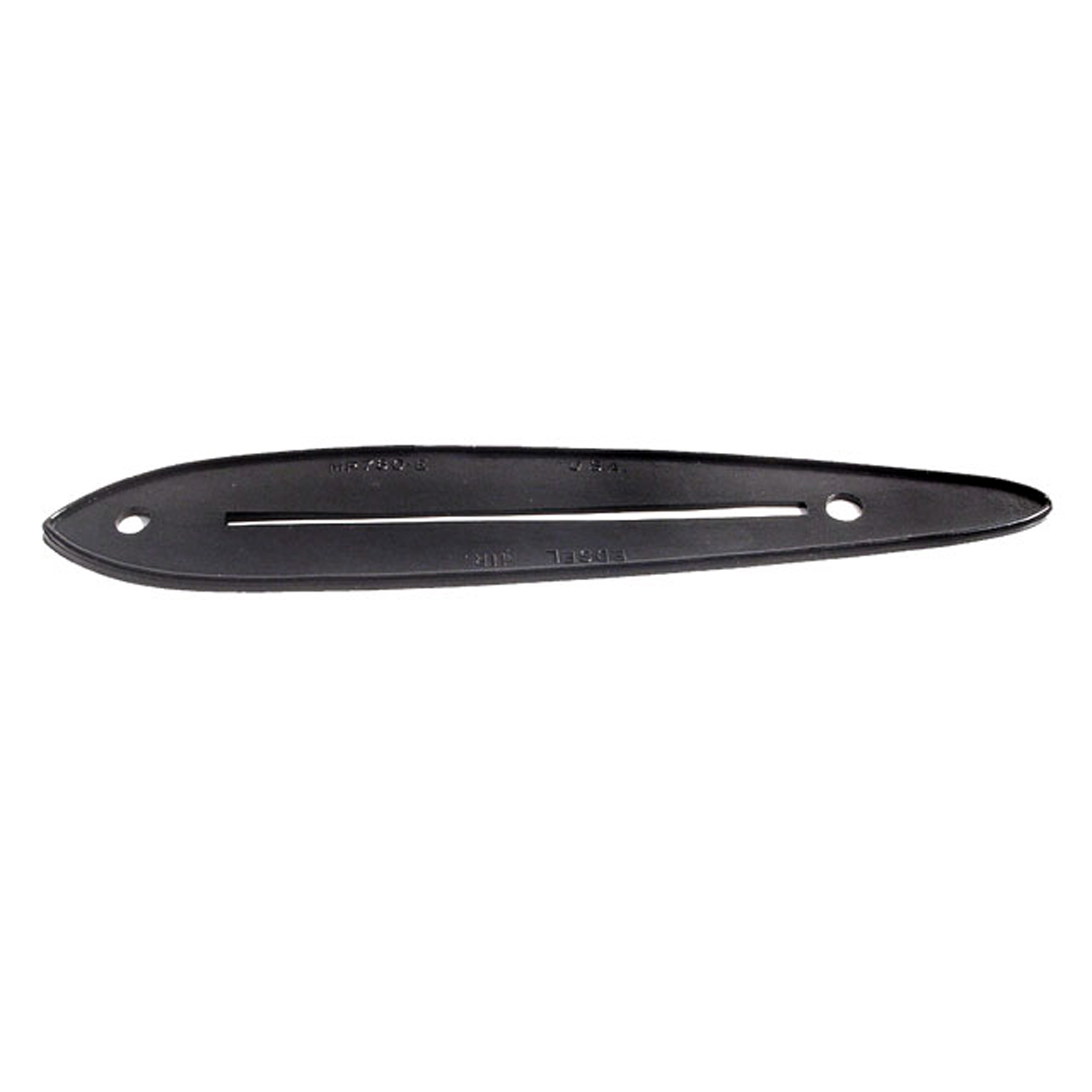 1958 Edsel Villager Mirror Pad. 1-3/8" wide X 7-1/4" long. Each-MP 780-EMirror Pad. 1-3/8" wide X 7-1/4" long. Each
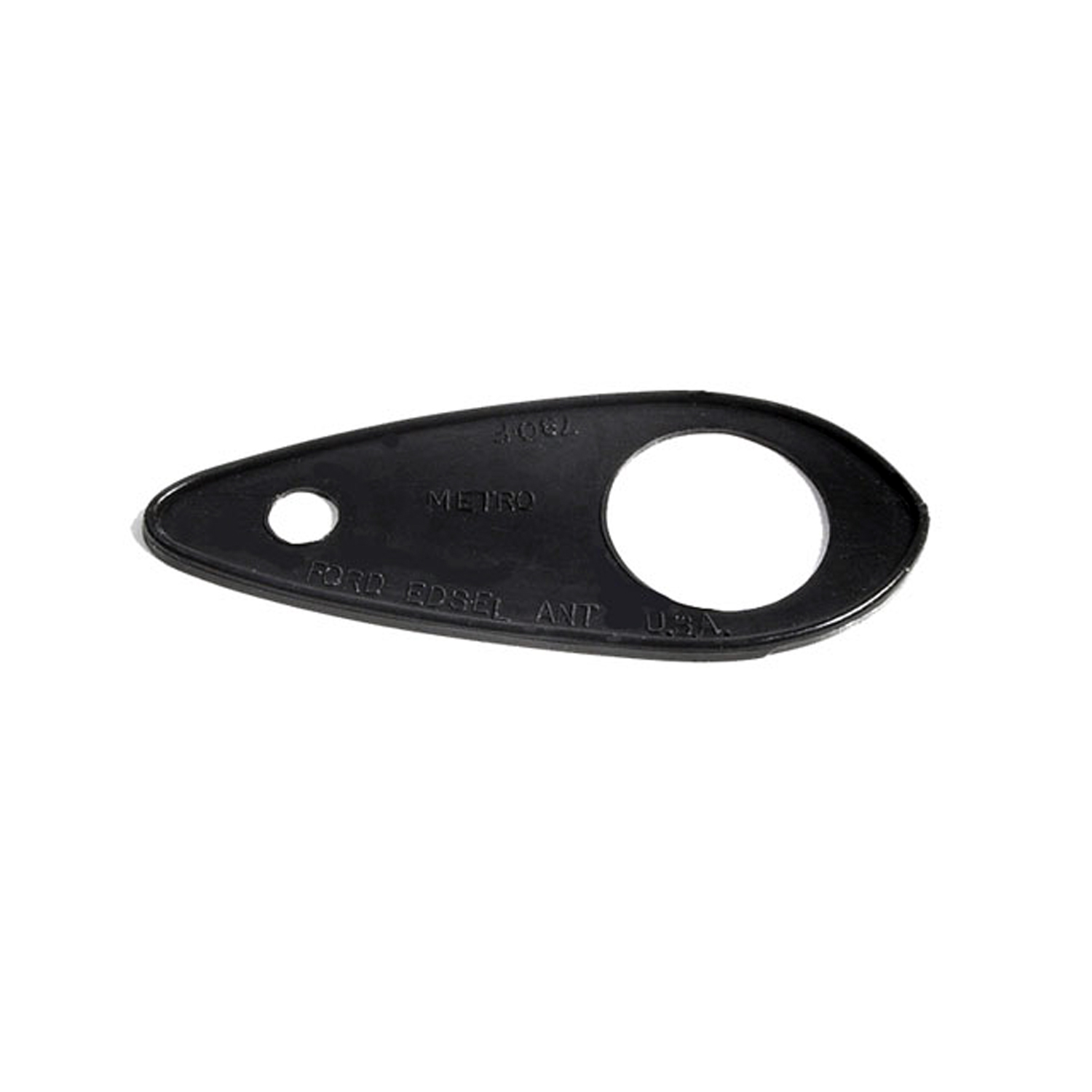 1958 Edsel Villager Antenna Pad. 1-5/8" wide X 3-5/8" long. Each-MP 780-FAntenna Pad. 1-5/8" wide X 3-5/8" long. Each
Why Choose Metro?
For over 100 years, Metro Moulded Parts has been the pinnacle of quality in classic car restoration parts. Our commitment to precision and authenticity in every component ensures a perfect fit and an OEM-level appearance.
- Expert Craftsmanship & Quality: Each part is a testament to our dedication to reliability and perfection, crafted from original designs and thoroughly tested.
- Advanced Technology: We use cutting-edge techniques to create flawless, long-lasting parts that surpass others in performance.
- SuperSoft Sponge – The Ultimate Door Seal: Not only are our door seals 30% softer than competitors', but they're also guaranteed to never leak. They effectively reduce wind and road noise, enhancing your classic car's comfort and driving experience.
- Proudly American: Our parts are a product of American craftsmanship, made in the USA with a spirit of excellence and heritage.
- Unrivaled Warranty: We back our products with a 30-year industry-leading warranty, a testament to our confidence in their quality.
Join us in preserving the legacy of classic cars with parts that are crafted for perfection, not just made.