
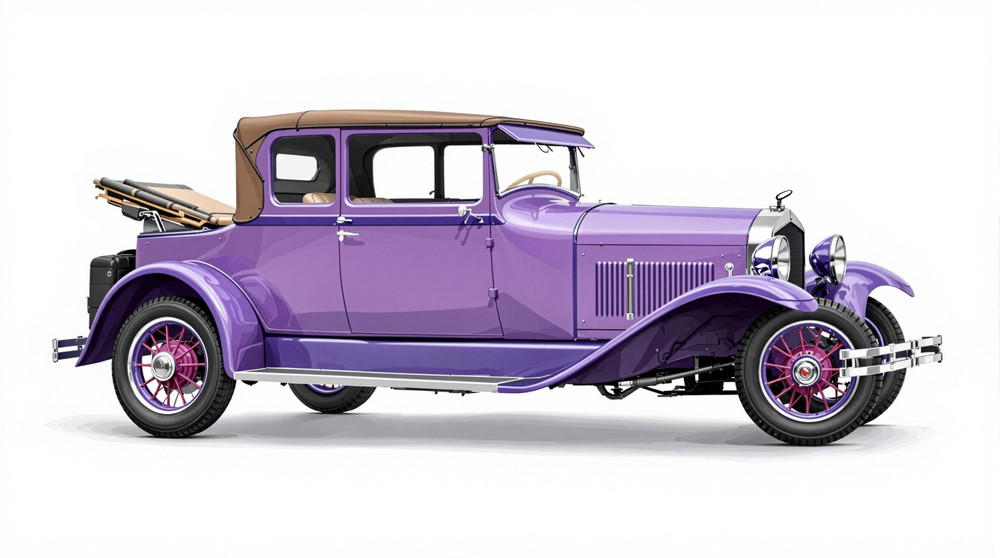
Image of 1920 Essex Four, Note: These illustrations use artistic license and may differ from actual historical models.
Performance Metrics
Fundamental Metrics
Emotional Appeal
MMP Rating
| Engine Specifications | |
|---|---|
| Engine: | L-head inline four-cylinder engine |
| Displacement: | 2.6L |
| Horsepower: | Estimated 55-60 HP |
| Torque: | Not available |
| Compression Ratio: | Not available |
| Ignition System: | Battery and coil |
| Cooling System: | Water-cooled |
| Performance Specifications | |
| 0-60 Time: | Not available |
| 1/4 Mile Time: | Not available |
| Top Speed: | 50-55 mph |
| Transmission and Drive | |
| Drive Type: | Rear-wheel drive |
| Transmission Type: | 3-speed manual |
| Fuel and Efficiency | |
| Fuel System Type: | Carburetor |
| MPG: | Not available |
| Dimensions and Brakes | |
| Brakes: | Mechanical drum brakes |
| Wheelbase: | 112 inches |
| Weight: | Estimated 2,400 lbs |
Note: Specifications for classic cars are given to the best of our ability, considering the limited and variant data available.
1920 Essex Four: Hudson’s Affordable Challenger
The 1920 Essex Four brought Hudson engineering to buyers who wanted a substantial, well-built car without paying luxury-car prices. Built by the Essex Motor Company, a Hudson Motor Car Company subsidiary, it was part of a deliberate move into the growing market for dependable, lower-cost automobiles. Its four-cylinder powertrain, straightforward mechanicals, and range of open and closed body styles made it a practical alternative to the more expensive six-cylinder cars of the day.
The Essex arrived in 1919, just as American motoring was shifting from a pastime for the wealthy toward everyday transportation. Hudson had already established a reputation for quality, and Essex let the company reach a broader audience while retaining a connection to that engineering background. One especially important chapter came a little later: Essex helped make the affordable, factory-built closed car more attainable. The celebrated Essex Coach arrived in 1922, after the Four-cylinder era, and helped change what buyers expected from a reasonably priced automobile.
Period Styling and Practical Comfort
The 1920 Essex Four has the upright, purposeful stance typical of an early postwar car. Its tall radiator, separate rounded fenders, narrow running boards, and high-mounted lamps give it a distinctly pre-streamlined profile. Brass-era decoration was already giving way to more restrained finishes, but the Essex still looks unmistakably like a machine from the dawn of mass motoring. The body sits high on its chassis, with large wheels and relatively slim tires that emphasize ground clearance and utility.
Inside, the experience depended on body style and trim level. Open cars generally used durable upholstery, often leather or leather-like material, with a simple dashboard, large steering wheel, and basic instruments. Closed models offered more shelter and an enclosed cabin, but their interiors were still straightforward by modern standards. Expect painted metal and wood trim rather than plush carpeting, elaborate moldings, or extensive sound insulation. The appeal was solid, usable transportation, not luxury-car ornament.
Period paint choices varied by body and production details. Dark blue, maroon, green, and black are plausible colors for surviving cars and restorations, with dark shades especially common on early automobiles. Exact factory availability should be confirmed against original sales literature or a car’s documentation, since surviving examples are often repainted and color options could change during a model year.
Body Styles and Equipment
The Essex Four was offered in open and enclosed configurations, with touring cars and roadsters among the most recognizable forms. Touring bodies suited families and longer outings, while a roadster gave the car a lighter, sportier appearance. Sedan and coupe-style closed bodies were available in the early Essex range as well, though the precise selection could vary by model year and market. The iconic Essex Coach, often associated with the brand’s affordable-enclosed-car breakthrough, belongs to 1922 rather than 1920.
Equipment was simple but purposeful. The car used a conventional front-mounted engine, rear-wheel drive, a manual transmission, and mechanical controls. Buyers could choose among body styles and accessories, but they should not expect today’s notion of a long options list. Period features such as electric lighting and an electric starter were becoming increasingly important in this era, though equipment can differ by individual car and specification. A surviving vehicle’s chassis number, original literature, and components are the best way to establish what it left the factory with.
Four-Cylinder Engineering and Historical Impact
At the heart of the Essex was a four-cylinder, side-valve engine. Published specifications for early Essex models can differ according to whether a source gives a period-rated horsepower figure or a later estimate of actual output. The engine is commonly associated with a rating of about 30 horsepower, a figure that should not be confused with modern brake-horsepower measurements. Its job was to provide steady, usable power rather than rapid acceleration.
The Essex’s larger achievement was commercial. Hudson used the brand to bring its manufacturing and engineering resources to a more accessible price class. The car was not a radical design experiment, but it helped demonstrate that a lower-priced automobile could be thoughtfully engineered and offered in useful body styles. Essex’s later success with the Coach also built on this strategy: enclosed motoring did not have to be reserved for the wealthy.
Against contemporary cars, the Essex stood out through its Hudson connection, practical proportions, and value-focused approach. Its influence is best understood as part of the broader movement toward dependable cars for ordinary households, rather than as a single technological breakthrough. It helped prepare the market for the mass adoption of enclosed bodies and more convenient everyday motoring.
Performance on 1920 Roads
Period performance figures are not as standardized as modern test results, and surviving cars can vary significantly with engine condition, gearing, tires, and restoration quality. A healthy Essex Four may reach roughly 45 to 50 mph, with some examples potentially approaching the low-50-mph range under favorable conditions. A modern-style 0-to-60-mph time is not especially useful here: many examples would struggle to reach 60 mph at all, and those that did would take a long time. A rough estimate of 40 seconds or more is more realistic than a brisk modern acceleration figure, but it is not a factory test statistic.
On a smooth road, the Essex feels deliberate and mechanical. The engine produces a steady exhaust note, while the manual gearbox and exposed controls keep the driver closely involved. There is no power steering, so low-speed turns require effort, and braking demands anticipation. Many early cars relied on mechanical braking systems that act differently from modern hydraulic brakes, making stopping distances and pedal feel dependent on the car’s exact configuration and condition.
Its tall stance and narrow tires suit moderate speeds and relatively gentle roads. On bumps, the suspension and high-profile tires absorb some of the roughness, but the body can move noticeably over broken surfaces. On winding roads, the driver needs to plan ahead: the steering is slower, body lean is apparent, and tires provide far less grip than modern rubber. The rewarding way to drive an Essex is smoothly, with room to brake and time to select the right gear.
Living With an Essex Four
Today, a 1920 Essex is best suited to touring, vintage-car events, museum displays, and careful weekend drives. It is not a sensible modern daily driver in ordinary traffic. Its modest speed, limited braking performance, lack of modern safety equipment, and exposure to weather in open-bodied versions call for a measured approach. On a quiet back road or a period-car tour, however, it offers a direct connection to early American motoring.
Maintenance is approachable for an owner comfortable with basic mechanical work, but the car is not maintenance-free. Ignition, fuel delivery, lubrication, cooling, mechanical brakes, and wheel bearings all deserve regular attention. Parts availability is generally less convenient than for a Ford Model T, so some components may require specialist suppliers, careful searching, or reproduction work. The simpler systems can make diagnosis understandable, but age, wear, and past repairs often matter more than the original design.
Reliability depends heavily on the individual car. A correctly restored and regularly exercised Essex can be dependable on suitable local journeys. A long-stored example may need extensive work before it is safe to drive, particularly in the steering, brakes, tires, and fuel system. For a prospective owner, a thorough inspection by someone familiar with prewar cars is more valuable than assuming that a running engine means the whole car is roadworthy.
Essex Trivia and Common Misconceptions
The Essex name is closely linked with the 1922 Coach, but that famous enclosed model should not be mistaken for a 1920 body style. The Coach’s importance came from bringing a fully enclosed body to a much broader price bracket, helping make year-round motoring more practical for ordinary buyers.
The 1920 Essex Four is not generally known for a headline speed record, a famous endurance run, or a celebrity-owner story on the scale associated with some luxury marques. Its notable achievement was broader: Essex became a highly successful value brand and helped Hudson reach customers beyond the luxury market. Model-year production figures are not consistently reported in easily comparable sources. A reasonable working estimate is that production for the 1920 Essex Four was in the tens of thousands, perhaps around 20,000 to 30,000 cars, but that is an estimate rather than a verified factory total.
Common criticisms are part of the early-car experience. The Essex is slow by modern standards, noisy, physically demanding to operate, and less comfortable in poor weather than a contemporary enclosed car. Its brakes and handling require respect. Those limitations are not hidden flaws so much as reminders that a 1920 automobile was designed for a different road system and a different pace of life.
Collector Values and Market Outlook
Values depend on body style, originality, completeness, mechanical condition, and the quality of any restoration. As a broad U.S. market estimate in 2026, a project or incomplete car might bring about $4,000 to $10,000. A usable driver could fall around $10,000 to $20,000, while a well-restored example may sell in the $20,000 to $35,000 range. An unusually fine, documented, or especially desirable car could exceed that range, but a high restoration bill does not automatically translate into an equally high market value.
The 1920 Essex Four is uncommon compared with the most widely collected mass-market cars, but it is not so rare that buyers should expect a single fixed price. Availability is intermittent, and body style can make a significant difference to interest and value. As a best-guess estimate, perhaps several hundred to a few thousand 1920 examples survive worldwide, though no complete census is known. The number originally built is much larger than the number still presentable or roadworthy.
Prices for early cars generally reward condition and provenance more than broad market fashion. A sound, authentic example is likely to hold interest among brass- and prewar-car collectors, while a poorly documented restoration or incomplete project can be harder to sell. Overall, the Essex is best viewed as a historically meaningful and enjoyable collectible, rather than a guaranteed investment. Its appeal lies in the experience and story as much as in resale potential.
Why the 1920 Essex Four Still Matters
The 1920 Essex Four combined practical four-cylinder engineering, Hudson-backed production, and a range of body styles aimed at buyers beyond the luxury class. It was not fast, lavish, or technologically exotic, but it represented an important shift toward affordable, dependable motoring. Its later connection to the Essex Coach gives the marque a lasting place in the story of the enclosed automobile.
For today’s enthusiast, the Essex rewards patience and respect: it asks the driver to slow down, listen to the machinery, and take an active part in the journey. That is precisely why this early Hudson offshoot remains more than a footnote. The 1920 Essex Four helped make motoring more accessible, and every careful mile keeps that story moving.
1920 Essex Four Catalog of Parts
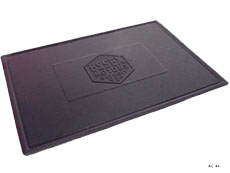 1920 Essex FOUR Accessory Floor Mat - 12"X17"-AC 44Accessory Floor Mat - made of high quality black rubber with molded original emblem. Also designed to be sewn into new carpets. 12"X17", Each
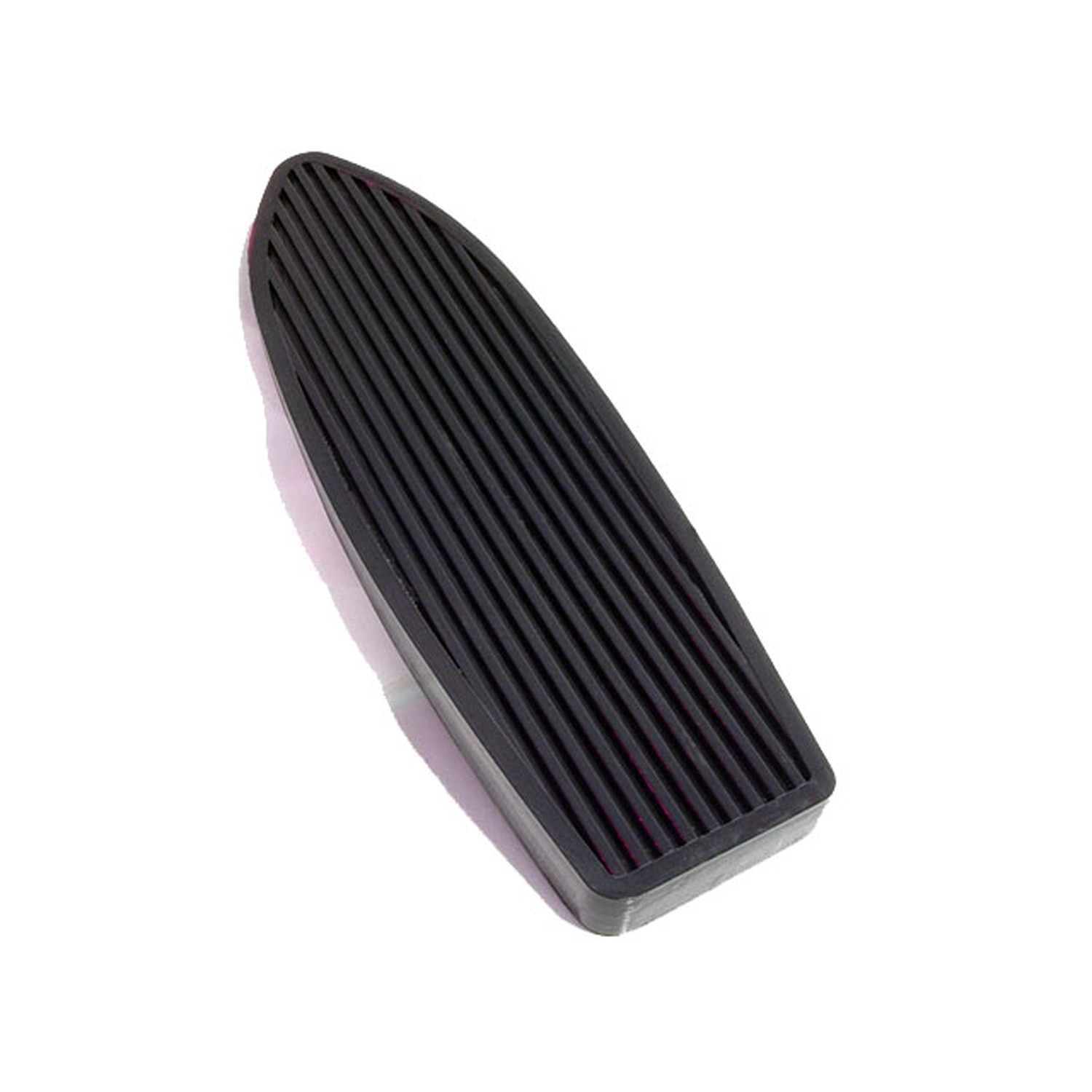 1920 Essex FOUR Accelerator Pedal Pad, 2-5/8" X 9", Each-AP 23Accelerator Pedal Pad, 2-5/8" X 9", Each
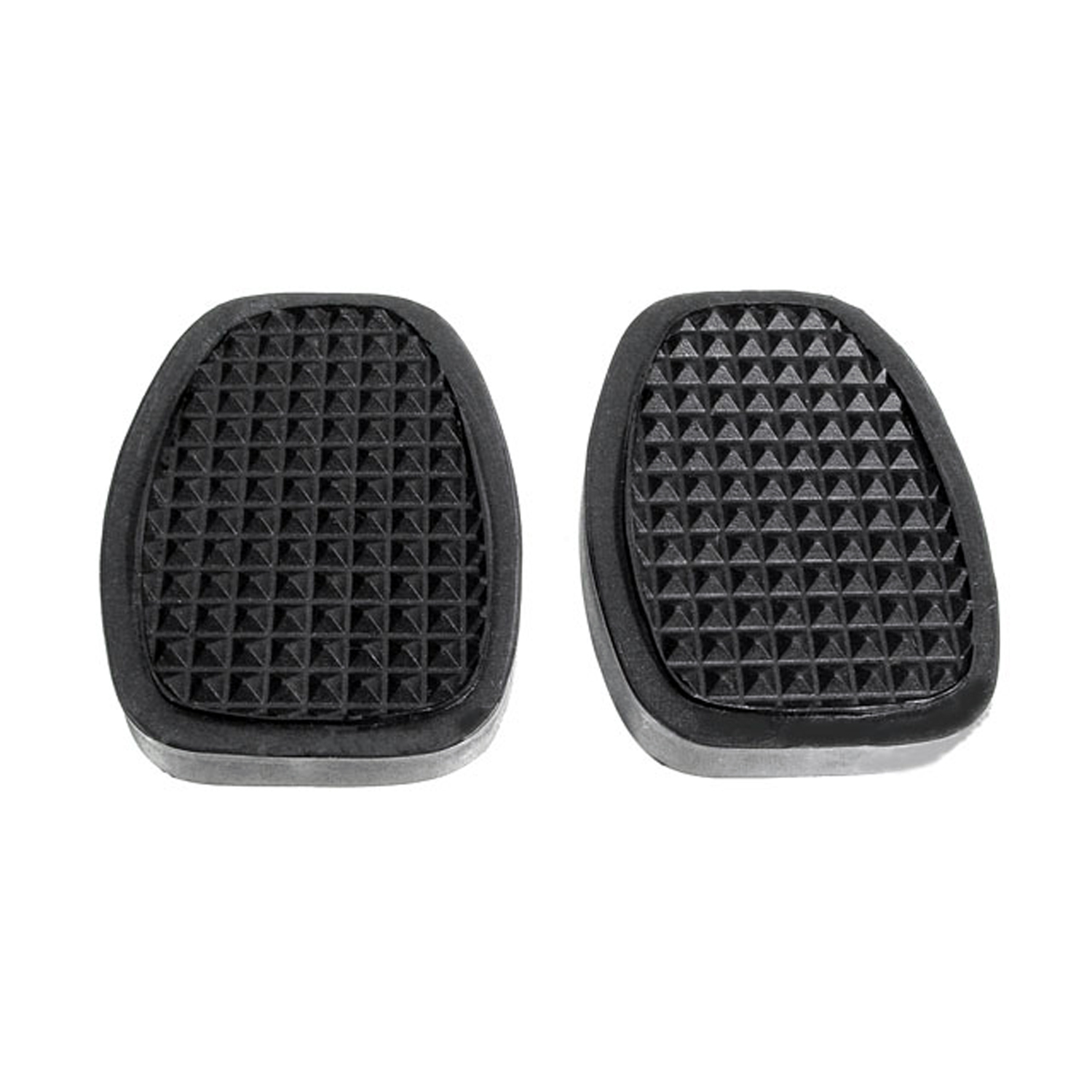 1920 Essex FOUR Clutch and Brake Pedal Pads. 2-3/4" wide X 3-3/4" long-CB 30Clutch and Brake Pedal Pads. 2-3/4" wide X 3-3/4" long. Pair
Why Choose Metro?
For over 100 years, Metro Moulded Parts has been the pinnacle of quality in classic car restoration parts. Our commitment to precision and authenticity in every component ensures a perfect fit and an OEM-level appearance.
- Expert Craftsmanship & Quality: Each part is a testament to our dedication to reliability and perfection, crafted from original designs and thoroughly tested.
- Advanced Technology: We use cutting-edge techniques to create flawless, long-lasting parts that surpass others in performance.
- SuperSoft Sponge – The Ultimate Door Seal: Not only are our door seals 30% softer than competitors', but they're also guaranteed to never leak. They effectively reduce wind and road noise, enhancing your classic car's comfort and driving experience.
- Proudly American: Our parts are a product of American craftsmanship, made in the USA with a spirit of excellence and heritage.
- Unrivaled Warranty: We back our products with a 30-year industry-leading warranty, a testament to our confidence in their quality.
Join us in preserving the legacy of classic cars with parts that are crafted for perfection, not just made.