

Image of 1927 Essex Super Six, Note: These illustrations use artistic license and may differ from actual historical models.
Performance Metrics
Fundamental Metrics
Emotional Appeal
MMP Rating
| Engine Specifications | |
|---|---|
| Engine Options: | Inline 6-cylinder |
| Displacement Range: | 2.6L |
| Horsepower Range: | Estimated 40-50 HP |
| Torque: | Not available |
| Compression Ratio: | Not available |
| Ignition System: | Battery and coil |
| Cooling System: | Water-cooled |
| Performance Specifications | |
| 0-60 Time: | Not available |
| 1/4 Mile Time: | Not available |
| Top Speed: | 60 mph |
| Transmission and Drive | |
| Drive Type: | Rear-wheel drive |
| Transmission Type: | 3-speed manual |
| Fuel and Efficiency | |
| Fuel System Type: | Carburetor |
| MPG: | Not available |
| Dimensions and Brakes | |
| Brakes: | Mechanical drum brakes |
| Wheelbase: | 113 inches |
| Weight: | 2,400 lbs |
Note: Specifications for classic cars are given to the best of our ability, considering the limited and variant data available.
1927 Essex Super Six: The Affordable Six-Cylinder That Put Coachwork Within Reach
The 1927 Essex Super Six brought six-cylinder power and a practical enclosed body to buyers who could not stretch to a luxury car. Built by the Essex Motor Company, a Hudson Motor Car Company subsidiary, it combined straightforward engineering with the increasingly popular comfort of a closed car. Its most familiar form was the Coach, a compact sedan that helped make all-weather motoring accessible to a much broader public.
Essex had been created by Hudson to serve the growing market for moderately priced cars. By the mid-1920s, its cars were no longer just basic transportation: the Super Six name highlighted a smooth-running six-cylinder engine, while the body range offered more choice than many budget-minded buyers had previously enjoyed. The Essex Coach is especially significant because it helped establish the enclosed automobile as a realistic everyday purchase rather than a costly luxury.
A notable point of context is the timing. In 1927, open touring cars still had plenty of admirers, but enclosed cars were rapidly gaining favor for their protection from rain, dust, and cold. Essex was among the makers that helped bring this shift to the mass market.
Coachbuilt Looks and Practical Comfort
The Super Six had the purposeful profile typical of a late-1920s car: a tall, upright radiator, long hood, prominent fenders, running boards, and narrow tires mounted on spoked wheels. Its body sat high by modern standards, giving the driver a commanding view and leaving plenty of room for the chassis and suspension beneath. The overall look was sturdy rather than flashy, with brightwork and trim adding just enough polish.
The Coach, the model’s best-known body style, enclosed passengers behind roll-up glass windows and a fixed roof. Inside, owners could expect broad bench seating, durable cloth or mohair upholstery, and practical trim suited to regular use. Materials and fittings varied with body style and equipment, but the cabin was designed for comfort and utility, not elaborate luxury. Drivers operated the car with period-standard controls, including a floor-mounted gear lever, hand controls, and a large steering wheel.
Essex offered several body configurations during this period, including Coach, sedan, coupe, and open touring or phaeton-style models. The exact range and naming could vary by market. The Coach became the signature choice because it offered weather protection at a price that made sense to ordinary families. Open models remained attractive to buyers who wanted fresh air and a more traditional motoring experience.
Factory paint choices depended on body style and production details. Dark, conservative shades such as black, deep blue, green, or maroon were characteristic of the era, with some cars receiving contrasting trim or body accents. Available combinations were not necessarily the same across every configuration, and many surviving cars have been repainted, so a present-day example may not reflect its original finish.
Six-Cylinder Engineering for the 1920s
The Super Six’s central feature was its inline six-cylinder engine. Commonly reported specifications for the 1927 model include a side-valve, or L-head, engine of about 192 cubic inches (3.1 liters), producing approximately 55 horsepower. Power went through a three-speed manual transmission to the rear wheels. Exact specifications can vary across references and configurations, so buyers researching a particular car should verify its engine and chassis details.
By the standards of the day, a six-cylinder engine was a meaningful selling point. It generally delivered smoother operation than a small four-cylinder engine, especially at cruising speeds. Four-wheel mechanical brakes were also part of the safety progress taking hold in this period, though they require a different feel and more frequent adjustment than modern hydraulic systems.
Why the Essex Mattered
The Essex Super Six did not invent the closed car, the six-cylinder engine, or mass production. Its importance lies in bringing desirable features together at a comparatively accessible price. A closed Coach body and six-cylinder power, once associated more strongly with pricier cars, helped Essex compete for buyers who wanted comfort without stepping up to a luxury marque.
That formula contributed to a larger change in American motoring. As enclosed bodies became more affordable and dependable, families were less dependent on seasonal or fair-weather driving. The Coach was practical transport, but it also represented a new expectation: an everyday car should protect its occupants from the elements. Essex’s success helped reinforce that expectation and encouraged other manufacturers to expand their closed-body offerings.
Road Manners, Speed, and the Driving Experience
A well-maintained 1927 Super Six is generally estimated to reach about 55 to 65 mph. A period car’s 0-to-60-mph time is difficult to state precisely because standardized testing was uncommon, and many examples may struggle to reach 60 mph quickly, especially with a full load. A reasonable modern estimate is roughly 30 to 40 seconds, depending on body style, mechanical condition, gearing, and road conditions.
On the road, the engine’s appeal is its steady six-cylinder rhythm. Expect a mechanical whir and exhaust note rather than the low, quiet rumble of a modern car. The three-speed transmission calls for deliberate shifts, and the driver must plan ahead when climbing hills or joining faster traffic. Steering is unassisted, braking requires more anticipation than a contemporary vehicle, and the car’s pace is best suited to relaxed touring rather than highway commuting.
The suspension and tall tires soften some rough patches, but the ride is not isolated from the road. Broken pavement can send movement through the body, while narrow tires and a high stance make fast cornering a poor idea. On winding roads, smooth steering inputs and moderate speed are the keys to confidence. In crosswinds, the upright body can feel more affected than a modern, lower car.
Living With a Super Six
In its own time, the Essex was everyday transportation. Today, most examples are used for vintage touring, local shows, museum displays, or occasional leisure drives. A sound car can cover short and moderate trips, but it is not a practical substitute for a modern daily driver. Traffic speed, braking distance, lighting, and the scarcity of suitable replacement parts all call for a thoughtful owner.
The mechanical layout is comparatively approachable for an experienced home mechanic. The engine, clutch, and basic chassis systems are less electronically complicated than those of modern vehicles, and many routine tasks can be performed with ordinary tools and period repair information. That does not mean every job is simple: worn engine parts, brake components, electrical faults, and body repairs may require specialist knowledge or hard-to-find pieces.
Reliability depends heavily on upkeep. Regular lubrication, careful attention to the cooling system, properly adjusted brakes, and suitable tires are essential. Before buying, inspect the frame, body structure, wood framing where applicable, engine condition, and the availability of correct parts. A car that has been stored for decades may need extensive recommissioning even if it appears complete.
Essex Facts, Myths, and Criticisms
The Essex Super Six’s most lasting claim to fame is not a single speed record or celebrity connection. It is the role its Coach body played in popularizing the affordable closed car. There is no widely documented, defining 1927 Essex Super Six speed or endurance record that should be confused with the achievements of other Hudson or Essex models.
Likewise, celebrity ownership stories attached to individual cars are difficult to verify without reliable documentation. A more dependable piece of trivia is that Essex began as a distinct Hudson-backed marque and became so successful that it was central to Hudson’s reach into the mass market. The name eventually disappeared as Hudson reorganized its product line, but the Essex Coach had already helped shape what buyers expected from a modestly priced automobile.
Common criticisms are familiar to anyone who drives a car from the 1920s: modest acceleration, limited braking compared with modern standards, heavy steering at low speeds, and a steady need for maintenance. The upright body and narrow tires also make it less composed at speed than a modern car. Those are limitations to respect, not flaws that surprise a buyer who understands the period.
Collector Values and Availability
For a 1927 Essex Super Six in the United States, a rough current-market guide is about $8,000 to $18,000 for a project or usable but imperfect car, $18,000 to $35,000 for a sound, presentable example, and roughly $35,000 to $50,000 or more for a high-quality restoration. These are broad estimates rather than guaranteed sale prices. Body style, originality, restoration quality, running condition, provenance, and regional demand can move a car well outside those ranges.
The Super Six is uncommon today, but it is not generally treated as an ultra-rare model. Complete examples appear in the collector market from time to time, while correct trim, body parts, and restoration-quality cars can be harder to find. Essex production was substantial for the period. A reasonable working estimate is that production across the 1927 Essex line was in the tens of thousands, potentially approaching or exceeding 100,000 cars, but precise model-year totals by body style are not consistently available. That is an estimate, not a verified figure for surviving Super Sixes.
Prices tend to reward quality and completeness more than simple age. Good examples have a stable enthusiast audience, but restoration costs can exceed the value of an average car. In inflation-adjusted terms, many prewar cars have not risen as strongly as their historical importance might suggest. Buyers should treat the Essex as a rewarding piece of motoring history first and a speculative investment second.
A Practical Classic With a Big Historical Role
The 1927 Essex Super Six paired a smooth six-cylinder engine with the comfort of an enclosed body at a price intended for a broad audience. Its Coach became an icon of practical 1920s motoring, while its design reflected the industry’s move toward cars that could be driven in more kinds of weather and by more kinds of owners.
It may not be fast by modern standards, and it asks more of its driver than a newer classic. But the Essex offers something increasingly rare: a direct connection to the moment when the closed car moved from luxury aspiration to family transportation. That is what makes the 1927 Super Six more than just an old car. It is a small, sturdy chapter in the story of how America learned to drive everywhere, in almost any weather.
1927 Essex Super Six Catalog of Parts
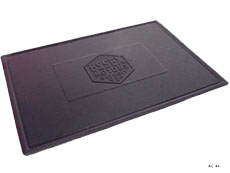 1927 Essex Super Six Accessory Floor Mat - 12"X17"-AC 44Accessory Floor Mat - made of high quality black rubber with molded original emblem. Also designed to be sewn into new carpets. 12"X17", Each
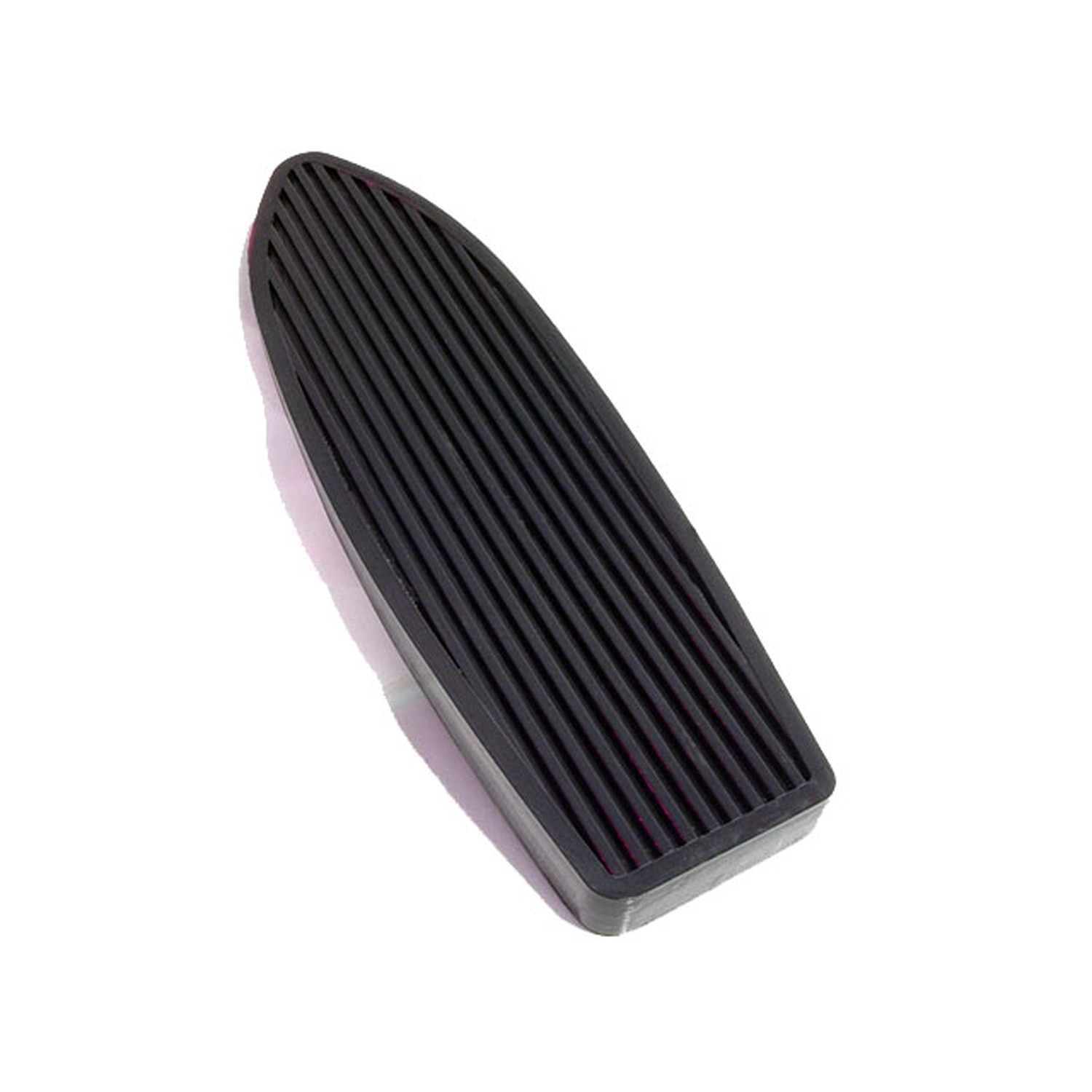 1927 Essex Super Six Accelerator Pedal Pad, 2-5/8" X 9", Each-AP 23Accelerator Pedal Pad, 2-5/8" X 9", Each
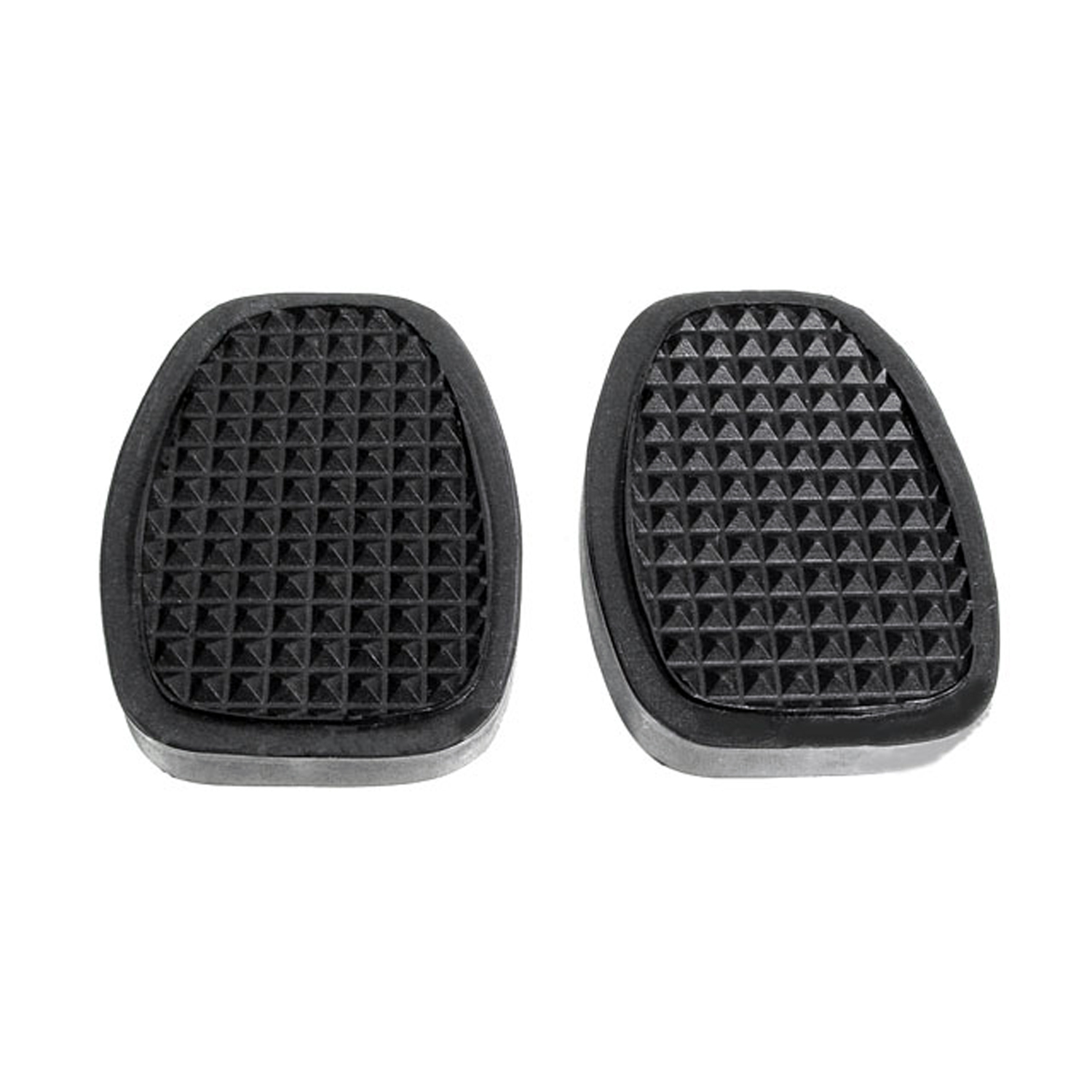 1927 Essex Super Six Clutch and Brake Pedal Pads. 2-3/4" wide X 3-3/4" long-CB 30Clutch and Brake Pedal Pads. 2-3/4" wide X 3-3/4" long. Pair
Why Choose Metro?
For over 100 years, Metro Moulded Parts has been the pinnacle of quality in classic car restoration parts. Our commitment to precision and authenticity in every component ensures a perfect fit and an OEM-level appearance.
- Expert Craftsmanship & Quality: Each part is a testament to our dedication to reliability and perfection, crafted from original designs and thoroughly tested.
- Advanced Technology: We use cutting-edge techniques to create flawless, long-lasting parts that surpass others in performance.
- SuperSoft Sponge – The Ultimate Door Seal: Not only are our door seals 30% softer than competitors', but they're also guaranteed to never leak. They effectively reduce wind and road noise, enhancing your classic car's comfort and driving experience.
- Proudly American: Our parts are a product of American craftsmanship, made in the USA with a spirit of excellence and heritage.
- Unrivaled Warranty: We back our products with a 30-year industry-leading warranty, a testament to our confidence in their quality.
Join us in preserving the legacy of classic cars with parts that are crafted for perfection, not just made.