
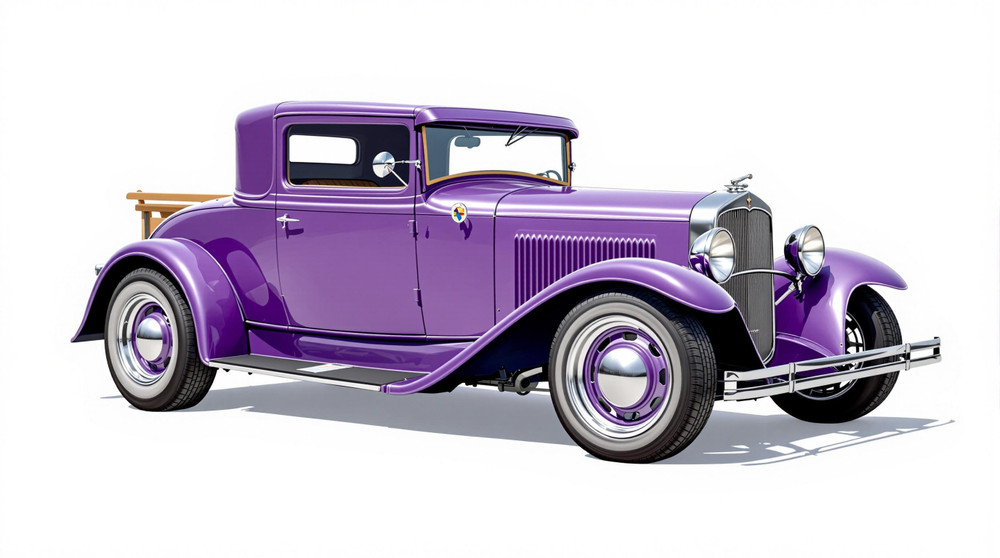
Image of 1929 Essex Challenger, Note: These illustrations use artistic license and may differ from actual historical models.
Performance Metrics
Fundamental Metrics
Emotional Appeal
MMP Rating
| Engine Specifications | |
|---|---|
| Engine Options: | Inline 6 |
| Displacement Range: | 3.3L |
| Horsepower Range: | Estimated 55-60 HP |
| Torque: | Not available |
| Compression Ratio: | Not available |
| Ignition System: | Distributor and coil |
| Cooling System: | Water-cooled |
| Performance Specifications | |
| 0-60 Time: | Not available |
| 1/4 Mile Time: | Not available |
| Top Speed: | 60 mph |
| Transmission and Drive | |
| Drive Type: | Rear-wheel drive |
| Transmission Type: | 3-speed manual |
| Fuel and Efficiency | |
| Fuel System Type: | Carburetor |
| MPG: | Not available |
| Dimensions and Brakes | |
| Brakes: | Mechanical drum brakes |
| Wheelbase: | 113 inches |
| Weight: | Estimated 2,400 lbs |
Note: Specifications for classic cars are given to the best of our ability, considering the limited and variant data available.
1929 Essex Challenger: The Affordable Six That Challenged the Big Names
The 1929 Essex Challenger brought six-cylinder motoring within reach of buyers who could not justify the price of a luxury car. Built by the Essex division of the Hudson Motor Car Company, it paired practical, closed-car comfort with straightforward engineering and a dash of late-1920s style. Its name promised a challenge to more expensive rivals, and its appeal rested on a simple idea: offer useful performance and modern features at a sensible price.
The Challenger arrived during a fast-changing period in American motoring. Closed bodies were becoming increasingly desirable, replacing the open touring cars that had dominated earlier years. Essex had helped popularize the affordable closed automobile earlier in the decade, and the Challenger continued that mission. A notable detail is that “Challenger” was a model name within Essex’s range, not a separate manufacturer or an independent marque.
Essex Challenger Design and Features
The Challenger had the upright, substantial proportions typical of a late-1920s American car. A tall radiator stood proudly at the front, flanked by rounded front fenders and prominent headlamps. Running boards connected the fenders, while a long hood gave the car a more substantial appearance than its price might suggest. Depending on body style, the roofline ranged from the practical, enclosed look of a coach to the more formal profile of a sedan.
Inside, the emphasis was on durability and function rather than luxury-car ornament. Buyers could expect cloth upholstery, a straightforward dashboard, large mechanical controls, and generous seating for the car’s size. Materials and trim varied by body style and equipment, and surviving cars may have been reupholstered or retrimmed over the decades. Original examples are therefore especially useful for understanding the factory finish.
Under the hood was an L-head, or flathead, inline-six of about 192 cubic inches, producing roughly 55 horsepower. A three-speed manual transmission sent power to the rear wheels. Four-wheel mechanical brakes were part of the period’s move toward improved stopping power, though they required regular adjustment and careful maintenance. These were meaningful, practical features for a car intended to handle everyday travel, not just Sunday outings.
Factory paint and trim choices could vary by body style, production period, and market. Dark shades such as black, blue, maroon, and green suit the car’s period character, but a specific car’s original colors should be confirmed through factory records, paint traces, or trustworthy restoration documentation. Available bodies included closed coach and sedan forms, along with coupe and open-car variations in the broader Essex range. The enclosed coach or sedan is among the most recognizable configurations today, reflecting buyers’ growing preference for weather protection.
Why the Challenger Mattered
The Essex Challenger was not a radical engineering experiment. Its significance lay in bringing a six-cylinder engine and enclosed-body comfort to a much broader audience than premium marques could reach. In the 1920s, motorists increasingly expected cars to be useful in poor weather and on longer journeys. Essex had already helped make the closed car more attainable, and the Challenger carried that practical approach into the end of the decade.
Against many contemporaries, the Challenger’s selling point was its balance: a roomy body, six-cylinder power, and a relatively accessible price. It helped reinforce the idea that an affordable car did not have to be a bare-bones runabout. Its influence is best understood as part of a wider shift toward practical, enclosed family cars rather than as a single invention that transformed the industry.
The timing was dramatic. The Challenger was a 1929 model, the year the stock-market crash ushered in the Great Depression. Hudson and Essex had achieved strong sales in the late 1920s, but the economic collapse changed what American buyers could afford and accelerated the pressure on carmakers to offer value.
Engine, Speed, and Road Manners
With about 55 horsepower, the Essex Challenger was capable of ordinary period highway travel, but it was not a modern high-speed car. A healthy example might reach approximately 60 to 65 mph under favorable conditions. A 0-to-60-mph time is not commonly established by reliable factory testing; based on its power, gearing, and weight, a rough estimate would be around 25 to 30 seconds, if it could reach 60 mph at all in the conditions being measured. Treat these figures as period-car estimates, not guaranteed specifications.
On the road, the six-cylinder engine delivers its power gradually. The driver works a non-synchronized manual gearbox with deliberate shifts, listens to engine speed, and plans overtaking well in advance. The flathead six has a steady mechanical note rather than the sharp, high-revving sound of a modern engine. At modest speeds, it gives the car an unhurried, confident character.
The Challenger’s suspension and narrow tires reflect the roads of its era. It can absorb ordinary bumps reasonably well, but rough surfaces bring more body movement and steering correction than a modern driver may expect. On winding roads, the car rewards smooth inputs and measured speed. Mechanical brakes demand more anticipation than modern hydraulic systems, and a well-maintained brake setup is essential. Windy conditions and passing trucks can also make the relatively light, upright car feel busy behind the wheel.
Living With a 1929 Essex
Today, the Challenger is primarily a show car, touring car, or weekend hobby vehicle. Some owners drive their cars on local roads and participate in antique-car events, but regular commuting is unusual. Its open controls, modest pace, period brakes, and limited crash protection make it best suited to leisurely drives in suitable conditions.
Maintenance is approachable for an owner comfortable with older machinery. The engine is mechanically straightforward, and many routine jobs can be handled with basic tools and a period service manual. The most important needs include regular lubrication, ignition and carburetor tuning, cooling-system care, and careful attention to the mechanical brakes. Parts availability varies: common service items and some reproduction components can be found, while body-specific trim, glass, and unusual fittings may require patience or specialist help.
Reliability depends heavily on condition and restoration quality. A well-sorted Challenger can be enjoyable on local tours, but an unrestored car may need substantial work before it is safe to drive. Owners should also plan ahead for tires, electrical components, and other parts that may be unlike those used on modern cars.
Essex Challenger Facts and Myths
There is no widely accepted, model-specific production total for the 1929 Challenger that can be quoted with confidence. Essex built cars in substantial numbers during its successful late-1920s years, but surviving production references do not always separate Challenger body styles and model designations cleanly. A reasonable broad estimate is that production reached many tens of thousands, though that should be treated as an informed approximation rather than a verified factory figure.
The Challenger is not generally associated with a headline speed record, endurance achievement, or famous celebrity owner. Its more telling distinction is its role in the everyday transformation of American car ownership: it represented the growing expectation that an affordable automobile could be enclosed, comfortable, and powered by a six-cylinder engine.
Common criticisms are rooted in its age. It is slow by modern standards, requires regular hands-on maintenance, and lacks contemporary safety equipment. Mechanical brakes, period lighting, and the absence of modern crash protection make careful driving essential. Those limitations are also part of what gives the car its character, but they should not be romanticized when planning to use one on today’s roads.
Collector Value and Availability
Values depend greatly on body style, completeness, mechanical condition, and the quality of any restoration. As a broad 2026 U.S. market estimate, a project car might fall around $4,000 to $10,000. A usable driver could bring roughly $12,000 to $25,000, while a well-restored example may reach approximately $30,000 to $50,000. Exceptional cars, unusual body styles, or unusually well-documented restorations can fall outside those ranges.
Essex Challengers appear less often than more familiar Ford Model A models, but they are not necessarily rare in the strict sense. Buyers may have to wait for the right body style or condition, and individual cars can be difficult to compare because restoration quality varies so widely. Prices for sound examples have generally held steady or risen modestly in nominal dollars, while inflation-adjusted values can be flatter. The car appeals to a focused group of collectors who value Hudson-Essex history and practical prewar motoring.
A Practical Classic With a Lasting Story
The 1929 Essex Challenger combined a six-cylinder engine, useful body styles, and approachable engineering at a time when American motorists were embracing enclosed cars. It was not built to dominate racetracks or set speed records. Its achievement was more everyday and arguably more important: making comfortable motoring available to a wider public.
Nearly a century later, the Challenger still tells that story through its upright stance, steady flathead six, and hands-on driving experience. It is a reminder that a classic car’s importance is not measured only in horsepower or rarity, but also in how successfully it brought a new kind of motoring within reach.
1929 Essex Challenger Catalog of Parts
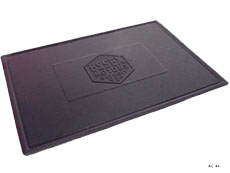 1929 Essex Challenger Accessory Floor Mat - 12"X17"-AC 44Accessory Floor Mat - made of high quality black rubber with molded original emblem. Also designed to be sewn into new carpets. 12"X17", Each
Why Choose Metro?
For over 100 years, Metro Moulded Parts has been the pinnacle of quality in classic car restoration parts. Our commitment to precision and authenticity in every component ensures a perfect fit and an OEM-level appearance.
- Expert Craftsmanship & Quality: Each part is a testament to our dedication to reliability and perfection, crafted from original designs and thoroughly tested.
- Advanced Technology: We use cutting-edge techniques to create flawless, long-lasting parts that surpass others in performance.
- SuperSoft Sponge – The Ultimate Door Seal: Not only are our door seals 30% softer than competitors', but they're also guaranteed to never leak. They effectively reduce wind and road noise, enhancing your classic car's comfort and driving experience.
- Proudly American: Our parts are a product of American craftsmanship, made in the USA with a spirit of excellence and heritage.
- Unrivaled Warranty: We back our products with a 30-year industry-leading warranty, a testament to our confidence in their quality.
Join us in preserving the legacy of classic cars with parts that are crafted for perfection, not just made.