
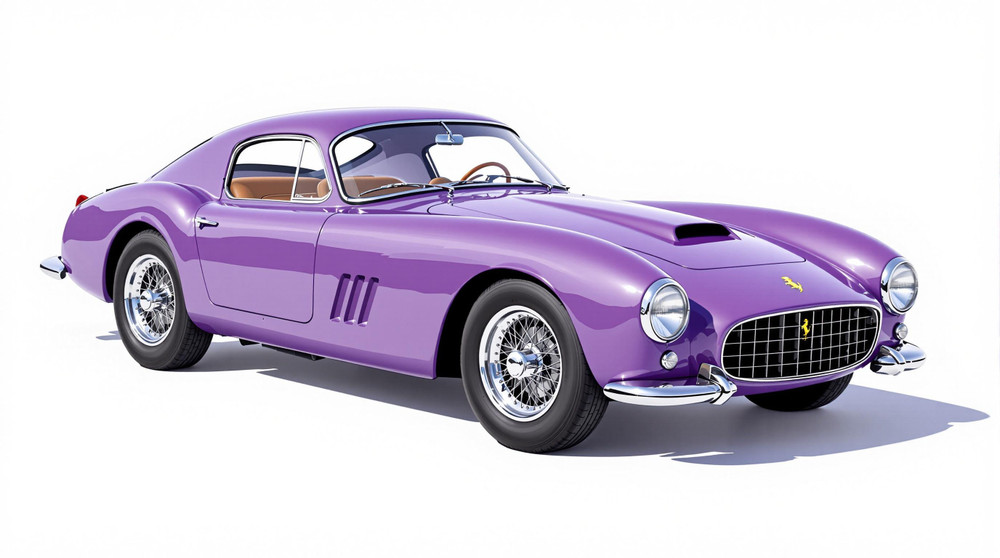
Image of 1953 Ferrari 195, Note: These illustrations use artistic license and may differ from actual historical models.
Performance Metrics
Fundamental Metrics
Emotional Appeal
MMP Rating
| Engine Specifications | |
|---|---|
| Engine: | 2.3 L Tipo 130 V12 |
| Displacement: | 2341 cc |
| Horsepower: | 170-190 hp |
| Torque: | Estimated 152 lb-ft |
| Compression Ratio: | 8.5:1 |
| Ignition System: | Coil ignition |
| Cooling System: | Water-cooled |
| Performance Specifications | |
| 0-60 Time: | Estimated 10 seconds |
| 1/4 Mile Time: | Not available |
| Top Speed: | 137 mph |
| Transmission and Drive | |
| Drive Type: | Rear-wheel drive |
| Transmission Type: | 4-speed manual |
| Fuel and Efficiency | |
| Fuel System Type: | Triple Weber carburetors |
| MPG: | Not available |
| Dimensions and Brakes | |
| Brakes: | Drum brakes |
| Wheelbase: | 2,420 mm |
| Weight: | 900 kg |
Note: Specifications for classic cars are given to the best of our ability, considering the limited and variant data available.
1953 Ferrari 195: The Year, the V12, and the Story
The Ferrari 195 paired an elegant coachbuilt body with a small, high-revving V12, but there is an important date to clear up: Ferrari’s 195 Inter and 195 S belong to the 1950–51 period, not 1953. A car described as a “1953 Ferrari 195” may have a later registration, a body completed or changed after its chassis was built, or an incorrect listing. For any individual car, its chassis number and provenance are essential to establishing its true history.
Ferrari introduced the 195 range as an evolution of the 166, expanding the Colombo-designed V12 from roughly 2.0 to 2.3 liters. The road-going 195 Inter was a grand touring car for wealthy clients, while the competition-focused 195 S was built in very small numbers. The model’s most celebrated moment came in 1950, when a 195 S won the Mille Miglia, one of the toughest and most prestigious road races of the era.
Coachbuilt Ferrari Design
There was no single standard body shape for the 195 Inter. Ferrari supplied the chassis and mechanical package, then leading Italian coachbuilders created the bodywork. Touring, Vignale, Ghia, Stabilimenti Farina, and other firms produced individual interpretations, so two 195s can look strikingly different while sharing the same basic mechanical identity.
The typical design language is unmistakably early Ferrari: a long, tapering hood, a prominent oval or egg-crate grille, flowing front fenders, and a compact cabin set well back from the nose. Many examples have rounded, hand-formed lines rather than the sharp creases and glassy surfaces that would define later cars. Details such as headlamp placement, grille shape, rear fender treatment, and tail design depend on the coachbuilder and the specific chassis.
Most 195 Inters were closed grand touring cars, including coupes and berlinettas, though cabriolet-style bodies were also made. The 195 S is especially associated with its competition berlinetta and open barchetta forms. The sleek Touring-bodied 195 S berlinetta is among the most recognizable versions, while the open cars show the model’s direct connection to road racing.
Inside, the emphasis was on craftsmanship rather than modern convenience. Depending on the body and specification, occupants could find leather upholstery, a large thin-rimmed steering wheel, simple door trim, and clearly arranged instruments set into a painted or wood-finished dashboard. These were custom-built cars, so materials and fittings varied. A well-restored interior feels intimate and handmade, but it is not a quiet or spacious modern GT cabin.
V12 Engineering and Period Technology
At the heart of the 195 was a 60-degree, 2,341 cc Colombo V12. The road-oriented 195 Inter generally produced around 100 to 130 horsepower, depending on tune and specification. The competition 195 S used a more aggressive setup, with output commonly quoted at about 170 horsepower. Carburetion, compression, and other details could differ from car to car.
For its time, the V12 was a remarkable piece of compact engineering. It was smooth for a sporting engine, yet willing to rev and responsive to careful throttle work. The car also reflected Ferrari’s competition-first approach: a light chassis, a manual gearbox, and straightforward mechanical systems took priority over driver aids. Expect period suspension and braking hardware, including a live rear axle and drum brakes, rather than the independent suspension, disc brakes, and electronic systems familiar to modern drivers.
Color was largely a matter of client preference and coachbuilder specification. Dark red, black, silver, and understated grays suit the car’s formal GT character, while competition cars could wear Italian racing red. Today, many collectors favor historically documented colors over a fashionable repaint. On a bespoke Ferrari, the original finish and a traceable color history can matter as much as the shade itself.
Why the Ferrari 195 Mattered
The 195 helped Ferrari develop the idea that a small-volume sports car could also serve as an elegant long-distance road car. It was neither a mass-produced family vehicle nor a stripped-down racer. Instead, Ferrari offered a sporting chassis and V12 power in a body tailored to the owner, an approach that became a defining feature of the marque’s early grand touring cars.
Its significance also lies in the relationship between Ferrari and Italy’s coachbuilders. The 195 range demonstrated how a shared mechanical platform could support a variety of individual designs. That formula helped establish the coachbuilt Ferrari as a symbol of postwar Italian craftsmanship and gave customers a level of visual individuality that factory-standard production could not provide.
The 195 stood apart from many contemporaries through its V12 layout, competition pedigree, and bespoke construction. It was not the first or only European sports car to combine performance and luxury, but Ferrari’s racing reputation gave the package particular force. The model’s influence is best understood as part of the foundation for Ferrari’s later road-going GTs, where racing-derived engineering and distinctive coachwork remained closely linked.
Speed, Handling, and the Driving Experience
There are few standardized performance tests for these hand-built cars, and figures vary with body style, gearing, engine tune, and condition. Period and later estimates place a typical 195 Inter’s top speed broadly around 110 to 120 mph, with 0–60 mph taking roughly 10 to 12 seconds. A competition-specification 195 S could be considerably quicker, with a top speed often estimated near 130 mph and stronger acceleration. These are approximate figures, not guaranteed results for every surviving example.
On the road, the car rewards smooth inputs. Its steering is direct by period standards, but it has no modern power assistance, so parking and tight maneuvering can require real effort. The relatively narrow tires and vintage suspension give the driver a clear sense of the road surface. Over bumps, the chassis can feel busy, and the body may move more than a modern driver expects. On a winding road, however, a well-sorted 195 feels light and engaging, with the driver doing the work rather than relying on electronic intervention.
The V12 is central to the experience. At low speeds it can sound mechanical and purposeful; as the revs rise, it develops the smooth, layered wail that makes early Ferrari engines so memorable. The ride is firm by luxury-car standards, and the controls demand attention. A 195 is best enjoyed as a period machine, not as a vintage shell expected to behave like a contemporary sports car.
Living with an Early Ferrari
A Ferrari 195 is primarily a collector car, concours entry, or carefully used touring and event car. Its value, rarity, and age make routine daily driving impractical for most owners. Some examples do take part in historic rallies and vintage events, where regular use can be rewarding when the car has been properly prepared and maintained.
Maintenance requires specialist knowledge and a realistic budget. The V12 is a sophisticated engine, and correct parts, expert machining, and authentic restoration work can be expensive. Mechanical systems are comparatively simple by modern standards, but that does not make the car easy for an average owner to repair. Finding original components, preserving coachwork, and maintaining historical accuracy are challenges best handled by experienced Ferrari or prewar and postwar Italian-car specialists.
Reliability depends heavily on the quality of the restoration and how the car is used. A sound example can be driven, but it needs regular attention, careful warm-up, and skilled servicing. Long periods of storage can create their own problems, while frequent use without proper maintenance can be costly. Owners should also expect limited weather protection, vintage brakes, and cabin comfort that reflects the early 1950s.
Mille Miglia Glory and Other Facts
The standout achievement belongs to the 195 S. In the 1950 Mille Miglia, Giannino Marzotto and co-driver Marco Crosara took victory in a Ferrari 195 S Touring berlinetta. Marzotto became famous for driving in a double-breasted suit, a wonderfully theatrical detail from a race that demanded exceptional stamina and courage on public roads.
The 195 S was produced in extremely small numbers, commonly cited as just two examples. The 195 Inter was more numerous, with production usually reported at about 27 cars. Figures can vary slightly across historical references because early Ferrari production was low-volume and bodies were individually commissioned. The result is a model range with very few surviving, correctly documented examples, especially in original or competition-related form.
The 195 does not have a widely recognized production-car speed record. Its enduring distinction is instead its competition success and its place in Ferrari’s early development. Common criticisms are familiar to owners of many early sports cars: limited comfort, substantial maintenance demands, modest braking performance by modern standards, and a driving experience that can feel demanding in traffic. Those drawbacks are part of its period character, but they also explain why it is better suited to special outings than everyday commuting.
195 Ferrari Values and Rarity
Values depend on whether the car is a 195 Inter or 195 S, its coachwork, originality, restoration quality, competition history, and the strength of its documentation. As a broad 2026 estimate, a 195 Inter might fall somewhere around $1 million to $3 million, with exceptional provenance or especially desirable coachwork potentially pushing a car higher. A genuine 195 S, particularly one with important racing history, could command several million dollars more. These are general market ranges, not appraisals of a specific chassis.
With roughly 27 195 Inters and only about two 195 S examples commonly reported, availability is exceptionally limited. Cars rarely appear on the open market, and a buyer may need to wait for the right example. Provenance is critical: a seller’s “1953 Ferrari 195” description should be checked against factory records, chassis history, registration documents, and the body’s documented history before any valuation is considered reliable.
Like other significant early Ferraris, the 195 has generally benefited from long-term collector interest, especially when supported by competition history and respected restoration work. Prices can still move with broader economic conditions and the classic-car market. Authenticity, condition, and documented significance usually matter more than a simple year or model label.
The Ferrari 195’s Lasting Appeal
The Ferrari 195 brings together a charismatic Colombo V12, individually crafted Italian coachwork, and a direct link to the marque’s formative racing years. The year “1953” may not match the model’s production history, but the correction only adds to the importance of careful research: with a car this rare, the chassis tells the real story.
Whether admired as an elegant Inter or celebrated as a Mille Miglia-winning 195 S, this is more than an early Ferrari with beautiful lines. It is a hand-built piece of the moment when Ferrari began turning racing credibility into one of the world’s most enduring grand touring traditions.
1953 Ferrari 195 Catalog of Parts
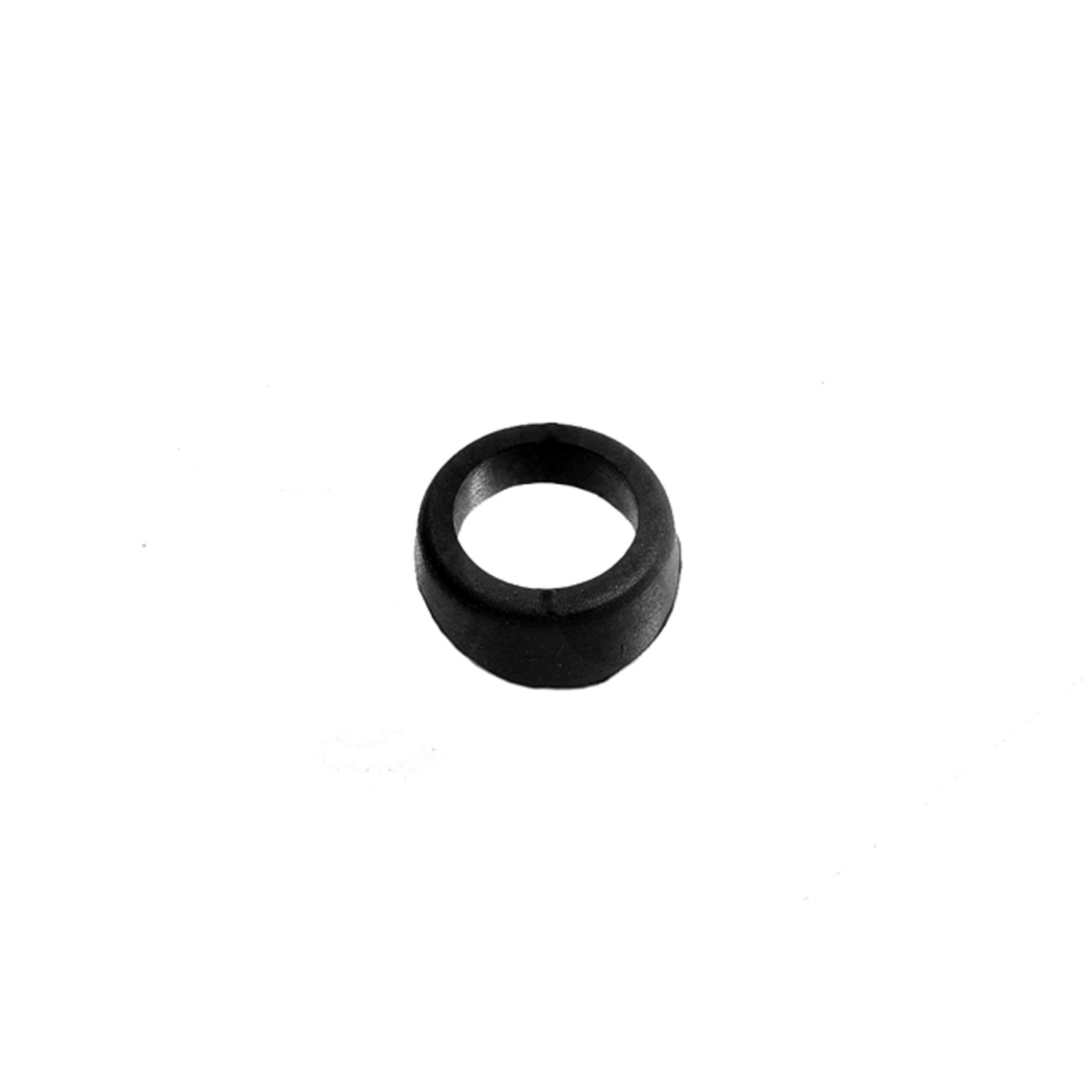 1953 Ferrari 195 Mirror Base Pad. 3/4" I.D., 1-1/4" O.D. Each-MB 31Mirror Base Pad. 3/4" I.D., 1-1/4" O.D. Each
Why Choose Metro?
For over 100 years, Metro Moulded Parts has been the pinnacle of quality in classic car restoration parts. Our commitment to precision and authenticity in every component ensures a perfect fit and an OEM-level appearance.
- Expert Craftsmanship & Quality: Each part is a testament to our dedication to reliability and perfection, crafted from original designs and thoroughly tested.
- Advanced Technology: We use cutting-edge techniques to create flawless, long-lasting parts that surpass others in performance.
- SuperSoft Sponge – The Ultimate Door Seal: Not only are our door seals 30% softer than competitors', but they're also guaranteed to never leak. They effectively reduce wind and road noise, enhancing your classic car's comfort and driving experience.
- Proudly American: Our parts are a product of American craftsmanship, made in the USA with a spirit of excellence and heritage.
- Unrivaled Warranty: We back our products with a 30-year industry-leading warranty, a testament to our confidence in their quality.
Join us in preserving the legacy of classic cars with parts that are crafted for perfection, not just made.