

Image of 1956 Ferrari 250 Gt, Note: These illustrations use artistic license and may differ from actual historical models.
Performance Metrics
Fundamental Metrics
Emotional Appeal
MMP Rating
| Engine Specifications | |
|---|---|
| Engine: | 3.0L V12 |
| Displacement: | 2953 cc |
| Horsepower: | 220-240 HP |
| Torque: | Estimated at 240 Nm |
| Compression Ratio: | 8.5:1 |
| Ignition System: | Coil ignition |
| Cooling System: | Water-cooled |
| Performance Specifications | |
| 0-60 Time: | Estimated at around 6 seconds |
| 1/4 Mile Time: | Information not available |
| Top Speed: | 140 mph |
| Transmission and Drive | |
| Drive Type: | Rear-wheel drive |
| Transmission Type: | 4-speed manual |
| Fuel and Efficiency | |
| Fuel System Type: | Triple Weber carburetors |
| MPG: | Information not available |
| Dimensions and Brakes | |
| Brakes: | Drum brakes |
| Wheelbase: | 2600 mm |
| Weight: | Estimated at around 1200 kg |
Note: Specifications for classic cars are given to the best of our ability, considering the limited and variant data available.
1956 Ferrari 250 GT: A Road Car with Racing DNA
The 1956 Ferrari 250 GT was not one single, fixed specification. It was part of a growing family of grand touring Ferraris, built in several body styles and tuned for different drivers, from fast-road touring enthusiasts to serious competitors. At its heart was a compact, high-revving V12 that helped establish the 250 GT as one of Ferrari’s defining models.
Ferrari, founded by Enzo Ferrari in Maranello, Italy, had built its reputation through racing before expanding into road cars. The 250 GT brought those worlds together: it offered enough comfort for long-distance travel while retaining the performance and engineering character of the marque’s competition machines. One especially notable member of the family was the 250 GT Berlinetta “Tour de France,” which won the 1956 Tour de France Automobile, a demanding road race and rally, not the famous bicycle event.
Because “1956 Ferrari 250 GT” can refer to different versions, details such as horsepower, top speed, bodywork and value vary considerably. The figures below are best understood as representative ranges rather than one universal specification.
Elegant Lines, Purposeful Engineering
The 250 GT’s appearance depended on its body style, but the family shared a distinctly Italian balance of elegance and purpose. Long, rounded front fenders flowed into a low nose, while the cabin sat well back on the chassis. Many cars had a prominent oval grille, delicate chrome detailing and slim pillars that gave the greenhouse a light, airy look. The racing Berlinettas were more compact and purposeful, with a fastback roof and a close-cropped tail shaped for speed.
Several coachbuilders contributed to the 250 GT story. Pinin Farina designed elegant coupes and cabriolets, while Carrozzeria Boano and, later, Carrozzeria Ellena built early coupe bodies. Scaglietti was closely associated with the lightweight Berlinettas. Details could differ from car to car, reflecting both the coachbuilder and the individual customer’s specifications.
Inside, the 250 GT was a hand-finished grand tourer rather than a mass-produced car. Depending on the example, owners could find leather upholstery, a wood-rimmed steering wheel, clear round instruments and carefully finished metal trim. The cabin was handsome and relatively simple by modern luxury-car standards. Comfort and craftsmanship mattered, but the priority was still the driving experience, and the racing versions made few concessions to plushness.
Ferrari offered cars in a wide range of colors through custom ordering. Rosso corsa, or racing red, is the most instantly recognizable choice today, but period Ferraris also appeared in shades of blue, silver, white, black and other colors. Original colors and documented paint history can be important considerations for collectors.
Boano, Ellena and the Tour de France Berlinetta
Three important 250 GT forms help explain the variety of the 1956 range. The Boano coupe was an elegant, relatively comfortable grand tourer. When production shifted to Ellena, the coupe design received detail changes, including a higher roofline on many examples that made the cabin more practical. The exact specification varied, so an individual car’s chassis records are essential for confirming its identity and history.
The most celebrated sporting version was the 250 GT Berlinetta, later widely known as the Tour de France or TdF. Its fastback body, lighter construction and competition focus made it the iconic choice for customers who wanted a road-legal Ferrari with genuine racing potential. The TdF name came from its success in the Tour de France Automobile. Ferrari built roughly 77 examples across the production run, with variations in body details and competition specification.
The 250 GT Cabriolet is also part of the broader story, but the production Series I cabriolet followed in 1957. It should not be confused with the Berlinettas and coupes commonly associated with 1956.
Why the 250 GT Mattered
The 250 GT helped define the modern high-performance grand touring car: a powerful engine up front, a refined two-seat cabin, and the ability to cover long distances at speed. Ferrari was not the only manufacturer building fast GTs, but the 250 combined a competition-derived V12 with Italian coachbuilt design in a way that made the formula especially compelling.
Its significance was not just stylistic. The 250 GT gave Ferrari a successful road-car platform that could be adapted for different customers and racing needs. The Berlinetta’s competition achievements helped prove that a customer-oriented GT could also be a serious weapon in endurance events and road races. The broader 250 lineage became a benchmark for later Ferraris and helped cement the company’s reputation for combining speed, craftsmanship and exclusivity.
Unlike a purpose-built race car, a 250 GT could be driven on public roads. Unlike a conventional luxury coupe, it carried the sound and character of a racing-bred V12. That dual personality set it apart from many contemporaries.
V12 Performance and Road Manners
Power came from Ferrari’s Colombo-designed, 60-degree V12, displacing approximately 2,953cc. In 250 GT road cars, output commonly fell in the region of 220 to 240 horsepower, depending on the version and state of tune. The engine used three Weber carburetors in many specifications, along with twin overhead camshafts per bank. A four-speed manual gearbox was typical, and later cars received a five-speed transmission.
Performance figures vary by body, gearing, tune and period testing. A well-sorted 250 GT Berlinetta could reach roughly 150 to 155 mph, while heavier or less competition-focused coupes were generally slower. A representative 0-to-60-mph time is around 6.5 to 8 seconds. These are estimates, not a single factory figure applicable to every 1956 car.
On a smooth road, the Ferrari feels alert and eager. The V12 builds power with a smooth, rising rush, accompanied by a distinctive mechanical snarl that sharpens as the revs climb. The steering is direct by period standards, and the driver remains closely involved through the manual gearbox, clutch and unassisted controls.
On winding roads, a healthy car rewards a measured driving style. Its balance and responsive engine make it enjoyable through flowing corners, while the period suspension and narrow tires demand respect on uneven surfaces. Bumps can unsettle the chassis more than they would in a modern car, and the brakes and steering require more effort. The experience is involving rather than effortless, especially in a lightweight competition Berlinetta.
Living with a 1956 Ferrari 250 GT
Today, most 250 GTs are cherished collector cars, show entries or carefully maintained touring machines. A few continue to take part in historic rallies and vintage events, where their period performance and competition heritage are part of the appeal. Using one as a daily driver is possible in theory, but it is uncommon and usually impractical given the car’s value, age and maintenance needs.
Maintenance requires specialist knowledge and careful sourcing of parts. The V12 is a sophisticated engine, and correct work demands experience with period Ferrari mechanicals, carburetor setup, ignition and lubrication. Routine service is not beyond a skilled mechanic, but major repairs are not a realistic do-it-yourself project for most owners. Originality, matching numbers, documented history and the quality of past restoration all affect both ownership costs and market value.
Reliability is closely tied to condition and upkeep. A properly restored and regularly exercised car can be a rewarding touring companion, but an old Ferrari that has sat unused may need substantial recommissioning. Buyers generally rely on marque specialists for a thorough inspection before purchase.
Racing Lore and Other Fascinating Details
The 1956 Tour de France Automobile victory by a Ferrari 250 GT Berlinetta gave the model its enduring TdF nickname. The Berlinetta went on to win the event in subsequent years, helping build a reputation for Ferrari’s GT racers across a variety of demanding stages and road conditions.
Production numbers depend on which 250 GT version is being counted. Commonly cited totals are about 68 Boano coupes, around 50 Ellena coupes and roughly 77 Tour de France Berlinettas, though published counts can differ according to how transitional cars and specifications are classified. These figures cover production runs that extended beyond 1956, not cars built in that calendar year alone.
One frequent criticism is that the 250 GT can be demanding to own. The cabin is warm and snug by modern standards, the controls are heavy, and restoration or mechanical work can be costly. Its rarity also means that even routine-looking parts may require specialist attention. Those drawbacks are part of the trade-off for a hand-built Ferrari with genuine period competition credentials.
Collector Values and Availability
There is no single current value for a “1956 Ferrari 250 GT” because the body style, chassis history, originality and competition record make an enormous difference. As a broad guide, an early road-going coupe might fall roughly in the $1.5 million to $3.5 million range, depending on condition and provenance. A desirable Tour de France Berlinetta can command approximately $8 million to $15 million or more, with exceptional competition history potentially pushing a car beyond that range. These are indicative estimates, not appraisals, and individual sales can vary sharply.
Only a small number of early 250 GTs come to market, and the most desirable Berlinettas are especially scarce. Prices for top-tier Ferraris have risen substantially over the long term, although the market can cool, and cars do not all appreciate at the same rate. Provenance, originality and quality of restoration can matter more than broad market trends. For buyers, expert verification and a condition survey are essential.
A Ferrari That Made the GT a Legend
The 1956 Ferrari 250 GT brought together a smooth Colombo V12, beautifully crafted Italian bodywork and real competition ability. Its many forms ranged from elegant coupes to the focused Tour de France Berlinetta, giving the model a breadth that few rivals could match.
More than a collectible, the 250 GT represents a turning point in Ferrari’s road-car history: a car that could cross a continent in comfort, then line up for a race with serious intent. Its lasting appeal lies in that rare combination of grace, speed and unmistakable Ferrari character.
1956 Ferrari 250 Gt Catalog of Parts
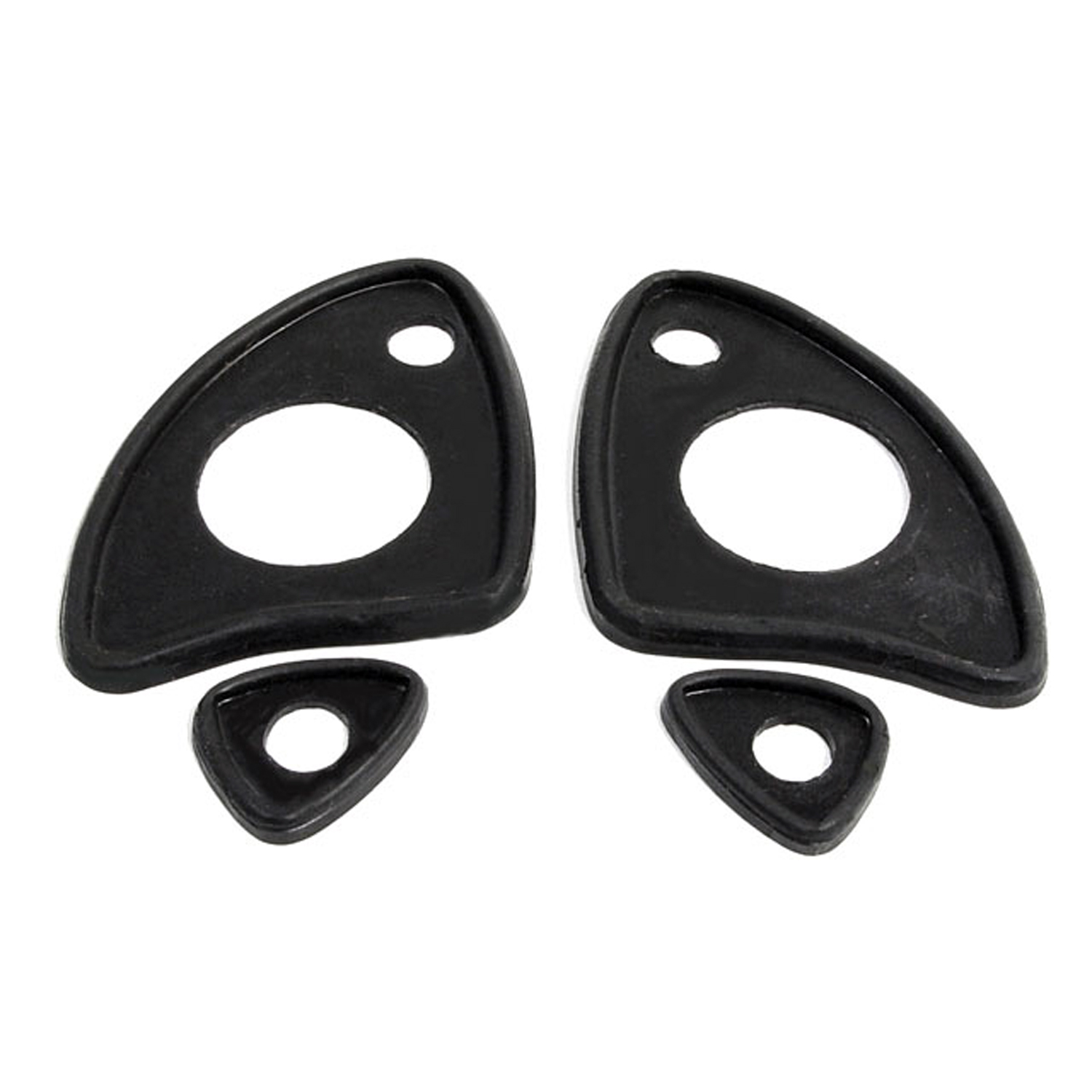 1956 Ferrari 250 GT Door Handle Pads. 2-5/8" long & 1" long. Set R&L-MP 669-ADoor Handle Pads. 2-5/8" long & 1" long. Set R&L
Why Choose Metro?
For over 100 years, Metro Moulded Parts has been the pinnacle of quality in classic car restoration parts. Our commitment to precision and authenticity in every component ensures a perfect fit and an OEM-level appearance.
- Expert Craftsmanship & Quality: Each part is a testament to our dedication to reliability and perfection, crafted from original designs and thoroughly tested.
- Advanced Technology: We use cutting-edge techniques to create flawless, long-lasting parts that surpass others in performance.
- SuperSoft Sponge – The Ultimate Door Seal: Not only are our door seals 30% softer than competitors', but they're also guaranteed to never leak. They effectively reduce wind and road noise, enhancing your classic car's comfort and driving experience.
- Proudly American: Our parts are a product of American craftsmanship, made in the USA with a spirit of excellence and heritage.
- Unrivaled Warranty: We back our products with a 30-year industry-leading warranty, a testament to our confidence in their quality.
Join us in preserving the legacy of classic cars with parts that are crafted for perfection, not just made.