
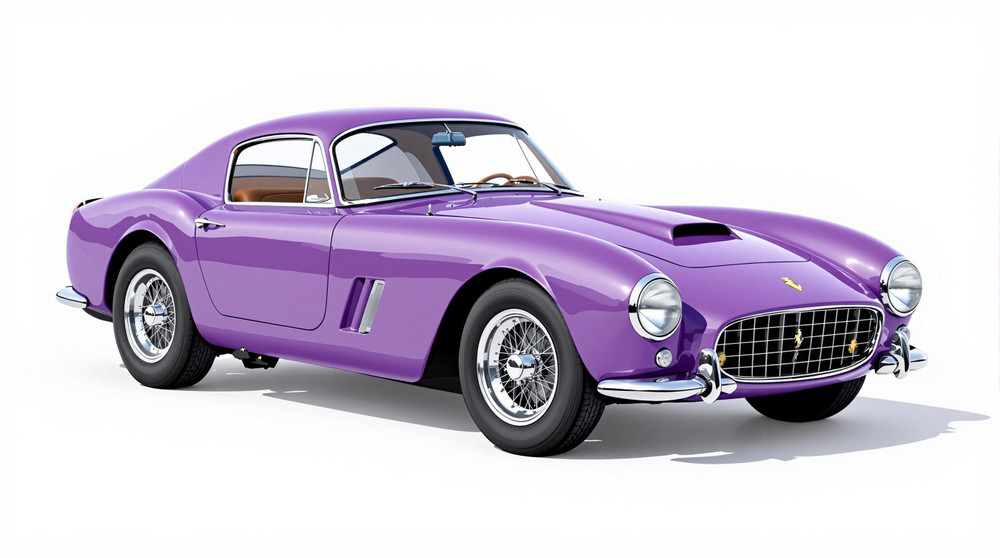
Image of 1957 Ferrari 250 Gt, Note: These illustrations use artistic license and may differ from actual historical models.
Performance Metrics
Fundamental Metrics
Emotional Appeal
MMP Rating
| Engine Specifications | |
|---|---|
| Engine: | 3.0L V12 |
| Displacement: | 2953cc |
| Horsepower: | 240-260 hp |
| Torque: | Estimated 240 lb-ft |
| Compression Ratio: | 9.2:1 |
| Ignition System: | Twin Ignition Coil |
| Cooling System: | Water-cooled |
| Performance Specifications | |
| 0-60 Time: | 6 seconds |
| 1/4 Mile Time: | Estimated 14 seconds |
| Top Speed: | 150 mph |
| Transmission and Drive | |
| Drive Type: | Rear Wheel Drive |
| Transmission Type: | 4-speed manual |
| Fuel and Efficiency | |
| Fuel System Type: | Triple Weber Carburetors |
| MPG: | Estimated 12-15 mpg (very dependent on driving conditions) |
| Dimensions and Brakes | |
| Brakes: | Drum brakes |
| Wheelbase: | 102.3 inches |
| Weight: | 2,646 lbs |
Note: Specifications for classic cars are given to the best of our ability, considering the limited and variant data available.
1957 Ferrari 250 GT: A Road Car with Racing DNA
The 1957 Ferrari 250 GT could cross a continent in style, then arrive with the unmistakable pedigree of a racing thoroughbred. It was not one single specification but part of a growing family of grand touring Ferraris, built by Ferrari in Maranello, Italy, and bodied by celebrated coachbuilders including Pinin Farina, Scaglietti, Boano and Ellena.
At the heart of the family was Gioacchino Colombo’s 2,953 cc V12, the engine that helped turn the 250 name into one of Ferrari’s most famous badges. In 1957, the range included elegant road coupes and cabriolets, the competition-bred 250 GT Berlinetta “Tour de France,” and the glamorous California Spider. One especially compelling detail: the Tour de France Berlinetta earned its name through success in the French stage race, which it won four years running from 1956 to 1959.
That breadth is important when discussing a “1957 250 GT.” Performance, styling, production totals and values vary considerably by body style and specification. The figures below are useful period estimates, not one universal set of specifications for every car.
Coachbuilt Style and Hand-Finished Luxury
The 250 GT’s shape depended on who built its body. Pinin Farina’s coupes typically wore clean, restrained lines, with a long bonnet, a compact cabin and a rounded tail. Boano and Ellena versions had their own subtle differences in roofline, glazing and trim. The racing Berlinetta was lower and more purposeful, while the California Spider paired open-air glamour with a distinctly sporting stance.
Inside, the car balanced competition-minded simplicity with Italian craftsmanship. Owners could expect leather upholstery, carefully finished trim, deep carpeting and a wood-rimmed steering wheel. Instrument layouts varied, but the large, legible gauges put engine speed and essential information in the driver’s line of sight. Compared with a modern car, the cabin was intimate and relatively spare. Compared with a race car, it was a luxurious place to spend a long day on the road.
Ferrari’s bespoke approach meant that paint and trim were often selected for the individual buyer rather than from a rigid, modern-style catalog. Rosso Corsa is the color most closely associated with the marque, but dark blue, silver, black, cream and other custom finishes suited the 250 GT’s elegant proportions. Red is the iconic choice today, though original, documented colors can be especially significant to collectors.
The most memorable body styles include the Tour de France Berlinetta, the California Spider and the Pinin Farina-designed coupes. The Berlinetta is the sharpest expression of the car’s racing character; the California Spider is arguably the most instantly recognizable open version. Ferrari’s coachbuilt production also means that two cars carrying the 250 GT name can look and feel noticeably different.
Engineering Ahead of Its Time
The 250 GT used a tubular steel chassis and Ferrari’s compact Colombo V12, generally fitted with a single overhead camshaft per cylinder bank. Depending on version and tune, the engine produced roughly 240 to 260 horsepower. A four-speed manual gearbox sent power to the rear wheels. The combination was sophisticated for a road-going grand tourer: a relatively light, high-revving engine in a chassis developed with competition firmly in mind.
Suspension and braking remained more traditional than the car’s engine. The front used independent suspension, while the rear relied on a live axle. Four-wheel hydraulic drum brakes were typical for the period. These systems were effective in their day, but they require more anticipation and maintenance than modern disc brakes and independent rear suspension.
What set the 250 GT apart was not one isolated invention. It was Ferrari’s ability to combine racing-derived performance with a car that could be trimmed, bodied and driven as a road-going grand tourer. That formula influenced generations of performance cars: a serious engine, a capable chassis and enough comfort to make speed useful beyond the racetrack.
V12 Performance and Road Manners
Performance depended on bodywork, gearing, engine tune and condition. Period and modern reference figures commonly place a well-sorted 250 GT at roughly 145 to 155 mph at the top end. A 0-to-60 mph time in the neighborhood of 6 to 8 seconds is a reasonable estimate, with lighter or more highly tuned versions generally quicker. These are broad figures for a varied family, not guaranteed results for every 1957 example.
On a winding road, the car rewards a driver who works with the gearbox and keeps the V12 in its useful rev range. Steering is direct by period standards, but it is not assisted, and the driver feels the weight of the car through the wheel. The live rear axle can react sharply to rough surfaces, so broken pavement calls for a steady hand rather than modern-car complacency. On smoother roads, the 250 GT settles into the kind of fast, flowing rhythm its grand touring role suggests.
The engine is central to the experience. It starts with a mechanical bark, then builds into a smooth, rising V12 howl as the revs climb. The manual shift, clutch and unassisted controls keep the driver involved at every speed. It is not effortless in the modern sense; it is rewarding because the driver is part of the machinery.
A Grand Tourer, a Racer and a Weekend Treasure
The 250 GT was conceived for road use, and many versions were built to cover distance in comfort. The lighter Berlinettas also competed, while the open California Spider offered a more glamorous way to enjoy the same basic sporting character. Today, most examples are prized collector cars, used for concours events, carefully planned tours and historic racing where their specification and provenance allow.
Maintenance is specialist work. The V12 is beautifully engineered, but it has twelve cylinders, multiple carburetors and period systems that need knowledgeable attention. A buyer should plan for careful inspection, regular servicing and access to a Ferrari specialist familiar with Colombo engines. Repairs are not generally a practical do-it-yourself project for the average owner, and parts, skilled labor and restoration can be expensive.
Reliability depends heavily on upkeep and use. A correctly maintained car can be driven, but long storage, improper tuning or neglected cooling and lubrication systems can turn a short outing into a costly repair. These cars are not disposable showpieces, yet treating one as an everyday commuter would be an impractical and risky choice. Their best modern use is usually selective driving by an attentive owner.
Racing History and 250 GT Trivia
The Tour de France Berlinetta’s four consecutive Tour de France Automobile victories helped establish the 250 GT name as more than a styling exercise. Its competition record demonstrated that a road-based grand tourer could be adapted into a formidable event car. It should not be confused with the 250 Testa Rossa, a separate Ferrari racing model associated with major sports-car victories, including Le Mans.
Another common source of confusion is the California Spider’s connection with pop culture. The famous Ferrari featured in the film Ferris Bueller’s Day Off was a replica, not an original California Spider. The real model remains highly sought after, but its film appearance is not evidence that a particular 1957 car has movie provenance.
Collectors also prize the fact that bodywork, trim and mechanical details can identify a car’s specific coachbuilder and production series. That individuality is part of the appeal, but it can complicate restoration: replacing an unusual feature with a more familiar one may make the car less historically correct. A frequent criticism is that the 250 GT’s drum brakes, firm ride and unassisted controls feel dated beside later classics. For many enthusiasts, those same traits are part of its honest, involving character.
Rarity, Values and Collector Demand
There is no single production total for “the 1957 Ferrari 250 GT,” because the name covers several distinct models and coachbuilt versions. As useful estimates, roughly 98 Boano and Ellena coupes are often cited together, while about 77 Tour de France Berlinettas are commonly reported across their production series. Around 40 Series I 250 GT Cabriolets were built, and approximately 106 California Spiders were made across the model’s longer production run. Only a portion of each total dates specifically to 1957, and published counts can differ according to how variants are classified.
Availability is extremely limited. A sale may not appear for years for a particular body style, specification or level of originality. Condition, matching numbers, coachbuilder, competition history, restoration quality and documented ownership all have major effects on price.
As broad 2026-era market estimates in U.S. dollars, a well-presented Boano or Ellena coupe might fall around $1.5 million to $3.5 million. A Tour de France Berlinetta can range from roughly $4 million to more than $10 million, with exceptional competition history potentially pushing a car higher. California Spiders often command approximately $10 million to $20 million or more, depending on specification and provenance. These are indicative ranges, not appraisals; individual auction results can sit well outside them.
Over the long term, the 250 GT has generally appreciated as the supply of original cars has remained fixed and demand for important Ferraris has stayed strong. The market is not immune to economic cycles, and highly restored cars do not always perform like exceptional, well-documented examples. Even so, the model’s history, design and V12 character give it durable collector appeal.
Why the 1957 Ferrari 250 GT Still Matters
The 1957 Ferrari 250 GT brought together Italian coachbuilt design, a charismatic Colombo V12 and a chassis with genuine competition credentials. Its different versions offered everything from understated grand touring to open-top glamour and focused racing performance. That variety is why it is best understood as a remarkable family of cars rather than one fixed specification.
More than a beautiful classic, the 250 GT helped define Ferrari’s identity as a maker of cars that could be both fast and deeply desirable. Its greatest legacy is the way it makes those two ideas feel inseparable: a hand-built grand tourer with a racer’s heart and a voice no modern car can quite reproduce.
1957 Ferrari 250 Gt Catalog of Parts
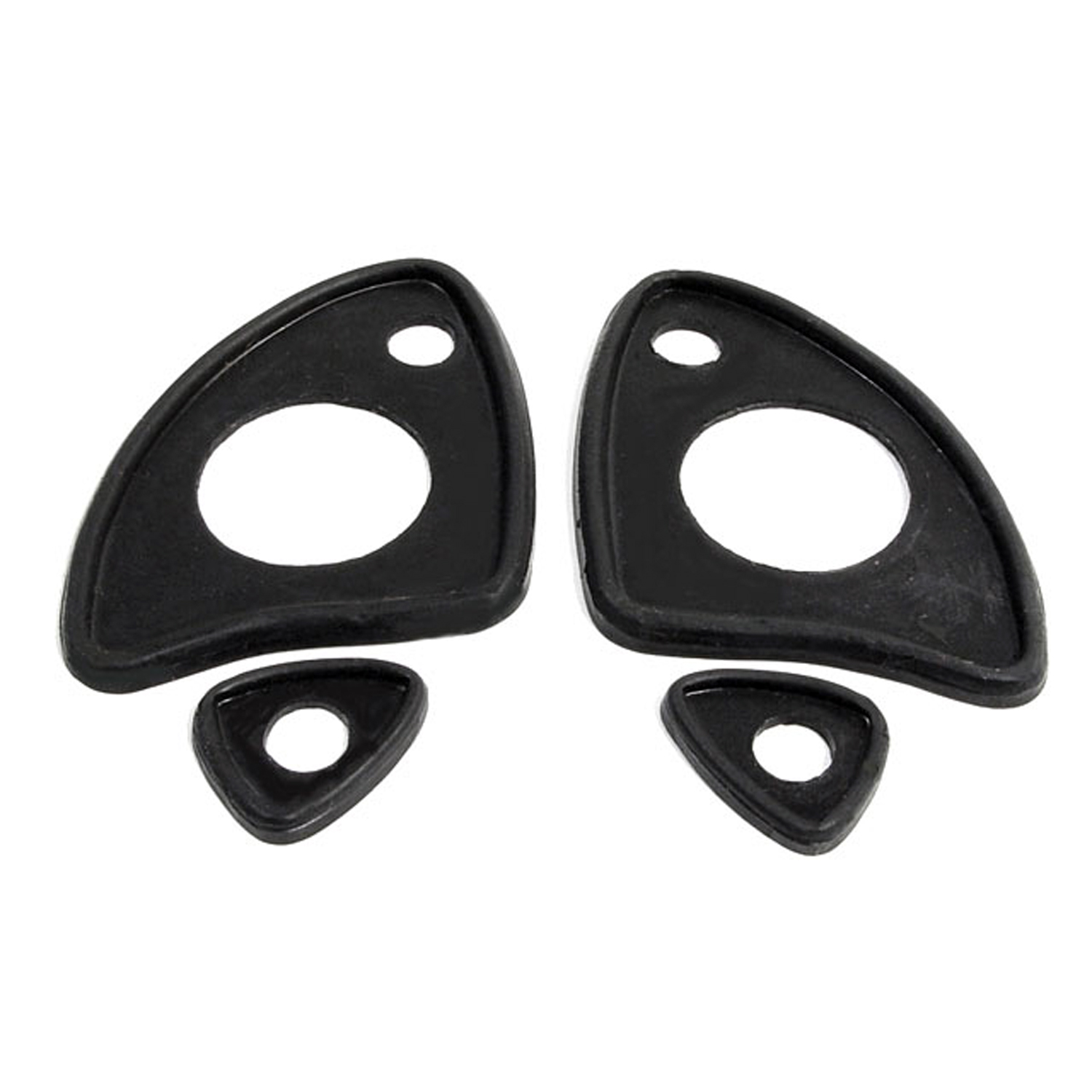 1957 Ferrari 250 GT Door Handle Pads. 2-5/8" long & 1" long. Set R&L-MP 669-ADoor Handle Pads. 2-5/8" long & 1" long. Set R&L
Why Choose Metro?
For over 100 years, Metro Moulded Parts has been the pinnacle of quality in classic car restoration parts. Our commitment to precision and authenticity in every component ensures a perfect fit and an OEM-level appearance.
- Expert Craftsmanship & Quality: Each part is a testament to our dedication to reliability and perfection, crafted from original designs and thoroughly tested.
- Advanced Technology: We use cutting-edge techniques to create flawless, long-lasting parts that surpass others in performance.
- SuperSoft Sponge – The Ultimate Door Seal: Not only are our door seals 30% softer than competitors', but they're also guaranteed to never leak. They effectively reduce wind and road noise, enhancing your classic car's comfort and driving experience.
- Proudly American: Our parts are a product of American craftsmanship, made in the USA with a spirit of excellence and heritage.
- Unrivaled Warranty: We back our products with a 30-year industry-leading warranty, a testament to our confidence in their quality.
Join us in preserving the legacy of classic cars with parts that are crafted for perfection, not just made.