

Image of 1958 Ferrari 250 Gt, Note: These illustrations use artistic license and may differ from actual historical models.
Performance Metrics
Fundamental Metrics
Emotional Appeal
MMP Rating
| Engine Specifications | |
|---|---|
| Engine: | V12 |
| Displacement: | 2953cc |
| Horsepower: | 240-260 HP |
| Torque: | 200 lb-ft |
| Compression Ratio: | 9.2:1 |
| Ignition System: | Coil ignition |
| Cooling System: | Water-cooled |
| Performance Specifications | |
| 0-60 Time: | 6-7 seconds |
| 1/4 Mile Time: | 14-15 seconds |
| Top Speed: | 140-150 mph |
| Transmission and Drive | |
| Drive Type: | Rear-wheel drive |
| Transmission Type: | 4-speed manual |
| Fuel and Efficiency | |
| Fuel System Type: | Triple Weber carburetors |
| MPG: | Estimated 10-12 MPG (due to the age and type of the vehicle, this is a rough estimate) |
| Dimensions and Brakes | |
| Brakes: | Drum brakes |
| Wheelbase: | 102.3 inches |
| Weight: | 2,646 lbs |
Note: Specifications for classic cars are given to the best of our ability, considering the limited and variant data available.
1958 Ferrari 250 GT: The Road Ferrari That Became a Legend
The 1958 Ferrari 250 GT could turn a quiet country road into a grand prix stage, with a sonorous V12 under its long bonnet and coachwork shaped by some of Italy’s finest designers. Built by Ferrari in Maranello, the 250 GT was not one single body style or specification. It was a family of road and competition cars united by a 3.0-liter V12 and a place at the center of Ferrari’s rise as a maker of both race winners and coveted road cars.
By the late 1950s, Ferrari was moving beyond its earliest, largely hand-built production cars. The 250 GT helped the company serve a growing market of wealthy drivers who wanted a Ferrari they could use on public roads, while retaining the engineering and sporting character of the marque. One memorable measure of the family’s racing credentials: Ferrari 250 GT Berlinettas won the Tour de France Automobile repeatedly, including the 1958 event, demonstrating that a road-going GT could be a serious competition car.
The name “1958 Ferrari 250 GT” can refer to several distinct models, from elegant Pinin Farina coupes to lightweight competition Berlinettas and open-top California Spiders. Their performance, rarity, and value vary dramatically, so identifying the specific version is essential.
Italian Coachwork and a Purposeful Cabin
The 250 GT’s styling depended on its coachbuilder, but the family shared a recognizable Ferrari profile: a long, low bonnet, a compact cabin set well back, and a rounded tail. Pinin Farina’s production coupe was restrained and refined, with smooth flanks and a formal roofline. The Tour de France Berlinetta looked more purposeful, with a lower, tighter body designed to reduce weight and perform at speed. The California Spider paired the same basic sporting spirit with an open cockpit and a more glamorous, sun-ready silhouette.
Inside, the 250 GT was luxurious by the standards of a sports car of its day, though it was not built like a modern high-end limousine. Depending on the model and original specification, the cabin could feature leather upholstery, a wood-rimmed steering wheel, clear Jaeger instruments, and carefully finished metal trim. The driving position was low, and the prominent gauges and large steering wheel put the emphasis on driving rather than convenience.
Ferrari buyers could often specify colors and details to suit their tastes. Rosso Corsa remains the most immediately recognizable choice, but period cars also appeared in dark blue, silver, black, cream, and other colors. Paint and trim combinations varied, and original color documentation can make a major difference to a collector’s view of a car today.
Body styles included the Pinin Farina coupe, the competition-focused Berlinetta, the open California Spider, and the Pinin Farina Cabriolet. The elegant coupe was the more practical grand tourer, while the Tour de France Berlinetta is often considered the most iconic choice for enthusiasts drawn to racing history. The California Spider is the family’s most glamorous open car and among its most valuable versions.
Engineering That Bridged Road and Race
At the heart of the 250 GT was Ferrari’s Colombo-designed V12, with a displacement of 2,953 cc. In 250 GT road-car form, output was generally around 240 horsepower, though tuning, carburetion, and model specification affected the figure. The engine used a single overhead camshaft per bank and, in many versions, multiple Weber carburetors. Power went through a manual gearbox to a live rear axle, with a tubular steel chassis beneath the body.
That combination was characteristic of the period: sophisticated engine design paired with relatively straightforward chassis hardware. The 250 GT did not rely on modern electronic aids or independent rear suspension. Its appeal came from the V12’s smooth power delivery, a well-balanced chassis, and the ability to cover long distances quickly. Braking equipment and other details varied by model and year; many 1958 road cars used drum brakes, while later developments in the 250 GT line brought disc brakes to the fore.
The 250 GT helped define the high-performance grand tourer. It showed that a Ferrari could be both a usable road car and a credible foundation for competition, rather than a racing machine made comfortable only as an afterthought. Its mix of hand-finished bodywork, compact V12 power, and race-bred character became a template that influenced later Ferrari GTs and the broader idea of the European grand tourer.
V12 Performance and Road Manners
Performance figures depend on the exact 250 GT version, its tune, and its condition. A typical road-going car could reach roughly 140 mph, while more competition-oriented Berlinettas were capable of around 150 mph or more in suitable specification. Period-style estimates for 0 to 60 mph generally fall in the neighborhood of six to eight seconds. These are approximate figures, not a single factory specification shared by every car wearing the 250 GT name.
On a smooth, winding road, a well-sorted 250 GT feels agile and communicative. The steering is unassisted, so it asks for more effort at parking speeds but gives the driver a direct sense of the front tires once underway. The manual gearbox rewards deliberate shifts, and the naturally aspirated V12 pulls with an increasingly urgent, metallic song as the revs rise.
Its vintage suspension and live rear axle make rough surfaces a different story. Broken pavement can unsettle the car more than it would a modern grand tourer, and the ride is firm rather than plush. On a fast, open road, however, the 250 GT feels composed and purposeful. The experience is physical: the driver works the steering, listens to the engine, and stays engaged with the car rather than being insulated from it.
Owning a 1958 Ferrari 250 GT
Today, most 250 GTs are cherished as collector cars, shown at concours events, or driven on carefully chosen rallies and tours. Some examples still take part in historic racing, particularly competition Berlinettas, but regular commuting is unusual. Their value, rarity, and specialist mechanical needs make routine daily use a demanding proposition.
Maintenance calls for a mechanic familiar with vintage Ferraris. The V12 is a finely engineered unit, and correct carburetor setup, ignition timing, cooling-system care, and regular servicing matter. Parts and expertise are available through specialist networks, but costs can be substantial. Repairs are not generally a realistic do-it-yourself project for the average owner, especially when the car has complex restoration needs or rare, model-specific components.
Provenance is just as important as mechanical condition. Original bodywork, matching numbers where applicable, documented history, and a high-quality restoration can strongly affect desirability. A car that looks similar in photographs may differ greatly in authenticity, specification, and market value.
Production Numbers, Trivia, and Collecting
There is no single production total for the “1958 Ferrari 250 GT,” because the name covers several models and production periods. As a guide to the scale of the family, approximately 353 Pinin Farina coupes were built across their production run, while the long-wheelbase California Spider is generally estimated at about 50 cars. The Series I Pinin Farina Cabriolet is often put at roughly 40 examples, and around 77 Tour de France Berlinettas are commonly cited, depending on how transitional cars are counted. These are model-family totals, not the number built in 1958 alone.
The California Spider has its own celebrity history. Actor James Coburn owned a 1961 example that sold at auction in 2008 for about $10.9 million. That car was not a 1958 model, but its sale helped illustrate the extraordinary demand for the rarest 250 GT variants. The family’s broader racing record, including its Tour de France successes, is another reason these cars are prized beyond their styling and performance.
Collectors should also be alert to common misunderstandings. “250 GT” does not identify a single body or equipment package, and a standard road coupe should not be valued like a competition Berlinetta or a California Spider. Nor does every car with a famous body style have a competition history. Claims about original specification and racing provenance should be supported by reliable documentation.
1958 Ferrari 250 GT Values and Availability
Only a small number of 1958 examples come to market, and the exact model makes an enormous difference to price. As broad estimates in today’s collector market, a Pinin Farina coupe might fall around $1 million to $2.5 million, while a Cabriolet could bring roughly $2 million to $4 million. A Tour de France Berlinetta may reach approximately $5 million to $10 million or more, with exceptional competition history potentially pushing it higher. A California Spider can command about $15 million to $25 million or more, especially when its provenance and originality are exceptional.
These ranges are estimates, not guaranteed sale prices. Condition, restoration quality, originality, history, and market timing can move the value substantially. Cars of this caliber are scarce and often trade privately, so public auction results provide only part of the picture. The rarest, best-documented examples have generally remained highly desirable over the long term, although even blue-chip classics can experience quieter periods and price fluctuations.
A Ferrari That Made the Grand Tourer Great
The 1958 Ferrari 250 GT brought together a charismatic Colombo V12, elegant Italian coachwork, and the sporting ability to earn respect in competition. Its many forms offered different expressions of the same idea: a Ferrari could be fast and beautiful, but also capable of carrying its owner across a continent.
More than a collectible badge, the 250 GT is a landmark in the evolution of the grand touring car. Hear one of its V12s wind through the gears on an open road, and its significance becomes wonderfully clear: this is a Ferrari built not just to be admired, but to make every mile feel like an occasion.
1958 Ferrari 250 Gt Catalog of Parts
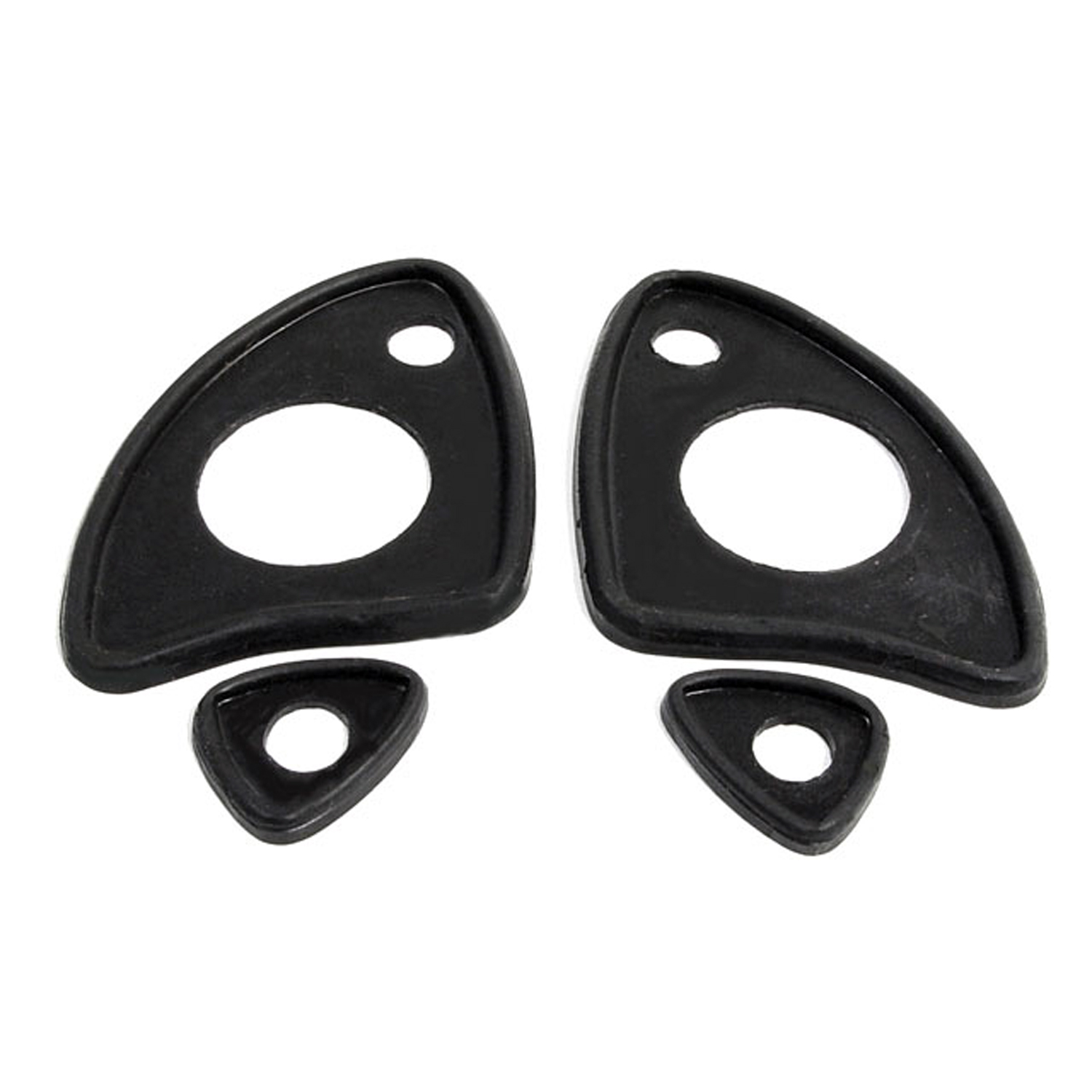 1958 Ferrari 250 GT Door Handle Pads. 2-5/8" long & 1" long. Set R&L-MP 669-ADoor Handle Pads. 2-5/8" long & 1" long. Set R&L
Why Choose Metro?
For over 100 years, Metro Moulded Parts has been the pinnacle of quality in classic car restoration parts. Our commitment to precision and authenticity in every component ensures a perfect fit and an OEM-level appearance.
- Expert Craftsmanship & Quality: Each part is a testament to our dedication to reliability and perfection, crafted from original designs and thoroughly tested.
- Advanced Technology: We use cutting-edge techniques to create flawless, long-lasting parts that surpass others in performance.
- SuperSoft Sponge – The Ultimate Door Seal: Not only are our door seals 30% softer than competitors', but they're also guaranteed to never leak. They effectively reduce wind and road noise, enhancing your classic car's comfort and driving experience.
- Proudly American: Our parts are a product of American craftsmanship, made in the USA with a spirit of excellence and heritage.
- Unrivaled Warranty: We back our products with a 30-year industry-leading warranty, a testament to our confidence in their quality.
Join us in preserving the legacy of classic cars with parts that are crafted for perfection, not just made.