

Image of 1948 Fiat 500, Note: These illustrations use artistic license and may differ from actual historical models.
Performance Metrics
Fundamental Metrics
Emotional Appeal
MMP Rating
| Engine Specifications | |
|---|---|
| Engine Options: | Inline 4 |
| Displacement Range: | 569 cc |
| Horsepower Range: | 13 hp |
| Torque: | Estimated at 20 lb-ft |
| Compression Ratio: | 6.7:1 |
| Ignition System: | Coil ignition |
| Cooling System: | Air-cooled |
| Performance Specifications | |
| 0-60 Time: | Not available due to low horsepower |
| 1/4 Mile Time: | Not available due to low horsepower |
| Top Speed: | 59 mph |
| Transmission and Drive | |
| Drive Type: | Rear-wheel drive |
| Transmission Type: | 4-speed manual |
| Fuel and Efficiency | |
| Fuel System Type: | Carburetor |
| MPG: | Estimated at 40 mpg |
| Dimensions and Brakes | |
| Brakes: | Drum brakes |
| Wheelbase: | 78.7 inches |
| Weight: | 1100 lbs |
Note: Specifications for classic cars are given to the best of our ability, considering the limited and variant data available.
1948 Fiat 500 Topolino: Italy’s Little Mouse
The 1948 Fiat 500 made modest size feel like a big idea: it was an affordable, practical little car built for streets where space, fuel, and money were all in short supply. Better known as the Topolino, or “little mouse,” the Fiat 500 was designed in Italy by engineer Dante Giacosa and produced by Fiat. The 1948 version belongs to the short-lived 500B chapter of the original Topolino story, a car family that helped put motor transport within reach of ordinary drivers.
The Topolino first appeared in 1936, when Europe’s roads were still dominated by larger, more expensive cars. After wartime disruption, Fiat resumed production and updated the model for a new era. The 500B arrived in 1948 with a more modern overhead-valve engine, while the more visibly restyled 500C followed in 1949. That means a car described as a “1948 Fiat 500” is generally a 500B, though exact identification can depend on its build date and market.
One intriguing detail: the Topolino’s name means “little mouse” in Italian, and the tiny car became a familiar sight far beyond Italy. It was not the first small car, but its combination of compact dimensions, usable passenger space, and mass production made it an especially influential example of the European economy car.
Topolino Styling and Cabin
The 500B has the upright, purposeful look of a prewar design adapted to postwar life. Its rounded bonnet slopes toward a narrow front grille, flanked by separate headlamps. Pronounced front wings, small wheels, and a tall cabin give it a friendly, almost toy-like profile, but the detailing is functional rather than ornamental. A short wheelbase and slim body make the Fiat look perfectly suited to narrow city lanes.
Inside, the emphasis is on simplicity. The cabin is compact, with room for two adults in the standard saloon and limited space for luggage. Expect a straightforward dashboard, a large steering wheel, basic instruments, and simple controls. Materials were practical for an inexpensive car of the period: painted metal, modest trim, and durable upholstery rather than the plush finishes of a luxury saloon. Restored examples can look charmingly polished, but the original experience was firmly utilitarian.
Fiat offered the Topolino in several forms, including a two-door saloon, an open or cabriolet-style version, and commercial van variants. Estate-style versions were also produced, including the distinctive Giardiniera, which used a wood-framed body on some examples. Availability varied by year and market, and specialist coachbuilders added further variety. The saloon remains the most recognizable and commonly associated version.
Factory paint choices varied over the model’s run and by destination market. Period cars were commonly finished in restrained colors such as grey, cream, dark blue, and green. Today, carefully restored examples in pale cream or classic dark shades tend to suit the Topolino’s period character especially well, though original paint and documented colors matter more to collectors than fashion.
Small-Car Engineering with Big Consequences
The 500B’s most important update was under the bonnet. Its 569 cc, water-cooled inline-four gained an overhead-valve cylinder head, replacing the earlier 500A’s side-valve arrangement. The change improved breathing and raised output to roughly 16.5 horsepower, depending on the specification quoted. The engine remained front-mounted and drove the rear wheels through a manual gearbox, a conventional layout made unusually compact.
That modest engineering package was part of the Topolino’s achievement. Fiat did not simply shrink a large car. The company engineered a small vehicle around everyday needs, with a compact footprint and enough enclosed cabin space to make it useful in poor weather. The Topolino helped establish the idea that a small car could be a real family or work vehicle rather than a novelty.
Its influence is best understood as part of a longer Italian tradition of practical, space-conscious car design. The original Topolino was not the same car as the famous 1957 Fiat Nuova 500, which was rear-engined and radically different in layout. But the earlier 500 helped build Fiat’s expertise and reputation in compact motoring, preparing the way for the postwar small-car boom.
Performance and Road Manners
With around 16.5 horsepower moving a very light car, the 500B was designed for steady progress, not rapid acceleration. Period specifications commonly put top speed at roughly 95 km/h, or about 59 mph, when the car was in good condition. A modern, instrumented 0-to-60 mph figure is not generally available, and the Topolino is unlikely to reach 60 mph in ordinary use. A rough estimate would be well over 40 seconds, if it reaches that speed at all. Its meaningful performance measure is how easily it handles everyday roads at modest speeds.
The steering is direct and mechanical, with no power assistance, and the driver sits close to the controls. The narrow tyres and short wheelbase make the car nimble in town, while the modest engine rewards anticipation. Hills, headwinds, and fast traffic call for patience and careful gear selection. On bumpy roads, the compact chassis can feel busy, and its narrow track and lightweight body mean it is more comfortable at relaxed speeds than in modern high-speed traffic.
From behind the wheel, the engine’s little four-cylinder note is a central part of the experience: light, busy, and unmistakably old-fashioned. The car asks its driver to listen, plan, and work the gearbox rather than rely on power. That hands-on character is a large part of its appeal, though it also means modern road conditions can be demanding.
Living with a 1948 Fiat 500
Today, most Topolinos are used as show cars, weekend runabouts, or carefully maintained touring classics. A sound example can manage local roads and relaxed country drives, but it is not an ideal daily driver for modern commuting. Limited crash protection, low cruising speed, small brakes, and scarce original parts all deserve consideration before regular use.
Mechanically, the car is relatively straightforward by classic-car standards. The engine bay is accessible, and many jobs require basic tools and patience rather than specialist electronics. Owners should pay close attention to cooling-system condition, lubrication, ignition, fuel delivery, brakes, tyres, and the integrity of the chassis and body structure. As with any nearly 80-year-old car, corrosion and the quality of previous repairs may matter more than the simplicity of the design.
Parts support exists through classic Fiat specialists and enthusiast networks, but availability varies. Some mechanical components are easier to source than correct trim, body panels, or details specific to a particular year. A pre-purchase inspection by someone familiar with Topolinos is wise, especially for a car that has been restored or modified.
Topolino Trivia and Common Complaints
The original Fiat 500 family was built from 1936 to 1955 in several successive versions: the 500A, 500B, and 500C. Production across the full Topolino run is commonly estimated at roughly 520,000 cars, though figures vary with how body styles and commercial derivatives are counted. The 500B itself was produced for a much shorter period, and estimates often place its output in the tens of thousands rather than the hundreds of thousands.
The Topolino’s reputation rests on accessibility and practicality rather than racing records or headline-grabbing speed. It was not a purpose-built competition car, and it is not known for a major speed or endurance record. Its historical importance is quieter: it helped make small, economical motoring an everyday possibility for a broad public.
Common criticisms are predictable. The cabin is cramped, the performance is slow, and the small brakes and modest road holding feel dated beside modern cars. Parts for correct restorations can also take time to find. Those drawbacks are part of the ownership calculation, not surprises to discover after purchase. The Topolino is most enjoyable when driven on roads and at speeds suited to its design.
Collector Values and Availability
The 500B is a specialist classic with a devoted following, but it is less commonly encountered than the later Fiat 500 models that became global icons. There is no reliable single count of surviving 500Bs, and market availability depends heavily on location. Buyers may find cars through European classic-car dealers, auctions, specialist Fiat clubs, and private sales, but condition and originality vary widely.
As a broad 2026 estimate, a project or incomplete car might sell for around US$8,000 to US$15,000. A usable, presentable example may fall roughly in the US$15,000 to US$30,000 range, while a high-quality, correctly restored car could reach about US$30,000 to US$50,000 or more. Rare body styles, documented provenance, exceptional restoration quality, and local market conditions can move prices substantially. These are guide figures, not a formal valuation.
Values for sound, well-presented examples have generally been resilient and may appreciate gradually, particularly for rare or unusually original cars. However, restoration costs can exceed the eventual sale price, so buying the best example you can afford is often wiser than taking on a severely deteriorated project. Regional differences are significant, and a local specialist or recent comparable sales will give the clearest picture.
Why the 1948 Fiat 500 Still Matters
The 1948 Fiat 500B combines charming prewar proportions with a meaningful postwar engineering update. Its overhead-valve engine, compact dimensions, varied body styles, and everyday purpose made it more than a cute curiosity. It was part of the foundation for Italy’s long love affair with small cars.
Slow by modern standards and wonderfully direct in its manners, the Topolino reminds us that useful motoring does not require size or speed. Its legacy is measured in the millions of people for whom a small Fiat made the open road feel within reach.
1948 Fiat 500 Catalog of Parts
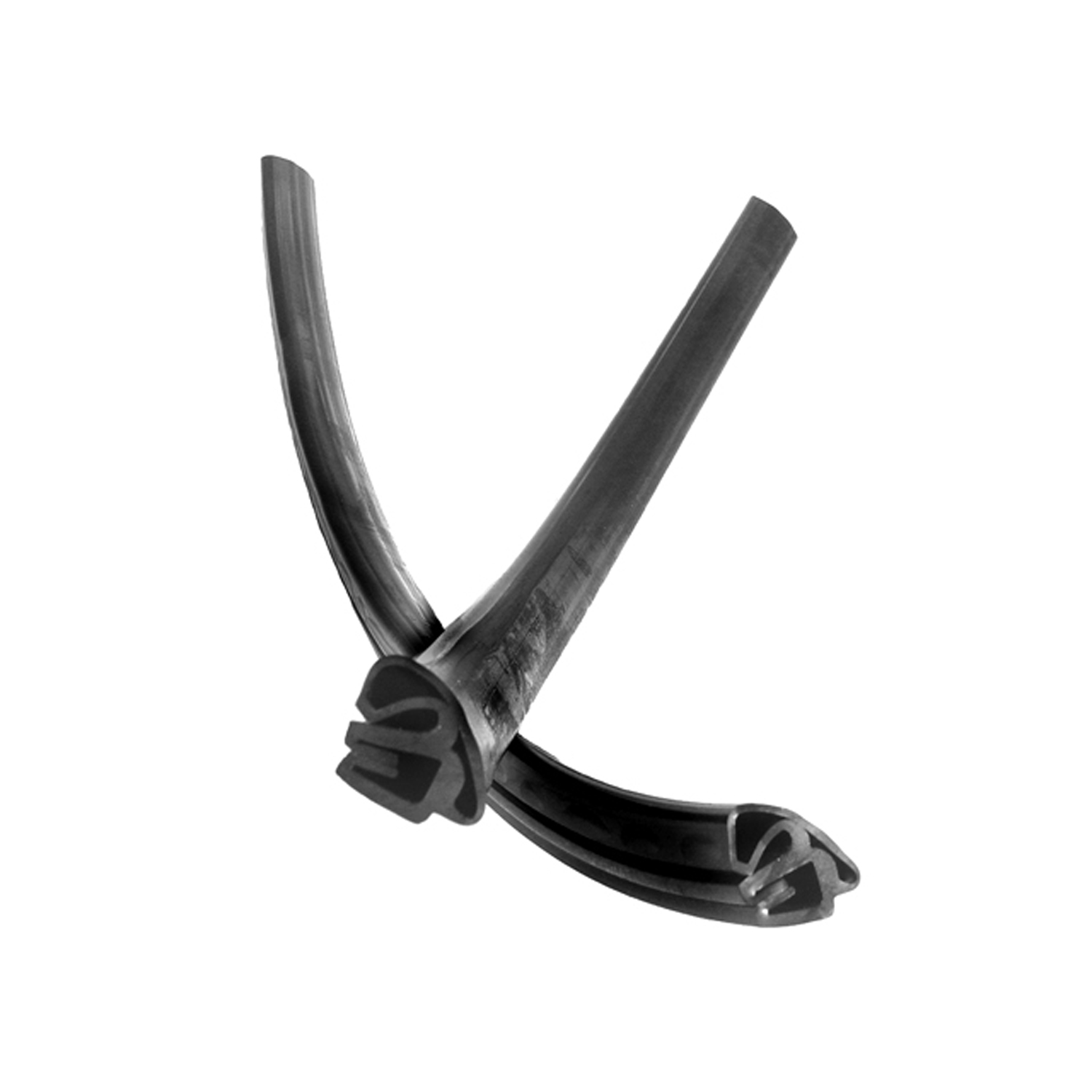 1948 Fiat 500 Vertical Seals. Pair-VS 20Vertical Seals. Pair
Why Choose Metro?
For over 100 years, Metro Moulded Parts has been the pinnacle of quality in classic car restoration parts. Our commitment to precision and authenticity in every component ensures a perfect fit and an OEM-level appearance.
- Expert Craftsmanship & Quality: Each part is a testament to our dedication to reliability and perfection, crafted from original designs and thoroughly tested.
- Advanced Technology: We use cutting-edge techniques to create flawless, long-lasting parts that surpass others in performance.
- SuperSoft Sponge – The Ultimate Door Seal: Not only are our door seals 30% softer than competitors', but they're also guaranteed to never leak. They effectively reduce wind and road noise, enhancing your classic car's comfort and driving experience.
- Proudly American: Our parts are a product of American craftsmanship, made in the USA with a spirit of excellence and heritage.
- Unrivaled Warranty: We back our products with a 30-year industry-leading warranty, a testament to our confidence in their quality.
Join us in preserving the legacy of classic cars with parts that are crafted for perfection, not just made.