

Image of 1949 Fiat 500, Note: These illustrations use artistic license and may differ from actual historical models.
Performance Metrics
Fundamental Metrics
Emotional Appeal
MMP Rating
| Engine Specifications | |
|---|---|
| Engine: | Inline 2-cylinder |
| Displacement: | 569 cc |
| Horsepower: | 13 hp |
| Torque: | Not available |
| Compression Ratio: | Not available |
| Ignition System: | Coil ignition |
| Cooling System: | Air-cooled |
| Performance Specifications | |
| 0-60 Time: | Not available |
| 1/4 Mile Time: | Not available |
| Top Speed: | 85 km/h (53 mph) |
| Transmission and Drive | |
| Drive Type: | Rear-wheel drive |
| Transmission Type: | 4-speed manual |
| Fuel and Efficiency | |
| Fuel System Type: | Carburetor |
| MPG: | Not available |
| Dimensions and Brakes | |
| Brakes: | Drum brakes |
| Wheelbase: | 1,900 mm (74.8 in) |
| Weight: | 520 kg (1,146 lbs) |
Note: Specifications for classic cars are given to the best of our ability, considering the limited and variant data available.
1949 Fiat 500 Topolino: Italy’s Little Giant
Small enough to slip through a crowded street and clever enough to help put a nation on wheels, the 1949 Fiat 500 was a remarkably ambitious little car. Known affectionately as the Topolino, Italian for “little mouse,” it was built by Fiat in Turin during a period when affordable transportation mattered more than horsepower or prestige.
The Topolino name covers a family of compact cars launched in 1936. The 1949 example sits at an interesting transition: it may be a late 500B or an early 500C, depending on its build date and market. The 500B brought a more modern overhead-valve engine, while the 500C introduced a thoroughly refreshed front-end design. That overlap makes the year especially appealing to enthusiasts who enjoy the details behind a model’s evolution.
Designed under the direction of Fiat engineer Dante Giacosa, the Topolino was conceived to make motoring attainable for ordinary Italians. Its influence extended well beyond Italy, and its success helped establish the idea that a small, economical car could be practical rather than merely basic.
Compact Styling, Clever Packaging
The Topolino has the upright, purposeful look of a miniature prewar automobile. Its narrow body, tall cabin, rounded fenders, and slim tires give it an unmistakably vintage profile. The long hood is not a styling trick: it covers a front-mounted engine, while the rear wheels provide propulsion. On the 500B, the nose retains a more traditional separate-fender appearance. The 500C is easiest to recognize by its redesigned front, with headlights integrated into the fenders and a cleaner, more unified face.
Inside, the cabin is simple and functional. Expect a thin-rimmed steering wheel, a straightforward instrument panel, modest controls, and seating for two adults, with limited room for children or luggage behind them. Materials were appropriate to an economy car of the period: painted metal, basic trim, and durable upholstery rather than luxury finishes. Restored cars may have fresh fabric and carefully refinished metal, but the original character is practical, not plush.
By 1949, the 500B’s key engineering update was its 569 cc inline-four with overhead valves, producing about 16.5 horsepower. Earlier Topolinos used a side-valve engine, so the change improved breathing and efficiency without making the car complicated. A four-speed manual gearbox, rear-wheel drive, and mechanical simplicity were central to the formula. The 500C carried forward the OHV engine while adding its more modern body treatment.
Factory paint choices varied by year, market, and body style. Muted shades such as gray, blue, green, and maroon suit the car’s postwar character, though the exact original palette should be confirmed against a particular car’s records and surviving paint. The most familiar body is the closed two-door saloon. Open-top and convertible-saloon versions, commercial vans, and the distinctive Giardiniera estate broadened the range. The Giardiniera, with its extended rear body and wood detailing on some versions, is among the most memorable Topolino variants.
A Postwar Car with Lasting Influence
In the late 1940s, Europe was rebuilding, fuel and materials remained precious, and many families could not afford a large automobile. The Topolino answered those realities with a small footprint, modest running costs, and useful weather protection. It was not the only small car of its era, but it combined compact dimensions with a genuine car-like layout and the polish of a major manufacturer.
Its significance lies less in a single groundbreaking gadget than in its complete package. Fiat made a tiny front-engine, rear-drive car that could handle everyday errands and longer journeys on the roads of its time. The Topolino helped normalize compact motoring and foreshadowed the postwar demand for affordable small cars. Its successor, the Fiat 600, would take the company’s mass-market ambitions in a new direction, but the Topolino had already shown how much practical transportation could be packed into a very small machine.
Performance: Made for Real Roads, Not Drag Strips
With roughly 16.5 horsepower and a lightweight body, the 1949 Topolino was frugal rather than fast. Period specifications commonly put top speed near 59 mph, or about 95 km/h, though condition, gearing, tires, load, and measurement methods all affect the result. A 0-to-60 mph time is not a particularly useful factory-style figure for this car: it is close to the Topolino’s maximum speed, and many examples may not reach 60 mph under ordinary conditions. A rough estimate for a healthy car is well over 40 seconds, with some taking longer or never quite getting there on level ground.
On a smooth road, the Topolino feels light and nimble. Its narrow dimensions make it easy to place, while the steering and controls ask for a more active hand than a modern car. The modest power encourages the driver to plan ahead, keep momentum, and use the gearbox rather than expect a quick burst of acceleration. On hills or into a strong headwind, speed falls away quickly.
The short wheelbase and small tires make broken pavement noticeable. It can bob and jostle over sharp bumps, and its light weight means crosswinds and passing traffic deserve respect. On a winding road, however, the car’s compact size and unhurried pace can make a familiar route feel like an event. The engine gives off a busy mechanical hum, the gearbox calls for deliberate shifts, and the driver feels directly connected to the machinery. It is an involving experience, but not a quiet or effortless one.
Living with a Topolino
Today, most 1949 Fiat 500s are used for classic-car gatherings, short pleasure drives, and local shows. Some owners take them on touring events, especially where roads are slower and routes are planned around the car’s limited cruising speed. A well-restored example can be driven regularly, but it is not an ideal modern commuter for fast highways or long stretches of high-speed traffic.
The simple mechanical layout is one of the Topolino’s greatest ownership advantages. A capable hobbyist can understand much of the car without specialist diagnostic equipment, and routine work such as basic ignition service, lubrication, and adjustments is straightforward by modern standards. Parts support exists through specialist suppliers and enthusiast networks, though availability depends on the component and the car’s exact series. The 500B and 500C share much, but body and trim details can differ, so ordering by appearance alone can lead to mistakes.
Reliability depends heavily on restoration quality and maintenance. Pay close attention to cooling, electrical connections, brakes, steering, suspension, and corrosion in the body and structural areas. A small engine working hard in modern traffic can overheat if its cooling system is neglected. The best ownership experience comes from sympathetic use, regular checks, and accepting that this is an eighty-year-old car, not a contemporary runabout.
Topolino Trivia and Common Criticisms
“Topolino” became so strongly associated with the Fiat 500 that many people use the nickname as if it were the model’s official name. The car’s compact proportions were no accident: the original concept was famously constrained by the goal of creating an extremely small, economical automobile. Its success was substantial, with production of the Topolino family continuing from 1936 into 1955.
The model’s history also includes commercial and utility versions, which helped make the basic design useful beyond private motoring. The Giardiniera estate is a particularly charming example of Fiat stretching the little platform into a more versatile family vehicle. There is no single celebrated speed or endurance record that defines the 1949 Topolino; its achievement was practical mass mobility, not competition glory.
Common criticisms are easy to understand from a modern perspective: the cabin is cramped, safety equipment is minimal, acceleration is slow, and highway driving can be tiring. Braking and handling expectations must also be adjusted to the period. Those limitations are part of the car’s context, not flaws that can be judged fairly by modern standards alone.
Collector Value and Availability
The 1949 Topolino is a relatively uncommon sight in many markets, particularly outside Europe, but it is not impossibly rare. Fiat built roughly 520,000 Topolinos across the full 1936-to-1955 production run, including multiple series and body styles. The 500B was produced in much smaller numbers than the full family total, with estimates generally placing it in the low tens of thousands. Exact counts can vary according to how production versions and markets are classified.
As a broad current-market estimate, a running but imperfect car might sell for about US$8,000 to US$15,000. A sound, well-presented driver could fall around US$15,000 to US$28,000, while an exceptional, correctly restored example or a desirable special body style may reach US$30,000 to US$40,000 or more. These are guide ranges, not fixed prices: originality, documentation, rust, mechanical condition, and whether the car is a 500B or 500C all matter.
Values have generally benefited from growing interest in small European classics, but the Topolino is a niche collectible rather than a guaranteed investment. Restored cars tend to attract the strongest attention, while projects can be difficult to price because body repairs and hard-to-find details quickly add up. Over time, the best examples are likely to remain the most desirable, but condition and provenance matter more than speculation.
Why the 1949 Fiat 500 Still Matters
The 1949 Fiat 500 Topolino combines ingenious packaging, modest engineering, and a distinctive personality in a car that is genuinely small by any era’s standards. Its overhead-valve 500B and refreshed 500C show a model adapting as Italy emerged from the war, while its saloon, open, and utility versions reveal just how versatile the little platform could be.
It will not win a contest for speed, space, or comfort. Its appeal is more enduring than that: the Topolino made mobility feel attainable and turned careful, economical engineering into something charming. Nearly eight decades later, it remains a reminder that a great car does not have to be big to leave a lasting mark.
1949 Fiat 500 Catalog of Parts
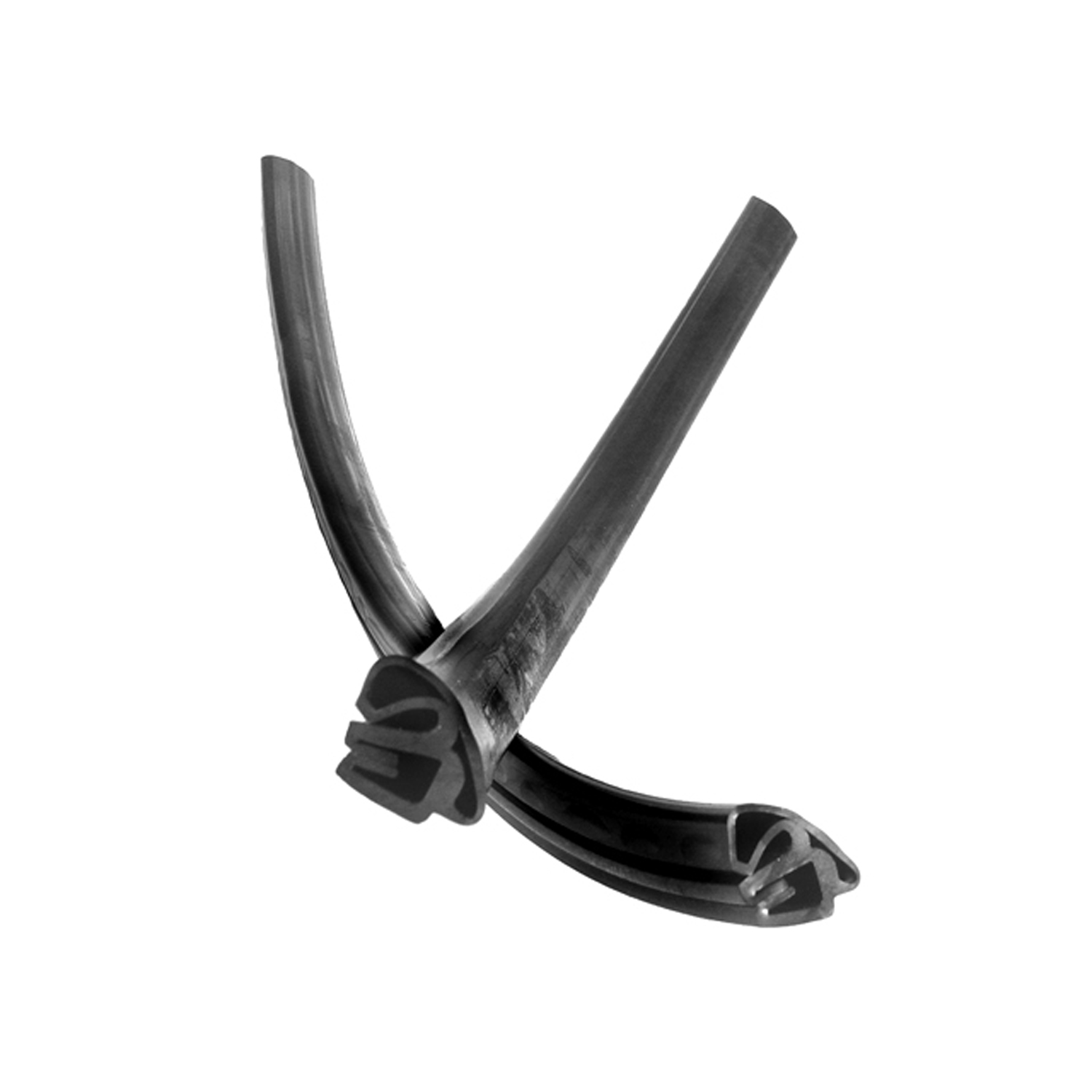 1949 Fiat 500 Vertical Seals. Pair-VS 20Vertical Seals. Pair
Why Choose Metro?
For over 100 years, Metro Moulded Parts has been the pinnacle of quality in classic car restoration parts. Our commitment to precision and authenticity in every component ensures a perfect fit and an OEM-level appearance.
- Expert Craftsmanship & Quality: Each part is a testament to our dedication to reliability and perfection, crafted from original designs and thoroughly tested.
- Advanced Technology: We use cutting-edge techniques to create flawless, long-lasting parts that surpass others in performance.
- SuperSoft Sponge – The Ultimate Door Seal: Not only are our door seals 30% softer than competitors', but they're also guaranteed to never leak. They effectively reduce wind and road noise, enhancing your classic car's comfort and driving experience.
- Proudly American: Our parts are a product of American craftsmanship, made in the USA with a spirit of excellence and heritage.
- Unrivaled Warranty: We back our products with a 30-year industry-leading warranty, a testament to our confidence in their quality.
Join us in preserving the legacy of classic cars with parts that are crafted for perfection, not just made.