

Image of 1950 Fiat 1100, Note: These illustrations use artistic license and may differ from actual historical models.
Performance Metrics
Fundamental Metrics
Emotional Appeal
MMP Rating
| Engine Specifications | |
|---|---|
| Engine: | Inline-4 |
| Displacement: | 1,089 cc |
| Horsepower: | 35-40 hp |
| Torque: | Estimated at around 60 lb-ft |
| Compression Ratio: | 6.7:1 |
| Ignition System: | Distributor and coil |
| Cooling System: | Water-cooled |
| Performance Specifications | |
| 0-60 Time: | Estimated at around 30 seconds |
| 1/4 Mile Time: | Information not available |
| Top Speed: | 68 mph |
| Transmission and Drive | |
| Drive Type: | Rear-wheel drive |
| Transmission Type: | 4-speed manual |
| Fuel and Efficiency | |
| Fuel System Type: | Carburetor |
| MPG: | Estimated at around 25-30 mpg |
| Dimensions and Brakes | |
| Brakes: | Drum brakes |
| Wheelbase: | 92.1 inches |
| Weight: | 2,094 lbs |
Note: Specifications for classic cars are given to the best of our ability, considering the limited and variant data available.
1950 Fiat 1100: Italy’s Postwar Everyday Classic
The 1950 Fiat 1100 was built for a country getting back on the road: compact, economical, and just lively enough to make an ordinary drive feel like an occasion. Made by Turin-based automaker Fiat, it belonged to a long-running family of small, four-cylinder cars that helped put Italian motorists back behind the wheel after World War II.
The 1950 model is generally identified as the Fiat 1100 E, an evolution of the prewar 1100 design. Its roots reach back to the 508 C, introduced in 1937 and also known as the “Nuova Balilla.” The 1100 E retained that car’s basic engineering while gaining useful updates, including a proper enclosed luggage compartment at the rear. That practical change made the Fiat more suitable for postwar family travel, when a car was expected to carry people and their bags, not just make a stylish entrance.
One intriguing chapter in the 1100 story comes from its sporting relatives. Specially prepared Fiat 1100 S competition cars wore streamlined coupe bodies and took part in major Italian road races, including the Mille Miglia. Those racers were not standard 1100 E sedans, but they show how a humble small-car platform could also provide the basis for serious motorsport machinery.
Classic Fiat 1100 Styling and Cabin
The 1950 Fiat 1100 has the compact, upright proportions of a car designed before streamlined shapes became the norm. Its rounded hood flows toward a tall, narrow grille, while separate-looking front fenders and rounded headlamps give the nose a distinctly prewar character. The body is neat rather than flamboyant, with a modest beltline, slim pillars, and a gently curved roof. Its appearance feels friendly and purposeful, the sort of design that looks at home outside a city café or parked along a narrow village street.
The 1100 E’s rear end is especially important to its everyday appeal. Earlier versions carried the spare wheel externally at the back, while the E incorporated a more conventional enclosed luggage compartment. The result was a cleaner tail and a more useful car for shopping, holidays, and family errands.
Inside, the Fiat is straightforward and functional. Expect a wide front bench, a simple instrument panel, and controls arranged for easy use rather than dramatic effect. Upholstery materials and trim could vary by market and specification, but cloth and durable vinyl were typical choices. The cabin has plenty of painted metal and practical surfaces, a reminder that this was an affordable family car, not a luxury saloon. Its slim steering wheel, upright seating position, and simple gauges make the driver feel closely connected to the machinery.
Fiat offered the 1100 in sober period colors, with shades such as gray, blue, green, beige, and darker reds appearing across markets and production runs. Exact factory palettes varied, and today’s cars may have been repainted, so original paint codes are worth checking when authenticity matters. The four-door Berlina sedan was the best-known and most common body style. Coachbuilders also produced open and special-bodied versions, while estate-like conversions and utility variants appeared in limited numbers. These rarer bodies are appealing, but the Berlina is the classic 1100 E most buyers are likely to encounter.
Engineering That Fit Its Era
Power comes from a 1,089 cc overhead-valve inline four, producing roughly 35 horsepower in typical 1100 E specification. It drives the rear wheels through a four-speed manual gearbox. The engine was not a high-revving performance unit by modern standards, but its compact size, sensible fuel use, and straightforward layout suited the car’s role as affordable transport.
For its time, the 1100 also offered a notably modern chassis. It used independent front suspension, hydraulic dampers, and hydraulic brakes, paired with a conventional live rear axle and leaf springs. That arrangement gave the car a more composed ride than a simple, rigid-axle design at all four corners. The steering and gear change are mechanical and direct, though a surviving car’s condition will have a major effect on how precise they feel today.
Fiat’s achievement was not a single revolutionary gadget. It was the combination of a relatively modern suspension layout, compact dimensions, a useful four-door body, and affordable running costs. In postwar Italy, that mix mattered. The 1100 helped make car ownership practical for families and small businesses while preserving a degree of comfort and road manners that basic transport did not always provide.
Road Performance and Driving Feel
A healthy 1950 Fiat 1100 E can reach roughly 100 to 110 km/h, or about 62 to 68 mph, depending on condition, gearing, load, and the accuracy of the speedometer. Period acceleration was modest. A 0-to-60 mph time in the neighborhood of 30 to 40 seconds is a reasonable estimate, but exact test figures are scarce and vary between cars. This is a car for unhurried progress, not quick overtakes or modern highway traffic.
On a smooth road, the 1100 feels light and nimble. Its compact footprint makes it easy to place on narrow streets, and the independent front suspension helps it settle over ordinary bumps. On rougher surfaces, the rear leaf springs and short wheelbase can make the car bob or bounce, especially when unladen. Take a winding road at a sensible pace and the Fiat rewards smooth inputs. It is not a sports saloon, but its modest mass and responsive character make a back-road drive enjoyable.
The engine produces a busy, purposeful four-cylinder note rather than a deep exhaust roar. The driver works the four-speed gearbox, listens to the engine, and plans ahead when climbing hills or merging into faster traffic. Braking distances and grip are far removed from those of a modern car, so a respectful following distance is essential. The best experience comes on scenic routes where the Fiat can find its rhythm without being hurried.
Living With a 1950 Fiat 1100
Today, most 1100 E owners use their cars for club outings, local shows, historic tours, and occasional weekend drives. A well-maintained example can be usable, but it is not an ideal daily driver in modern traffic. Limited crash protection, modest performance, and the demands of an older cooling and electrical system all call for a careful owner and sensible routes.
The mechanical layout is relatively simple, and many routine jobs are within reach of an experienced home mechanic with a workshop manual and the correct tools. The engine, gearbox, brakes, and suspension are conventional by classic-car standards. Parts availability varies by country, however, and trim pieces, body panels, and coachbuilt components can be harder to source than routine service items. Before buying, check for rust in the floor, sills, lower doors, wheel arches, and structural areas. Also inspect the cooling system, brake hydraulics, wiring, and the condition of the gearbox and steering.
Reliability is closely tied to maintenance. A properly rebuilt and regularly serviced Fiat can be rewarding, but age-related wear, neglected electrics, fuel-system problems, and corrosion can quickly turn an inexpensive purchase into a major project. For an average owner, the key is to buy the best, most complete car the budget allows and to avoid assuming that simple engineering means no maintenance.
Fiat 1100 Facts and Myths
The racing connection deserves a little clarification. The Fiat 1100 S was a specialized sporting derivative with distinct bodywork and competition preparation. It shared the broader 1100 family name and engineering background, but it was not a standard 1100 E sedan with a few bolt-on parts. Its existence is a reminder that Fiat’s small-car platform had both everyday and sporting branches.
The 1100 family also had a long life beyond this particular model year, with later generations and related versions produced in large numbers. The 1950 1100 E itself is far less common today than its once-popular role might suggest. Exact production totals for individual versions can be difficult to pin down, but a rough estimate for 1100 E production is around 50,000 to 60,000 cars. That is a best estimate for the model, not a verified count of surviving examples.
There is no single universally recognized speed or endurance record associated with the standard 1950 1100 E. Its significance lies more in accessible mobility and in the broader competition history of the 1100 family. A common criticism is its limited power, especially on modern roads. Owners may also point to a cramped rear seat by today’s standards and the constant attention an elderly car needs. Those drawbacks are part of the honest ownership picture, not reasons to overlook its charm.
Collector Value and Availability
Values depend heavily on condition, originality, body style, and location. As a broad current guide in U.S. dollars, a project car may fall around $3,000 to $8,000. A usable driver or older restoration might bring roughly $8,000 to $18,000, while a very good, well-documented example could reach about $18,000 to $30,000 or more. Rare coachbuilt versions can command higher prices, but their value depends on provenance and the quality of the body and restoration. These are general estimates, not a formal appraisal, and local European prices may differ.
Standard Berlina sedans are uncommon in many markets outside Europe, and finding one for sale can take patience. The market for sound, original postwar Fiats has generally strengthened as interest in approachable European classics has grown, though values are not as consistent as those for more famous sports cars. Excellent examples are likely to hold appeal, while poor restorations and rusty projects can remain difficult to sell. Documentation, correct details, and a solid body are often worth more than a flashy repaint.
Why the 1950 Fiat 1100 Still Matters
The 1950 Fiat 1100 E brought together practical four-door packaging, a modest but capable overhead-valve engine, and a comparatively modern suspension in a compact postwar car. It was neither a luxury landmark nor a high-performance icon. Its importance is more grounded: it helped ordinary families travel, work, and rebuild daily life in a changing Italy.
With its rounded styling, approachable mechanicals, and links to a much broader Fiat and motorsport story, the 1100 remains a rewarding classic for drivers who value character over speed. It may ask you to slow down, listen closely, and plan your route, but that is precisely where its appeal begins.
1950 Fiat 1100 Catalog of Parts
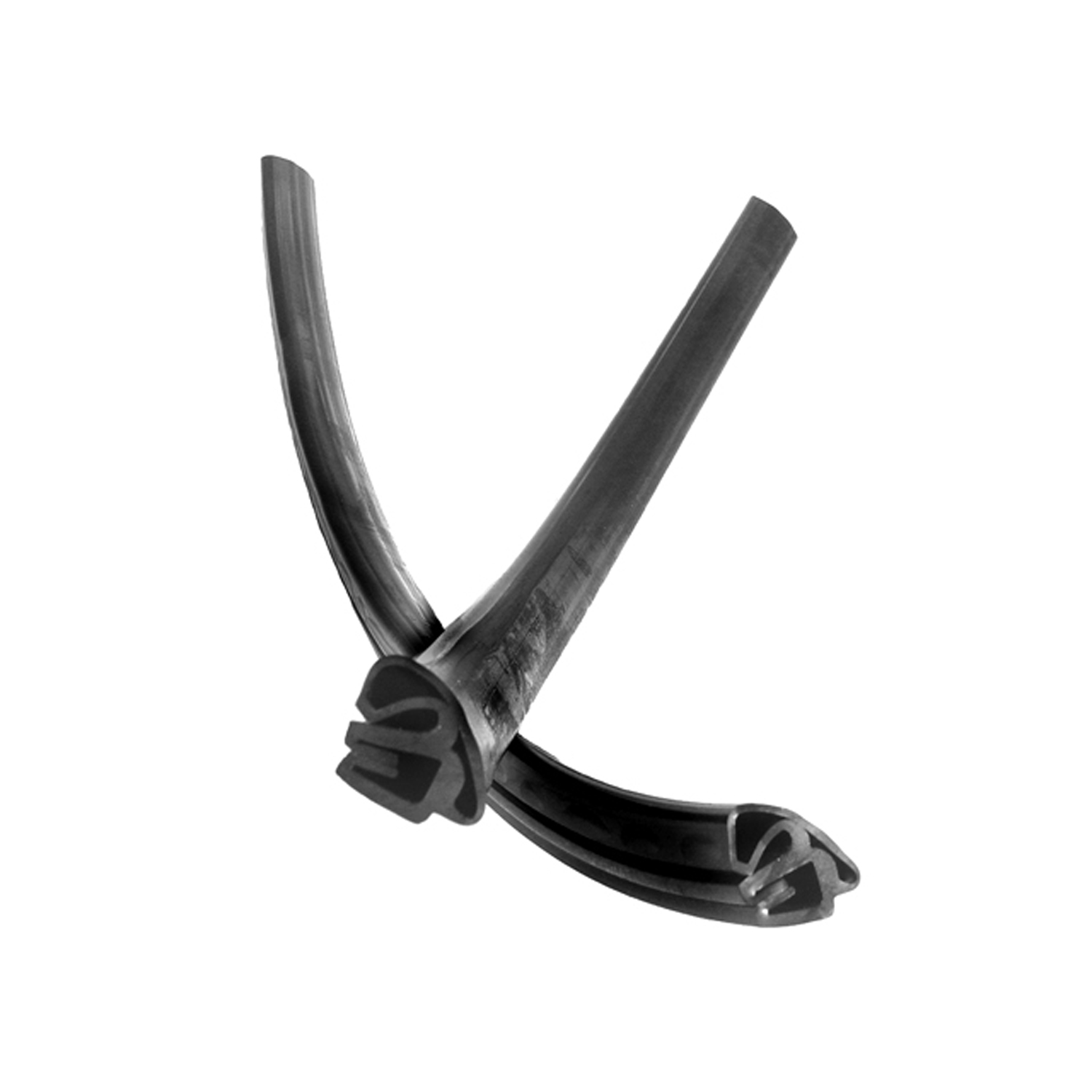 1950 Fiat 1100 Vertical Seals. Pair-VS 20Vertical Seals. Pair
Why Choose Metro?
For over 100 years, Metro Moulded Parts has been the pinnacle of quality in classic car restoration parts. Our commitment to precision and authenticity in every component ensures a perfect fit and an OEM-level appearance.
- Expert Craftsmanship & Quality: Each part is a testament to our dedication to reliability and perfection, crafted from original designs and thoroughly tested.
- Advanced Technology: We use cutting-edge techniques to create flawless, long-lasting parts that surpass others in performance.
- SuperSoft Sponge – The Ultimate Door Seal: Not only are our door seals 30% softer than competitors', but they're also guaranteed to never leak. They effectively reduce wind and road noise, enhancing your classic car's comfort and driving experience.
- Proudly American: Our parts are a product of American craftsmanship, made in the USA with a spirit of excellence and heritage.
- Unrivaled Warranty: We back our products with a 30-year industry-leading warranty, a testament to our confidence in their quality.
Join us in preserving the legacy of classic cars with parts that are crafted for perfection, not just made.