

Image of 1950 Fiat 500, Note: These illustrations use artistic license and may differ from actual historical models.
Performance Metrics
Fundamental Metrics
Emotional Appeal
MMP Rating
| Engine Specifications | |
|---|---|
| Engine Options: | Inline 2-cylinder |
| Displacement Range: | 569 cc |
| Horsepower Range: | 13-16.5 hp |
| Torque: | Estimated at 20-22 lb-ft |
| Compression Ratio: | 6.7:1 |
| Ignition System: | Coil ignition |
| Cooling System: | Air-cooled |
| Performance Specifications | |
| 0-60 Time: | Not available due to low horsepower |
| 1/4 Mile Time: | Not available due to low horsepower |
| Top Speed: | 53 mph |
| Transmission and Drive | |
| Drive Type: | Rear-wheel drive |
| Transmission Type: | 4-speed manual |
| Fuel and Efficiency | |
| Fuel System Type: | Carburetor |
| MPG: | 40-50 mpg |
| Dimensions and Brakes | |
| Brakes: | Drum brakes |
| Wheelbase: | 78.7 inches |
| Weight: | 1100 lbs |
Note: Specifications for classic cars are given to the best of our ability, considering the limited and variant data available.
1950 Fiat 500 Topolino: Italy’s Little Giant
The 1950 Fiat 500 made small-car engineering feel like a big idea. Known affectionately as the Topolino, Italian for “little mouse,” this tiny Fiat helped put practical motoring within reach of ordinary families in a country still rebuilding after World War II.
Fiat introduced the original 500 in 1936, well before the postwar boom in compact cars. Designed under the direction of engineer Dante Giacosa, it was intended to be inexpensive, economical, and compact enough for crowded European streets. By 1950, the car was in its final and most polished form, the 500C, which had arrived in 1949. It retained the Topolino’s basic front-engine, rear-wheel-drive layout while gaining a more modern-looking nose and other refinements.
The Topolino’s historical importance lies in more than its diminutive size. It helped establish the small, affordable car as a serious solution to everyday transportation, not merely a novelty. One memorable detail is that the original design brief called for a genuinely usable four-seat car with a very small engine and modest cost. The result was a machine that looked almost impossibly compact, yet could carry a family through the streets and countryside of postwar Italy.
500C Styling and Cabin Details
The 1950 500C is easy to recognize by its rounded front fenders, upright proportions, narrow body, and compact wheels. Its most noticeable update over earlier Topolinos is the front end: the headlights sit integrated into the front fenders, framing a broad, horizontal grille. The effect is cheerful without being overly decorative. A short hood, gently curved roof, and upright rear give the car a tidy, almost toy-like profile, while its tall stance helps make the cabin more useful than the exterior dimensions suggest.
Inside, the Topolino keeps things simple. The cabin is narrow, with a straightforward dashboard, basic instruments, uncomplicated controls, and a modest front seat. Painted metal surfaces are part of the experience, while upholstery was generally practical rather than luxurious, often using durable cloth or vinyl-like materials depending on trim and market. There is little in the way of sound insulation or convenience equipment by modern standards. The reward is a cabin where the driver can reach nearly everything without stretching.
For its era, the 500C’s engineering was sensible and well developed. It used a water-cooled, 569cc four-cylinder engine mounted at the front, driving the rear wheels through a four-speed manual gearbox. The 500C’s engine produced about 16.5 horsepower, a useful improvement over the earliest Topolino versions. Hydraulic brakes and independent front suspension helped it feel like a proper small car rather than a motorized cart.
Fiat offered the Topolino in different body forms, with details and availability varying by market. The familiar two-door saloon is the most iconic, while an open-top cabriolet brought a little extra charm. The practical Giardiniera Belvedere, a small estate car with a wood-framed rear body structure, is especially distinctive. Commercial van versions also served businesses that needed a compact delivery vehicle. Factory colors varied by year and market; restrained shades such as cream, gray, pale green, and blue suit the period look, though surviving cars have also been restored in brighter colors.
Why the Topolino Mattered
The 500C was not the first small car, but it showed how carefully packaged engineering could make a small car genuinely useful. Its compact dimensions suited narrow streets and tight parking, while its conventional layout made it less intimidating to service than some more unusual economy-car designs. The Topolino’s long production life also gave Fiat valuable experience in building affordable cars for a broad audience.
Compared with many contemporary small cars, the Topolino stood out for its balance of size, economy, and everyday usability. It was not fast, spacious, or luxurious, but it delivered basic transportation in a package that could fit into places larger cars could not. That idea carried forward into later European city cars, including Fiat’s much more famous Nuova 500, launched in 1957. The two models are often confused, but the 1950 Topolino is an earlier, front-engine car with a very different design.
Top Speed and Driving Feel
A healthy 1950 Fiat 500C could reach a period-quoted top speed of roughly 59 mph, or about 95 km/h, under favorable conditions. Acceleration to 60 mph is a different story. It is generally estimated at around 40 to 50 seconds, and some cars may struggle to reach a true 60 mph at all. The exact result depends on mechanical condition, gearing, load, road gradient, and how speed is measured. The Topolino is happiest at modest speeds, with a relaxed cruising pace closer to 40 or 50 mph.
On ordinary city streets, its narrow body and light controls make it easy to place. The suspension is basic by modern standards, so sharp bumps and broken pavement come through clearly, especially at the rear. On winding roads, the modest power encourages momentum driving: carry speed through bends, choose a gear early, and avoid expecting modern levels of grip or braking. Strong crosswinds and passing traffic can make the little Fiat feel vulnerable, so it rewards a calm driver and plenty of room.
Behind the wheel, the 500C feels mechanical in the best old-fashioned sense. The small four-cylinder engine produces a busy, purposeful note as it works, and the driver is involved in every gear change and adjustment of speed. The light weight makes even moderate acceleration feel like an event. It is not a car for rushing; it is a car for enjoying the route, the sound of the engine, and the reactions it gets from people along the way.
Living With a 1950 Fiat 500
Today, the Topolino is most often used as a show car, weekend runabout, touring companion on quiet roads, or centerpiece of a small-car collection. A well-sorted example can handle local drives and club events, but it is rarely a sensible choice for modern daily commuting. Traffic moves faster, safety expectations have changed, and the car offers little crash protection by current standards.
Mechanical maintenance is relatively straightforward for an owner with basic skills, workshop information, and patience. The simple engine and conventional layout make many routine jobs accessible, though age can make even basic work complicated. Rust, tired wiring, worn suspension components, and cooling-system problems deserve careful attention. Body and trim restoration can be more challenging than engine work, particularly when replacement panels or hard-to-find details are needed. Specialist knowledge is useful, but the Topolino is not inherently difficult to understand or repair.
Parts support is better than the car’s age might suggest, thanks to a committed international enthusiast community and specialist suppliers. Still, buyers should assess the individual car carefully. A running engine does not guarantee sound brakes, reliable electrics, or a rust-free structure. A thorough inspection and a realistic restoration budget are essential.
Topolino Facts and Common Criticisms
The Topolino name means “little mouse” in Italian and became the car’s lasting nickname. The 500C was the final development of the original 500 line, which Fiat produced from 1936 until 1955. Across the full Topolino family, production is commonly estimated at about 520,000 vehicles. That figure covers multiple versions and body styles, not just 1950 500Cs; a dependable total for the 1950 model year alone is difficult to establish.
The model is best remembered for mass motoring and practical ingenuity rather than speed records or high-profile competition victories. It was an everyday car, a small commercial vehicle, and a symbol of accessible transport. Its biggest criticisms are equally straightforward: it is slow, cramped, lightly equipped, and less comfortable on rough roads than a modern car. The compact cabin and limited power are part of its character, but they also define its limitations.
1950 Fiat 500 Collector Values
Collector values vary significantly with body style, originality, restoration quality, and location. As a broad 2026 guide in U.S. dollars, a project car or rough runner might fall around $8,000 to $15,000. A usable, presentable saloon could bring roughly $15,000 to $28,000, while a high-quality restoration may reach $30,000 to $45,000 or more. Rare or especially well-restored versions, including desirable Belvedere wagons and cabriolets, can command a premium.
These are estimates rather than fixed prices. Topolinos appear less often than common postwar classics, especially in some North American markets, but they are not unobtainable. The overall family’s production run was substantial, and condition is usually more important than the model year alone. Values have generally strengthened as small European classics have gained attention, with exceptional restorations appreciating more reliably than cars needing extensive work. Market prices still depend heavily on regional demand and the cost of shipping or restoration.
A Small Car With a Lasting Legacy
The 1950 Fiat 500C Topolino combines clever packaging, approachable engineering, and unmistakable prewar-to-postwar charm. Its 569cc engine and modest speed may seem slight today, but the car’s real achievement was making useful transportation compact, economical, and appealing. It helped shape the idea of the European city car long before that category became fashionable.
More than a tiny classic, the Topolino is a reminder that good automotive design is not measured by size or horsepower alone. It made a small footprint feel like a big step forward.
1950 Fiat 500 Catalog of Parts
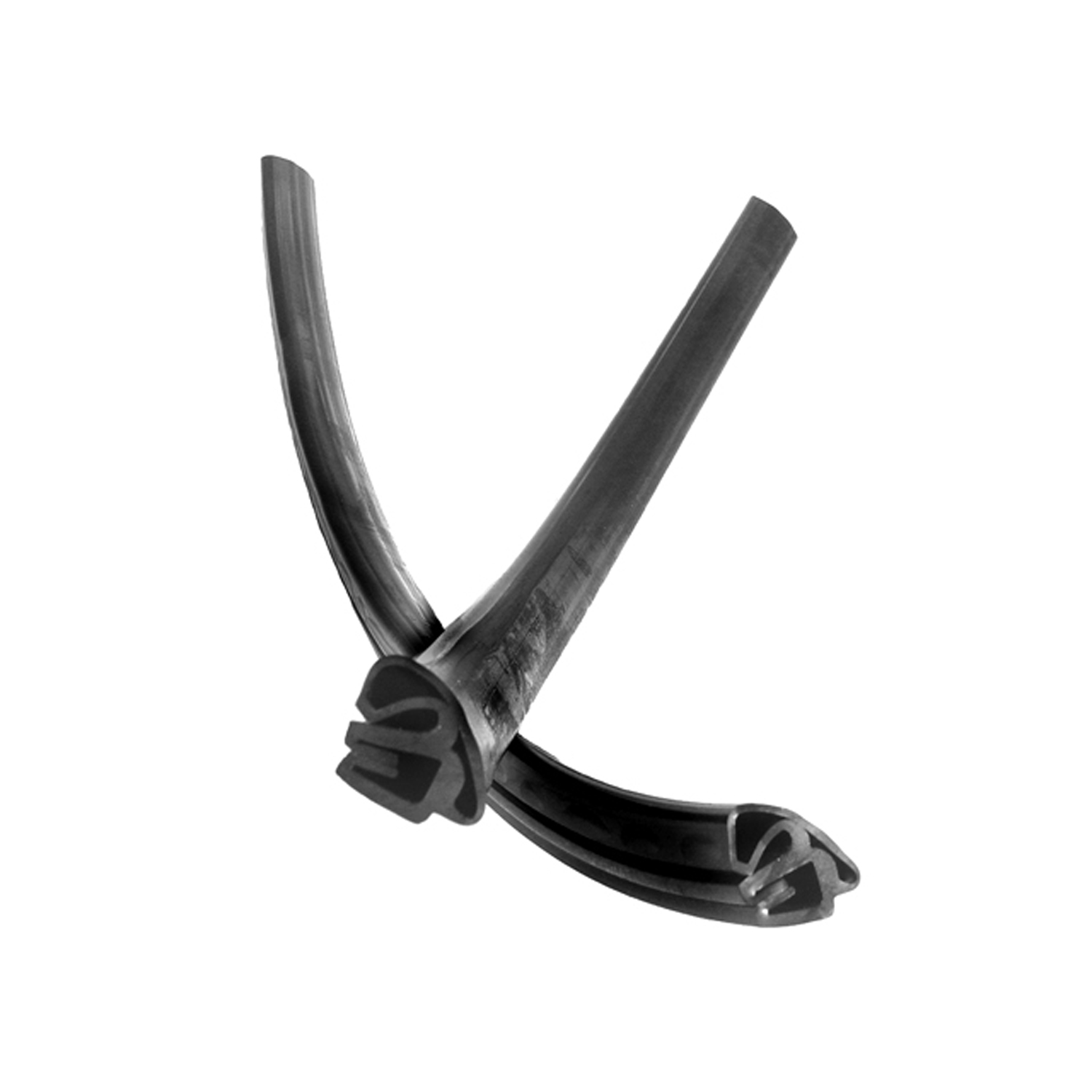 1950 Fiat 500 Vertical Seals. Pair-VS 20Vertical Seals. Pair
Why Choose Metro?
For over 100 years, Metro Moulded Parts has been the pinnacle of quality in classic car restoration parts. Our commitment to precision and authenticity in every component ensures a perfect fit and an OEM-level appearance.
- Expert Craftsmanship & Quality: Each part is a testament to our dedication to reliability and perfection, crafted from original designs and thoroughly tested.
- Advanced Technology: We use cutting-edge techniques to create flawless, long-lasting parts that surpass others in performance.
- SuperSoft Sponge – The Ultimate Door Seal: Not only are our door seals 30% softer than competitors', but they're also guaranteed to never leak. They effectively reduce wind and road noise, enhancing your classic car's comfort and driving experience.
- Proudly American: Our parts are a product of American craftsmanship, made in the USA with a spirit of excellence and heritage.
- Unrivaled Warranty: We back our products with a 30-year industry-leading warranty, a testament to our confidence in their quality.
Join us in preserving the legacy of classic cars with parts that are crafted for perfection, not just made.