

Image of 1951 Fiat 1100, Note: These illustrations use artistic license and may differ from actual historical models.
Performance Metrics
Fundamental Metrics
Emotional Appeal
MMP Rating
| Engine Specifications | |
|---|---|
| Engine: | Inline-4 |
| Displacement: | 1089 cc |
| Horsepower: | 35-40 HP |
| Torque: | Estimated at around 60 lb-ft |
| Compression Ratio: | 6.7:1 |
| Ignition System: | Coil ignition |
| Cooling System: | Water-cooled |
| Performance Specifications | |
| 0-60 Time: | Estimated at around 30 seconds |
| 1/4 Mile Time: | Information not available |
| Top Speed: | 75 mph |
| Transmission and Drive | |
| Drive Type: | Rear-wheel drive |
| Transmission Type: | 4-speed manual |
| Fuel and Efficiency | |
| Fuel System Type: | Carburetor |
| MPG: | Estimated at around 25-30 MPG |
| Dimensions and Brakes | |
| Brakes: | Drum brakes |
| Wheelbase: | 92.5 inches |
| Weight: | 2,200 lbs |
Note: Specifications for classic cars are given to the best of our ability, considering the limited and variant data available.
1951 Fiat 1100: Italy’s Everyday Classic
The 1951 Fiat 1100 was a small family car with a surprisingly big role in Italy’s postwar recovery. Built by Turin-based automaker Fiat, it combined practical four-door accommodation with sturdy engineering and a lively 1.1-liter engine. In an era when European families needed affordable, dependable transport, the 1100 helped put modern motoring within reach.
The model belonged to a line that began before the Second World War, but the 1951 car was the refined 1100 E, introduced in 1949. One easy way to recognize it is its more conventional, integrated rear luggage compartment, a useful update over earlier versions that carried their spare wheel and luggage in a more exposed arrangement. The 1100 name also became famous in competition: specially prepared Fiat 1100 S cars took on the demanding Mille Miglia road race, giving this sensible family-car lineage a sporting side.
How to Identify a 1951 Fiat 1100
It is important not to confuse the 1951 Fiat 1100 E with the Fiat 1100/103, a substantially revised model that arrived in 1953. The 1100 E retained the earlier car’s basic engineering and familiar shape. Period descriptions and registration documents may simply call it a Fiat 1100, so checking the chassis details and body features is useful when researching a particular car.
The 1100 E was powered by a 1,089 cc, four-cylinder engine. Depending on market and specification, it produced about 35 metric horsepower. Power went through a four-speed manual gearbox, commonly operated by a column-mounted shift lever. That layout kept the floor relatively clear for passengers and was a practical choice for a compact sedan.
Elegant Lines, Practical Details
The Fiat’s styling is rounded and upright, with separate-looking front fenders flowing into a tall cabin and a gently curved roof. At the nose, a narrow vertical grille, compact headlamps and a modest hood give the car a distinctly prewar character, even as its details reflect postwar tastes. The 1100 E’s integrated trunk makes the rear look tidier and more finished than that of its predecessors.
Inside, the cabin is straightforward rather than luxurious. The dashboard is usually painted metal or simply trimmed, with clear round instruments and sturdy controls. Seats were typically upholstered in cloth or vinyl-like materials, with details varying by market and trim. The emphasis was on durability and easy cleaning, not hand-finished extravagance. A column shifter, broad bench-style seating and generous glass helped make the small car feel usable for a family.
Factory colors and trim varied by country, year and individual order. Black, gray, dark blue, green and cream shades are commonly associated with period Fiat saloons, while two-tone combinations could add a more distinctive look. Today, a well-preserved original color can be especially appealing to collectors, though repaint history and authenticity matter more than any one “correct” shade.
The four-door saloon was the most familiar and practical body style. Fiat’s 1100 range also inspired commercial and special-bodied versions, and independent coachbuilders produced more unusual interpretations across the broader model family. Availability differed considerably from one market to another, so a cabriolet or bespoke body should be verified by chassis and coachbuilder records rather than assumed to be a standard 1951 factory option.
Engineering for Everyday Roads
The 1100 was not a clean-sheet postwar design. It developed a proven Fiat formula into a more refined and capable family car, with a compact engine, four-speed transmission and suspension suited to the roads of its time. Its front suspension used an independent layout, while the rear relied on a live axle and leaf springs. Hydraulic drum brakes were typical of the period.
That combination made the Fiat practical to maintain and well suited to mixed urban and country use. Its small dimensions helped in narrow streets and tight parking spaces, while the relatively upright cabin offered useful headroom and visibility. Compared with many basic economy cars, the 1100 felt polished and substantial without becoming expensive or mechanically exotic.
The 1100’s influence is best understood as an important part of Fiat’s mass-market success rather than as a single revolutionary breakthrough. It helped establish a pattern of compact, well-packaged Italian family cars that balanced modest running costs with a little more character than bare-bones transportation. The model’s long-running name and later generations carried that formula forward for decades.
Performance and Road Manners
With about 35 metric horsepower moving a compact sedan, the 1951 Fiat 1100 was brisk by the standards of many small postwar cars, but it was no modern traffic-light sprinter. Period figures and current estimates vary with condition, gearing and bodywork. A sound example could reach roughly 100 to 110 km/h, or about 62 to 68 mph. A 0-to-60-mph run would likely take around 30 seconds or more, making smooth momentum and thoughtful gear changes more important than quick acceleration.
The four-speed gearbox gives the driver useful control, although the column shift takes some practice if the driver is accustomed to a floor-mounted lever. The engine works willingly when properly tuned, producing a light mechanical buzz that becomes more pronounced as revs rise. At cruising speeds, the car feels most at home on quieter roads rather than in fast modern traffic.
On ordinary bumps, the suspension offers the softer, more compliant response expected of a small 1950s saloon. The rear leaf springs can feel firm when the car is lightly loaded, and a worn example may wander or rattle over broken pavement. On winding roads, modest power encourages a steady, flowing driving style. Good tires, properly maintained steering components and correctly adjusted brakes make a major difference to confidence.
Living With a 1951 Fiat 1100
In its day, the Fiat served as everyday family transport, a business car and, in some markets, a taxi or fleet vehicle. Today, most surviving examples are enjoyed as weekend classics, displayed at Italian-car gatherings or used for relaxed touring. Their modest size and approachable mechanical layout make them less intimidating than many larger luxury cars of the same era.
Routine maintenance is manageable for an owner with basic mechanical skills, but age matters more than the original design’s simplicity. The ignition, carburetor, cooling system, brakes and electrical connections all benefit from careful inspection and regular service. Parts support varies by country, and some trim, body and interior pieces can take longer to find than common service items. Rust deserves particular attention, especially around floors, sills, wheel arches and body seams.
A 1951 Fiat 1100 is not necessarily a modern “turn-key” daily driver. Traffic speed, braking distances, lighting and crash protection are all far removed from current standards. For regular use, it is wise to keep the car mechanically fresh, drive defensively and treat long, fast journeys as a test of the car’s condition rather than its original design brief.
Racing Roots and Fiat 1100 Trivia
The most celebrated sporting connection is the Fiat 1100 S, a special competition model related to the 1100 family. It was built for events including the Mille Miglia, Italy’s famously demanding open-road race. The 1100 S had specialized bodywork and mechanical changes, so it should not be mistaken for an ordinary 1100 E sedan. Its reputation nevertheless gave the entire 1100 name a welcome dose of racing glamour.
The 1100 also earned a place in everyday Italian life. Its “Millecento” nickname, referring to its roughly 1,100 cc engine class, became familiar to generations of motorists. The car’s appeal was not a headline-grabbing speed record; it was the more meaningful achievement of giving ordinary households useful, dependable mobility.
Common criticisms are straightforward: acceleration is leisurely, the cabin is basic, and the brakes and handling require more anticipation than those of a modern car. On the ownership side, rust and scarce cosmetic parts can turn an inexpensive project into a costly restoration. A complete, structurally sound car is usually a better buy than a cheap example with extensive corrosion.
Collector Values and Rarity
Prices vary widely with condition, originality, documentation and location. As a broad 2026 guide, an incomplete or project-grade 1100 E might sell for roughly US$3,000 to $8,000. A usable, sound driver could fall around US$8,000 to $18,000, while a carefully restored, highly original saloon may bring about US$18,000 to $30,000 or more. Exceptional coachbuilt cars and genuine competition models are separate cases and can command substantially higher prices.
There is no universally accepted production total for the 1951 1100 E alone. As an informed estimate rather than a factory-certified figure, production of the E-series saloon was probably in the tens of thousands, perhaps around 50,000 to 60,000 cars. That makes it uncommon today, especially outside Italy, but not necessarily rare in the same way as a limited-production sports car. The much broader Fiat 1100 family continued through later generations and ultimately reached production in the millions.
Values for sound examples have generally benefited from growing interest in accessible postwar European classics, but prices remain condition-sensitive. Restorations can cost more than the finished car is worth, so originality, sound metal and credible history tend to matter most. The market is best described as steady to gradually appreciating for good cars, rather than a guaranteed investment boom.
Why the 1951 Fiat 1100 Still Matters
The 1951 Fiat 1100 E brought together practical packaging, modest running costs and the charm of a distinctly Italian design. Its four-cylinder engine and unhurried performance suited family journeys, while the 1100 family’s competition history added a livelier chapter to its story. It is not a fast or luxurious classic, but it remains an engaging example of how thoughtful engineering helped restore everyday mobility in postwar Europe.
For collectors, the best 1100 is often the one with the straightest body, soundest structure and most complete history. Find one in good condition, and its appeal is easy to understand: this is a small Fiat that carried a generation forward, one practical mile at a time.
1951 Fiat 1100 Catalog of Parts
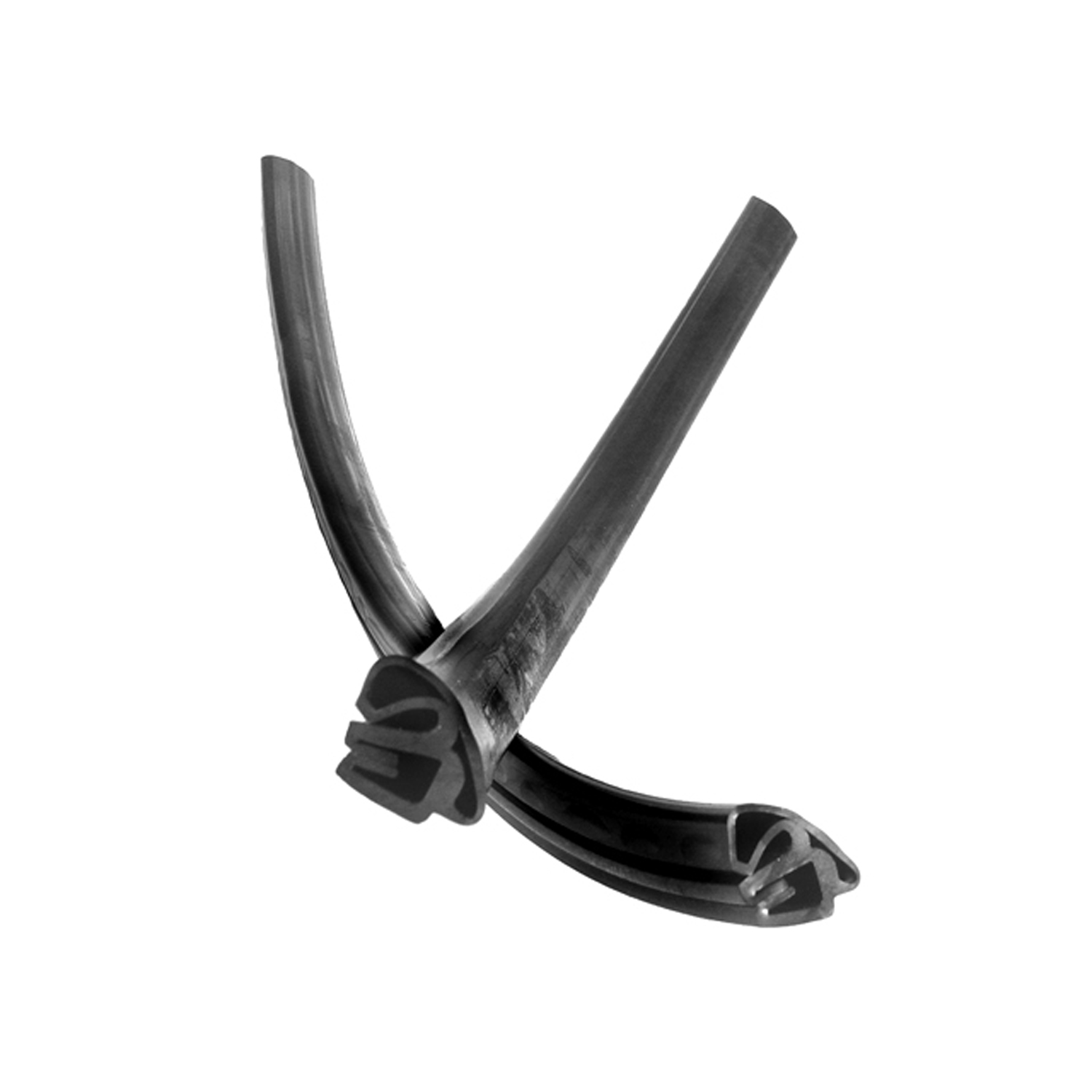 1951 Fiat 1100 Vertical Seals. Pair-VS 20Vertical Seals. Pair
Why Choose Metro?
For over 100 years, Metro Moulded Parts has been the pinnacle of quality in classic car restoration parts. Our commitment to precision and authenticity in every component ensures a perfect fit and an OEM-level appearance.
- Expert Craftsmanship & Quality: Each part is a testament to our dedication to reliability and perfection, crafted from original designs and thoroughly tested.
- Advanced Technology: We use cutting-edge techniques to create flawless, long-lasting parts that surpass others in performance.
- SuperSoft Sponge – The Ultimate Door Seal: Not only are our door seals 30% softer than competitors', but they're also guaranteed to never leak. They effectively reduce wind and road noise, enhancing your classic car's comfort and driving experience.
- Proudly American: Our parts are a product of American craftsmanship, made in the USA with a spirit of excellence and heritage.
- Unrivaled Warranty: We back our products with a 30-year industry-leading warranty, a testament to our confidence in their quality.
Join us in preserving the legacy of classic cars with parts that are crafted for perfection, not just made.