

Image of 1952 Fiat 1100, Note: These illustrations use artistic license and may differ from actual historical models.
Performance Metrics
Fundamental Metrics
Emotional Appeal
MMP Rating
| Engine Specifications | |
|---|---|
| Engine: | Inline-4 |
| Displacement: | 1,089 cc |
| Horsepower: | Estimated 35-40 hp |
| Torque: | Information not available |
| Compression Ratio: | Information not available |
| Ignition System: | Coil ignition |
| Cooling System: | Water-cooled |
| Performance Specifications | |
| 0-60 Time: | Information not available |
| 1/4 Mile Time: | Information not available |
| Top Speed: | 75 mph |
| Transmission and Drive | |
| Drive Type: | Rear-wheel drive |
| Transmission Type: | 4-speed manual |
| Fuel and Efficiency | |
| Fuel System Type: | Carburetor |
| MPG: | Information not available |
| Dimensions and Brakes | |
| Brakes: | Drum brakes |
| Wheelbase: | 2,420 mm |
| Weight: | 950 kg |
Note: Specifications for classic cars are given to the best of our ability, considering the limited and variant data available.
1952 Fiat 1100: Italy’s Postwar Family Saloon
The 1952 Fiat 1100 was a practical little Italian saloon with a surprisingly sporting streak, built for a country getting back on its feet after the Second World War. Made by Turin-based Fiat, it belonged to a long-running 1100 family that helped put dependable, economical motoring within reach of ordinary families. One important detail for collectors: a 1952 car is generally the Fiat 1100 E, not the later 1100/103, which arrived in 1953 with a thoroughly modernized design.
The 1100 E evolved from the prewar Fiat 508 C, itself known as the 1100. Fiat updated the model after the war, giving it more contemporary bodywork and, in the E version, a proper integrated luggage compartment. The result was a compact four-door car with traditional proportions and useful family-car practicality. Its blend of modest running costs and lively character made it popular at home and in export markets.
There is a motorsport connection, too. Fiat’s 1100s were regular sights in Italian road events, including the Mille Miglia, where their manageable size and robust mechanicals suited the demanding route. The 1952 1100 E was not a purpose-built racer, but it shared the family’s reputation for being game enough to compete when prepared for the job.
Classic Fiat 1100 E Styling and Cabin
The 1100 E has the charming, upright look of a car from the transition between prewar tradition and postwar modernity. Its rounded front wings flow into a tall nose, where a prominent grille and chrome detailing give the car a formal face. Separate headlamps sit proudly at the front, while the rounded roof and relatively narrow body keep the silhouette light rather than bulky. At the rear, the integrated boot is a key distinction from earlier 1100 versions, which carried the spare wheel externally.
Inside, the emphasis is on straightforward function. The cabin is airy by the standards of a small early-1950s saloon, with generous windows, a broad steering wheel and a simple instrument panel. Upholstery was typically cloth, with trim and materials varying by market and specification. The finish is durable and honest rather than luxurious: painted metal and practical fittings are part of the car’s appeal. Many saloons used a column-mounted gear lever, which kept the floor area clear and suited the bench-style seating found in some versions.
Factory colors varied by country and production run. Dark shades such as black, navy and maroon look particularly at home on the upright body, while gray and lighter tones show off its rounded lines. Original paint, trim and equipment can differ from car to car, so period documentation is useful when judging authenticity.
The four-door saloon is the most familiar and representative 1100 E. Fiat also supplied chassis and mechanicals for specialist coachbuilders, who created more individual coupés, cabriolets and other body styles. Long-wheelbase versions were used for taxi work. These coachbuilt cars are generally much less common today than standard saloons, and their value depends heavily on the builder, condition and documentation.
What Made the 1100 Important
The Fiat 1100 E was significant because it delivered a useful balance rather than a single headline-grabbing innovation. It was compact enough for crowded streets, economical enough for a family budget and capable of longer journeys on the road network of its day. Fiat’s steady development of the 1100 line helped establish the idea that a small car could serve as a proper all-purpose family vehicle, not merely a basic runabout.
Compared with many contemporaries, the 1100 offered a willing engine and a practical four-door layout in a manageable package. Its roots were older than its 1952 styling might suggest, but ongoing updates kept it relevant in a rapidly changing market. The 1100 name would continue into the more modern 1100/103 and later generations, making the 1952 E an important link between Fiat’s prewar engineering and its postwar mass-market success.
Engine, Speed and Road Manners
Power comes from a 1,089 cc inline-four, a compact overhead-valve engine that produced about 35 horsepower in the 1100 E. It drives the rear wheels through a four-speed manual gearbox. A healthy, correctly tuned example could reach roughly 105 to 110 km/h, or about 65 to 68 mph. A period-style 0-to-60 mph run is likely to take around 25 to 30 seconds, depending on condition, gearing, load and how the test is measured. Those figures are estimates, not modern instrumented-test results.
The Fiat feels most comfortable at a steady touring pace. Its engine has a busy, mechanical note that grows more pronounced as revs rise, but it is not an unpleasant sound. The gearbox rewards deliberate shifts, and the steering gives the driver a direct, unassisted connection to the front wheels. On a winding road, the modest weight and compact dimensions make the car feel nimble, though its narrow tires and period suspension call for smooth inputs rather than aggressive cornering.
Over broken pavement, the suspension is tuned for comfort by early-1950s standards, but age matters enormously. Fresh dampers, sound bushes, good tires and correctly maintained springs make a greater difference than any specification sheet. A sound 1100 E can handle ordinary rough roads with composure, while a worn example may wander, bounce or feel vague. Braking and stopping distances are also very much of their era, so modern traffic demands extra space and anticipation.
Living With a 1952 Fiat 1100
In period, the 1100 E served as family transport, a workaday car and, in longer-wheelbase form, a taxi. Today, most owners use one for weekend drives, club events, historic rallies and shows rather than as an everyday commuter. Its approachable size and simple layout make it an enjoyable introduction to pre-1960 motoring, provided the owner is comfortable with slower travel and regular maintenance.
The basic engine and mechanical systems are relatively straightforward for a capable home mechanic. Routine jobs such as ignition tuning, fluid changes and brake servicing do not require modern diagnostic equipment. The bigger challenge is often finding correct trim, body panels and model-specific parts, particularly for coachbuilt versions. Before buying, inspect the body carefully for corrosion and old accident repairs, and check that the cooling system, charging system, brakes and gearbox work properly. As with many classics, a well-maintained car is usually a better bet than a cheap project with missing parts.
Fiat 1100 Facts and Myths
The 1100’s sporting reputation came from the wider model family and its suitability for road competition, not from the standard 1952 saloon being a racing car. Modified 1100s appeared in Italian events, including the Mille Miglia, while private entrants also appreciated the model’s accessible size and mechanical simplicity. It is best not to assume that every car with competition badges or rally stories has a documented period history.
There is no widely recognized production record or single celebrity association that defines the 1952 1100 E. Its more notable achievement was its broad usefulness and the longevity of the 1100 name. Common criticisms are familiar to anyone considering an early postwar car: modest acceleration, limited crash protection, relatively basic cabin equipment and a need for frequent hands-on care. Those drawbacks are part of the ownership reality, not hidden surprises.
1952 Fiat 1100 Collector Values
Exact production totals for the 1100 E are difficult to pin down because figures are often grouped with related versions and markets. A reasonable broad estimate is that tens of thousands were built, potentially in the range of roughly 50,000 to 100,000 saloons and related E-series versions. That is an estimate rather than a confirmed factory total. Standard cars are not especially rare in the way a limited-production sports car is, but surviving, complete examples are far less common than the original production suggests.
As a broad 2026 guide, an incomplete or poorly preserved saloon might sell for around US$4,000 to $8,000, while a usable driver could fall in the US$9,000 to $18,000 range. A well-restored, highly original example may reach roughly US$20,000 to $30,000, with exceptional coachbuilt cars potentially selling for more. These are approximate international-market ranges: location, rust, restoration quality, paperwork and body style can shift the price substantially.
Values have generally benefited from growing interest in approachable postwar classics, but the market is selective. A documented, correctly restored car is more likely to hold its appeal than an expensive restoration with uncertain history. The standard saloon remains a relatively accessible entry into Italian classic motoring, while rare coachbuilt versions attract a narrower, potentially more competitive group of buyers.
Why the 1952 Fiat 1100 Still Matters
The 1952 Fiat 1100 E brings together useful family-car engineering, graceful early-1950s styling and a touch of Italian sporting spirit. It is not fast by modern standards, nor was it intended to be. Its appeal lies in the way it makes ordinary motoring feel memorable: the upright view through the windscreen, the purposeful engine note and the simple satisfaction of a well-timed gear change.
For collectors, it is a meaningful piece of Fiat history and a practical classic with a story that stretches from prewar roots into the postwar boom. Keep one maintained, drive it at its own pace and the 1100 E rewards you with more than nostalgia. It offers a vivid connection to the moment when Italy was rebuilding its roads, its industry and its love of the open road.
1952 Fiat 1100 Catalog of Parts
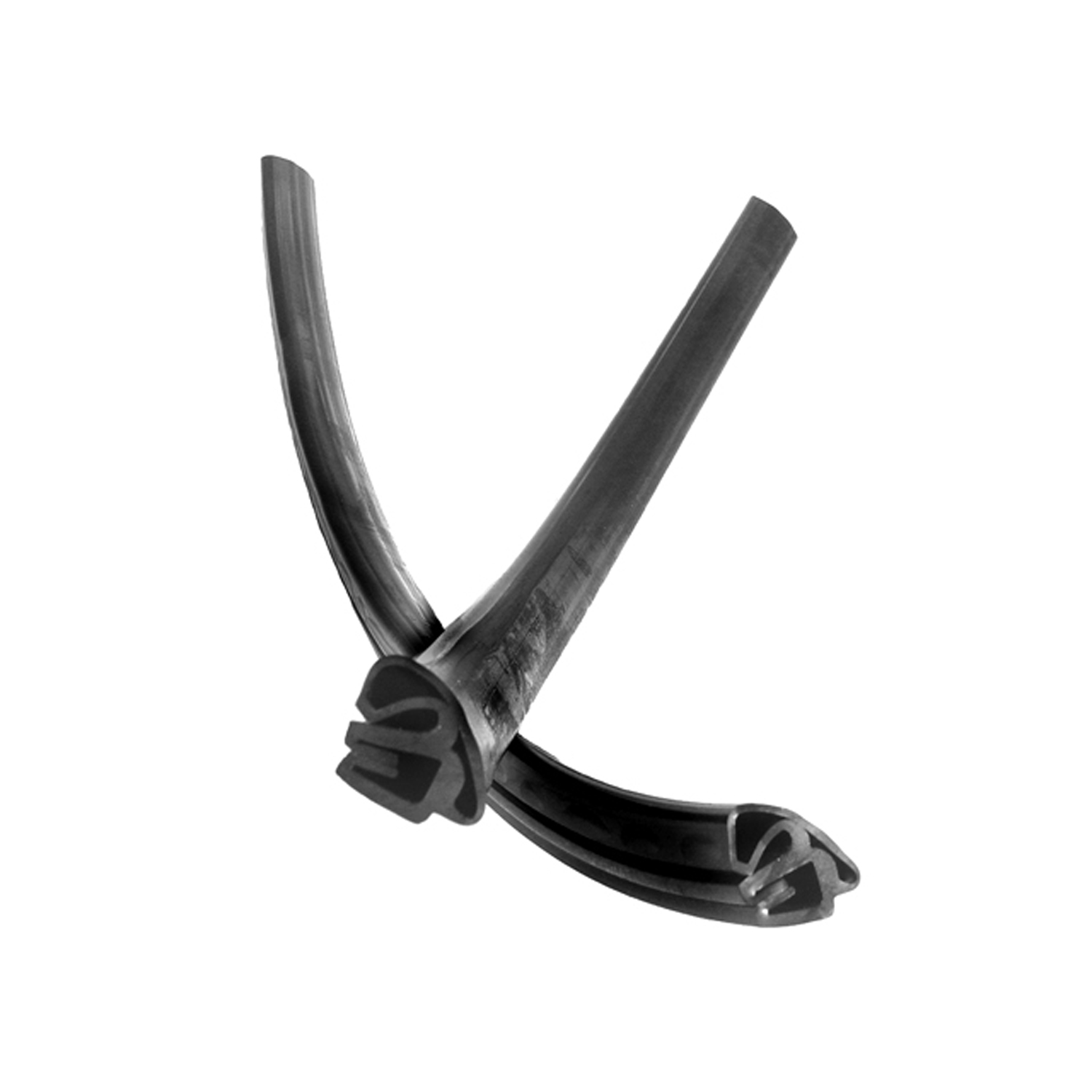 1952 Fiat 1100 Vertical Seals. Pair-VS 20Vertical Seals. Pair
Why Choose Metro?
For over 100 years, Metro Moulded Parts has been the pinnacle of quality in classic car restoration parts. Our commitment to precision and authenticity in every component ensures a perfect fit and an OEM-level appearance.
- Expert Craftsmanship & Quality: Each part is a testament to our dedication to reliability and perfection, crafted from original designs and thoroughly tested.
- Advanced Technology: We use cutting-edge techniques to create flawless, long-lasting parts that surpass others in performance.
- SuperSoft Sponge – The Ultimate Door Seal: Not only are our door seals 30% softer than competitors', but they're also guaranteed to never leak. They effectively reduce wind and road noise, enhancing your classic car's comfort and driving experience.
- Proudly American: Our parts are a product of American craftsmanship, made in the USA with a spirit of excellence and heritage.
- Unrivaled Warranty: We back our products with a 30-year industry-leading warranty, a testament to our confidence in their quality.
Join us in preserving the legacy of classic cars with parts that are crafted for perfection, not just made.