

Image of 1952 Fiat 500, Note: These illustrations use artistic license and may differ from actual historical models.
Performance Metrics
Fundamental Metrics
Emotional Appeal
MMP Rating
| Engine Specifications | |
|---|---|
| Engine: | Inline-2 |
| Displacement: | 569 cc |
| Horsepower: | 13-16.5 hp |
| Torque: | Estimated at 22 lb-ft |
| Compression Ratio: | 6.7:1 |
| Ignition System: | Coil ignition |
| Cooling System: | Air-cooled |
| Performance Specifications | |
| 0-60 Time: | Not available due to low horsepower |
| 1/4 Mile Time: | Not available due to low horsepower |
| Top Speed: | 53 mph |
| Transmission and Drive | |
| Drive Type: | Rear-wheel drive |
| Transmission Type: | 4-speed manual |
| Fuel and Efficiency | |
| Fuel System Type: | Carburetor |
| MPG: | Estimated at 40-50 mpg |
| Dimensions and Brakes | |
| Brakes: | Drum brakes |
| Wheelbase: | 79.9 inches |
| Weight: | 1100 lbs |
Note: Specifications for classic cars are given to the best of our ability, considering the limited and variant data available.
A 1952 Fiat 500 could squeeze through streets that stopped larger cars in their tracks, yet it was more than a cute city runabout: it was a practical little machine that helped put postwar Italy back on the road. This is the original Fiat 500, better known as the Topolino, not the later Nuova 500 that arrived in 1957.
Meet the Fiat 500 Topolino
Fiat introduced the 500 in 1936, during a period when affordable motoring was still out of reach for many Europeans. The car was developed under the direction of engineer Dante Giacosa, whose knack for compact, cost-conscious design would shape Fiat cars for decades. Its nickname, Topolino, means “little mouse” in Italian, a fitting description for a car barely larger than a small modern city car’s front end.
By 1952, the Topolino was in its final major form, the Fiat 500 C. Introduced in 1949, the C received updated styling and a more modern-looking front end while keeping the basic formula of its predecessors: a tiny engine, rear-wheel drive, simple construction, and room for everyday errands. One important point for buyers and enthusiasts is that a 1952 Topolino is not the rear-engined Nuova 500 launched five years later. They share a name and a mission, but are very different cars.
The Topolino’s place in automotive history is tied to more than its small dimensions. It offered working families a relatively attainable way to travel, carry shopping, and escape the limits of public transport. Its success helped establish the small, economical car as a serious answer to Europe’s postwar mobility needs.
Compact Italian Design
The 500 C has an upright, rounded silhouette, with separate-looking front fenders, a short bonnet, and a compact cabin set close to the rear axle. Its revised nose is the most recognizable feature of the C version: the headlights sit integrated into the front fenders, giving the car a tidier, more finished appearance than earlier Topolinos. At the back, the body tapers neatly around the small boot and exposed rear wheels.
Inside, the Topolino is deliberately simple. The cabin has painted metal surfaces, straightforward instruments, a slim steering wheel, and modest upholstery, typically in fabric or vinyl depending on specification and restoration. There is little sound insulation and no expectation of modern conveniences. The reward is a light, airy cabin with controls that are easy to understand and maintain.
Equipment varied by market and body style, but the 500 C’s most notable engineering features were its compact four-cylinder engine, four-speed manual gearbox, and independent front suspension. For a small prewar design that continued into the 1950s, the independent front suspension helped provide a more composed ride than a simple rigid front axle would have offered. The rear used a conventional live axle, keeping the layout robust and economical.
Fiat offered the Topolino in several forms, including the closed Berlina saloon, the open-roof Trasformabile, the practical Giardiniera estate, and commercial van or delivery versions. Coachbuilders also produced specialist bodies. The Berlina is the most familiar and widely recognized, while the Giardiniera is especially appealing to collectors who want a tiny car with genuine carrying ability. Factory paint colors varied by year and market; period cars were often seen in restrained shades such as cream, grey, green, or blue. Today, cheerful pastel finishes are popular at shows, though an authentic, well-documented original color is often the stronger choice for restoration value.
Why the Topolino Mattered
The Fiat 500 did not invent the small car, but it showed how a carefully engineered microcar could be useful rather than merely basic. Its compact footprint made narrow streets and tight parking spaces less intimidating, while its enclosed body and usable luggage space made it more versatile than a motorcycle and sidecar. Fiat also built the car in substantial numbers, helping small-car ownership become a realistic goal for a much broader public.
The Topolino’s influence is visible in Fiat’s later approach to affordable urban transport: keep the package small, make the mechanicals straightforward, and focus on efficient use of space. The 1957 Nuova 500 became the more famous cultural icon, but it inherited the earlier car’s central idea. The Topolino established the name and proved that a modest, economical Fiat could become a national favorite.
Its other distinction was longevity. The original 500 remained in production, with updates, from 1936 until 1955. That run carried it through major changes in European life, from prewar austerity to postwar rebuilding and expanding personal mobility.
Top Speed and Driving Feel
The 1952 Fiat 500 C uses a 569 cc, water-cooled, side-valve inline-four producing roughly 16 horsepower, with figures varying slightly by specification and source. Power goes to the rear wheels through a four-speed manual gearbox. Period specifications commonly put top speed at about 85 to 95 km/h, or roughly 53 to 59 mph, depending on condition, gearing, and body style.
Acceleration is leisurely by any modern measure. A 0-to-60-mph time is not especially meaningful because the car takes a long time to reach that speed and may not attain it in ordinary conditions. A healthy example is better understood as a machine for steady, unhurried travel, not rapid acceleration or sustained high-speed motorway use.
On a smooth town road, the Topolino feels nimble and easy to place. Its light controls and small turning circle make it pleasant in tight streets. Over bumps, the short wheelbase and narrow tires remind you that this is a small 1950s car: it can hop and jiggle over rough surfaces, and the cabin offers little isolation from road noise. On winding roads, modest weight and modest speed encourage a relaxed style. You carry momentum through corners rather than charging toward them.
The engine’s sound is one of the car’s charms: a busy, mechanical four-cylinder note that grows more insistent as the revs rise. The driver works the gearbox, plans hills in advance, and becomes part of the car’s rhythm. It is an engaging experience precisely because the Topolino asks for attention and sympathy rather than delivering effortless speed.
Living With a 1952 Fiat 500
Most Topolinos today are used for weekend drives, historic motoring events, club gatherings, and classic-car displays. A well-sorted example can handle local roads and short trips, but it is rarely the ideal choice for modern daily commuting. Traffic speeds, crash protection, heating, and long-distance comfort all reflect a different era.
The mechanical layout is relatively simple, and many routine jobs are approachable for an owner with basic tools and workshop experience. The engine bay is compact, however, and parts availability can vary. Specialist Fiat clubs and vintage-car suppliers are valuable resources, particularly for trim, body panels, and model-specific components. As with any old car, condition and previous restoration quality matter more than a reassuring odometer reading.
Before buying, inspect the body carefully for corrosion, especially around the floor, sills, wheel arches, and structural mounting points. Check the cooling system, brakes, steering, and gearbox, and look for evidence that the engine has been rebuilt properly. A shiny restoration can conceal rushed repairs underneath, so an inspection by someone familiar with Topolinos is money well spent.
Topolino Trivia and Common Criticisms
The Topolino name is one of the most enduring nicknames in motoring. It began as a description of the car’s tiny proportions and became so familiar that many people use “Topolino” as if it were the model’s official name. The 1952 car also sits at a useful dividing line in Fiat history: it is a late version of the original front-engined, rear-wheel-drive 500, just before the radically different Nuova 500 took over the name.
Across the full production run from 1936 to 1955, Fiat built approximately 520,000 Topolinos in their various versions. That figure covers the broader model family, not just 1952 cars, and exact year-by-year totals are not consistently reported. The Giardiniera estate and commercial variants add extra interest because they show how Fiat stretched the little platform beyond basic passenger transport.
The Topolino’s shortcomings are straightforward: limited power, limited space, modest braking by modern standards, and little protection in a collision. It is also less comfortable at contemporary traffic speeds than its cheerful appearance might suggest. Its strengths are just as clear: simplicity, character, fuel economy for its era, and an ability to make ordinary journeys feel like an occasion.
Collector Values and Availability
Topolinos are collectible, but they are not so scarce that buyers must settle for the first car they find. The total production of roughly 520,000 across the model family means examples do surface in Europe and North America, though condition, body style, originality, and documentation vary widely. The rarest or most desirable versions, including certain Giardiniera and specialist-bodied cars, can command a premium over a standard Berlina.
As a broad U.S. market guide, a project car might sell for around $5,000 to $12,000, while a usable driver or older restoration may fall in the $12,000 to $25,000 range. A high-quality, carefully restored Berlina can reach roughly $25,000 to $40,000 or more. Exceptional rare-bodied examples may exceed that range. These are estimates rather than fixed market prices; location, originality, mechanical condition, and the quality of the restoration have a major effect on value.
Well-presented Topolinos have generally benefited from growing interest in microcars and postwar European classics, although the market is smaller and less predictable than for more famous sports cars. Values tend to reward sound, authentic cars rather than expensive restorations that are difficult to verify. The best buying strategy is to prioritize structural condition, correct specification, and a strong history over bright paint or claims of rarity.
A Small Fiat With a Big Legacy
The 1952 Fiat 500 Topolino combines charming Italian styling with practical engineering and a remarkable place in the story of affordable motoring. It is slow, compact, and uncomplicated, yet those qualities were exactly what made it useful to generations of drivers. As a classic, it rewards patience and a light touch, offering a direct connection to a time when getting around town required less power and a lot more character.
The Topolino may be small enough to fit into a tight parking space, but its influence reaches far beyond its dimensions. It helped make everyday driving accessible, and it remains a delightful reminder that a great car does not need to be fast to leave a lasting mark.
1952 Fiat 500 Catalog of Parts
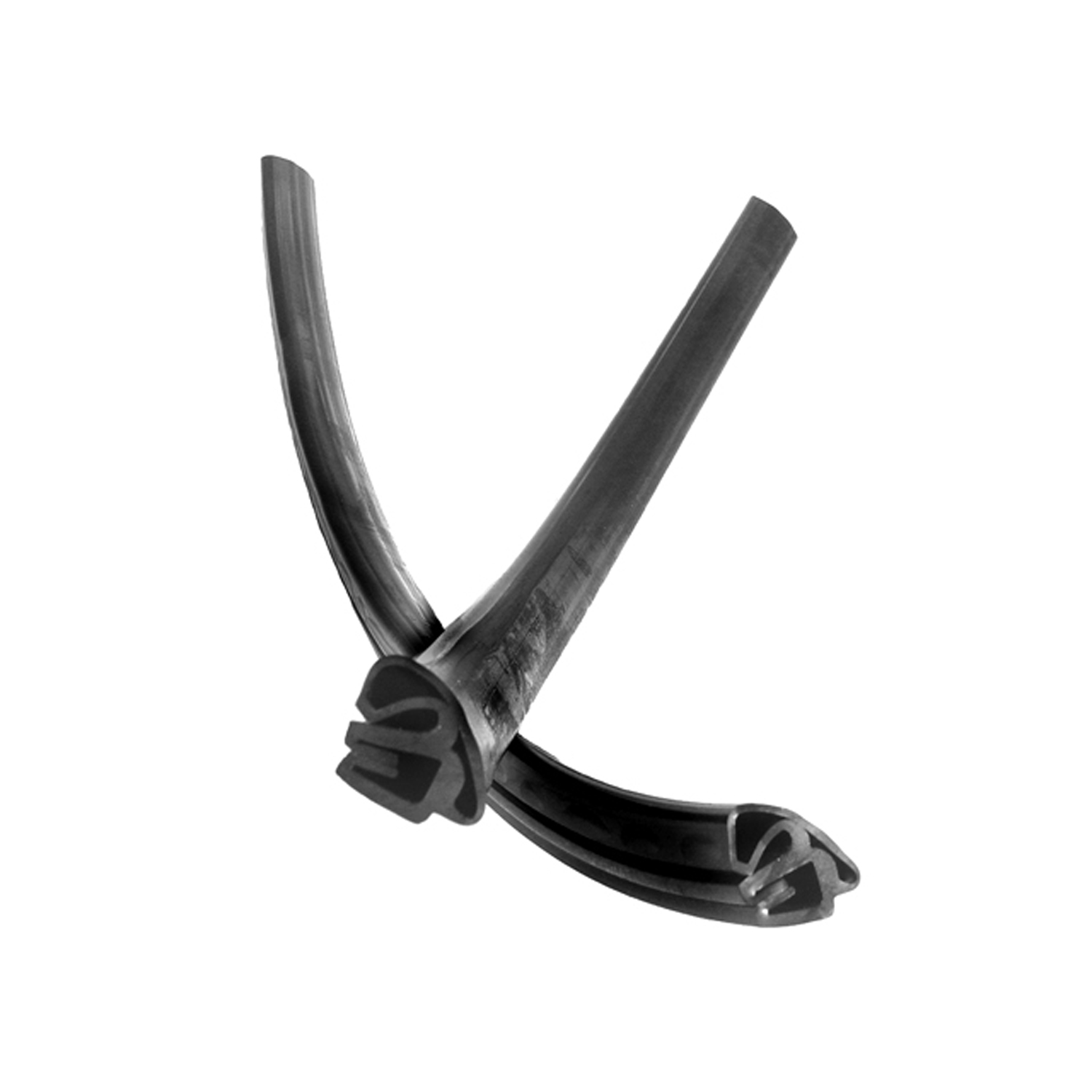 1952 Fiat 500 Vertical Seals. Pair-VS 20Vertical Seals. Pair
Why Choose Metro?
For over 100 years, Metro Moulded Parts has been the pinnacle of quality in classic car restoration parts. Our commitment to precision and authenticity in every component ensures a perfect fit and an OEM-level appearance.
- Expert Craftsmanship & Quality: Each part is a testament to our dedication to reliability and perfection, crafted from original designs and thoroughly tested.
- Advanced Technology: We use cutting-edge techniques to create flawless, long-lasting parts that surpass others in performance.
- SuperSoft Sponge – The Ultimate Door Seal: Not only are our door seals 30% softer than competitors', but they're also guaranteed to never leak. They effectively reduce wind and road noise, enhancing your classic car's comfort and driving experience.
- Proudly American: Our parts are a product of American craftsmanship, made in the USA with a spirit of excellence and heritage.
- Unrivaled Warranty: We back our products with a 30-year industry-leading warranty, a testament to our confidence in their quality.
Join us in preserving the legacy of classic cars with parts that are crafted for perfection, not just made.