

Image of 1953 Fiat 600, Note: These illustrations use artistic license and may differ from actual historical models.
Performance Metrics
Fundamental Metrics
Emotional Appeal
MMP Rating
| Engine Specifications | |
|---|---|
| Engine: | Inline 4 |
| Displacement: | 633 cc |
| Horsepower: | 21.5 hp at 4600 rpm |
| Torque: | 30 Nm at 2500 rpm |
| Compression Ratio: | 6.7:1 |
| Ignition System: | Coil ignition |
| Cooling System: | Water-cooled |
| Performance Specifications | |
| 0-60 Time: | 59 seconds |
| 1/4 Mile Time: | Not available |
| Top Speed: | 59 mph |
| Transmission and Drive | |
| Drive Type: | Rear-wheel drive |
| Transmission Type: | 4-speed manual |
| Fuel and Efficiency | |
| Fuel System Type: | Carburetor |
| MPG: | 40 mpg |
| Dimensions and Brakes | |
| Brakes: | Drum brakes |
| Wheelbase: | 78.7 inches |
| Weight: | 1,279 lbs |
Note: Specifications for classic cars are given to the best of our ability, considering the limited and variant data available.
1953 Fiat 600: A Date Ahead of Its Time
The Fiat 600 helped put postwar Europe on wheels, but there is an important date twist: Fiat did not launch the production 600 until 1955. A car described as a “1953 Fiat 600” is therefore unlikely to be a standard production model. It may be a dating error, a reference to an early development car, or a mix-up with another small Fiat. The production car is still the right subject for anyone curious about the little rear-engined runabout that became one of Italy’s defining cars.
Designed under engineer Dante Giacosa and built by Fiat in Turin, the 600 was conceived as an affordable step up from the tiny Fiat 500 Topolino. It carried four people in a compact, modern package, with its engine behind the passenger compartment and its drive wheels at the rear. The first version appeared at the Geneva Motor Show in March 1955, so claims about a 1953 road-going example should be treated cautiously unless supported by documentation.
Its arrival came as Europe was rebuilding after World War II and demand for affordable personal transport was rising. The 600 was more than a small car: it was a practical symbol of growing mobility. One of its most intriguing offshoots arrived in 1956, when Fiat transformed the same basic mechanical idea into the 600 Multipla, a remarkably space-efficient people carrier that could seat up to six.
Italian Styling and Clever Packaging
The Fiat 600’s shape is compact but not crude. Its rounded nose, curved roof, upright tail, and gently swollen fenders give it a friendly, almost toy-like appearance. The proportions were carefully managed: short overhangs and a cab-forward layout helped create useful room inside a car that measured only about 3 metres long. The rear-mounted engine also freed up space at the front, where a small luggage compartment sat beneath the bonnet.
Early saloons had rear-hinged doors, often called “suicide doors” in modern conversation. They opened wide and made entry easier, though they require sensible care in traffic. Later versions adopted front-hinged doors. Inside, the cabin was simple and functional rather than luxurious. Expect painted metal surfaces, straightforward trim, a slim steering wheel, basic instrumentation, and durable upholstery. Materials and finish varied by year and market, but the 600’s appeal was never about plushness. Its charm came from making a small amount of space work surprisingly hard.
Period paint choices varied by market and production year. Light blue, cream, grey, and muted green shades suit the car’s original character, while brighter colours are also popular on restored examples. Buyers should check whether a colour is correct for the individual car’s year and market, especially when assessing a restoration.
The best-known body style is the two-door saloon, the shape most people picture when they hear “Fiat 600.” The Multipla is the standout alternative: with its forward-set cabin and flexible seating, it served as a family car, taxi, and commercial vehicle. It was not simply a 600 with extra seats; its unusual layout made it an early example of the compact, space-efficient people carrier.
Small Car, Big Influence
The Fiat 600 stood out from many contemporaries because it combined four-cylinder power, independent suspension, rear-wheel drive, and useful four-seat accommodation in an economical package. Its water-cooled engine was mounted at the rear, a layout that kept the front of the car compact and gave the 600 excellent traction on slippery roads. The design made economical use of steel, components, and interior space at a time when affordability was essential.
Its influence extended well beyond Italy. The 600’s basic formula was built under licence or adapted in several countries, including Spain, where SEAT produced the closely related SEAT 600, and Yugoslavia, where Zastava developed its own versions. Those cars helped establish the small car as an everyday choice for families across Europe. Fiat’s own 600 also provided the mechanical foundation for the Multipla, demonstrating how one compact platform could serve very different needs.
The 600 did not invent the rear-engine car, but it showed how effectively the layout could be used in an affordable family vehicle. It helped shape the postwar European small-car boom and paved the way for later Fiat icons, including the rear-engined Fiat 500 Nuova.
Performance and Road Manners
The original 600 used a 633 cc water-cooled inline-four mounted at the rear. Output was about 21 horsepower in early form, delivered through a four-speed manual gearbox. Period specifications and figures can vary slightly by market and model year. Top speed was roughly 95 km/h, or 59 mph. A modern estimate for 0–60 mph is around 35 to 40 seconds, though that figure is best treated as approximate: many period tests measured acceleration to 50 mph or 100 km/h instead.
Those numbers make clear that the 600 was designed for economical travel, not fast overtaking. It is happiest on town streets and quieter roads, where its light weight and compact dimensions make parking and low-speed manoeuvres easy. On a steep hill, with passengers aboard, the small engine asks for patience and well-timed gear changes.
Independent suspension at all four wheels helped the car cope with uneven surfaces better than its tiny size might suggest. The ride is soft and the body can roll in corners, so a 600 rewards smooth inputs rather than aggressive driving. On winding roads, its modest power encourages momentum and careful use of the gearbox. Strong crosswinds and passing trucks are more noticeable than they would be in a modern car, and the original drum brakes call for greater stopping distance and anticipation.
From the driver’s seat, the 600 feels intimate and mechanical. The four-cylinder engine produces a busy, cheerful note from behind the cabin, while the short wheelbase and light controls make urban driving feel direct. It is not quiet or effortless by modern standards, but the close connection between driver, engine, and road is a large part of the experience.
Living With a Fiat 600
Today, most Fiat 600s are used as weekend classics, show cars, or cheerful local drivers. A sound example can handle relaxed outings, but it is not well suited to modern high-speed motorways, heavy traffic, or long journeys without careful preparation. Its small size and approachable character make it a favourite at classic-car gatherings and historic events.
Routine maintenance is generally straightforward for an owner with basic mechanical experience. The engine bay is accessible, the mechanical layout is uncomplicated, and many servicing tasks are familiar to classic-car specialists. Parts availability is reasonably good in established Fiat and SEAT enthusiast communities, although some trim, body, and market-specific components can take more effort to source.
Condition matters more than a low odometer reading. Inspect the body carefully for rust, especially around the floor, sills, wheel arches, door bottoms, and structural areas. Check the cooling system, engine temperature, gearbox operation, brakes, and suspension. A small car with a rear-mounted engine can be forgiving to maintain, but poor cooling or neglected corrosion can quickly turn an inexpensive project into a costly restoration.
Fiat 600 Facts and Misconceptions
The biggest fact to remember is that a production 1953 Fiat 600 is not part of the normal model-year story. Fiat introduced the production car in 1955. An alleged 1953 example should come with convincing evidence, such as factory records, prototype documentation, or a well-supported explanation of its identity.
Fiat produced approximately 2.7 million 600 saloons in Italy between 1955 and 1969. That figure does not include the much wider family of licensed and related cars built elsewhere, so the international legacy is considerably larger. The Multipla is particularly distinctive among the variants, while performance-focused Abarth conversions and derivatives add a sporting chapter to the 600 story.
The model is not known for a headline speed or endurance record. Its achievement was more practical: providing affordable transport in enormous numbers and inspiring related cars across national borders. A common criticism today is that the 600 is slow, noisy, and less safe than a modern vehicle. Those are fair points, but they need to be judged in context. The car was built for an era of lower road speeds, and its purpose was economy and utility, not modern crash protection or high-speed comfort.
Collector Values and Availability
As a broad 2026 guide, a running but tired Fiat 600 might sell for roughly US$5,000 to US$10,000, while a solid, usable example commonly falls around US$10,000 to US$20,000. Well-restored cars can reach approximately US$20,000 to US$30,000 or more, depending on originality, documentation, location, and restoration quality. These are general estimates, not appraisals, and local markets can differ substantially.
Multipla values are usually higher because of the model’s rarity, distinctive design, and strong demand. Particularly desirable examples can sell for several tens of thousands of dollars, with exceptional cars exceeding US$100,000 in some markets. A rare badge or an eye-catching restoration does not automatically guarantee a high price; structural condition and the quality of the work remain decisive.
Ordinary Fiat 600 saloons are findable, especially in Italy and countries with a strong SEAT or Zastava connection, but truly original, rust-free cars are less common. Values have generally strengthened over the long term as interest in postwar European classics has grown. The market is likely to remain condition-sensitive: good cars have collector appeal, while poor projects can be expensive to put right. Any supposed 1953 example would need exceptional provenance before it could be valued as a genuine prototype.
A Little Car With a Lasting Legacy
The Fiat 600 made clever engineering feel approachable. Its rear-mounted four-cylinder engine, space-conscious body, and practical four-seat cabin helped deliver affordable mobility to a generation of European drivers. It also proved adaptable enough to inspire family, commercial, and performance versions.
There may not be a standard production 1953 Fiat 600, but the 1955 car that followed became a landmark all the same. Small in size and modest in speed, it left an outsized mark on automotive history.
1953 Fiat 600 Catalog of Parts
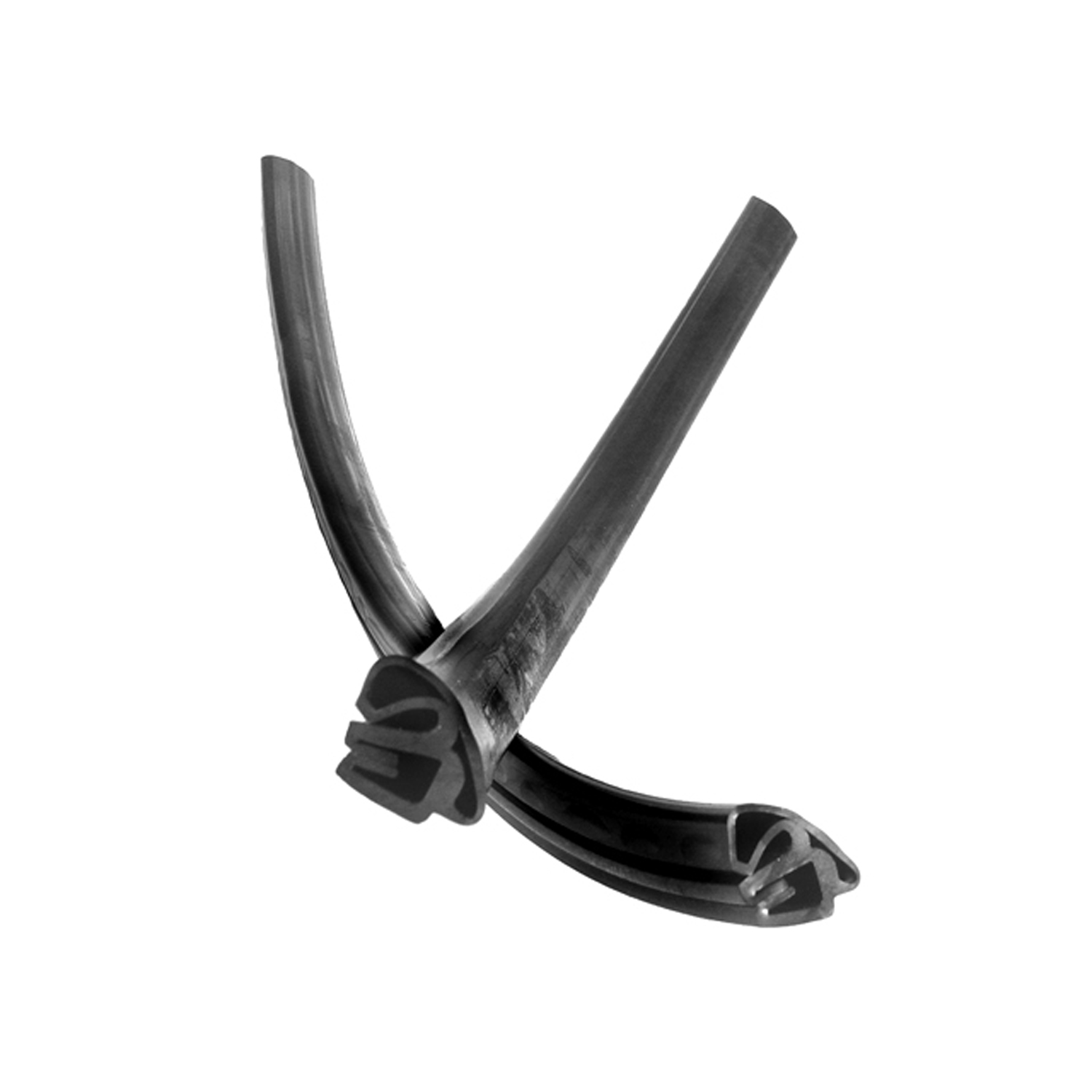 1953 Fiat 600 Vertical Seals. Pair-VS 20Vertical Seals. Pair
Why Choose Metro?
For over 100 years, Metro Moulded Parts has been the pinnacle of quality in classic car restoration parts. Our commitment to precision and authenticity in every component ensures a perfect fit and an OEM-level appearance.
- Expert Craftsmanship & Quality: Each part is a testament to our dedication to reliability and perfection, crafted from original designs and thoroughly tested.
- Advanced Technology: We use cutting-edge techniques to create flawless, long-lasting parts that surpass others in performance.
- SuperSoft Sponge – The Ultimate Door Seal: Not only are our door seals 30% softer than competitors', but they're also guaranteed to never leak. They effectively reduce wind and road noise, enhancing your classic car's comfort and driving experience.
- Proudly American: Our parts are a product of American craftsmanship, made in the USA with a spirit of excellence and heritage.
- Unrivaled Warranty: We back our products with a 30-year industry-leading warranty, a testament to our confidence in their quality.
Join us in preserving the legacy of classic cars with parts that are crafted for perfection, not just made.