
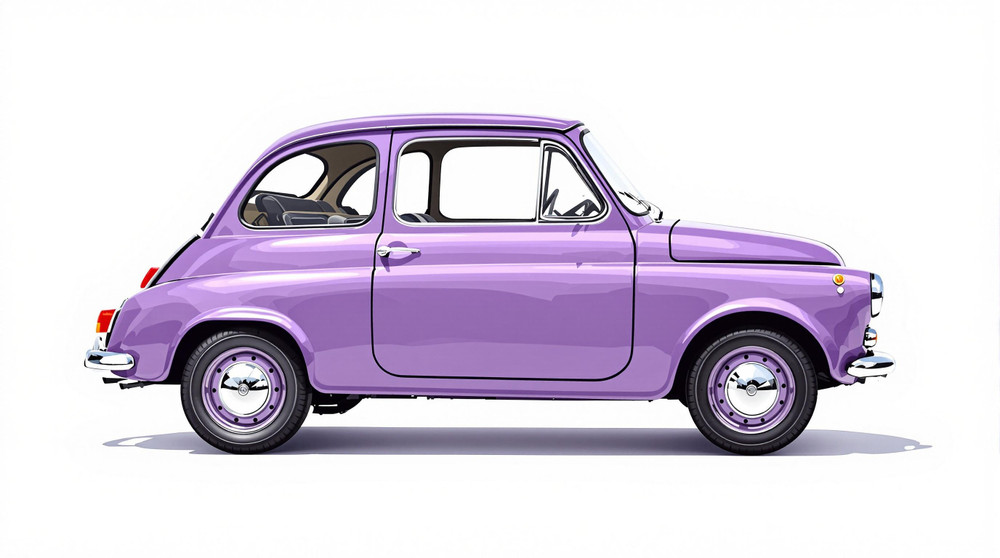
Image of 1954 Fiat 600, Note: These illustrations use artistic license and may differ from actual historical models.
Performance Metrics
Fundamental Metrics
Emotional Appeal
MMP Rating
| Engine Specifications | |
|---|---|
| Engine: | Inline 4 |
| Displacement: | 633 cc |
| Horsepower: | 21.5 hp at 4600 rpm |
| Torque: | 30 Nm at 2500 rpm |
| Compression Ratio: | 6.8:1 |
| Ignition System: | Coil ignition |
| Cooling System: | Water-cooled |
| Performance Specifications | |
| 0-60 Time: | 59 seconds |
| 1/4 Mile Time: | Not available |
| Top Speed: | 59 mph |
| Transmission and Drive | |
| Drive Type: | Rear-wheel drive |
| Transmission Type: | 4-speed manual |
| Fuel and Efficiency | |
| Fuel System Type: | Carburetor |
| MPG: | 40 mpg |
| Dimensions and Brakes | |
| Brakes: | Drum brakes |
| Wheelbase: | 78.7 inches |
| Weight: | 1,212 lbs |
Note: Specifications for classic cars are given to the best of our ability, considering the limited and variant data available.
1954 Fiat 600: The Little Car That Put Italy in Motion
A tiny Fiat with its engine behind the passengers helped turn Italy’s postwar streets into a showcase for affordable motoring. The date needs a small correction, though: the Fiat 600 was developed during the early 1950s, but it was unveiled in 1955, not sold as a regular 1954 production car. A vehicle described as a “1954 Fiat 600” is best understood as a reference to the project’s development period or a pre-production car, rather than a standard model-year example.
Designed under the direction of engineer Dante Giacosa and built by Italian manufacturer Fiat, the 600 was a practical, economical four-seat car aimed at families who needed more room than a scooter or motorcycle could offer. Its compact footprint, rear-mounted engine and relatively modern construction made it a milestone in small-car design. One intriguing detail: the 600 arrived before the even smaller Fiat 500, and helped establish the rear-engine engineering approach that made Fiat’s postwar city cars so distinctive.
Rounded Styling, Clever Packaging
The Fiat 600 had a friendly, rounded shape, with a short hood, a bulbous rear engine compartment and a compact cabin pushed toward the front of the car. Its curved roof and upright glass made the little Fiat feel airier inside than its exterior dimensions suggested. The original model’s rear-hinged doors, often nicknamed “suicide doors,” opened from the center of the car and made it easier to climb into the front seats. Fiat later changed to front-hinged doors on updated versions.
Inside, the 600 was simple and deliberately economical. Painted metal, practical vinyl upholstery and straightforward controls were more common than plush trim or elaborate decoration. The cabin was designed around usefulness: room for four in a very small car, a compact dashboard and a luggage area at the front. The front compartment was modest, so owners had to pack thoughtfully, but the car’s layout made impressive use of its limited length.
The original 600 used a water-cooled, 633 cc inline four-cylinder engine mounted at the rear and driving the rear wheels. That was a notable technical choice for such a small car. It also featured unitary construction, independent suspension at all four wheels and hydraulic drum brakes, giving it a more modern mechanical package than many basic economy cars of the period.
Fiat offered changing paint palettes across model years and markets. Period colors included restrained neutrals and soft, cheerful shades such as pale blue, cream, gray and green. The most memorable examples today are often the light pastel cars, which suit the 600’s rounded shape and postwar Italian character. Exact factory colors vary by production year, so original paint codes are valuable when restoring a car.
The best-known body style is the two-door saloon, but the 600’s platform supported several memorable variations. The Fiat 600 Multipla, introduced in 1956, used a forward-control layout to create a remarkably space-efficient family car with seating for up to six, depending on configuration. Commercial versions such as the 600T van served small businesses, while the glamorous Fiat 600 Jolly, coachbuilt by Ghia, turned the basic car into an open-sided beach car with wicker-style seats and no conventional doors.
A Small Car with a Large Footprint
The Fiat 600 mattered because it brought family motoring within reach of a much broader public. It offered four seats and enclosed-car practicality at a time when many households were moving up from two wheels. Its compact dimensions suited crowded urban streets, while its rear-engine layout freed up space in the cabin and helped Fiat keep the car short.
It also demonstrated how much could be achieved through careful packaging. The 600 was not simply a scaled-down conventional sedan. Its engine placement, independent suspension and unitary body were part of a coordinated design built around low cost and efficient use of space. The Multipla took that thinking further, creating a small people-carrier decades before the modern minivan became a familiar category.
Fiat built approximately 2.7 million 600s in Italy from 1955 to 1969. Licensed and related versions made by manufacturers including SEAT in Spain and Zastava in Yugoslavia added many more. Those cars helped make the 600 a familiar sight well beyond Italy and gave it a lasting place in European automotive history.
Performance and Road Manners
The first Fiat 600’s 633 cc engine produced around 21.5 horsepower, depending on the rating standard used. Fiat quoted a top speed of roughly 95 km/h, or 59 mph. A 0-to-60-mph time is not often given in period specifications, and test results vary, but a reasonable estimate for an original 633 cc car is around 30 to 40 seconds. It was built for economical everyday travel, not fast acceleration.
On smooth roads, the 600 feels light, nimble and easy to place. Its short wheelbase and narrow body make it particularly comfortable in town, where it can slip through traffic and fit into small parking spaces. The independent suspension helps take the edge off ordinary bumps, although the short wheelbase and modest tires mean sharp potholes can still send a noticeable jolt through the cabin.
The rear engine gives the driven wheels useful traction, especially at low speeds or on a damp incline. It also gives the car a distinctive balance. Like other rear-engine cars of its era, the 600 rewards smooth steering and throttle inputs, especially on a winding road. Push it too hard through a corner and its handling can feel less forgiving than that of a modern front-wheel-drive hatchback. A well-maintained example on sound tires is more enjoyable than one with tired suspension or mismatched rubber.
Behind the wheel, the experience is delightfully mechanical. The little four-cylinder engine buzzes from behind the seats, the four-speed gearbox asks for deliberate shifts, and the steering and pedals feel direct rather than heavily assisted. The ride is busy by modern standards, but the car’s low weight and modest pace make ordinary roads feel engaging. Driving a 600 is less about speed than about being part of the scenery.
Living with a Fiat 600
Owners use Fiat 600s as weekend classics, show cars, vintage-tour participants and, in some cases, regular local drivers. The saloon is the most practical version for routine use, while a Multipla or Jolly is more likely to be treasured as a rare specialist model. The 600 can manage short trips and moderate roads, but limited speed, small brakes and minimal crash protection make it a poor match for fast modern highways.
The mechanical layout is relatively straightforward, and many repairs can be handled by an experienced home mechanic. The small engine is accessible, and the car’s uncomplicated systems are part of its appeal. Parts availability is generally reasonable through Fiat specialist suppliers and enthusiast networks, although the quality and fit of reproduction parts can vary. Bodywork is often the bigger concern: rust in the floor, sills, suspension mounting areas and lower body panels can turn an affordable project into an expensive restoration.
Reliability depends heavily on maintenance and restoration quality. Check the cooling system carefully, since the rear-mounted water-cooled engine depends on sound hoses, a healthy radiator and proper airflow. A neglected cooling system can lead to overheating. Also inspect the brakes, electrical system, gearbox and suspension, and confirm that any replacement parts suit the exact model and market version.
Notable Versions and Fiat 600 Trivia
The 600’s most famous transformation may be the Ghia-built Jolly. With its open sides, canvas canopy and beach-friendly character, it became a striking luxury accessory despite being based on an economical city car. Genuine Jolly models are rare and highly collectible, and replicas or conversions should be checked carefully before purchase.
The Multipla is another standout. Its forward-control design placed the driver near the front of the vehicle and made room for a flexible cabin in a remarkably short package. It became a working taxi and family car, and is now regarded as an important ancestor of the compact people-carrier. The 600 also became a national favorite in Spain as the SEAT 600, where it played a major role in the spread of private motoring.
There is no widely recognized production or speed record associated with the original Fiat 600. Its achievement was more practical: millions of families gained access to a small, enclosed car. Common criticisms are equally straightforward. The car is slow by modern standards, offers limited luggage space, has basic safety equipment and can feel vulnerable in contemporary traffic. Those drawbacks are part of the reason it is best enjoyed on relaxed roads and at classic-car events rather than in high-speed commuting.
Collector Values and Availability
A genuine 1954 pre-production Fiat 600 would be an exceptional historical artifact, not a normal used-car purchase. Its value would depend on documented provenance, originality and whether it could be authenticated as an actual factory development vehicle. Since regular production began in 1955, buyers should be cautious about listings that call an ordinary early car a “1954 model” without supporting paperwork.
For production-era Fiat 600 saloons, broad current asking and sale ranges in the United States might run from roughly $4,000 to $10,000 for a project, $10,000 to $20,000 for a usable driver, and approximately $20,000 to $35,000 or more for a very good restoration. Exceptional cars can exceed those figures. Prices vary substantially by country, condition, originality and the quality of the restoration.
Multipla values are typically much higher because of their rarity and historical importance. Depending on condition and specification, a good example may bring roughly $35,000 to $100,000 or more. Authentic Ghia Jollys can command well into six figures, with exceptional cars sometimes reaching several hundred thousand dollars. These are broad estimates, not guaranteed sale prices, and rare models require close comparison with recent specialist auctions.
With about 2.7 million Fiat-built examples, the standard 600 is not rare in the same sense as a limited-production sports car. However, surviving cars in original, well-documented condition are increasingly harder to find. Values have generally strengthened as interest in postwar European classics has grown, especially for Multipla and Jolly versions. Well-restored cars are likely to remain sought after, while poor restorations and incomplete projects may be harder to sell.
Why the Fiat 600 Still Matters
The Fiat 600 combined compact dimensions, a practical four-seat cabin and smart engineering in a car that helped put postwar Europe on the road. Its rear-engine layout and independent suspension made it more than a basic economy car, while the Multipla and Jolly showed just how adaptable its platform could be. The 1954 date points to the car’s development story, but the production Fiat 600 made its public debut in 1955.
Small, charming and quietly influential, the Fiat 600 proved that a modest car could change everyday life. Its greatest legacy is not how fast it went, but how many people it carried into a new era of mobility.
1954 Fiat 600 Catalog of Parts
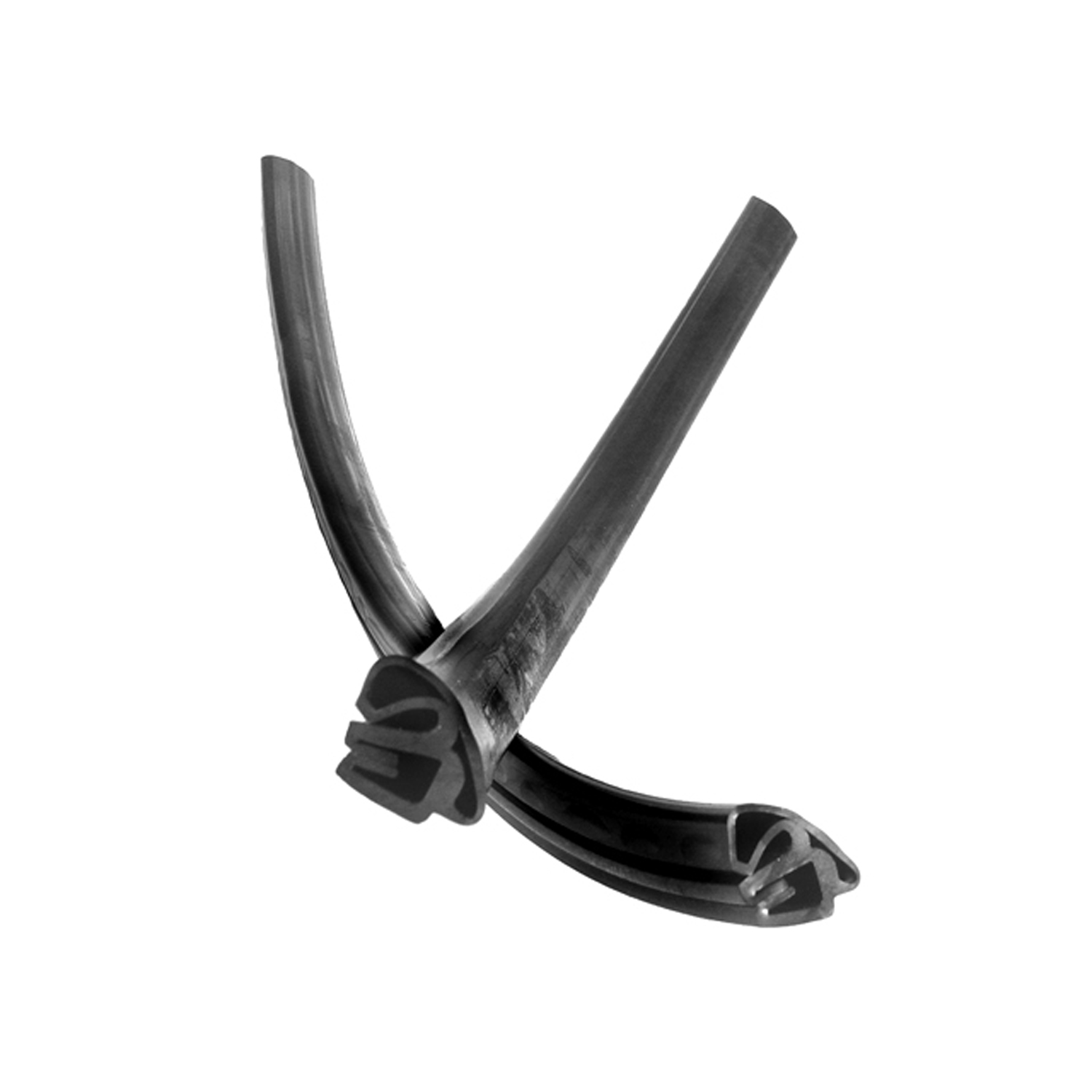 1954 Fiat 600 Vertical Seals. Pair-VS 20Vertical Seals. Pair
Why Choose Metro?
For over 100 years, Metro Moulded Parts has been the pinnacle of quality in classic car restoration parts. Our commitment to precision and authenticity in every component ensures a perfect fit and an OEM-level appearance.
- Expert Craftsmanship & Quality: Each part is a testament to our dedication to reliability and perfection, crafted from original designs and thoroughly tested.
- Advanced Technology: We use cutting-edge techniques to create flawless, long-lasting parts that surpass others in performance.
- SuperSoft Sponge – The Ultimate Door Seal: Not only are our door seals 30% softer than competitors', but they're also guaranteed to never leak. They effectively reduce wind and road noise, enhancing your classic car's comfort and driving experience.
- Proudly American: Our parts are a product of American craftsmanship, made in the USA with a spirit of excellence and heritage.
- Unrivaled Warranty: We back our products with a 30-year industry-leading warranty, a testament to our confidence in their quality.
Join us in preserving the legacy of classic cars with parts that are crafted for perfection, not just made.