

Image of 1955 Fiat 500, Note: These illustrations use artistic license and may differ from actual historical models.
Performance Metrics
Fundamental Metrics
Emotional Appeal
MMP Rating
| Engine Specifications | |
|---|---|
| Engine: | Inline 2-cylinder |
| Displacement: | 479 cc |
| Horsepower: | 13-15 hp |
| Torque: | Estimated at 20 lb-ft |
| Compression Ratio: | 6.5:1 |
| Ignition System: | Coil ignition |
| Cooling System: | Air-cooled |
| Performance Specifications | |
| 0-60 Time: | Not applicable (the car's top speed is less than 60 mph) |
| 1/4 Mile Time: | Not applicable |
| Top Speed: | 53 mph |
| Transmission and Drive | |
| Drive Type: | Rear-wheel drive |
| Transmission Type: | 4-speed manual |
| Fuel and Efficiency | |
| Fuel System Type: | Carburetor |
| MPG: | 52 mpg |
| Dimensions and Brakes | |
| Brakes: | Drum brakes |
| Wheelbase: | 72.4 inches |
| Weight: | 1100 lbs |
Note: Specifications for classic cars are given to the best of our ability, considering the limited and variant data available.
1955 Fiat 500: The Original Topolino
The 1955 Fiat 500 is a tiny survivor from the dawn of Italian mass motoring, with a front-mounted engine, rear-wheel drive and a personality far bigger than its footprint. It belongs to the Fiat 500 C generation, the final version of the prewar-designed Topolino, and is a different car from the rear-engined Nuova 500 that arrived in 1957.
Fiat introduced the original 500 in 1936, with engineer Dante Giacosa leading its design. The name Topolino, Italian for “little mouse,” became its affectionate nickname. By the time the 500 C appeared in 1949, Fiat had updated the small car for postwar buyers. A 1955 example represents the end of the Topolino’s production run, just as Europe was entering a new era of compact-car design.
One detail that often surprises new enthusiasts: despite carrying the famous “500” badge, this car’s engine displaces 569 cc. The model name reflected its approximate fiscal and class category rather than an exact engine size.
Topolino Styling and Cabin
The 500 C has the upright, rounded proportions of a classic prewar small car, softened by its distinctive front end. Its headlights sit integrated into the front fenders, a defining styling change from earlier Topolino versions. A narrow grille, curved hood, simple bumpers and petite wheels give the car a friendly, almost toy-like appearance, while its carefully balanced shape keeps it from looking merely scaled down.
Inside, the cabin is compact and straightforward. Painted metal surfaces, a simple instrument panel and modest trim reflect the car’s practical purpose. Depending on specification and restoration, seats were finished in durable cloth or similar period upholstery. There is little sound insulation or luxury equipment by modern standards, but the controls are uncomplicated and the view forward is excellent.
Equipment varied by market and body style. The 500 C’s notable updates were practical rather than high-tech: improved styling, a small but useful four-speed manual gearbox and hydraulic brakes. The engine was water-cooled, a less common choice among tiny economy cars of the period and one that helped make the car suitable for everyday use in varied conditions.
Factory paint choices differed by year and market. Period examples are often seen in restrained shades such as cream, pale blue, gray and muted green, alongside other light colors typical of postwar European cars. A well-preserved original color can be especially appealing to collectors, though condition and documentation matter more than any single shade.
The best-known form is the two-door saloon, with its enclosed cabin and compact proportions. Fiat also offered commercial van versions, while the 500 C Giardiniera Belvedere provided a small station-wagon-style body with extra carrying capacity. Convertible-style versions with a fabric roof added open-air appeal. The saloon remains the most recognizable and commonly associated Topolino body style.
Why the Fiat 500 C Mattered
The Topolino helped make car ownership more attainable in Italy. Its small size suited narrow streets and limited parking, while its modest running costs made it a realistic choice for families and small businesses. It was not the first affordable small car, but Fiat’s ability to build and sell it in substantial numbers made it an important part of the country’s gradual shift from bicycles and motorcycles toward private motoring.
Its layout also set it apart from many later economy cars. The 500 C kept its engine at the front and drove the rear wheels, a conventional arrangement in its time. The Nuova 500 that followed adopted a rear-mounted engine and rear-wheel drive, showing how quickly small-car engineering was changing. The Topolino’s lasting influence is therefore less about a single technical layout and more about the formula it demonstrated: keep a car compact, economical and useful, and make it accessible to ordinary buyers.
The name lived on in the public imagination. Fiat’s 1957 Nuova 500 became the better-known global icon, but the Topolino established the original small Fiat 500 identity and helped prepare buyers for the later model’s success.
Performance and Road Manners
The 500 C uses a front-mounted, water-cooled 569 cc four-cylinder engine producing roughly 16.5 horsepower, paired with a four-speed manual transmission and rear-wheel drive. Its top speed is generally quoted at about 95 km/h, or 59 mph, though actual performance depends on condition, gearing, road and load.
A conventional 0–60 mph figure is not meaningful: a standard 500 C is not generally capable of reaching 60 mph, even at maximum speed. Period specifications and surviving road tests more often describe its maximum speed than a timed acceleration run. In short, this is a car for measured progress, not traffic-light contests.
On a smooth road, the light steering and compact dimensions make the Topolino easy to place. Its modest power asks the driver to plan ahead, especially on hills or when carrying passengers. The suspension is designed for the roads of its era, so bumps and broken surfaces are part of the experience. Narrow tires and a short wheelbase also mean it can feel lively on a winding road, but it should be driven at a pace that suits its age, brakes and grip.
From behind the wheel, the car feels mechanical and direct. The engine produces a small, steady four-cylinder note, while the gear changes and steering remind the driver that this is a vintage machine rather than a modern appliance. You work with the car: choose a gear early, carry momentum and enjoy the scenery as it comes to you.
Living with a 1955 Fiat 500
Today, most 500 C examples are weekend drivers, show cars or part of a collection. A sound, well-maintained car can be used for local trips and classic-car events, but its age, low speed and limited crash protection make it a poor match for modern highways or daily commuting in fast traffic.
The simple mechanical layout is one of its ownership advantages. A knowledgeable home mechanic can understand much of the engine and drivetrain without specialist diagnostic equipment. Routine service is straightforward, but restoration work can be more demanding. Parts are available through specialist suppliers and enthusiast networks, though availability varies by component and country.
Before buying, pay close attention to rust in the floor, sills, lower body panels and structural areas. Also check cooling-system condition, oil leaks, electrical connections, brakes and the state of the fabric roof if fitted. A car that has been standing for years may need more than a quick tune-up. Originality matters too: confirm that the engine, body style and key components are appropriate for the car and its documented history.
Topolino Facts and Criticisms
Topolino is a nickname rather than the model’s formal name, and its meaning, “little mouse,” suits the car’s small scale. The 500 C was the last major evolution of a design that had begun before the Second World War. The Topolino family is generally credited with production of roughly 520,000 cars across its versions, with estimates for the 500 C itself often placed around 376,000. Exact figures vary by source and by how commercial derivatives are counted.
Topolino-based competition and modified cars appeared in the broader world of Italian amateur motorsport, where small, light vehicles could be adapted for local events. The standard 500 C, however, was built primarily as economical transport rather than a record-setting performance car. Its achievement was its usefulness and scale of production, not a headline speed or endurance record.
Its familiar drawbacks are easy to understand: limited speed, little space, modest braking by modern standards and minimal safety equipment. The cabin can feel cramped, and the car’s age means reliability depends heavily on maintenance and restoration quality. Those limitations are also part of its appeal to enthusiasts who value a simple, hands-on driving experience.
1955 Fiat 500 Collector Values
Values depend strongly on body style, originality, restoration quality, provenance and location. As a broad current-market estimate in U.S. dollars, a project car may fall around $5,000 to $12,000, while a usable driver could be roughly $12,000 to $25,000. A well-restored or especially attractive example may bring about $25,000 to $40,000 or more. Exceptional cars, rare configurations or documented examples can exceed those ranges, while neglected cars may sell for less.
Topolinos are collectible but not impossible to find, especially in Europe. The estimated production of hundreds of thousands of 500 C models means the car is not rare in the strictest production-number sense. Original, rust-free examples and unusual body styles are much less common than ordinary saloons, however, and quality restoration can cost more than buyers expect.
Interest in small Italian classics has supported values over time, particularly for well-presented cars. Prices still vary with the wider collector market, and restoration costs can limit the return on a project. For buyers, the strongest purchase is usually the soundest and most complete car they can afford, rather than the cheapest example with the longest repair list.
A Small Car with a Big Legacy
The 1955 Fiat 500 C Topolino combines clever packaging, approachable engineering and unmistakable Italian charm. It is slower and simpler than the cars that followed, but it played a meaningful role in making motoring attainable and helped establish a name that would become famous around the world.
It does not need a big engine or a record-breaking speed to make an impression. The Topolino’s achievement was giving ordinary drivers a practical little car, and its legacy still fits neatly into every smile it earns on the road.
1955 Fiat 500 Catalog of Parts
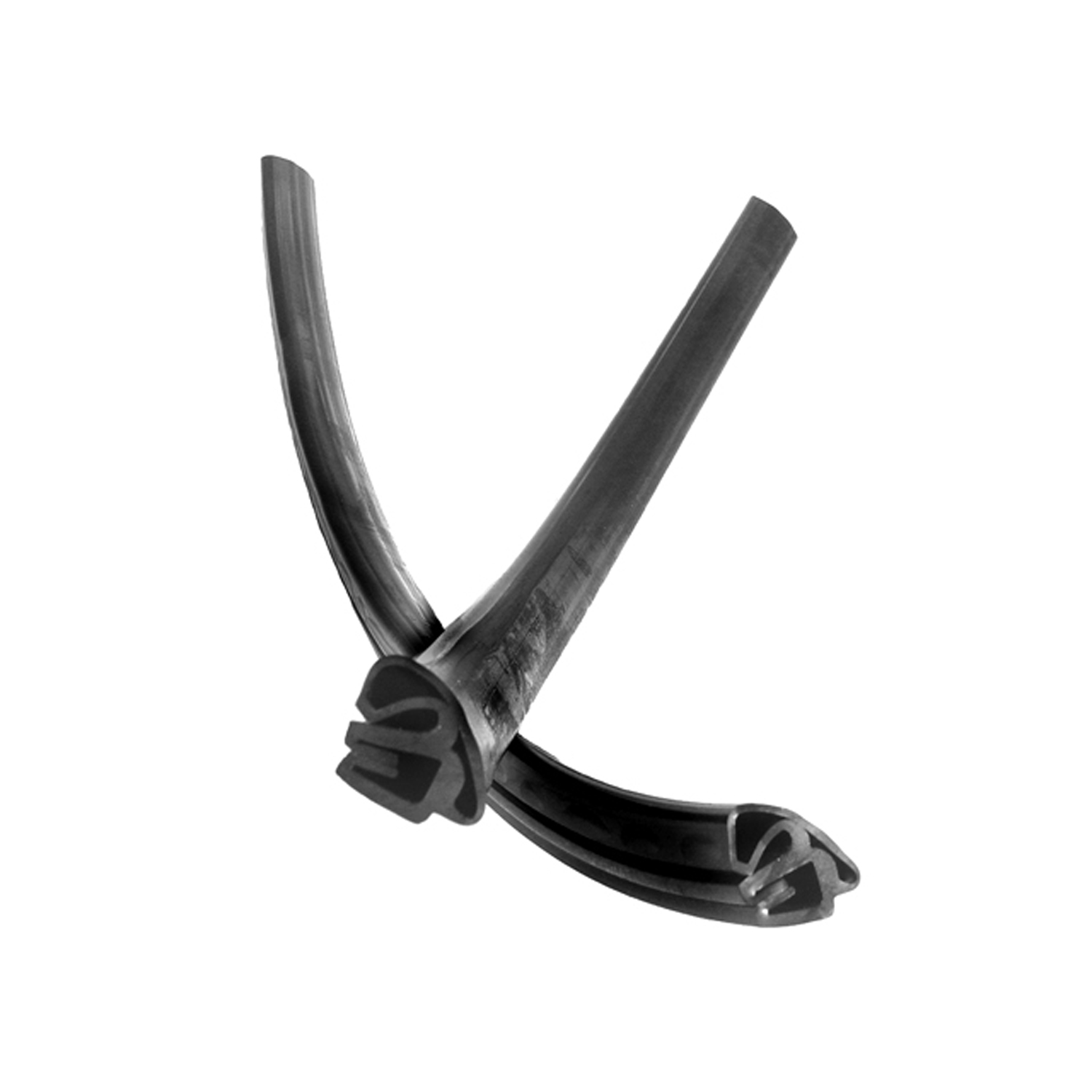 1955 Fiat 500 Vertical Seals. Pair-VS 20Vertical Seals. Pair
Why Choose Metro?
For over 100 years, Metro Moulded Parts has been the pinnacle of quality in classic car restoration parts. Our commitment to precision and authenticity in every component ensures a perfect fit and an OEM-level appearance.
- Expert Craftsmanship & Quality: Each part is a testament to our dedication to reliability and perfection, crafted from original designs and thoroughly tested.
- Advanced Technology: We use cutting-edge techniques to create flawless, long-lasting parts that surpass others in performance.
- SuperSoft Sponge – The Ultimate Door Seal: Not only are our door seals 30% softer than competitors', but they're also guaranteed to never leak. They effectively reduce wind and road noise, enhancing your classic car's comfort and driving experience.
- Proudly American: Our parts are a product of American craftsmanship, made in the USA with a spirit of excellence and heritage.
- Unrivaled Warranty: We back our products with a 30-year industry-leading warranty, a testament to our confidence in their quality.
Join us in preserving the legacy of classic cars with parts that are crafted for perfection, not just made.