

Image of 1955 Fiat 600, Note: These illustrations use artistic license and may differ from actual historical models.
Performance Metrics
Fundamental Metrics
Emotional Appeal
MMP Rating
| Engine Specifications | |
|---|---|
| Engine: | Inline 4 |
| Displacement: | 633 cc |
| Horsepower: | 21.5 hp at 4600 rpm |
| Torque: | 30 Nm at 2500 rpm |
| Compression Ratio: | 6.8:1 |
| Ignition System: | Coil ignition |
| Cooling System: | Water-cooled |
| Performance Specifications | |
| 0-60 Time: | 59 seconds |
| 1/4 Mile Time: | Not available |
| Top Speed: | 59 mph |
| Transmission and Drive | |
| Drive Type: | Rear-wheel drive |
| Transmission Type: | 4-speed manual |
| Fuel and Efficiency | |
| Fuel System Type: | Carburetor |
| MPG: | 40 mpg |
| Dimensions and Brakes | |
| Brakes: | Drum brakes |
| Wheelbase: | 78.7 inches |
| Weight: | 1102 lbs |
Note: Specifications for classic cars are given to the best of our ability, considering the limited and variant data available.
1955 Fiat 600: Italy’s Little Giant
The 1955 Fiat 600 turned a cramped postwar commute into the start of a family motoring adventure. Designed by Dante Giacosa and built by Fiat in Italy, this compact rear-engine car arrived at the Geneva Motor Show in March 1955 as an affordable, practical step up from the tiny Fiat 500 Topolino. It carried four people in a footprint small enough for crowded city streets, helping put car ownership within reach of ordinary Italian households.
Its timing mattered. Europe was rebuilding, incomes were rising, and demand for inexpensive personal transport was growing fast. The 600 offered more room and performance than a scooter or microcar without the cost and bulk of a larger sedan. One detail that still catches the eye is its original pair of rear-hinged “suicide” doors, a feature that gave the first-generation car an unmistakable look and made entry to its compact cabin easier.
Compact Styling, Clever Packaging
The Fiat 600 is short, rounded, and cheerful, with a softly domed roof, gently curved fenders, small circular headlamps, and a simple upright nose. Its rear-mounted engine allowed the front of the car to be used for luggage, while the cabin occupied most of the available length. The result is a shape that looks almost toy-like, but it was carefully designed to make efficient use of every inch.
Inside, the 600 is straightforward rather than luxurious. The dashboard is simple, with painted metal and clear, functional controls. Materials were chosen to keep the car affordable: modest trim, practical upholstery, and durable surfaces rather than expensive wood or plush carpeting. The front seats are separate, with a rear bench providing room for passengers. By modern standards, the cabin is narrow, but its upright seating and generous glass make it feel airy for such a small car.
Paint colors varied by year and market. Period Fiat 600s appeared in cheerful shades such as cream, pale blue, light green, and red, alongside more restrained colors. Cream and pastel shades suit the car’s friendly character particularly well, though original paint codes and availability should be checked when assessing a specific example.
The best-known body style is the two-door saloon, and the 1955 model is especially recognizable with its rear-hinged doors. Fiat broadened the family soon after launch. The 600 Multipla, introduced in 1956, used a forward cabin and compact footprint to carry as many as six people, making it an early, influential people carrier. Abarth and other specialists also created tuned versions, including the celebrated Abarth 750 based on the 600.
Engineering That Changed Small Cars
At the heart of the original 600 is a water-cooled, 633 cc inline-four mounted behind the passenger compartment. It drives the rear wheels through a four-speed manual gearbox. Early cars produced roughly 21 horsepower, a modest figure even for the period, but the car’s low weight helped make that power useful around town.
The 600’s layout was a major part of its innovation. Its compact rear-engine package left room for four passengers without requiring a long bonnet, while independent suspension at all four wheels helped deliver a more composed ride than many basic small cars of the era. The combination of unitary construction, rear-wheel drive, and efficient packaging made the 600 a practical template for affordable family transport.
It also helped establish the idea that a small car did not have to be a bare-bones two-seater. The 600 sat between the smaller Fiat 500 and larger Fiat models, offering a useful middle ground. Its success influenced the development of compact cars across Europe, while the Multipla anticipated the modern emphasis on flexible passenger space.
Performance and Road Manners
Fiat quoted a top speed of about 95 km/h, or 59 mph, for the original 633 cc model. Acceleration is leisurely. A period-style 0-to-60 mph figure is not especially meaningful because the car’s top speed is around that mark; depending on mechanical condition, gearing, load, and road conditions, reaching 60 mph can take roughly 40 seconds or more, and some examples may not quite get there. The 600 is best understood as a city and country-road car, not a modern highway runner.
On narrow streets, the light steering and small dimensions make the Fiat easy to place and park. Its rear-engine layout gives the driven wheels good traction at low speeds, while the independent suspension helps soften rough surfaces. The short wheelbase can make sharp bumps feel abrupt, however, and strong crosswinds can unsettle a light car with a tall cabin.
Like other rear-engine cars with swing-axle rear suspension, the 600 can become lively if pushed hard through a corner, particularly if the driver lifts off the throttle suddenly. Its narrow period tires and modest brakes also demand sensible speeds and generous following distances. Driven smoothly, it feels nimble and sociable rather than intimidating.
The driving experience is wonderfully direct. The small engine buzzes away behind the rear seat, the four-speed gearbox asks for deliberate shifts, and the cabin carries more mechanical sound than a modern car. The driver feels closely connected to the road, the engine, and the work of keeping momentum. That involvement is part of the charm, though it also means the 600 rewards patience.
Living With a Fiat 600
Today, most Fiat 600s are used for weekend drives, classic-car gatherings, historic motoring events, and local shows. Some owners enjoy them on quiet roads or in town, where their compact size feels perfectly at home. Abarth-inspired and period-tuned examples may appear at club events and historic motorsport gatherings, but an ordinary 600 is more about cheerful transport than outright speed.
Routine mechanical work is relatively approachable for an owner with basic tools and a repair manual. The simple engine and accessible components are a welcome contrast to modern, computer-controlled cars. Parts support is helped by the Fiat’s large production run and the related Spanish, Yugoslav, and other licensed versions, though availability varies by country. Body and trim pieces can be harder to source than routine service items.
Rust is a key inspection point. Check the floor, sills, wheel arches, suspension mounting areas, and lower body panels carefully, especially on cars that have spent years in damp climates. Also inspect the cooling system and look for signs of overheating or poor maintenance. As with any old car, a tidy, well-documented example is usually a better buy than a cheap restoration project.
Fiat 600 Facts and Criticisms
The Fiat 600 became a worldwide family of cars. Fiat built roughly 2.7 million examples in Italy, while licensed or locally produced relatives included Spain’s SEAT 600 and Yugoslavia’s Zastava 750. Counting these and other related production runs, the broader 600 family reached well over four million cars. Exact totals depend on which derivatives are included.
The Abarth connection gave the little Fiat a surprising competition career. Abarth transformed the 600 into small-displacement record and racing cars, including 750 cc machines that set endurance records at Monza in 1956. The contrast between the humble family saloon and these hard-working record cars remains one of the most entertaining chapters in the 600’s story.
Criticisms are easy to understand. The original car is slow by modern standards, offers limited luggage space, and has a small cabin for four adults. Early rear-hinged doors can feel awkward in tight parking spaces, and the driving experience is noisy and lacks modern safety equipment. Those limitations are real, but they are also part of what makes the car an honest time capsule rather than a modern vehicle in vintage clothing.
Collector Values and Availability
The Fiat 600 is not exceptionally rare overall, but an original 1955 example is much less common than later cars. It is also less readily encountered in North America than in Italy, Spain, and other European markets. Licensed relatives broaden the supply of similar cars, but buyers seeking a genuine early Fiat should verify the model year, identification numbers, and production details.
As a broad 2026 estimate, a project car might sell for around US$4,000 to $8,000. A usable driver could fall in the US$8,000 to $18,000 range, while a well-restored car may bring roughly US$20,000 to $35,000. Exceptional restorations, rare early details, and desirable Abarth or coachbuilt versions can exceed those figures. Prices vary considerably by country, condition, originality, and documentation.
Values have generally strengthened as interest in small postwar European cars has grown, though condition and restoration quality matter more than short-term market swings. A sound, original car is often more appealing to collectors than an over-restored example with questionable parts. The 600 is unlikely to behave like a blue-chip exotic, but well-kept examples have a strong enthusiast following and a good chance of holding their appeal.
Why the 1955 Fiat 600 Still Matters
The 1955 Fiat 600 combined clever packaging, accessible engineering, and endearing design in a car small enough for Italy’s narrow streets yet useful enough for family life. Its rear-engine layout and independent suspension helped shape the compact-car conversation, while its licensed descendants carried the basic idea to millions more drivers around the world.
It may be slow, noisy, and wonderfully simple, but that is precisely why the Fiat 600 remains memorable. It did not merely make a small car; it made a small car feel like a genuine family automobile, and its cheerful silhouette still tells that story at a glance.
1955 Fiat 600 Catalog of Parts
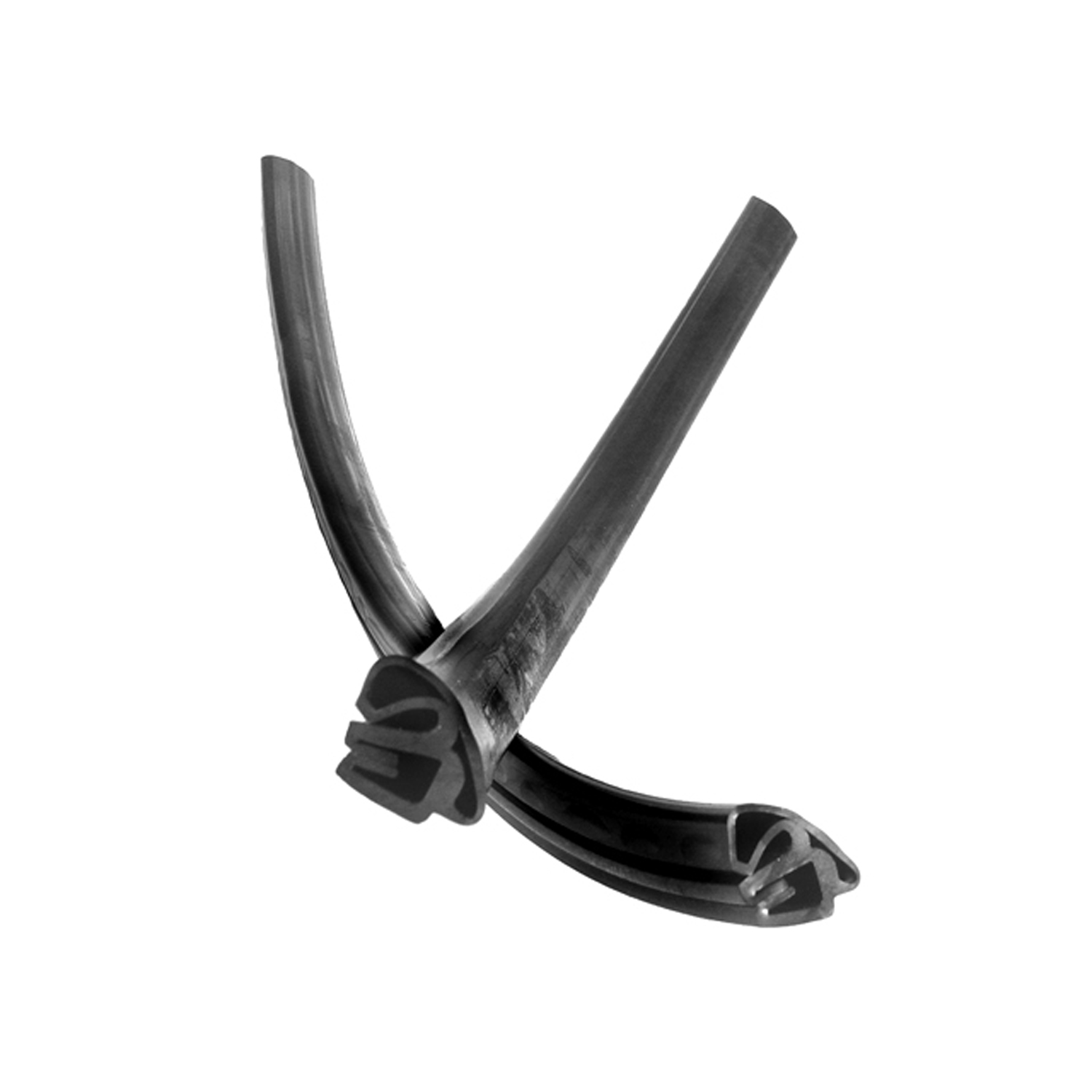 1955 Fiat 600 Vertical Seals. Pair-VS 20Vertical Seals. Pair
Why Choose Metro?
For over 100 years, Metro Moulded Parts has been the pinnacle of quality in classic car restoration parts. Our commitment to precision and authenticity in every component ensures a perfect fit and an OEM-level appearance.
- Expert Craftsmanship & Quality: Each part is a testament to our dedication to reliability and perfection, crafted from original designs and thoroughly tested.
- Advanced Technology: We use cutting-edge techniques to create flawless, long-lasting parts that surpass others in performance.
- SuperSoft Sponge – The Ultimate Door Seal: Not only are our door seals 30% softer than competitors', but they're also guaranteed to never leak. They effectively reduce wind and road noise, enhancing your classic car's comfort and driving experience.
- Proudly American: Our parts are a product of American craftsmanship, made in the USA with a spirit of excellence and heritage.
- Unrivaled Warranty: We back our products with a 30-year industry-leading warranty, a testament to our confidence in their quality.
Join us in preserving the legacy of classic cars with parts that are crafted for perfection, not just made.