

Image of 1956 Fiat 500, Note: These illustrations use artistic license and may differ from actual historical models.
Performance Metrics
Fundamental Metrics
Emotional Appeal
MMP Rating
| Engine Specifications | |
|---|---|
| Engine: | Inline 2-cylinder |
| Displacement: | 479 cc |
| Horsepower: | 13-15 hp |
| Torque: | 22 Nm |
| Compression Ratio: | 6.7:1 |
| Ignition System: | Coil ignition |
| Cooling System: | Air-cooled |
| Performance Specifications | |
| 0-60 Time: | Not available due to the vehicle's low horsepower |
| 1/4 Mile Time: | Not available due to the vehicle's low horsepower |
| Top Speed: | 85 km/h (53 mph) |
| Transmission and Drive | |
| Drive Type: | Rear-wheel drive |
| Transmission Type: | 4-speed manual |
| Fuel and Efficiency | |
| Fuel System Type: | Carburetor |
| MPG: | 52 mpg |
| Dimensions and Brakes | |
| Brakes: | Drum brakes |
| Wheelbase: | 1,840 mm |
| Weight: | 500 kg |
Note: Specifications for classic cars are given to the best of our ability, considering the limited and variant data available.
1956 Fiat 500: The Topolino at the End of an Era
A tiny Fiat helped put an entire generation of Italians on the road, but a car advertised as a “1956 Fiat 500” comes with an important historical wrinkle: the familiar front-engine Fiat 500C Topolino had ended production in 1955, while its famous rear-engine successor would not arrive until 1957. A car carrying a 1956 date may therefore be a late-registered Topolino, a car built earlier and sold later, or a listing that has confused it with the newer Nuova 500.
This guide focuses on the Fiat 500C Topolino, the model most likely meant by a 1956 Fiat 500. Built by Italian manufacturer Fiat, it was the final and most developed version of the original 500, a compact economy car conceived to make motoring accessible. Its name, Topolino, means “little mouse” in Italian, a fitting nickname for a car that was small, nimble, and instantly recognizable.
The Topolino’s story began in 1936, when Fiat introduced a remarkably compact car designed under engineer Dante Giacosa. After World War II, Fiat updated the model in stages, culminating in the 500C in 1949. That final version paired prewar engineering with a more modern appearance and practical details. Its production ended just before the even smaller, rear-engine Nuova 500 became one of the defining cars of Italy’s postwar boom.
Topolino Design: Small Car, Big Character
The 500C has a rounded, upright shape, with a short bonnet, tall cabin, and friendly front end. Unlike the later Nuova 500, its engine sits at the front and drives the rear wheels. The 500C’s most obvious visual update was its front styling: the earlier upright grille treatment gave way to a lower, wider-looking nose with integrated headlamps. The result remained unmistakably Topolino, but looked tidier and more contemporary.
Inside, the cabin is straightforward and compact. Expect a simple painted-metal dashboard, basic instrumentation, slim door panels, and seats trimmed in practical cloth or vinyl, depending on specification and restoration history. It is not a luxury interior, but its honest simplicity is part of the appeal. There is little sound insulation, limited storage, and no modern conveniences, so the driver and passenger sit close to the mechanical action.
Equipment reflects the car’s economical mission. The 500C used a four-speed manual gearbox, hydraulic brakes, and a conventional front-engine, rear-wheel-drive layout. Its small wheels, narrow tyres, and light weight helped keep running costs down. Period paint choices varied by market and specification, but surviving examples are often seen in light blue, cream, grey, and other understated tones. Restored cars may wear a broader range of period-inspired colors.
The best-known body style is the two-door saloon, often fitted with a large fabric sunroof that opens much of the roof area. Fiat also offered open-top versions and the useful Giardiniera Belvedere estate, which added cargo room while retaining the Topolino’s compact footprint. Commercial van and light utility versions were produced too. The saloon remains the most recognizable choice, while the Belvedere is especially appealing to collectors who want a more unusual and practical variant.
Why the Fiat 500C Matters
The Topolino was not the first small car, but it showed how carefully engineered a low-cost car could be. Its compact dimensions and modest engine suited crowded European streets and tight household budgets. It helped establish the idea that a small car could be genuine everyday transport rather than a novelty or a stripped-down runabout.
Its layout also makes it an instructive contrast to the 1957 Nuova 500. The Topolino used a front-mounted four-cylinder engine and rear-wheel drive; the Nuova 500 placed a two-cylinder engine at the rear. The newer car became the more famous symbol of Italy’s postwar mobility, but the Topolino helped prepare the ground by building Fiat’s reputation for compact, affordable transportation.
The 500C’s significance is partly about timing. It was a mature design from an earlier era, still serving drivers as Europe rebuilt, just as a new generation of microcars was taking shape. Its influence is less about a single technical breakthrough than about making small-car engineering useful, durable, and desirable to ordinary buyers.
Fiat Topolino Performance and Driving Feel
The 500C’s water-cooled, 569 cc inline-four produces around 16.5 horsepower in its later specification. Power goes through a four-speed manual transmission to the rear wheels. A healthy, properly tuned example can reach roughly 55 to 60 mph, with about 59 mph commonly quoted as its top speed. A modern 0-to-60 mph time is not a particularly useful measure for a car of this type; expect acceleration to take well over 30 seconds, and often longer depending on condition, gearing, load, and road conditions.
On the road, the Topolino rewards patience. It is happiest at modest speeds, where the engine’s steady mechanical chatter and the short wheelbase make it feel lively. The gear lever and controls require more deliberate input than those in a modern car, and keeping momentum matters. Hills, headwinds, and fast traffic can quickly expose the limits of its power.
The suspension and narrow tyres were designed for a lighter, slower world. The car can feel busy over rough surfaces, and bumps are more noticeable than they would be in a contemporary family car. On winding roads, its small size and light steering make it enjoyable, but it is not a sports car: cornering grip and braking performance are modest by modern standards. Strong crosswinds and the wake of large vehicles can also affect such a light car.
Driving one is a hands-on experience. You hear the engine, feel the road through the controls, and plan ahead rather than relying on acceleration to solve every problem. That directness is a major part of the Topolino’s charm, but it also means sensible speeds and attentive driving are essential.
Living with a 1956 Fiat 500
Today, most Topolinos are used as show cars, weekend drivers, or participants in classic-car tours. Some owners do use them around town, where their compact size is a natural advantage, but fast roads and long-distance journeys demand careful planning. The car’s lack of modern safety equipment, including contemporary crash protection, should be taken seriously.
Mechanical access is generally friendly compared with that of a modern vehicle. The simple engine and conventional systems can be serviced by a knowledgeable owner or a specialist familiar with prewar and postwar Fiats. Routine attention includes checking the cooling system, ignition, fuel delivery, brakes, steering, and lubrication. Parts availability is reasonable for many common service items, though specific body, trim, and restoration parts can take more searching.
Condition matters more than the badge. Rust in the body and structural areas, neglected cooling systems, worn brakes, and poor-quality past repairs can turn an inexpensive-looking car into a costly project. Before buying, inspect the underside and body seams carefully, confirm that the engine runs and cools properly, and check that the registration and chassis details match the car’s history.
Topolino Facts, Variants, and Common Criticisms
Fiat produced roughly 520,000 examples of the original 500 Topolino family across its 500A, 500B, and 500C generations from 1936 to 1955. That figure refers to the broader Topolino series, not to cars built in 1956. The exact number attributed to each version can vary among historical sources, so a seller’s claim about a particular production year should be checked against chassis records and documentation.
The nickname is another enduring piece of trivia: Topolino is the Italian name for Mickey Mouse. The name suited the car’s small dimensions and rounded appearance, and it stuck long after the original model gave way to its successor. The estate-style Belvedere is a particularly distinctive version, combining a tiny footprint with the practicality of a small wagon.
The Topolino is not known for a headline-grabbing speed record or a single famous endurance feat. Its achievement was more everyday and arguably more important: it helped make car ownership attainable for a large number of people. The model belongs to the wider history of postwar European recovery, when inexpensive, economical cars became increasingly important to working families and small businesses.
Common criticisms are easy to understand. The cabin is cramped, performance is slow, and braking and safety standards are far behind modern expectations. Older examples may also be affected by corrosion or decades of improvised repairs. For many enthusiasts, however, those limitations are part of the character, provided the car is driven within its abilities.
Collector Values and Market Outlook
Topolino values depend heavily on condition, originality, body style, and documentation. As a broad U.S. market estimate, a project car may sell for roughly $5,000 to $12,000, while a usable driver can fall around $12,000 to $25,000. A well-restored saloon may bring approximately $25,000 to $40,000, with exceptional examples or desirable Belvedere variants sometimes reaching higher prices. Local markets, currency, and restoration quality can shift those figures considerably.
Although Fiat built the Topolino in substantial numbers, surviving cars in excellent, original condition are much less common than the production figure suggests. They appear on the classic-car market, but the right specification and a sound restoration can take time to find. Values have generally benefited from growing interest in small European classics, though condition and buyer demand matter more than age alone. A well-documented, correctly restored car is likely to hold its appeal better than a hurried or heavily modified example.
Because “1956 Fiat 500” is an unusual description for a factory-built Topolino, buyers should verify the actual production date and model. It may be a late registration rather than a true 1956 build. It should also not be confused with the rear-engine Fiat Nuova 500, which was introduced in 1957 and is a different car.
The Last Word on the Fiat 500C Topolino
The late Fiat 500C Topolino is a charming small car with a serious place in automotive history. Its front-engine layout, simple engineering, useful body choices, and approachable scale made it practical transportation in its day. It is slow and basic by modern standards, but its personality is immediate: every journey asks the driver to engage, listen, and enjoy the pace.
For anyone considering a car described as a 1956 Fiat 500, the first step is confirming exactly what it is. If it is a genuine Topolino, it represents the final chapter of Fiat’s original little mouse, a compact machine that helped put Europe on wheels before its famous successor changed the meaning of the name “500.”
1956 Fiat 500 Catalog of Parts
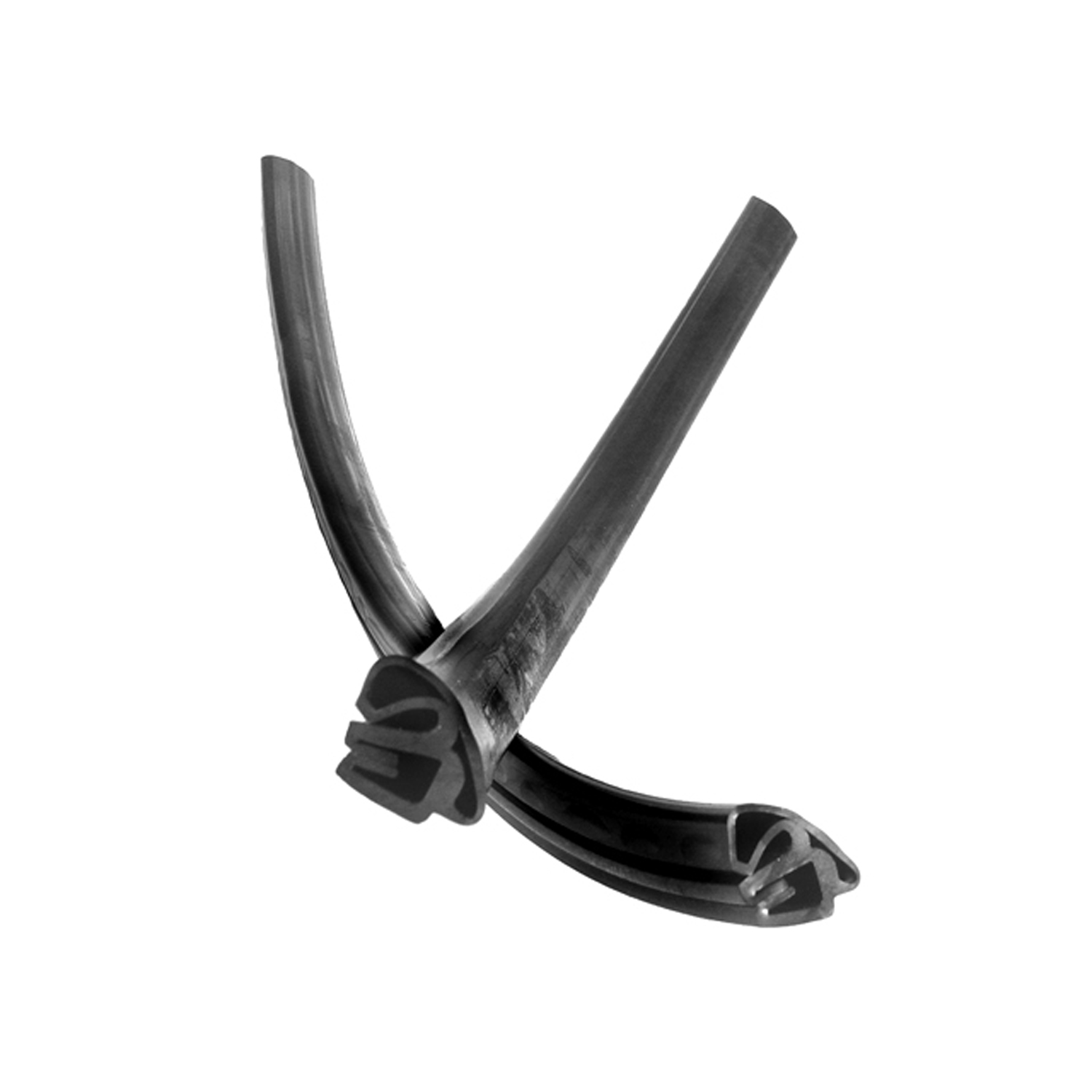 1956 Fiat 500 Vertical Seals. Pair-VS 20Vertical Seals. Pair
Why Choose Metro?
For over 100 years, Metro Moulded Parts has been the pinnacle of quality in classic car restoration parts. Our commitment to precision and authenticity in every component ensures a perfect fit and an OEM-level appearance.
- Expert Craftsmanship & Quality: Each part is a testament to our dedication to reliability and perfection, crafted from original designs and thoroughly tested.
- Advanced Technology: We use cutting-edge techniques to create flawless, long-lasting parts that surpass others in performance.
- SuperSoft Sponge – The Ultimate Door Seal: Not only are our door seals 30% softer than competitors', but they're also guaranteed to never leak. They effectively reduce wind and road noise, enhancing your classic car's comfort and driving experience.
- Proudly American: Our parts are a product of American craftsmanship, made in the USA with a spirit of excellence and heritage.
- Unrivaled Warranty: We back our products with a 30-year industry-leading warranty, a testament to our confidence in their quality.
Join us in preserving the legacy of classic cars with parts that are crafted for perfection, not just made.