

Image of 1956 Fiat 600, Note: These illustrations use artistic license and may differ from actual historical models.
Performance Metrics
Fundamental Metrics
Emotional Appeal
MMP Rating
| Engine Specifications | |
|---|---|
| Engine: | Inline 4 |
| Displacement: | 633 cc |
| Horsepower: | 21.5 hp at 4600 rpm |
| Torque: | 30 Nm at 2500 rpm |
| Compression Ratio: | 6.8:1 |
| Ignition System: | Coil ignition |
| Cooling System: | Water-cooled |
| Performance Specifications | |
| 0-60 Time: | 37 seconds |
| 1/4 Mile Time: | Not available |
| Top Speed: | 59 mph |
| Transmission and Drive | |
| Drive Type: | Rear-wheel drive |
| Transmission Type: | 4-speed manual |
| Fuel and Efficiency | |
| Fuel System Type: | Carburetor |
| MPG: | 40 mpg |
| Dimensions and Brakes | |
| Brakes: | Drum brakes |
| Wheelbase: | 78.7 inches |
| Weight: | 1,212 lbs |
Note: Specifications for classic cars are given to the best of our ability, considering the limited and variant data available.
1956 Fiat 600: Italy’s Little Giant
The 1956 Fiat 600 turned postwar Italian mobility into a small, affordable package, with a rear-mounted engine, room for a family and the sort of cheerful styling that made it instantly recognizable. Designed by Dante Giacosa and built by Fiat, it was a practical everyday car with an outsized role in Italy’s automotive history.
Fiat introduced the 600 in 1955 as a step up from the tiny two-seat Topolino. Its four-seat cabin and compact footprint answered a growing demand for personal transportation as Italy rebuilt and its cities filled with new drivers. One especially intriguing twist arrived in 1956: Fiat unveiled the 600 Multipla, a remarkably compact people carrier that could seat up to six and is often described as an early forerunner of the modern minivan.
Small-Car Styling and Smart Packaging
The 600’s rounded body is all friendly curves and useful economy. Its short nose, domed roof, upright windshield and gently tapered tail make it look almost toy-like, but the proportions were carefully arranged to create as much cabin space as possible. The engine sat behind the passenger compartment, leaving a small luggage area under the front hood. The spare tire and fuel tank also occupied the front section, so packing for a trip called for a little creativity.
Early 600s, including the 1956 model, used rear-hinged doors, often called suicide doors. They opened wide and made entry easier, though they required care in traffic. Fiat switched to front-hinged doors later in the model’s life. The standard body was a two-door saloon, while the 1956 Multipla offered a much more upright, cab-forward layout with flexible seating. Later commercial and licensed versions broadened the family, but the little saloon remains the image most people associate with the Fiat 600.
Inside, the car was simple rather than luxurious. Painted metal surfaces, basic upholstery, a compact dashboard and straightforward controls kept costs and weight down. Materials and trim varied by market and specification, but owners should expect practical cloth or vinyl rather than plush finishes. Color availability also changed over time and by country. Period Fiat palettes included restrained shades such as cream, gray, blue and green, with pale colors especially popular for their fresh, sunny look.
For its size and price, the 600 had clever engineering. Its water-cooled engine was mounted at the rear, driving the rear wheels through a four-speed manual gearbox. Independent suspension at all four corners helped make the most of uneven roads, while the monocoque body provided a modern alternative to a separate chassis. It was a thoughtfully packaged car, not simply a scaled-down version of a larger sedan.
Why the Fiat 600 Mattered
The 600 helped bring car ownership within reach of ordinary households. Before it, many Italians relied on scooters, motorcycles, buses or small two-seat cars. The Fiat offered room for a family and everyday belongings without demanding much parking space or fuel. It became a familiar sight in crowded city streets and on narrow country roads, helping shape the postwar image of Italian motoring.
Its rear-engine layout was not unique, but Fiat made the concept work in a practical, mass-produced family car. The compact powertrain freed up cabin space, and the 600’s basic architecture proved adaptable enough to support the Multipla and a wide range of licensed versions. The model was built in Spain as the SEAT 600 and in Yugoslavia as the Zastava 750, among other related cars. Those versions helped spread the 600’s influence well beyond Italy.
The Multipla deserves special mention. Its short front end and forward cabin placed passengers unusually close to the front axle, creating surprising interior room in a vehicle barely larger than a small saloon. That packaging idea would become familiar in later people carriers, even if the Multipla’s shape was far more distinctive than most of them.
Engine, Speed and Road Manners
A 1956 Fiat 600 used a rear-mounted, water-cooled 633 cc four-cylinder engine. Output was roughly 21 horsepower, with small differences depending on how figures are quoted and the market specification. Power went through a four-speed manual transmission. The early gearbox had synchromesh on the higher gears, so smooth shifts called for a measured hand and a little mechanical sympathy.
Period specifications generally put top speed at about 95 km/h, or roughly 59 mph. That means a true 0-to-60 mph time is not very useful: a standard 1956 car may not reach 60 mph under normal conditions. Acceleration to 100 km/h was leisurely, typically taking well over 40 seconds in period-style estimates. The 600 was built for economical transport, not fast lane overtaking.
On the road, its small size and light controls make it easy to place in tight streets. The rear-engine, rear-drive layout gives the back tires useful traction on slippery surfaces, while the short wheelbase and modest weight help it feel nimble at low speeds. The suspension can soften the impact of rough pavement, but sharp bumps still make their presence known in such a short car.
On winding roads, a 600 rewards smooth inputs. Its period swing-axle rear suspension can change the rear wheels’ camber as the suspension moves, so abrupt cornering or suddenly lifting off the throttle mid-turn is best avoided. The drum brakes and narrow tires also call for sensible following distances by modern standards. Expect an intimate driving experience: a busy little four-cylinder chugging just behind the cabin, light mechanical feedback through the controls and a steady reminder that momentum is precious.
Living With a 1956 Fiat 600
Today, the Fiat 600 is most often enjoyed as a weekend classic, show car, vintage-tour participant or part of a small-car collection. Some owners still use one regularly, especially in towns where its compact dimensions are an advantage. It is less suited to modern high-speed traffic, long highway commutes or carrying a full load up steep hills.
Mechanical simplicity is one of its attractions. The engine and drivetrain are relatively accessible, and many routine jobs can be handled by an experienced home mechanic with basic tools. However, these are old cars, and originality, condition and prior repairs matter more than a reputation for simplicity. Cooling-system condition deserves close attention because the engine is at the rear and depends on sound components and proper airflow. Buyers should also inspect the floor, sills, wheel arches and other body areas for corrosion, along with the brakes, steering, electrical system and gearbox.
Parts support is generally helped by the 600’s large production family and the many licensed derivatives, but not every component is interchangeable between years or countries. A specialist club or marque mechanic can help identify the correct parts, especially for a 1956 car with early details.
Curiosities, Criticisms and Production
The 600’s great trivia fact is that its most famous spin-off arrived in its first full years of production: the Multipla. Its unusual shape was functional, not a styling joke, and today it is among the most collectible members of the family. The standard 600 also inspired performance-minded conversions. Carlo Abarth’s tuned Fiat-based cars are part of the wider 600 story, but they were specialized sporting machines, not standard 1956 Fiat 600s.
There is no widely recognized world speed or endurance record attached to the ordinary 600. Its achievement was more everyday and arguably more important: putting millions of people on the road. Fiat produced roughly 2.7 million 600s in Italy, with licensed versions such as the SEAT and Zastava adding millions more across the broader family. Totals vary depending on which derivatives and markets are counted.
Common criticisms are easy to understand from a modern perspective. The car is slow, noisy at speed, sparsely equipped and short on luggage space. It has limited crash protection by contemporary standards, and its small brakes and tires demand care. Those compromises were part of how Fiat kept it affordable and compact, but they are important considerations for anyone planning to drive one today.
Collector Values and Market Outlook
Prices vary substantially with condition, originality, location and paperwork. As a broad U.S. guide, a project car may fall around $5,000 to $10,000, while a usable driver might bring roughly $12,000 to $25,000. A well-restored saloon can reach approximately $25,000 to $45,000 or more. These are estimates rather than fixed market values, and a documented, exceptional car can exceed them.
The Multipla is in a different league. Its rarity, unusual design and growing reputation as an early people carrier can push restored examples into the $50,000 to $100,000-plus range, depending on specification and condition. A genuine 1956 saloon is less scarce than a Multipla, but early details, excellent restoration quality and a clear history can make one especially appealing to collectors.
The Fiat 600 market has generally strengthened as interest in small European classics has grown, particularly for sound, original or professionally restored cars. Like most classics, values are not guaranteed to rise steadily. Rust, incomplete restorations and poor-quality repairs can quickly outweigh a low purchase price, so condition remains the best guide to value.
A Classic That Made Room for More
The 1956 Fiat 600 combined a tiny footprint, four-cylinder power and clever packaging at a moment when affordable family transport mattered enormously. Its rear-engine layout and modest performance were matched to the needs of its era, while the Multipla showed just how much usefulness could be fitted into a small space.
It may not be fast or lavish, but the Fiat 600 helped reshape everyday motoring and inspired a far-reaching family of cars. That is why this little Italian remains more than a charming piece of vintage design: it is a compact symbol of a country getting back on the road.
1956 Fiat 600 Catalog of Parts
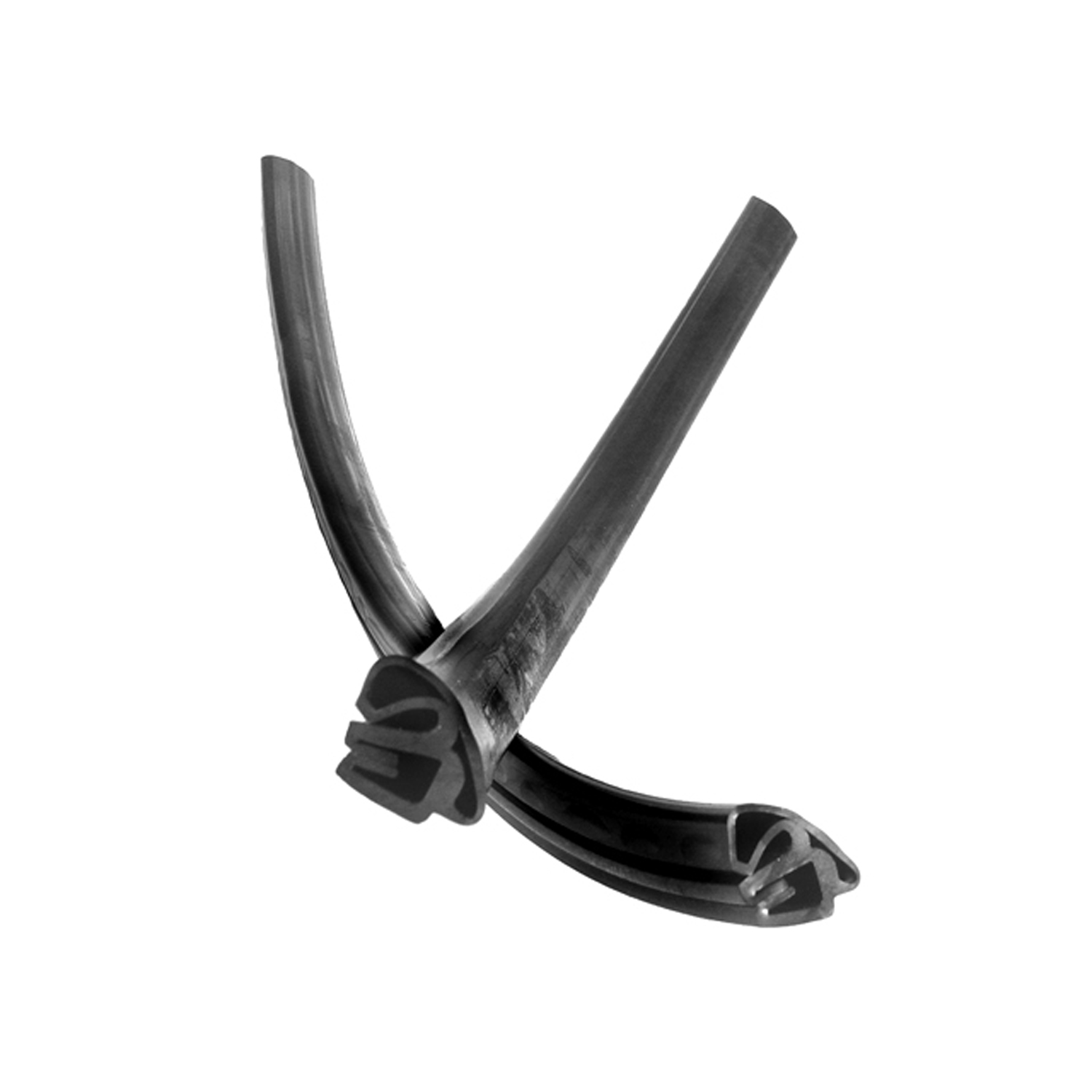 1956 Fiat 600 Vertical Seals. Pair-VS 20Vertical Seals. Pair
Why Choose Metro?
For over 100 years, Metro Moulded Parts has been the pinnacle of quality in classic car restoration parts. Our commitment to precision and authenticity in every component ensures a perfect fit and an OEM-level appearance.
- Expert Craftsmanship & Quality: Each part is a testament to our dedication to reliability and perfection, crafted from original designs and thoroughly tested.
- Advanced Technology: We use cutting-edge techniques to create flawless, long-lasting parts that surpass others in performance.
- SuperSoft Sponge – The Ultimate Door Seal: Not only are our door seals 30% softer than competitors', but they're also guaranteed to never leak. They effectively reduce wind and road noise, enhancing your classic car's comfort and driving experience.
- Proudly American: Our parts are a product of American craftsmanship, made in the USA with a spirit of excellence and heritage.
- Unrivaled Warranty: We back our products with a 30-year industry-leading warranty, a testament to our confidence in their quality.
Join us in preserving the legacy of classic cars with parts that are crafted for perfection, not just made.