

Image of 1957 Fiat 500, Note: These illustrations use artistic license and may differ from actual historical models.
Performance Metrics
Fundamental Metrics
Emotional Appeal
MMP Rating
| Engine Specifications | |
|---|---|
| Engine: | Inline 2-cylinder engine |
| Displacement: | 479 cc |
| Horsepower: | 13 hp |
| Torque: | 20 Nm |
| Compression Ratio: | Estimated 6.7:1 |
| Ignition System: | Coil ignition |
| Cooling System: | Air-cooled |
| Performance Specifications | |
| 0-60 Time: | Estimated 59 seconds |
| 1/4 Mile Time: | Not available |
| Top Speed: | 85 km/h (53 mph) |
| Transmission and Drive | |
| Drive Type: | Rear-wheel drive |
| Transmission Type: | 4-speed manual |
| Fuel and Efficiency | |
| Fuel System Type: | Carburetor |
| MPG: | Estimated 52 mpg |
| Dimensions and Brakes | |
| Brakes: | Drum brakes |
| Wheelbase: | 1,840 mm |
| Weight: | 500 kg |
Note: Specifications for classic cars are given to the best of our ability, considering the limited and variant data available.
1957 Fiat 500: Italy’s Tiny Postwar Hero
The 1957 Fiat 500 made small-car practicality feel unmistakably Italian. Officially called the Nuova 500, or “new 500,” it was created by Fiat to give postwar motorists affordable, economical transport in a country where narrow streets and modest household budgets favored compact cars. Designed under the direction of Dante Giacosa, the little Fiat became one of the defining cars of Italy’s economic recovery and a much-loved symbol of everyday life.
Its launch was a bold move: Fiat replaced the larger 500 Topolino with a car that was smaller, simpler, and less expensive. The first Nuova 500 was so basic that it had only two seats as standard, with a small rear seat available as an option. A memorable detail was its fabric roof, which rolled back over much of the cabin. That clever feature offered open-air motoring without the cost or weight of a full convertible.
Compact Styling and Clever Packaging
The Nuova 500’s rounded body is both charming and carefully practical. Its short nose, domed roof, tiny wheels, and upright rear end leave little room for wasted space. The engine sits behind the passenger compartment, allowing the car to keep its overall length to roughly 2.97 metres, or just under 9 feet 9 inches. The result is a car that can slip into parking spots that larger cars can only admire.
Inside, the cabin is straightforward rather than luxurious. Painted metal, simple upholstery, a slim dashboard, and uncomplicated controls keep the weight and cost down. The front seats are narrow, and storage space is scarce, but the large windows and fabric roof help the little cabin feel brighter and more open than its dimensions suggest. Buyers could choose from different paint shades depending on market and production period. Soft blue, pale green, cream, and other light colors suited the car’s friendly character, though exact availability varied.
The defining 1957 body style was the two-door saloon with a roll-back fabric roof, often described as the Trasformabile. Fiat also offered a more basic Economica version. The familiar estate-like Giardiniera arrived later, in 1960, and the sporting 500 Sport followed in 1958, so neither should be confused with the original launch specification.
Small-Car Engineering Ahead of Its Time
At the heart of the 1957 Fiat 500 is an air-cooled, two-cylinder engine mounted at the rear and driving the rear wheels. The launch model’s engine displaced 479cc and produced about 13 horsepower. Air cooling avoided the weight and complexity of a radiator, while the compact rear-engine layout left more of the car’s footprint available for people and luggage.
The car used a four-speed manual gearbox and independent suspension, with a transverse leaf spring at the front and coil springs at the rear. Its construction and components were deliberately uncomplicated, but the package was highly considered. The 500 showed how a small engine, efficient use of space, and low running costs could make car ownership accessible to far more people.
That formula helped shape the city-car idea for generations. The Nuova 500 was not the first small car, but its combination of rear-engine packaging, compact dimensions, low cost, and distinctive personality made it one of the most influential. It stood apart from larger family saloons by treating urban mobility as a design problem to solve, not simply a full-size car to shrink.
Performance: Built for Towns, Not Autobahns
With around 13 horsepower, the original 500 was designed for modest speeds and short journeys. Period specifications commonly put its top speed at about 85 km/h, or 53 mph, depending on condition and version. A conventional 0-to-60-mph time is not especially useful because the launch model’s top speed was below 60 mph. Acceleration to 50 km/h is leisurely, and reaching its maximum speed takes patience, a clear road, and favorable conditions.
On city streets, the Fiat feels far more at home. Its small size makes tight turns and parking easy, while the light steering and direct controls keep the driver involved. The suspension is simple and the wheelbase is short, so sharp bumps can make the ride busy. On winding roads, the car is entertaining at sensible speeds: the low mass and modest power encourage momentum and smooth driving rather than hard acceleration.
The air-cooled twin has a distinctive puttering note that becomes a steady mechanical buzz as speed rises. There is little sound insulation, so the engine, road, and wind are all part of the experience. The driver sits close to the action, works the manual gearbox frequently, and learns to plan climbs and overtakes well in advance. It is not effortless transport by modern standards, but it has a cheerful, hands-on character that larger cars cannot reproduce.
Owning and Maintaining a Nuova 500
Today, the Fiat 500 is most often enjoyed as a show car, weekend classic, or warm-weather runabout. Some owners use them regularly in towns, where their compact size remains a genuine advantage. Longer, faster journeys are possible for later or more powerful versions, but the original 1957 model is best suited to relaxed local driving and roads where its modest pace is not a disadvantage.
Mechanically, the car is refreshingly simple. The air-cooled engine avoids coolant-system repairs, and many routine jobs are accessible to an owner with basic tools and a workshop manual. Parts support is strong thanks to the model’s popularity and long production life. Even so, a small car is not automatically a maintenance-free car: old wiring, worn suspension, tired brakes, and poorly repaired bodywork all deserve close attention.
Rust is a key concern. Inspect the floor, sills, wheel arches, door bottoms, and structural areas carefully, especially on cars restored with low-quality repairs. A sound, correctly maintained example is usually more rewarding than a shiny car hiding corrosion beneath new paint. The 500’s small size also means that parts and labor can be affordable, but specialist restoration work and rare trim can still add up.
Fiat 500 Facts and Common Misconceptions
The Nuova 500’s roll-back fabric roof is one of its most recognizable features, but it was also practical. It brought fresh air and light into a tiny cabin without requiring a heavy, complex convertible top. Its launch-era two-seat layout is another surprise for people who know the later 500 as a small family car.
Fiat’s 500 family eventually included saloons, sporting models, and the Giardiniera estate. The Ghia-bodied Jolly, with its open sides and wicker-style seats, is another famous relative, but it was a special beach car rather than a standard 1957 Fiat 500. The model’s cultural footprint is broad, particularly in Italy, where it became an enduring shorthand for postwar optimism and affordable independence.
The car’s main criticisms are easy to understand: it is slow, cramped, noisy, and offers far less crash protection than a modern vehicle. Those limitations were part of its original bargain, not hidden flaws. The 500 was designed to be economical and accessible, not fast or luxurious, and its appeal comes from how cleverly it fulfilled that purpose.
Collector Values and Availability
Fiat produced approximately 3.9 million cars across the 500 family during its long run from 1957 to 1975. That figure covers multiple versions and years, not just the first-year Nuova 500. The model is therefore not rare in the broad sense, and examples appear regularly in the classic-car market, though first-year cars and unusual variants are harder to find in excellent, original condition.
As a broad 2026 estimate in the U.S. market, a project car may sell for roughly $5,000 to $12,000, depending on completeness and rust. A usable, presentable example often falls around $15,000 to $30,000, while a high-quality restoration can reach approximately $30,000 to $50,000 or more. Special-bodied Jolly models and other unusual derivatives occupy a separate, much more expensive market. Prices vary substantially by country, authenticity, condition, and restoration quality.
Well-presented classic 500s have generally appreciated over the long term as interest in small European cars has grown. However, values are not guaranteed to rise, and the cost of a thorough restoration can exceed the eventual sale price. Buyers should compare recent sales for the exact body style and year, then prioritize sound structure, correct components, and good documentation over a fresh coat of paint.
Why the 1957 Fiat 500 Still Matters
The 1957 Fiat 500 paired a tiny air-cooled engine with clever packaging, low running costs, and a design full of character. It made everyday mobility more attainable in postwar Italy, helped establish the modern city-car formula, and turned practical minimalism into something people could love. More than a cute classic, the Nuova 500 is a small but significant piece of automotive history, still ready to put a smile on the face of anyone willing to slow down and enjoy the drive.
1957 Fiat 500 Catalog of Parts
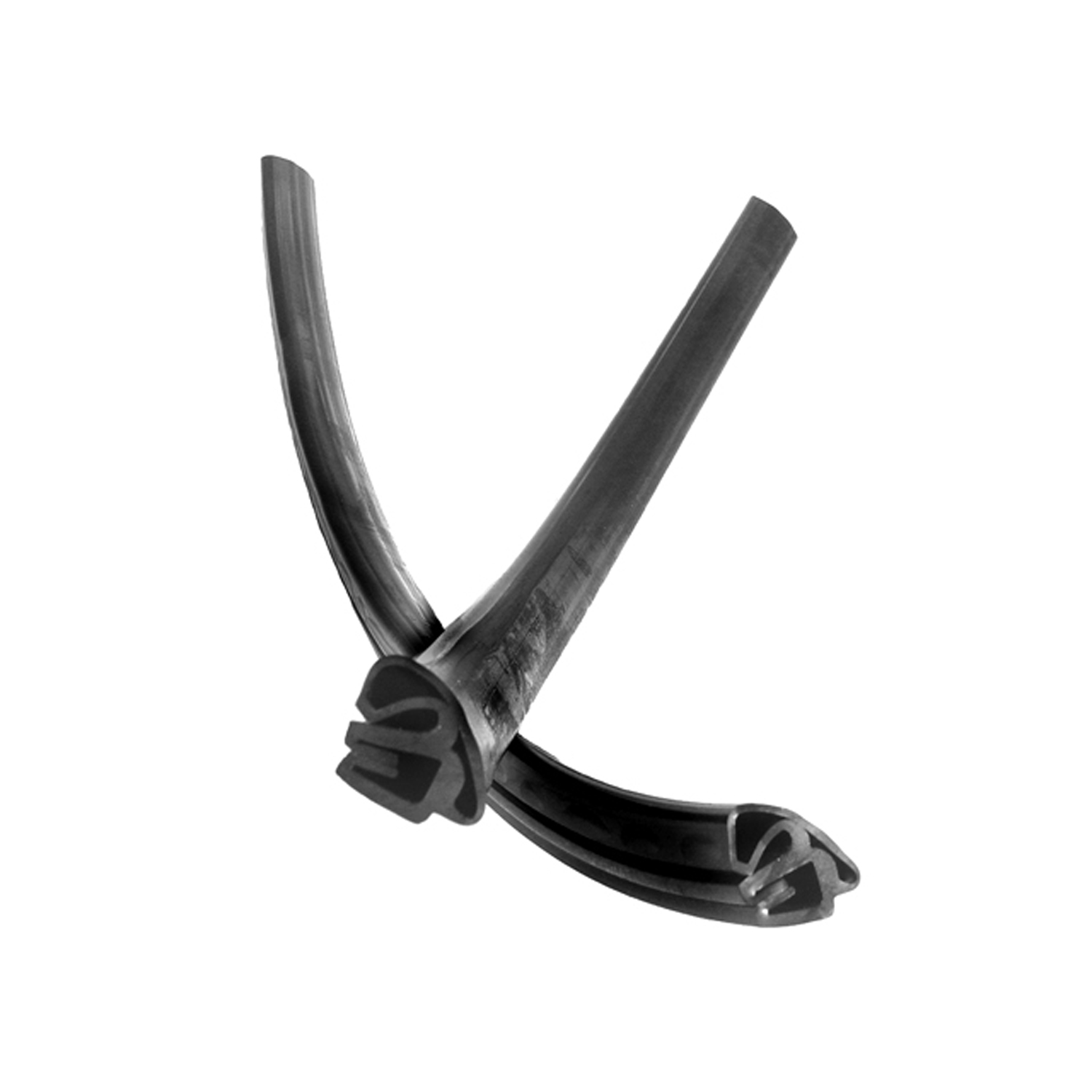 1957 Fiat 500 Vertical Seals. Pair-VS 20Vertical Seals. Pair
Why Choose Metro?
For over 100 years, Metro Moulded Parts has been the pinnacle of quality in classic car restoration parts. Our commitment to precision and authenticity in every component ensures a perfect fit and an OEM-level appearance.
- Expert Craftsmanship & Quality: Each part is a testament to our dedication to reliability and perfection, crafted from original designs and thoroughly tested.
- Advanced Technology: We use cutting-edge techniques to create flawless, long-lasting parts that surpass others in performance.
- SuperSoft Sponge – The Ultimate Door Seal: Not only are our door seals 30% softer than competitors', but they're also guaranteed to never leak. They effectively reduce wind and road noise, enhancing your classic car's comfort and driving experience.
- Proudly American: Our parts are a product of American craftsmanship, made in the USA with a spirit of excellence and heritage.
- Unrivaled Warranty: We back our products with a 30-year industry-leading warranty, a testament to our confidence in their quality.
Join us in preserving the legacy of classic cars with parts that are crafted for perfection, not just made.