

Image of 1957 Fiat 600, Note: These illustrations use artistic license and may differ from actual historical models.
Performance Metrics
Fundamental Metrics
Emotional Appeal
MMP Rating
| Engine Specifications | |
|---|---|
| Engine: | Inline 4 |
| Displacement: | 633 cc |
| Horsepower: | 21.5 hp at 4600 rpm |
| Torque: | 30 Nm at 2500 rpm |
| Compression Ratio: | 6.8:1 |
| Ignition System: | Coil ignition |
| Cooling System: | Water-cooled |
| Performance Specifications | |
| 0-60 Time: | 59 seconds |
| 1/4 Mile Time: | Not available |
| Top Speed: | 59 mph |
| Transmission and Drive | |
| Drive Type: | Rear-wheel drive |
| Transmission Type: | 4-speed manual |
| Fuel and Efficiency | |
| Fuel System Type: | Carburetor |
| MPG: | 40 mpg |
| Dimensions and Brakes | |
| Brakes: | Drum brakes |
| Wheelbase: | 78.7 inches |
| Weight: | 1,279 lbs |
Note: Specifications for classic cars are given to the best of our ability, considering the limited and variant data available.
1957 Fiat 600: Italy’s Little Postwar People-Mover
The 1957 Fiat 600 turned a small footprint into a big idea: an affordable, four-seat car that helped put postwar Italy on the road. Designed by engineer Dante Giacosa and built by Fiat, it paired a water-cooled engine at the rear with a surprisingly useful cabin and compact, rounded bodywork. Its appeal reached far beyond Italy, too. The 600 became a blueprint for licensed versions across Europe and South America, and its practical layout helped inspire a whole generation of small cars.
When the 600 debuted in 1955, it arrived in a country hungry for accessible transport. Scooters and motorcycles were common, while a car remained out of reach for many households. Fiat’s clever little sedan offered a more weatherproof, family-friendly alternative without demanding much space or fuel. One notable milestone came in 1960, when production passed one million cars, a remarkable achievement for a model that had started life as an economical runabout.
Rounded Body, Rear-Hinged Doors
The 600’s styling is compact and cheerful rather than flashy. Its short nose, curved roof, upright rear end, and round headlamps give it a distinctive, almost toy-like profile. At roughly 3.2 metres long, it could fit into tight city parking spaces, yet its tall cabin and broad windows made the interior feel more open than the exterior suggested. The engine sat behind the passenger compartment, leaving the front end free for a small luggage compartment.
Early Fiat 600s, including the 1957 model, had rear-hinged “suicide” doors. They opened from the front edge of the body, making it easy to step into the cabin, but they could catch the wind if opened carelessly. Fiat later changed to front-hinged doors. On a 1957 car, those rear-hinged doors are one of the most recognizable period details.
The interior was straightforward and durable. Expect painted metal surfaces, simple instruments, thin door trim, and practical upholstery, often in vinyl or cloth depending on specification and market. The front seats and rear bench made room for four, though adult passengers would find the back seats snug. It was an honest cabin designed around cost and function, not luxury. Paint colors varied by year and market; soft pastel shades such as pale blue, cream, and light green suit the car’s character, while brighter colors make it stand out at shows.
The standard two-door sedan is the iconic 600 body style. Fiat also introduced the Multipla in 1956, a clever six-seat, van-like people carrier built around 600 mechanicals. Its cab-forward shape and flexible seating made it a particularly early example of the compact family MPV. The Multipla is now one of the most sought-after members of the 600 family.
Small-Car Engineering with Big Consequences
The 600’s importance lies in how efficiently it used its parts and space. Its unitary, or unibody, construction kept weight and material costs down. A rear-mounted engine and rear-wheel drive helped free up passenger space, while independent suspension at all four wheels gave the little Fiat a more sophisticated ride than its basic appearance might imply. Hydraulic drum brakes provided stopping power, and a four-speed manual gearbox made the most of the modest engine.
These were practical solutions, not technological showpieces, but together they helped define the modern small car: compact outside, useful inside, and economical to build and run. The 600 also proved adaptable. It was manufactured under licence in several countries, including Spain as the SEAT 600 and in Yugoslavia as part of the Zastava 750 family. Across Fiat and licensed production, the broader 600 family eventually reached several million vehicles.
633cc Power and City-Friendly Handling
A 1957 Fiat 600 uses the early 633cc, water-cooled inline-four mounted at the rear. Output was around 21 to 22 horsepower, depending on the specification and rating method. Power reaches the rear wheels through a four-speed manual gearbox. Period figures put top speed at roughly 95 km/h, or about 59 mph. Acceleration is leisurely: a 0-to-60-mph run can take around 35 to 40 seconds, and some examples may not reach 60 mph easily in ordinary conditions. The 600 is happiest at sensible country-road and urban speeds.
On a smooth road, the car feels light and nimble, with a short wheelbase that makes narrow streets and tight turns easy to manage. Its independent suspension helps it cope with rough surfaces, though bumps can still make the small body move around. On winding roads, the rear-engine layout gives the front wheels a light feel and can make the rear end more influential in a corner. Smooth steering inputs and measured throttle are the right approach, especially on wet or uneven pavement.
The driving experience is wonderfully direct. The little engine produces a busy, mechanical four-cylinder note from just behind the rear seats, and the car’s modest speed encourages you to make the most of every gear. The clutch and manual gearbox require more involvement than a modern automatic, while the thin tires and compact dimensions keep the driver closely connected to the road. It is not fast, but it makes ordinary journeys feel like an event.
Living with a Fiat 600
Today, the 600 is most often used as a show car, weekend cruiser, or historic-event participant. Some owners still drive them regularly, particularly in places where parts and specialist knowledge are readily available. Its size and mechanical simplicity make it an entertaining classic for towns and relaxed back-road trips, rather than a comfortable choice for long, fast motorway journeys.
Routine servicing is generally approachable for an owner with basic mechanical skills. The engine is relatively simple, and many components are accessible, but a small vintage car still needs careful upkeep. Cooling-system condition matters on any rear-engine 600, so inspect the radiator, hoses, water pump, fan, and airflow passages. Check the brakes, steering, suspension, electrical system, and gearbox as well. Rust in the body structure, floors, sills, and suspension mounting areas can turn an inexpensive-looking project into a major restoration.
Parts availability varies by country. The model’s popularity and licensed production mean that many service parts can be found, but original trim, correct body pieces, and details specific to early cars may take more searching. A well-maintained example can be dependable for the kind of careful use expected of a 1950s classic, but it should not be judged by modern safety, comfort, or performance standards.
Fiat 600 Trivia and Enduring Reputation
The 600’s compact platform inspired more than family transport. Carlo Abarth and other specialists used Fiat 600 mechanicals as the basis for hotter, more competition-focused cars, including Abarth 750 variants. Some Abarth derivatives went on to set notable endurance and speed records, showing just how much performance tuners could extract from the humble Fiat platform.
The car’s international career is another part of its story. The Spanish SEAT 600 became an emblem of growing car ownership in Spain, while related models built elsewhere introduced generations of drivers to affordable motoring. The Fiat 600 Multipla also deserves its own footnote in automotive history: it anticipated the compact, flexible people-carrier long before minivans became familiar sights.
Its drawbacks are as much a part of its character as its charm. The cabin is tight, acceleration is slow, crash protection is limited by modern standards, and the early rear-hinged doors demand care in traffic. The small engine also has to work hard at higher speeds. For enthusiasts, those limitations are part of the bargain, not a surprise to discover after purchase.
1957 Fiat 600 Values and Collectability
Exact production totals vary depending on whether a figure counts only Fiat-built cars or also licensed models. A reasonable estimate for the wider Fiat 600 family is around five million vehicles, with the standard Italian sedan accounting for a substantial share. That makes the 600 far from rare as a model, although an original, complete 1957 car in excellent condition is much less common than a later or heavily restored example.
Collector prices depend heavily on condition, originality, restoration quality, and location. As a broad 2026 estimate in the United States, a project car might sell for roughly $5,000 to $12,000, a usable driver for about $12,000 to $25,000, and a very good restored sedan for approximately $25,000 to $40,000 or more. Exceptional cars can exceed those figures. Multipla values are in a different league, with strong examples often bringing tens of thousands of dollars more than a standard sedan.
The market for tidy, original small European classics has generally strengthened over time, and the 600 benefits from its history, friendly looks, and growing international recognition. Values are not guaranteed to rise, however. Restoration costs, local parts supply, and the condition of the individual car matter more than the model’s popularity alone. A sound, well-documented example is usually a better buy than a cheap car hiding extensive rust.
Why the 1957 Fiat 600 Still Matters
The 1957 Fiat 600 combined a tiny footprint, a useful four-seat cabin, and straightforward engineering at a moment when affordable mobility was changing everyday life. Its rear-engine layout and adaptable platform influenced small-car thinking, while its licensed descendants carried the idea around the world. Slow by modern standards and delightfully simple inside, it remains a classic that rewards involvement over speed.
More than a cute postwar runabout, the Fiat 600 helped make car ownership attainable for millions. Its greatest achievement was not a top-speed figure or a luxury feature, but the way it made a small car feel like a big step forward.
1957 Fiat 600 Catalog of Parts
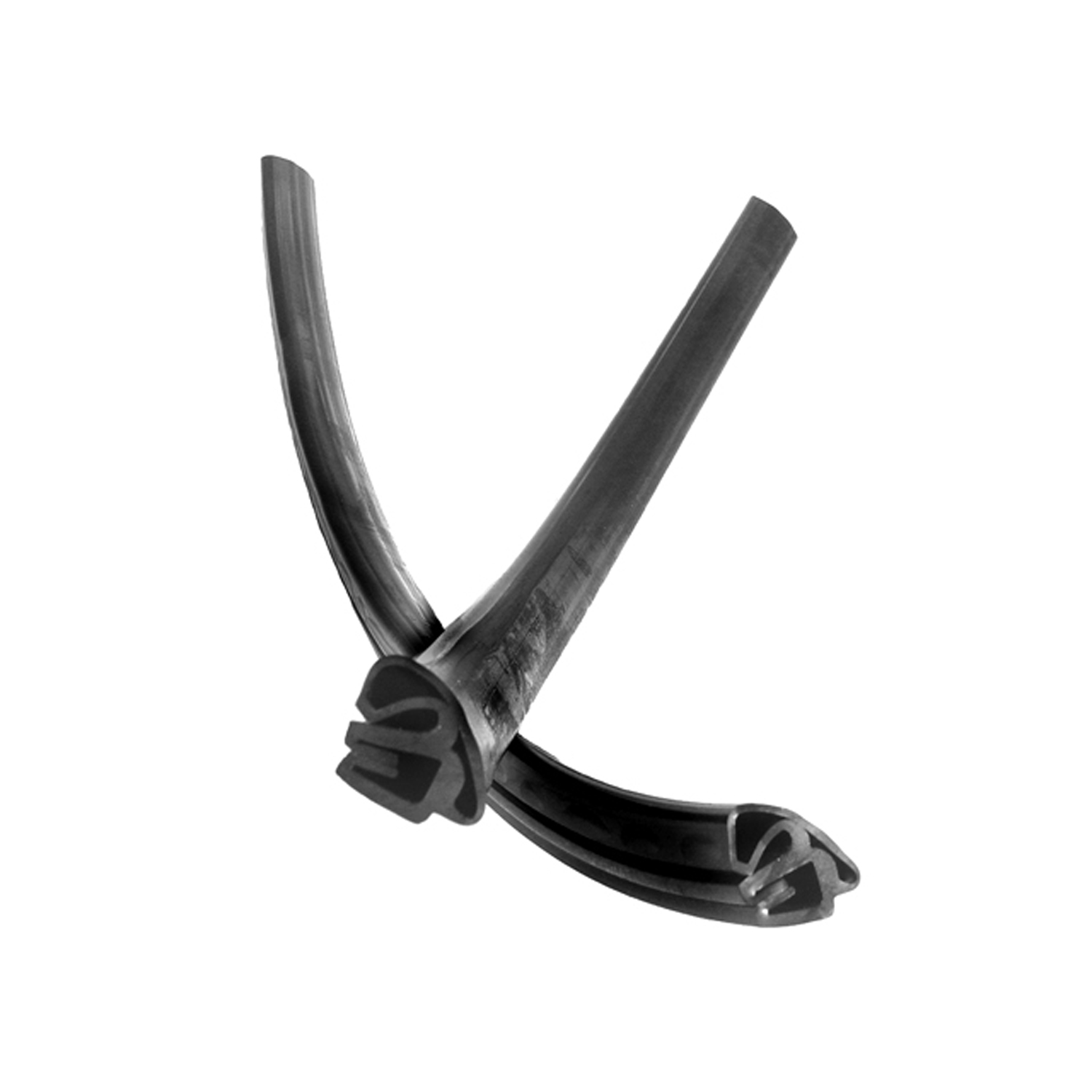 1957 Fiat 600 Vertical Seals. Pair-VS 20Vertical Seals. Pair
Why Choose Metro?
For over 100 years, Metro Moulded Parts has been the pinnacle of quality in classic car restoration parts. Our commitment to precision and authenticity in every component ensures a perfect fit and an OEM-level appearance.
- Expert Craftsmanship & Quality: Each part is a testament to our dedication to reliability and perfection, crafted from original designs and thoroughly tested.
- Advanced Technology: We use cutting-edge techniques to create flawless, long-lasting parts that surpass others in performance.
- SuperSoft Sponge – The Ultimate Door Seal: Not only are our door seals 30% softer than competitors', but they're also guaranteed to never leak. They effectively reduce wind and road noise, enhancing your classic car's comfort and driving experience.
- Proudly American: Our parts are a product of American craftsmanship, made in the USA with a spirit of excellence and heritage.
- Unrivaled Warranty: We back our products with a 30-year industry-leading warranty, a testament to our confidence in their quality.
Join us in preserving the legacy of classic cars with parts that are crafted for perfection, not just made.